

Israel Weapon Industries (IWI), the original developer of the Uzi submachine gun and manufacturer of the Tavor rifle and Negev machine gun used by the Israel Defense Forces, has unveiled a new line of advanced sound silencers made with cutting-edge 3D printing technology.
The silencers, produced at IWI’s factory in Kiryat Gat, mark the company’s first foray into additive manufacturing for weapon components — a breakthrough for Israel’s defense industry. The new line was developed using operational lessons drawn from the Swords of Iron War and is already being used by elite Israeli security units.
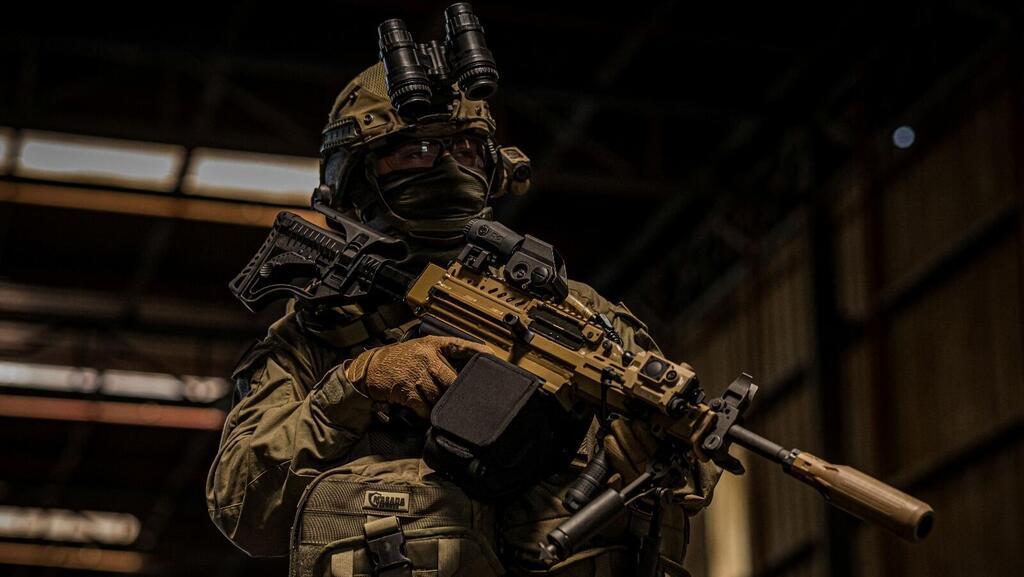
The official unveiling took place at the 2025 International Defense Exhibition in Thailand, where IWI also showcased its latest Negev model chambered in 7.62 mm. The new version weighs just 6.8 kilograms, providing a tactical advantage in close-quarters and urban combat.
Company officials said that the new suppressors were designed to address specific battlefield needs. “The request from the field was to reduce muzzle flash, which can expose a unit’s position, and to lower the sound signature of gunfire,” IWI said. “Drawing on lessons from the war, we developed advanced silencers that provide a significant edge in combat.”
The silencers, which attach to the end of the weapon’s barrel, use a proprietary gas redirection system that reduces both sound and the amount of gas released toward the shooter. They also feature a quick-attach mechanism called UZI-LOCK, allowing for fast, secure installation across multiple weapon platforms.
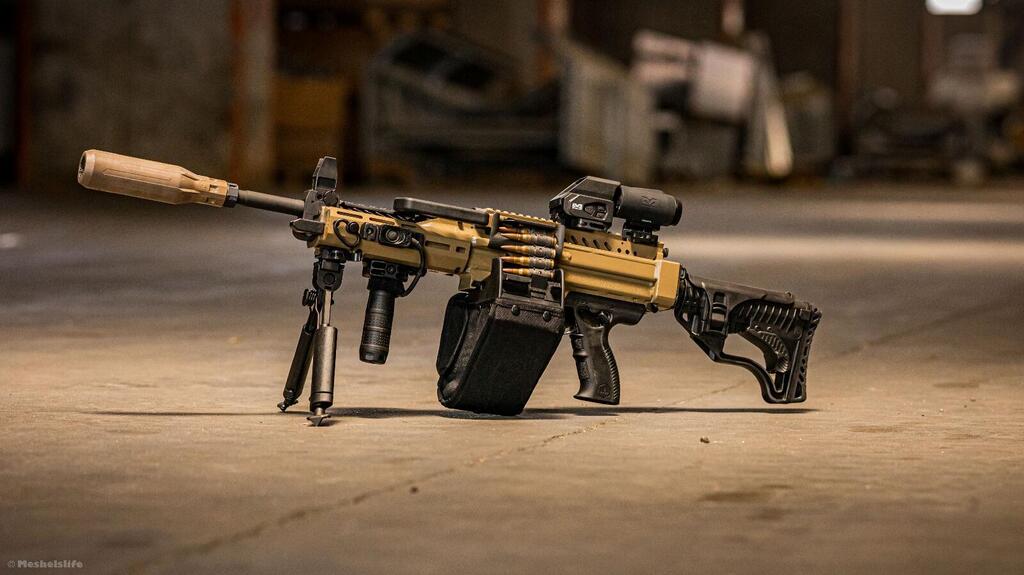
(Photo: IWI a member of the SK Group)
The most significant innovation lies in the materials and manufacturing process. The silencers are made from a high-performance alloy known as Inconel, which starts as a fine powder and is fused into solid metal using a precision laser-based 3D printing process. The result is a component capable of withstanding extreme heat — above 980 degrees Celsius (1,800°F) — while maintaining its integrity through thousands of rounds without erosion, warping, or cracking.
According to Ronen Chamuda, deputy chairman of the SK Group, which owns IWI, the development reflects the company’s focus on adaptability and technological innovation. “Our new line of silencers represents our commitment to constant innovation,” he said. “Thanks to advanced manufacturing and breakthrough materials, we’re providing security forces with modular, combat-ready solutions tailored to modern operational demands.”
The company emphasized that the silencers’ modularity and durability allow them to perform effectively across various environments and weapons systems, from assault rifles to machine guns. By minimizing both muzzle flash and acoustic signature, the silencers are intended to help forces operate stealthily and maintain tactical superiority — particularly in nighttime and urban missions, where exposure risks are highest.
Industry analysts note that IWI’s entry into 3D-printed weapon components highlights a broader trend among defense manufacturers embracing additive manufacturing to enhance precision, customization, and durability while reducing production time and costs.
For IWI, whose products are used by dozens of military and law enforcement agencies worldwide, the new suppressor line reinforces its position at the forefront of Israeli small arms innovation — continuing the legacy that began with the Uzi more than seven decades ago.