

Cuba approved its broadest economic reform since the revolution, in a move aimed at opening its socialist economy to free-market mechanisms. The 176 measures approved are intended to decentralize the island’s planned economy, which has suffered under the tightening of the U.S. embargo during President Donald Trump’s tenure.
Under Cuba’s current economic model, the government determines production levels, who produces goods, the prices at which products are sold and how state resources are allocated. The new reform abolishes many of those mechanisms: It expands the room for private businesses to operate, allows imports and exports without government mediation, permits free hiring and authorizes the establishment of private banks and investments by Cubans living abroad. The reform even opens the door for fast-food chains to enter the island.
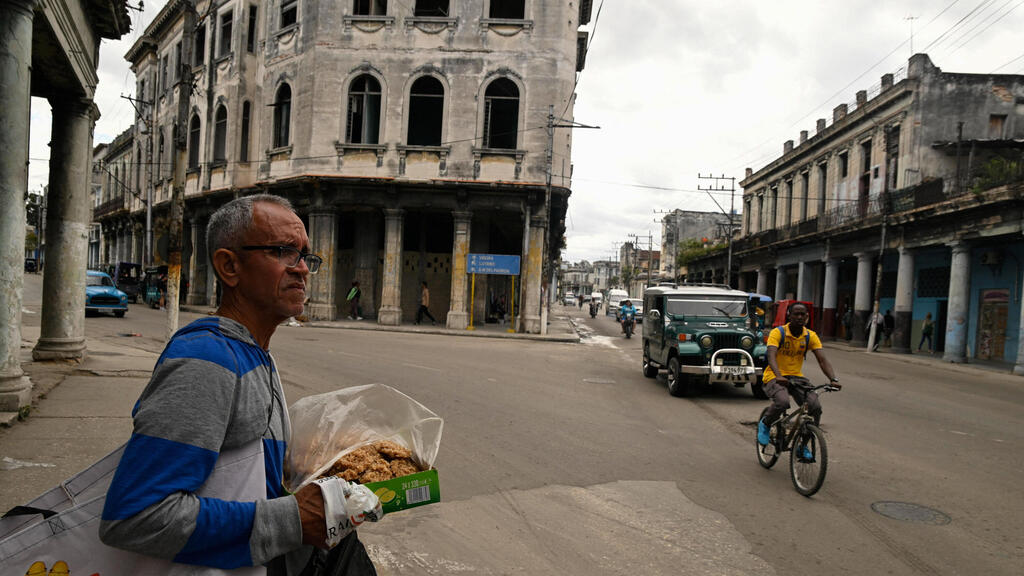
Luis Carlos Battista, a Cuban American political scientist and lawyer pursuing a doctorate at the University of Salamanca, said pillars long considered the foundation of the revolutionary economy — such as the state monopoly on foreign trade and centralized control of production forces — have now been dismantled. Cuban leaders, including former President Raul Castro, who still wields considerable influence on the island, had previously tried to advance more limited reforms but ran into bureaucratic obstacles. Authorities in Havana warned that implementation could be slow and stressed that the measures would not be viable unless the United States lifts the energy and financial blockade.
Since January, Cuba has been under a severe energy and financial blockade imposed by Washington, cutting the island off from its main energy source and deepening a crisis that has dragged on for five years. Power outages last up to 20 hours a day, hurting access to health care, transportation and education. Trump and Secretary of State Marco Rubio have confirmed they are continuing a maximum pressure policy aimed at changing the island’s political and economic system and have not ruled out the use of military force.
On Jan. 16, 2026, Cuban President Miguel Díaz-Canel took part in a march in Havana outside the U.S. Embassy to protest the killing of Cuban bodyguards of Venezuelan President Nicolás Maduro during the operation to capture him.
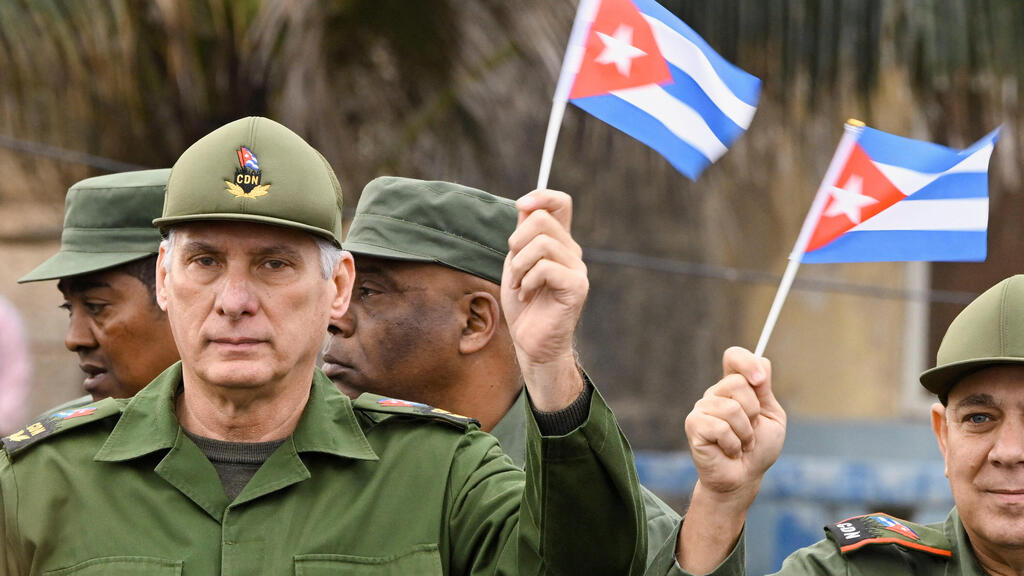
Cuban President Miguel Díaz-Canel
(Photo: REUTERS/Norlys Perez)
Castro’s grandson, Raul Guillermo Rodríguez Castro, said in an interview with The National, published in the United Arab Emirates, that Cuba “does not pose even the slightest threat” to the United States. He added that his country is seeking a “very Cuban” economic model that would include diversifying the economy, business practices and investment channels. Cuban President Miguel Díaz-Canel said the measures are based on an analysis of the Vietnamese and Chinese models, communist states with market economies.
Still, U.S. sanctions remain the main obstacle. Lee Schlenker, a researcher at the Quincy Institute in Washington, said the measures would be effective only if accompanied by a gradual easing of U.S. restrictions. Otherwise, many of them would be impossible to implement because of the limitations placed on potential investors exposed to sanctions by the U.S. financial system. Paolo Spadoni, an associate professor at Augusta University in Georgia, warned that Cuba’s leaders have only a short window to achieve tangible results if they hope to survive the crisis and pressure from Washington.