


Since returning to the White House for a second term, U.S. President Donald Trump has devoted much of his time to leaving a physical, personal mark on Washington and on American history in ways no sitting president before him has dared to attempt.
From plans for a new White House ballroom to renaming the Kennedy Center and building an “Arc de Triomphe,” Trump is acting as president much as he did as a real estate developer: attaching his name, in giant letters, to buildings and symbols. The difference is that these buildings and symbols do not belong to the president of the United States.
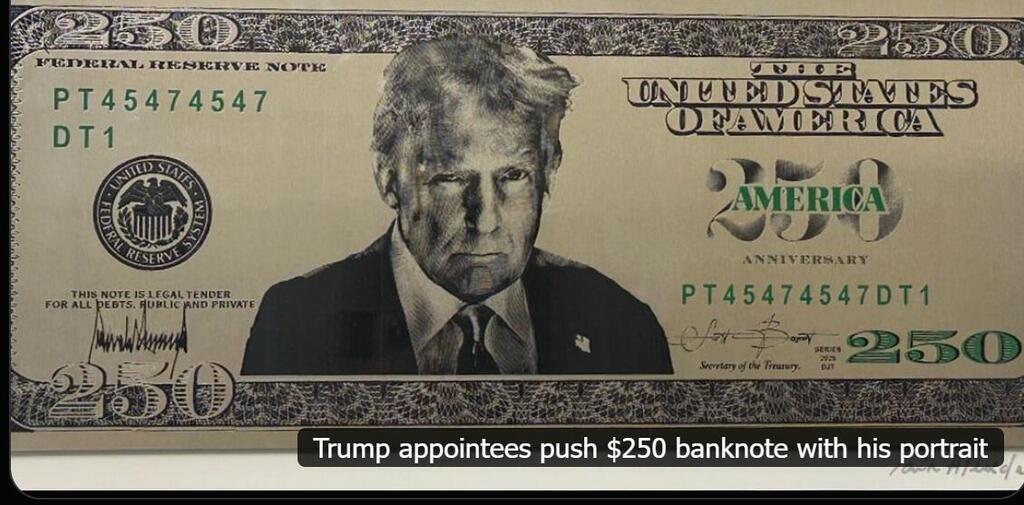
The fact that the U.S. is marking its 250th Independence Day this year has only encouraged Trump’s efforts to make sure he is not forgotten. Last month, the State Department announced it would begin issuing special passports featuring Trump’s portrait and signature. The next step, according to a Washington Post report, is an effort to put his image on U.S. currency.
Over the past year, two Trump political appointees at the Treasury Department, U.S. Treasurer Brandon Beach and his adviser Mike Brown, repeatedly pressed staff at the Bureau of Engraving and Printing to prepare prototypes for a new $250 bill featuring Trump’s portrait, according to four bureau employees who spoke to the Washington Post.
The push came despite clear legal obstacles. Federal law bars the image of a living president, or any living person, from appearing on U.S. currency. The proposed $250 denomination is also not currently authorized under existing law.
According to the report, Beach provided bureau staff with sample designs created by British artist Iain Alexander, who describes himself as a “royal portrait artist.” “Trump likes to call me his favorite British artist,” Alexander told the Post.
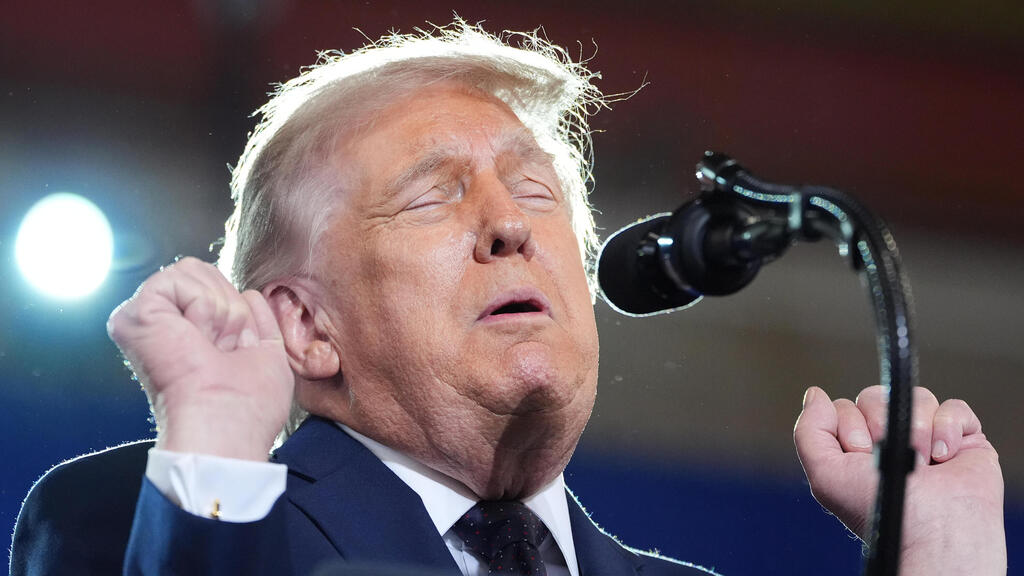
US President Donald Trump
(Photo: Alex Brandon/ AP)
Patricia Solimene, then director of the Bureau of Engraving and Printing, and other staff members repeatedly told Beach and Brown that there were legal and procedural barriers to producing such a bill, and that the process would take far longer than they appeared to expect.
“She had told them we’re not authorized to do this. We can’t progress any further, and all the stakeholders have not even met to discuss the next steps,” one bureau employee told the Post. “Currency often takes six to eight years to produce a new bill, particularly one of such high value. These guys think you can just print something overnight and it’s going to work in an ATM.”
Last month, Solimene was abruptly reassigned by Treasury leadership. In an email to colleagues the next day, she said she was leaving “with a heavy heart” and not by choice, adding: “I took full accountability, and I never sacrificed the values of myself or the organization.”
Brown has since been named acting director of the bureau. He did not respond to the Post’s requests for comment. Beach, a former Georgia state senator who backed Trump’s false claims about the 2020 election, also did not respond.
Solimene and her staff did agree to another administration request: printing $100 bills with Trump’s signature. Those bills, the first in U.S. history to bear the signature of a sitting president, are now being printed at the bureau’s facility in central Washington.
“We will recognize the historic achievements of our great country and President Trump by adding his signature to our currency,” the Treasury Department said in a statement, using language that critics said sounded more like the rhetoric of very different political systems than that of the United States.
The legal restrictions on living people appearing on U.S. currency date back to 1866, after the image of a mid-level Treasury official appeared on a 5-cent note. Congress responded by passing a law requiring that only deceased individuals appear on U.S. banknotes, a rule intended to prevent practices associated with monarchs and dictators.
There has been one narrow exception. In 1926, Congress passed a one-time resolution allowing the image of then-President Calvin Coolidge to appear on a limited-edition coin marking the 150th anniversary of U.S. independence.
Last year, Rep. Joe Wilson, a South Carolina Republican, introduced legislation instructing the Treasury secretary to print $250 Federal Reserve notes bearing Trump’s portrait. The bill was referred to the House Financial Services Committee but has not advanced.
A Treasury spokesperson told the Washington Post that the Bureau of Engraving and Printing is conducting “planning and due diligence” in response to the proposed legislation.
“If there is a legislative mandate, we will be prepared to produce a special $250 note, which would be a fitting tribute marking the 250th anniversary of our great nation,” the spokesperson said.