

In Silicon Valley, legendary tales abound of startups born in cramped garages and rising to global dominance. Over the past three years, Ukraine has been building its own version of that mythology—only this time, the innovation comes from underground bunkers rather than garages, and the goal isn’t to disrupt tech, but to fight a war.
Across Kyiv, small volunteer-driven ventures founded by civilians with no prior defense experience have evolved into multimillion-dollar military contractors. Backed and encouraged by President Volodymyr Zelensky’s government, these companies have helped offset Russia’s battlefield superiority and given Ukraine a powerful new weapon: long-range drones capable of striking deep inside Russian territory.
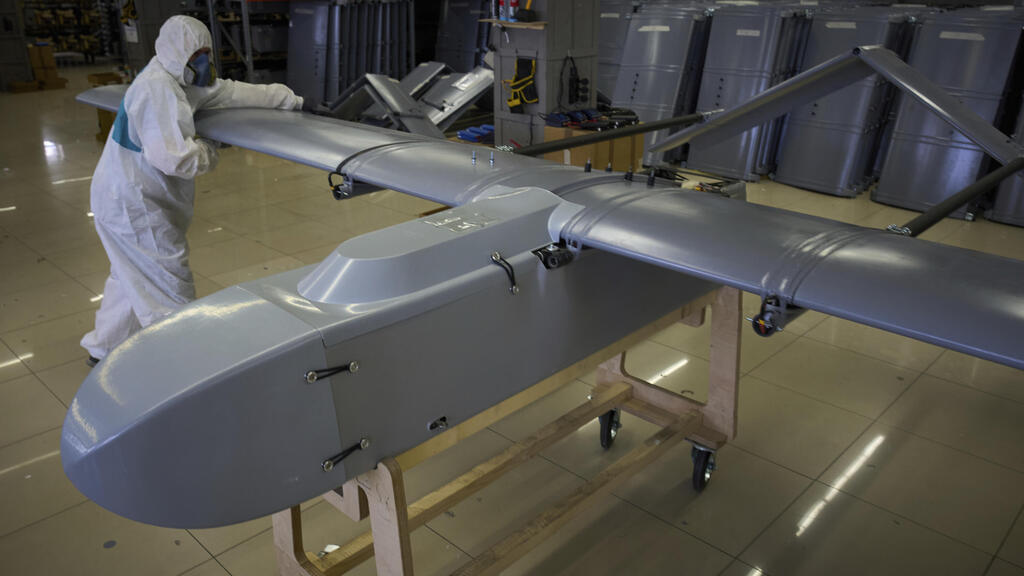
Among them, one name stands out: Fire Point, a fast-growing drone manufacturer whose origins are as unlikely as they come.
From casting calls to combat missions
When Russia invaded in February 2022, Fire Point wasn’t even in the defense business—it was a casting agency for film and television productions. Its current chief technology officer, Iryna Terekh, once ran a company that made concrete outdoor furniture.
Today, Fire Point is one of Ukraine’s biggest military contractors, holding more than $1 billion in government deals this year alone. At roughly 30 secret sites across the country, the company produces long-range explosive drones made from inexpensive materials like Styrofoam, plywood, plastic, and carbon fiber used in racing bikes.
Ukrainian drone crashes into oil refinery in Russia


Those drones have become central to Ukraine’s campaign of precision strikes on Russian oil refineries, part of an effort to damage Russia’s economy and gain leverage in future peace talks. Fire Point says it is now scaling up production of a larger, more powerful jet-powered drone called the Flamingo, designed to reach even deeper targets inside Russia.
Accusations of favoritism and corruption
But not everything about Fire Point’s Cinderella story is rosy. As the company rose to national prominence, allegations surfaced that it leveraged political connections to secure lucrative government contracts. Its executives have acknowledged being questioned by anti-corruption investigators.
Ukraine’s wartime defense spending is shrouded in secrecy, with billions of dollars flowing to local weapons producers as Kyiv seeks to reduce dependence on international allies. In a country with a long history of corruption, analysts and watchdogs have questioned how some of these massive contracts are being awarded.
Fire Point traces its roots to the same Ukrainian entertainment industry where Zelensky built his career as a comedian and actor before becoming president in 2019. In fact, the company once scouted filming locations for the 2016 romantic comedy Eight Best Dates, starring Zelensky, and worked on dozens of other productions unrelated to his career.
In August, The Kyiv Independent reported that Ukraine’s National Anti-Corruption Bureau was investigating possible ties between Fire Point and businessman Tymur Mindych, who co-owns a television studio founded by Zelensky. The paper said investigators were probing whether Mindych profits from Fire Point as an undeclared stakeholder. The company denied the allegation, saying Mindych had tried to buy shares but was turned down.

President Volodymyr Zelensky back in 2019 getting ready for his sitcom shoot
(Photo: Brendan Hoffman/Getty Images)
Quality concerns and whistleblower claims
Fire Point has also faced criticism over the quality of its drones. Some former military officers claim the aircraft are technologically inferior to rival designs offered to the Ukrainian military and struggle to bypass Russian air defenses.
The Public Council for Combating Corruption, an independent watchdog overseeing defense procurement, has called for a parliamentary investigation into complaints about quality and pricing.
In an interview with The New York Times, Maj. Yurii Kasyanov, a former drone unit commander, said Fire Point won major contracts despite design flaws, while his own model, the Spear, was ignored—even after he demonstrated it by detonating two drones just meters from the Kremlin’s flag in Moscow in 2023.
Fire Point insists its initial technical issues have long been resolved. The company says its flagship FP-1 drone has successfully destroyed Russian ammunition depots, causing “widespread damage and chaos” as intended.
Chief technologist Terekh said Fire Point’s strength lies in its cost-effective manufacturing methods. The company is now ramping up production of the Flamingo drone, a heavier, jet-powered model carrying a 1,000-kilogram warhead. Former CIA Director and retired Gen. David H. Petraeus recently described the Flamingo as a “potential game changer” in the war.
The pink drone that became a symbol
According to Terekh, the Flamingo got its name after one of the early prototypes was painted pink to make debris easier to spot after a test flight, only because the company had run out of red paint. Another version of the story claims the color was a mistake that led to a sexist joke among engineers: “That’s what happens when a woman runs a defense company.”
Whatever the truth, Fire Point’s transformation from a modest casting agency into a billion-dollar drone powerhouse is one of the most extraordinary—and controversial—stories to emerge from Ukraine’s war with Russia.