

The report that Google co-founder Larry Page is moving his business interests from California to Delaware should not come as a surprise. America’s wealthy may pay lower tax rates than most of the middle class, but even that appears to be too much for them — and California’s billionaires, in particular, are on edge.
This November, alongside the congressional midterm elections, California voters will head to the polls to decide on a ballot measure that would impose an additional 5% tax on any state resident worth more than $1 billion.
So Larry Page, whose net worth at the start of 2026 is estimated at about $280 billion, is taking his business elsewhere. That, as noted, is hardly surprising. What is surprising is that Page chose Delaware rather than Texas or Florida, the destinations favored by most billionaires in recent years.
Until a few years ago, Page’s move would have seemed entirely predictable. Delaware, for reasons detailed below, has long been the preferred home of America’s largest corporations. Executives were willing to absorb a personal state income tax of 6% or more because incorporating in Delaware made running a business far easier. In the Trump era, however, American billionaires are no longer willing to pay even that.
Elon Musk, who personally left California for Texas and also moved Tesla, which had been incorporated in Delaware, is the most prominent example. In Texas, Musk pays no state income tax at all, only federal tax — and that, too, is relatively low. The effective tax rate — the share of total income actually paid in taxes — for US billionaires fell from about 30% between 2010 and 2017 to just 24% between 2018 and 2020, following Donald Trump’s tax reform. By comparison, other US taxpayers paid an average effective rate of about 30% during those years.
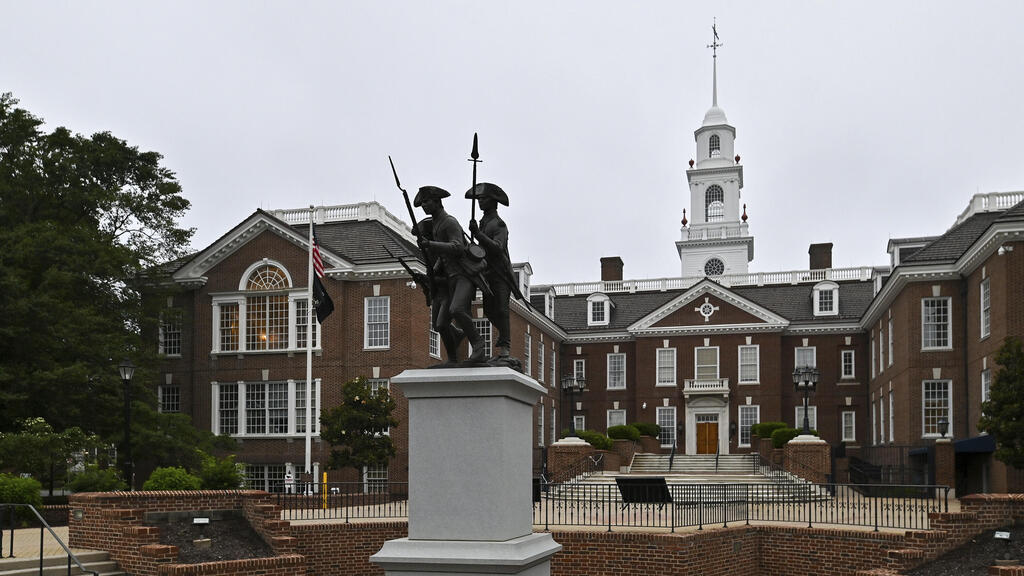
And yet, Larry Page is moving to Delaware because it remains the best state for anyone who wants to run a large business with peace of mind. Delaware, the first state to ratify the US Constitution in December 1787, is tiny, with a population of just over 1 million — larger only than Rhode Island. Still, it is home to more than 60% of Fortune 500 companies, including Alphabet, Amazon, Apple, Netflix, Meta, Comcast, Morgan Stanley, Bank of America, Goldman Sachs and Ford. More than 90% of US companies that went public in 2021 were incorporated in the state that produced former President Joe Biden.

Larry Page, founder of Google
(Photo: AP)
‘Delaware is attractive for three main reasons: convenience, flexibility and predictability,’ corporate adviser Roy Gilberg told CNBC.
Delaware has created a unique business court system, flexible corporate laws and a tax structure that offers certainty — a highly valuable commodity in the business world. The state has an enormous body of case law in corporate matters, allowing lawyers and investors to have a good sense in advance of how disputes over mergers, shareholder rights and other issues are likely to be resolved.
Delaware’s courts are effectively a separate judicial system dedicated to corporate cases. In 1986, the state Supreme Court ruled that when a board of directors decides to sell a company or undergo a change of control, its primary duty is to maximize value for shareholders. Actions aimed mainly at protecting management, at the expense of higher offers for shareholders, could be considered a breach of fiduciary duty. That ruling became a cornerstone of US corporate law and is still used today to assess board behavior in mergers and acquisitions.
‘Delaware’s courts are widely respected as an authority on business matters, trusted by both the business and legal communities, frankly, all over the world, as a place where the rules are well developed,’ Gilberg said.
In addition to its attractive legal system, Delaware offers some tax incentives for businesses, though this is a relatively secondary reason for incorporating there. ‘There is a claim that Delaware is a corporate tax haven,’ said Gigi Tewari, a professor at Widener University’s Delaware Law School. ‘So many people believe I need to register my business in Delaware because I’ll save so much on corporate taxes. In fact, Delaware is on the higher end when it comes to corporate tax.’
Delaware’s corporate law allows for complex structures, multiple classes of shares and broad protections for directors and officers, making it particularly suitable for public companies and startups with many investors. Investors also like seeing ‘Delaware’ at the top of a company’s filings. Most venture capital funds prefer, and sometimes require, companies to be incorporated in Delaware because of the familiar laws and consistent court rulings. Delaware also makes registration processes relatively easy, and the small, low-profile state is home to a vast infrastructure of lawyers who know the system inside and out.
‘When you want to go global and you’re incorporated in Canada, no one even looks at you,’ explained Gloria Oppong, CEO of Cleanster, a home-cleaning services platform that is also incorporated in Delaware. ‘This is a system that protects us, the founders and, eventually, the investors who come on board.’
All of this has led most American companies to incorporate in Delaware, even if they are physically based elsewhere. Larry Page, too, is unlikely to move his home to Delaware or give up life under the Pacific sun — but he will not be handing California the 5% ‘billionaire tax.’