

When Chinese mixer manufacturers ask Itzik Gabay, CEO and co-owner of OIG, why Israelis need giant 8-liter bowls, he already knows the answer. “What are you baking over there?” they wonder.
The answer, it turns out, has to do not only with cakes and Shabbat challahs, but with a phenomenon gaining momentum in Israel: challah separation events and ceremonies. More and more women are gathering around huge bowls, kneading dough, lighting candles, reciting blessings, praying and taking photos, then posting them on social media and helping spread the trend.
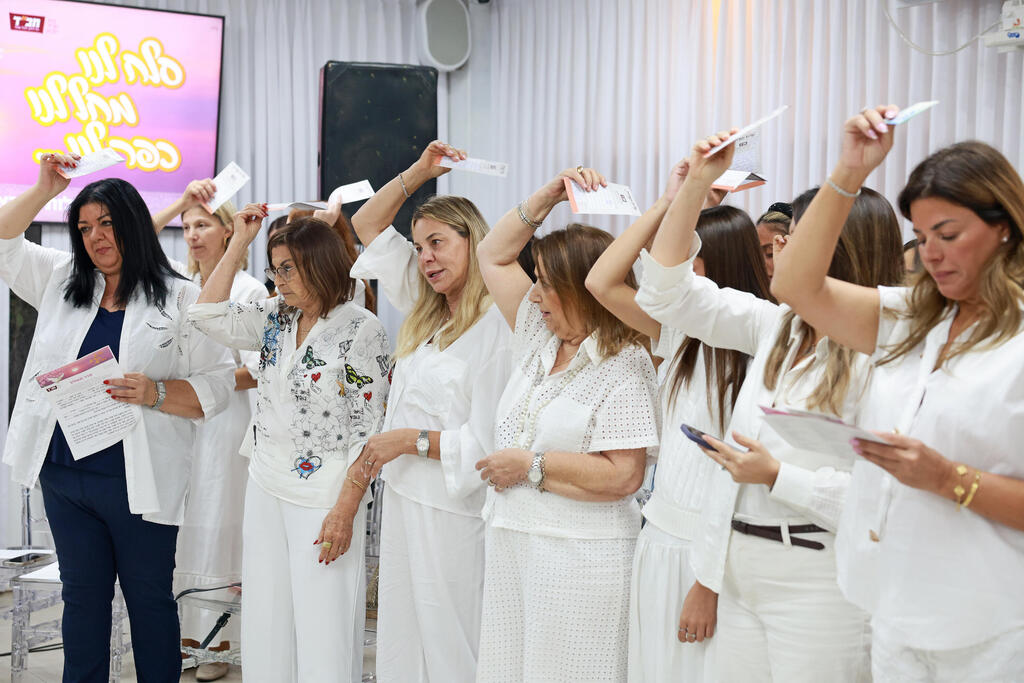
An estimated 50,000 ceremonial challah separation events are held each year, with an average of 15 to 25 women participating in each. Many are considerably larger.
The phenomenon has long since moved beyond the ultra-Orthodox community and is flourishing among secular women, young women, influencers and celebrities, from Bar Refaeli and Noa Kirel to Eden Fines and Sapir Kashti. They have turned the spiritual ritual, rooted in one of the commandments traditionally associated with women in Judaism, into a social and Instagram-friendly event.
An entire market has emerged around the ceremony, ranging from a simple home evening costing a few hundred shekels to an elaborate bridal event that can reach 20,000 shekels and, in some cases, 30,000 to 40,000 shekels or more.
The expenses mainly include a host, designer, event producer, DJ, accessories, ingredients and, of course, mixers capable of handling 2 kilograms of flour or more.
“We identified the trend five years ago,” Gabay says. “COVID and the long periods spent at home boosted home baking, including baking in large quantities. Then came the challah-separation trend, which became a phenomenon and sent demand for giant bowls soaring.”
COVID, which strengthened the home-baking trend, was only part of the story. Since October 7, people working in the field say there has been a further increase in demand for these ceremonies, which participants describe as calming, connecting and meaningful.
“The thirst is enormous and it won’t stop,” says Rebbetzin Hagit Shira of Safed. “The desire simply doesn’t end. The war intensified it. I held challah separation ceremonies even during rocket sirens.”
The war increased demand
The Hebrew month of Tishrei is considered one of the peak seasons for public challah separation events.
There are also particular peak Shabbats, such as Shabbat Bereishit, after Simchat Torah, when the annual Torah-reading cycle begins again, and the Shabbat after Passover, when some bake key-shaped challahs as a traditional segulah, or spiritual practice associated with hopes for financial prosperity.
The winter and summer wedding seasons also see many challah separation ceremonies.
Another trigger is the Shabbat Project, which this year will take place on Oct. 30. The global initiative encouraging Jews to observe Shabbat began in South Africa in October 2013 and now draws millions of Jews in Israel and around the world.
The largest event last year took place in Buenos Aires, but challah separation gatherings were also held in dozens of Israeli communities, including Eilat, in dozens of Jewish population centers in the United States, in several European countries and even in Dubai.
“Over the past year, I’ve gone out to lead a challah separation ceremony every evening, and there have been nights when I did two,” says Rebbetzin Hagit Shira of Safed, one of the field’s leading and most sought-after figures.
She is the mother of 10 children, six of whom are married.
“And I have even more grandchildren,” she says with a smile.
She became religious at age 9 despite opposition from her family, who over the years followed her path. She married a man who also became religious, and together they run what has grown into an enterprise that began with challah separation and now includes a range of religious books she has published, among them prayer books, High Holiday prayer books and calendars, as well as a weekly online newspaper and weekly lessons watched by 16,000 viewers.
It all began with public speaking and a challah separation ceremony.
“Twenty years ago, my husband’s brother was killed in a motorcycle accident, two months before his wedding. I was asked to strengthen the family, and when I spoke I realized what an impact my words had.
“Eighteen years ago, someone suggested I lead a challah separation. I didn’t understand what it was. I started going through the process of preparing the dough, put out candles, played music, and suddenly I saw a sea of shining eyes in front of me.
“From that night on, I was in. In Israel and abroad — I even reached Australia. The largest challah separation evening I led was for 4,000 women.”
Rabbi Shlomo Raanan, founder and chairman of Ayelet Hashachar, an organization dealing with bridge-building, education and Jewish identity, says challah separation ceremonies have even reached kibbutzim.
“It’s not only a women’s commandment, it’s the soul of women that touches them all,” he says. “In a study we recently initiated, we were surprised to find that among women, challah separation is the commandment with the highest level of awareness. Among men, it is tefillin.”
He says the commandment is also perceived today as a social trend.
“Challah separation, like attending Selichot prayers, is increasingly seen as a social trend and less as religious ritual. It is connected to life. Bread is something basic. Through challah separation, we give thanks for our very existence, alongside the special spiritual qualities attributed to the commandment.
“Even groups that before October 7 saw commandments like these as pagan rituals are now willing to listen.”
Rebbetzin Shira echoes his remarks.
“There is a great deal of sadness in Israeli society, anxiety, fear, lack of peace between brothers and sisters, children and parents, spouses.
“I see the calm and joy that engaging in challah separation brings. I see the surprising number of girls ages 18 to 21 who come to these ceremonies. In the past, I barely saw them.
“I teach them to give thanks for what they have. I tell them that God loves them no matter what they look like.
“I’ve been invited many times to workplace bonding evenings, even to lead challah separation ceremonies for female soldiers in the army.
“I always encounter shining eyes and girls asking me to strengthen them. The drives back to Safed are long. I don’t go to sleep before 2 a.m., but what happens in the field makes the fatigue seem insignificant.”
Even among the wealthiest Israelis
Rebbetzin Rivka Bistritzky, 42, a mother of six and wife of Rabbi Shmuel Bistritzky, chief rabbi of Savyon, began leading challah separation events 11 years ago, about a year after her husband was appointed the community’s rabbi.
“One of the neighbors approached me and asked me to do an event for her daughter, who was getting married,” she says.
“I developed a concept that would also suit women who had no idea what challah separation was. I make the commandment accessible.
“I explain that we take flour, water, yeast, sugar and salt, the most basic ingredients, and that teaches us that all of us can perform this commandment and all of us are equal.
“They bless one another, receive a sense of female empowerment and I talk about the power of women throughout the generations. Women connect very strongly to that message.”
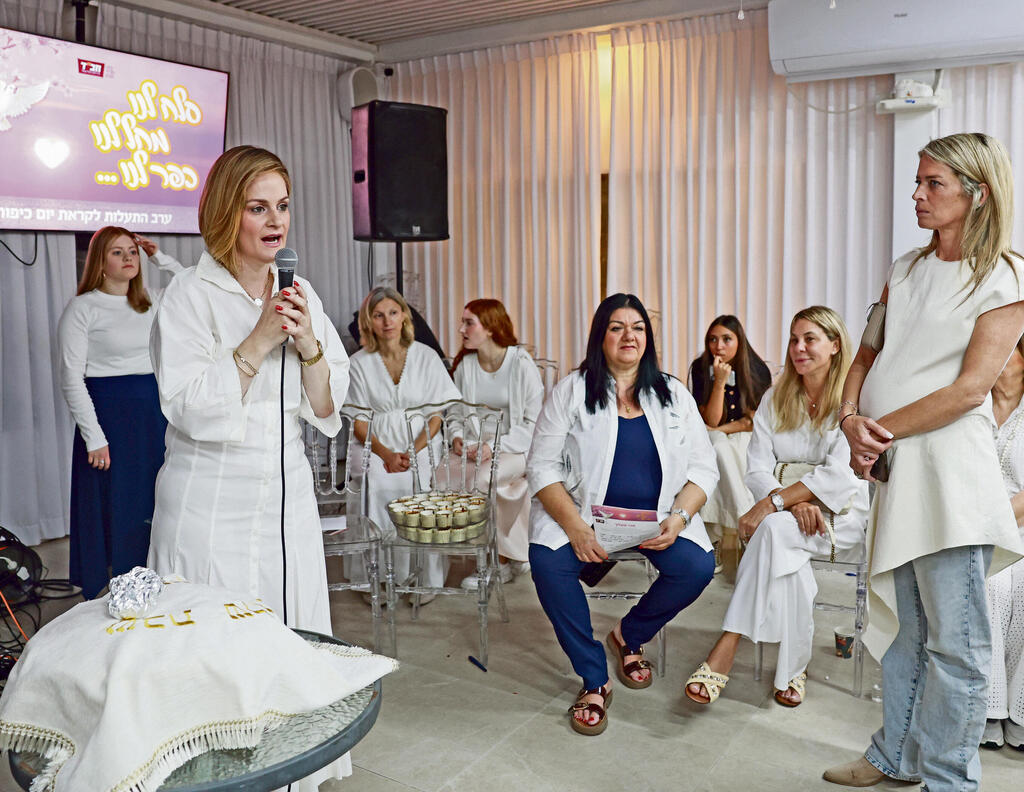
Rebbetzin Rivka Bistritzky at a challah separation ceremony in Savyon
(Photo: Dana Kopel)
And no one accuses you of religious coercion?
“Never. And I work with the most secular audiences imaginable. Women who are very far removed from Judaism, celebrities, wives of leading business figures, some of Israel’s wealthiest women — and when it comes to the commandment of challah separation, we are all equal.
“Anyone who doesn’t want to come doesn’t come. I’m not trying to make anyone religious. I connect them to their roots and I see that this truth touches them.”
Do you remember any particularly moving evenings?
“Yes. Evenings we held to pray for the return of the hostages.
“One of them was with Dafna, the aunt of Abigail Idan, the little girl whose parents were murdered on October 7. Another was with Merav Berger, whose daughter Agam was held hostage by Hamas and returned.
“Bridal evenings before weddings are especially moving. The emotional peak for me came about a month ago, when I led a challah separation ceremony for my eldest daughter before her wedding.
“I also hold an evening at my home once a month. We started with eight to 10 women. Today, it’s 50 women drawn from a pool of 300.”
Keren Assis, 42, of Be’er Ya’akov, who became religious and now leads challah separation evenings, adds: “The overwhelming majority of my audience are young secular women, especially brides, and it is very important to them that I speak about closeness to God.
“Since the war, you see more and more emotion among the women attending.”
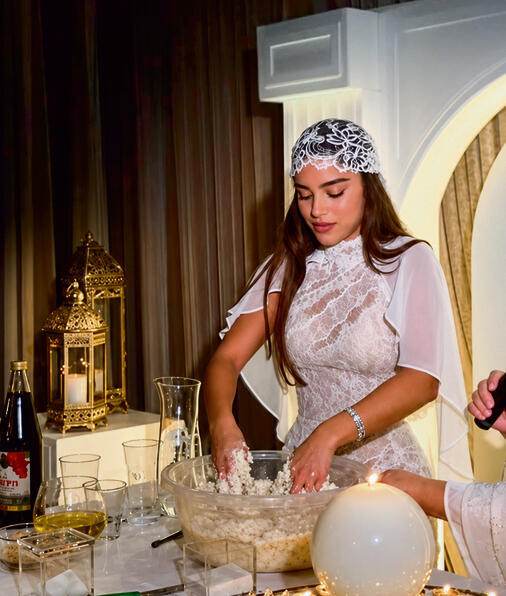
Noa Kirel kneads dough at a challah separation ceremony
(Photo: Instagram)
What brings women back again and again to these challah separation events? I ask two participants at a ceremony in Savyon.
“I’m a very spiritual person,” says Daniela, who works in media. “I grew up in a religious home, and even though today I’m not religious, I’m certain someone up there is watching over me.
“I first came to Rebbetzin Bistritzky when my father wasn’t well. My husband is very far removed from the world of prayer, and I don’t go to synagogue, but with the rebbetzin I feel this is a place where I can pray and bless.
“It works for me, it’s accessible to me and it’s important to me.”
Ilana Blattner also connects with the spiritual aspect of the ceremony.
“I’m observant-lite,” she says of herself. “Two of my children chose to be like me and the third did not. My husband watches television on Shabbat and respects me.
“I connect with the idea that everything comes from God and that we must not forget other people.”
Demand for challah separation evenings continues to grow.
“You wouldn’t believe the homes I enter in Tzahala, in affluent Tel Aviv neighborhoods, in Herzliya Pituach,” says an ultra-Orthodox woman invited to lead challah separation ceremonies in the homes of some of Israel’s wealthiest families and among leading figures in business and medicine.
“They ask for a different kind of evening — challah separation, but also deep, spiritual Judaism at an academic level.
“In some cases, after the ceremony I hear surprising reactions such as, ‘Within the fabric of our lives, we lost deep material that we pushed away because of the antagonism and the wall we created.’
“Of course there is the setting. They come dressed in white, we light candles. But there is a thirst to know, and a huge prayer gathering of women does something to them.”
‘It has become a mini-wedding’
Challah separation is a Torah commandment requiring that a portion be separated from dough used for baking.
During the time of the Temple, the separated portion was given to the priests. Since the destruction of the Temple, the dough cannot be eaten in the required state of ritual purity, and this gave rise to the form of challah separation practiced today.
The amount of flour requiring challah separation with a blessing begins at about 1.6 kilograms under some customs and reaches around 2.5 kilograms under others. At most challah separation evenings, the customary amount is 2 kilograms of flour.
Over the generations, various spiritual benefits have been associated with challah separation.
In addition to reciting the blessing, it has also become customary during the separation to recite Psalms, such as Psalm 100, Mizmor LeToda, the Psalm of Thanksgiving.
There is also a special prayer that includes the request: “And in the merit of this commandment, abolish death from the world, wipe tears from every face and send blessing into our home.”
There are also prayers associated with different stages of preparing the dough.
At the end of the kneading process, a small piece of dough is removed. This is the portion known as challah.
It is generally wrapped twice in aluminum foil and in another wrapping and burned over a gas flame. Some pour soap on it and throw it in the garbage.
The remaining dough is then baked into challahs.
The ingredients themselves are inexpensive. That, incidentally, is one reason home challah baking is growing, explains pastry chef Chen Cohen.
A challah baked at home costs about 3 shekels, compared with 19 to 30 shekels for a boutique challah.
What makes the events expensive and pushes the cost into the hundreds, thousands or even tens of thousands of shekels is everything surrounding the ritual.
“In many places, it has become a mini-wedding,” explains Assis, who was an event singer in her secular years.
“It’s a full production. I bring sound equipment, accessories, an aisle for the bride, catering, decorations, gifts for guests. Then add table design, a backdrop wall and more.”
Gal Guetta, an event producer from Beersheba, says demand for challah separation ceremonies is growing not only before weddings, but even for birthdays.
“Even schoolgirls contact me and ask to hold a challah separation evening with their classmates.”
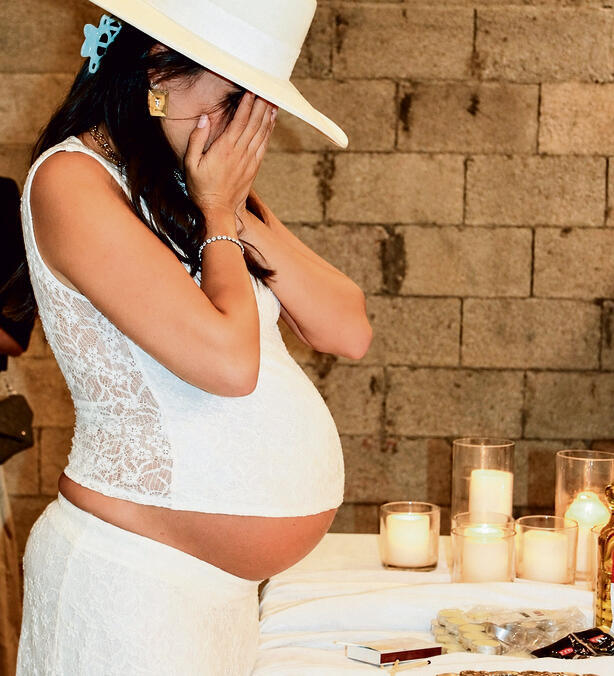
Kim Or Azulay at a challah separation ceremony before giving birth
(Photo: Kim Or Azulay’s Instagram)
How do the parents react?
“Mothers prefer their daughter to do a challah separation rather than spend the evening at a club.
“They’re willing to pay, and the girls demand a lot too — catering, a DJ, gifts for guests, and at bridal events even belly dancers.”
I found Gal through Midrag, which, in a move that itself testifies to the field’s popularity, opened a category featuring more than 20 organizers of challah separation evenings. They represent only a fraction of those working in the field in Israel, estimated to number in the many hundreds.
“It’s a crazy trend,” says Shira Hadas Nakar, Midrag’s communications director. “I see huge numbers of friends doing challah separation events on social media. In the past six months, I’ve been to three.”
Challah kits costing hundreds of shekels
There is, of course, also a commercial side to the ceremony.
An entire industry has developed around ready-made challah separation kits, decorative bowls, branded gifts, photography services and specialized catering.
Sometimes there are even booths selling Tupperware and rolling pins at the event, and in some cases charity fundraising as well.
At Davo, they report an increase of about 30% in demand for mixers suited to large quantities, which are also more expensive.
Brimag recently launched a Kenwood mixer capable of kneading dough made from 2 kilograms of flour, priced at about 3,000 shekels.
“We are seeing the challah separation commandment increasingly move beyond religious audiences and spread across every segment of the population,” says Avi Zilberstein, deputy CEO of Brimag.
A category of kits featuring specialized kneading bowls has also developed, usually made of enamel in cream and pastel colors, together with decorative challah covers and acrylic plaques containing the text of the challah separation ritual.
Hanna Malul, who became religious, created a kit that includes a bowl and costs 225 shekels.
“When I entered the world of challah separation, I noticed something that kept repeating itself,” she says.
“At all these events, everything was always invested in and beautifully designed, sometimes down to the smallest detail — except one thing: the bowl. It always looked too plain, made of plastic or some other cheap, unattractive material.”
Then there are gift packages for guests.
The fastest-growing category is designed blessing booklets containing the challah separation text, priced at 9.90 to 11.90 shekels each, alongside branded matches, candles, headscarves, pairs of candlesticks, chocolates and challah separation kits for brides combining the event with ritual immersion in a mikveh.
A gift for a guest costs 7 to 15 shekels, a basic package 30 to 50 shekels, a luxury bridal package 150 to 280 shekels and premium kits 200 to 500 shekels.
Price-conscious consumers order gifts for guests from AliExpress and TEMU, which are prepared to supply products carrying Hebrew inscriptions at significantly lower prices than in Israel.
Could supermarket chains also enter the category? They could set up challah separation sections ahead of holidays or during wedding season, gathering flour, accessories and blessing booklets in one place.
Another option would be specialized freezer products, such as ready-made challah dough weighing 3.5 to 4 kilograms from which challah can be separated.
Yafit Levi Atias, CEO of Rami Levy, is not enthusiastic about the idea.
“There’s no value in packages like that,” she says. “People prefer to buy the products individually. Whoever needs 2 kilograms of flour simply takes 2 kilograms.”
Liat Hatuka, known as the “Gel Queen,” agrees.
Hatuka herself holds challah separation events, and the most recent and emotionally significant one for her was the event she organized, produced and managed last summer before the wedding of her eldest daughter.
She had been convinced that a set of products for guests at challah separation events that she designed and produced would have enormous marketing potential in Israel and abroad.
In practice, she sold only 500 units.
Frozen ready-made dough from which challah can immediately be separated, however, may be a different story.
Hatzvi Bakery in Bnei Brak sells strict-kosher dough from which challah has not yet been separated.
Packs containing 3.5 kilograms of dough, used even by challah separation hosts such as Rebbetzin Rivka Bistritzky, sell for 40 shekels each. Will such packages eventually reach supermarkets as well?
‘A kind of spiritual entertainment’
The true pioneer in transforming the way challah separation was perceived was the late Rebbetzin Batsheva Kanievsky, daughter of the late Rabbi Yosef Shalom Elyashiv and wife of the late Rabbi Chaim Kanievsky, one of the leading figures in the ultra-Orthodox community.
Beginning in the early 1990s, she held a weekly challah separation ceremony in her home for hundreds of women from across the religious spectrum, later moving the ceremonies to a nearby hall.
Women who came to seek her blessing attributed what they regarded as miraculous powers to her.
According to the story, challah separation was even part of her spiritual legacy.
A week before her death, she held the hands of singer Miri Or, who had become religious and came to see her after recovering from cancer, and told her: “Challah separation is what you need to do with your songs. This commandment saves from death and overturns harsh decrees. Do it everywhere in Israel and around the world and you will see salvation.”
Or went on to become a successful and sought-after host of challah separation ceremonies.
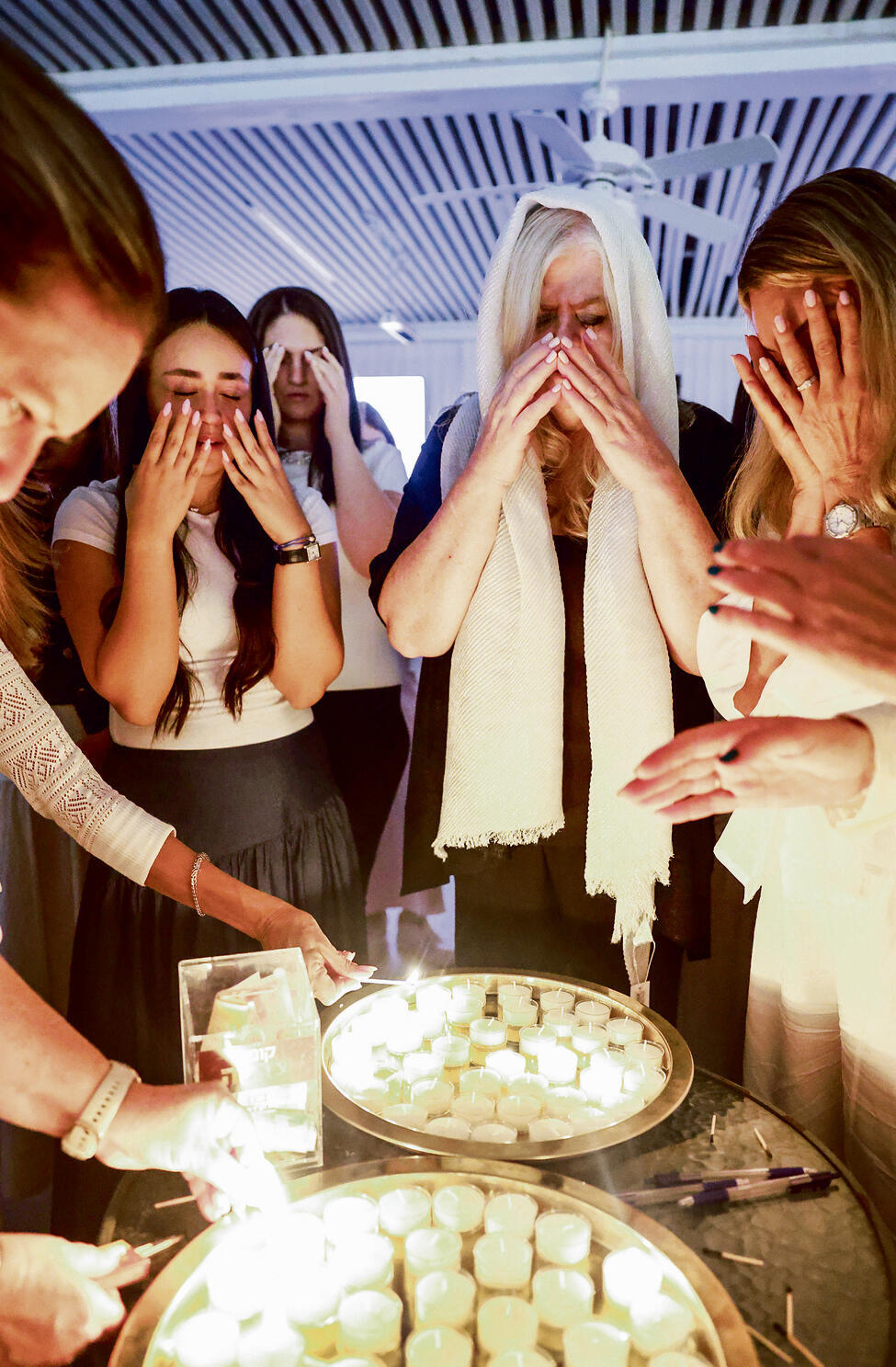
Challah separation ceremony in Savyon
(Photo: Dana Kopel)
Rebbetzin Kanievsky revived the commandment within the ultra-Orthodox community.
According to estimates, about 40% to 50% of young ultra-Orthodox women who bake challahs at home perform the commandment at least twice a month.
How did the practice spread into the broader Israeli public?
According to Prof. Tamar El-Or, an anthropologist at the Hebrew University of Jerusalem, “Challah separation is now accepted as a kind of ‘spiritual entertainment.’”
El-Or first encountered challah separation as a public event in the early 2000s while conducting fieldwork in Pardes Katz.
“The pioneer was Anat Ben Ari,” she recalls.
Ben Ari, who worked in high tech for 11 years before becoming religious, is considered one of the founders and leaders of mass challah separation evenings in Israel and abroad and is now in demand among celebrities.
“That was when they began branding the event as one where you perform a commandment while also having fun, experiencing joy, entertainment and spiritual uplift,” El-Or says.
“I used to tell people about it and they had no idea what I was talking about.
“Secular women are moved by reading a verse that their grandmother and great-grandmother read, and they don’t realize that the grandmothers of all those women who now go to challah separation ceremonies as something fun did not actually do it this way.
“I hear mothers around me say, ‘I can’t believe my daughter is doing challah separation,’ and a week later they come back and say, ‘It was lovely and beautiful.’”
Why do secular Israelis need it?
“Because in the secular world we created a ritual vacuum.
“Apart from communal singing and folk dancing, Zionism did not create rituals. It fought against them.
“We don’t have a synagogue to pray in, we don’t have a place to gather. It’s something we pushed aside.
“And there is also ignorance that makes it possible to introduce things into challah separation ceremonies that are far removed from the original practice.”
The influence of celebrities and social media cannot be ignored.
One of the first major bursts of exposure came after Bar Refaeli posted about a challah separation evening at her home in 2015.
Facebook groups such as Mamazon and Mothers Cooking Together accelerated the phenomenon.
There is no precise registry of how many women lead challah separation events in Israel, but estimates put the number in the hundreds.
At the top of the pyramid are sought-after “stars,” some of whom are extremely difficult to book, such as Ronit Barash, who moved from public relations and event production into mass challah separation and religious inspiration evenings, Rebbetzin Hagit Shira and reality television personality Jackie Azoulay, who became sought-after after leading a challah separation evening at the Refaeli family home.
Most charge thousands of shekels to lead an evening.
Alongside them are former event producers, many of whom became religious, as well as rebbetzins and women who conduct the events for free.
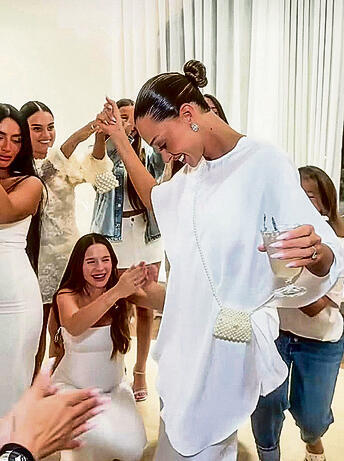
Eden Fines at the lavish ceremony before her wedding
(Photo: Eden Fines’ Instagram)
Celebrities and influencers who continue posting their experiences from challah separation events on Instagram remain a catalyst for the phenomenon, alongside emotional videos and photographs.
That was evident when Eden Fines held an elaborate ceremony before her wedding. Noa Kirel, Kim Or Azulay, Sapir Kashti and others have done the same.
Kashti posted photos on Instagram from a challah separation evening with friends several months after suffering a miscarriage.
In the post, she said the rebbetzin, who did not know what she had been through, asked that the yeast be given to “someone who wants the fruit of the womb,” and it ended up with her.
“To be honest, I don’t think I was this emotional even at my own challah separation as a bride,” she wrote. “It was the most powerful evening in the world.”