

If the current global energy crisis can be distilled into a single figure, it is the staggering gap between the nearly 20 million barrels per day that flowed under normal conditions and the volume the Middle East is now able to move through alternative routes, barely 40 percent of that total.
Under normal circumstances, the Strait of Hormuz is far more than a shipping lane. It is the main artery of the global economy. About one-fifth of the world’s oil consumption and a quarter of global maritime energy trade pass through it. It is the most critical bottleneck on the planet. When it is blocked or threatened, the result is not only higher prices but a shift in the global order.
Now, more than a month into a military campaign that has disrupted the regional balance, the question facing the global economic community is not whether workarounds exist, but whether they can replace the original route. The emerging answer is clear: there is no substitute for Hormuz.
Improvisation under pressure
Amid the current chaos, there is some positive news. Gulf states have not stood still. In recent weeks, they have demonstrated a level of improvisation and operational boldness rarely seen in the region.
Saudi Arabia has redirected oil exports through Red Sea terminals. The United Arab Emirates has relied heavily on the port of Fujairah, located outside the strait. Iraq has revived complex emergency routes through Turkey and Syria.
On paper, Saudi Arabia and the UAE together have a theoretical bypass capacity of between 2.6 million and 5.5 million barrels per day through pipelines that avoid Hormuz. Even under the most optimistic scenarios, however, this remains a partial and limited solution. It may slow the economic bleeding, but it cannot replicate the scale of flows that passed through Hormuz in normal times.
The scale of the collapse
To understand the depth of the disruption, it is necessary to look beyond theoretical capacity and examine actual export data from the first month of the war.
Figures published in Arab economic media at the end of last week paint a bleak picture. Seaborne crude exports from Gulf states, excluding Iran, fell in March to just 8.44 million barrels per day. This represents a 49 percent drop compared to February, when exports stood at 16.58 million barrels per day.
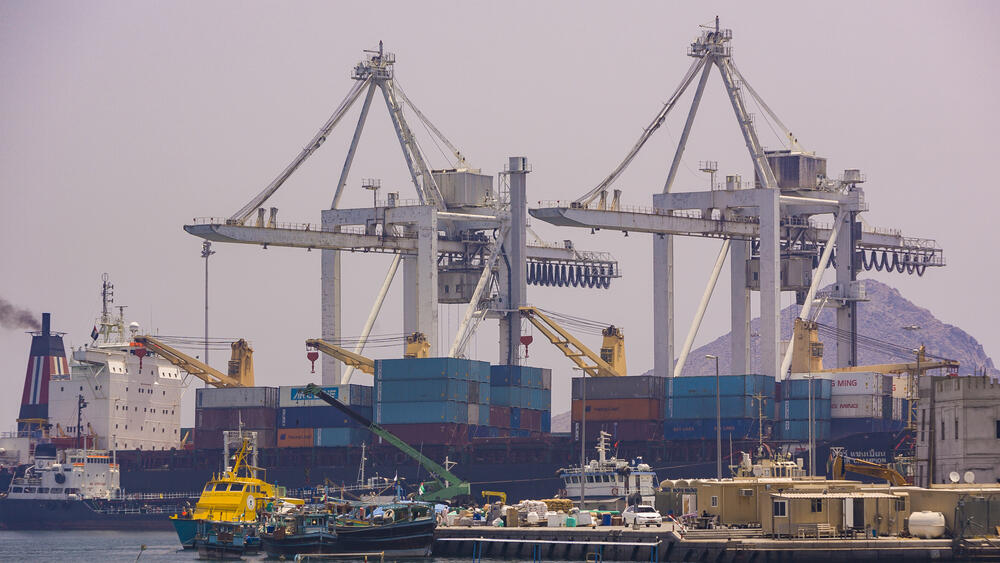
Fujairah port before it was hit
(Photo: Shutterstock)
A country-by-country breakdown highlights the scale of the damage. Saudi Arabia’s exports fell to 4.388 million barrels per day, the UAE to 2.132 million, while Iraq, the hardest hit, dropped to just 561,000 barrels per day.
Kuwait and Qatar have almost disappeared from the export map, with 280,000 and 135,000 barrels per day respectively. The only exception is Oman, which increased exports to 940,000 barrels per day due to its strategic location on the Arabian Sea, outside the strait’s choke point.
This is the critical figure: even after a month of full mobilization, the region is barely able to supply half of its normal output.
A costly patch, not a solution
This gap explains why the current network of workarounds is not a strategic solution but an expensive and temporary fix.
Saudi Arabia and the UAE can mitigate some of the damage thanks to long-standing pipeline infrastructure, such as the Saudi Petroline crossing the kingdom. But they cannot compensate for the losses of their neighbors.
Iraq’s situation is the clearest example of logistical strain. The oil ministry in Baghdad has resorted to exporting fuel oil through Syria, while the state marketer SOMO has signed contracts to transport hundreds of thousands of tons of fuel by truck across the Saudi and Syrian deserts.
When a major oil producer like Iraq turns to road transport, it signals a breakdown in normal logistics, dependent on border crossings, fragile political agreements and security risks stretching across thousands of kilometers.
Global shipping adapts
At a broader level, major global shipping companies have already accepted that the old system will not return soon.
Industry giants such as France’s CMA CGM and Denmark’s Maersk have rapidly established new corridors through Jeddah and other ports. The model is simple but cumbersome: containers are unloaded at Red Sea or Arabian Sea ports, such as Jeddah, Sohar, Salalah or Fujairah, and then transported by truck or feeder vessels to destinations within the Gulf, including Kuwait, Qatar and Bahrain.
This shift to port-road-port logistics reflects both resilience and limitation. While such solutions may work for food, medicine and spare parts, they are inadequate for the continuous transport of tens of millions of tons of crude oil and liquefied natural gas.
The rising cost of disruption
The cost of these workarounds is not only operational but economic.
Every barrel that does not pass through Hormuz carries a significant crisis premium. Costs vary widely depending on the route, whether via Saudi pipelines or truck convoys through Iraq and Syria, but the trend is clear.
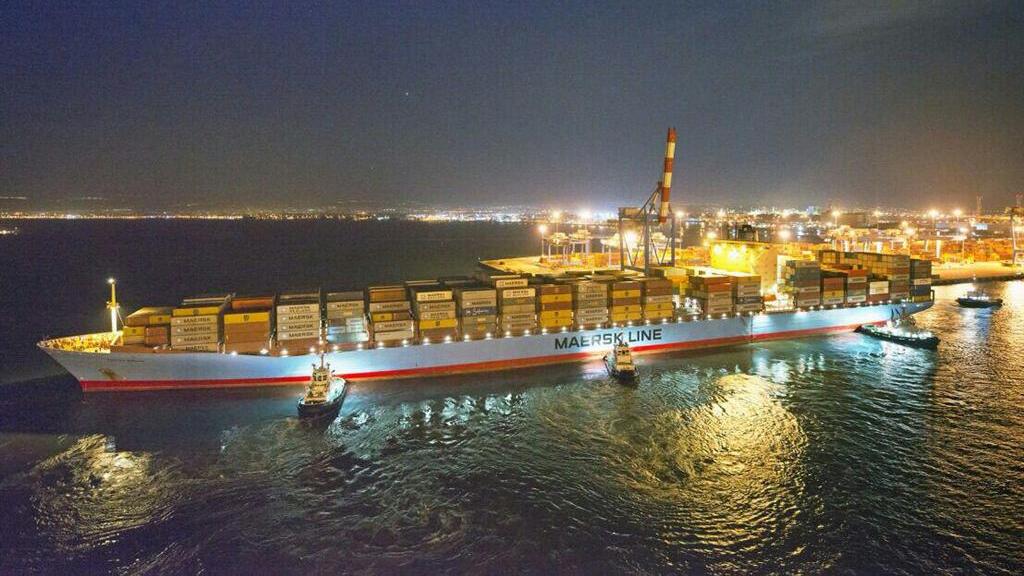
Maersk, the shipping giant, established the Jeddah corridor
(Photo: Port of Haifa)
S&P has already raised its 2026 oil price forecast by an average of $15 per barrel, reflecting expectations of prolonged disruption. Shipping, fuel and insurance costs have surged. The United Nations Conference on Trade and Development reported that war risk insurance premiums in the Middle East have doubled or even tripled.
For a vessel valued at $100 million, this can add up to $1 million per voyage. In short, the Gulf’s workaround network is not only smaller than Hormuz, it is far more expensive.
Structural limits
There are also structural reasons why alternatives remain limited.
Hormuz benefits from unmatched economies of scale. It allows the efficient, continuous flow of crude oil, refined products, liquefied petroleum gas and liquefied natural gas along a single route.
Saudi and Emirati pipelines are designed primarily for crude oil. They cannot replace the complex export chains for refined products, nor can they substitute for Qatari LNG exports, which are critical to energy security in Europe and Asia.
As a result, while Saudi Arabia can partially bypass the strait, countries such as Kuwait and Qatar remain highly exposed, with no significant overland alternatives for energy exports.
Emergency reserves and global response
To prevent a full market collapse, global emergency reserves have been activated.
The decision by 32 member states of the International Energy Agency to release 400 million barrels from strategic reserves marks the largest such move in the organization’s history. The aim is to buy time and reduce panic in the markets.
However, this is only a temporary measure. Strategic reserves are meant to cushion shocks, not replace a steady supply.
While 400 million barrels sounds substantial, against a daily shortfall of millions of barrels it represents only a few months of relief if Hormuz remains blocked. Refineries face increasing pressure, and the global system is being forced to adapt to a more fragile, costly and complex logistics network.
The emerging conclusion is a clear lesson in the geopolitics of energy.
The Gulf has demonstrated remarkable improvisation. It has deployed land corridors, pushed pipeline capacity to its limits and revived old transport routes. Yet this extraordinary effort only underscores a harsh reality: Hormuz is irreplaceable.
When it is open, the world benefits from efficiency and abundance that no alternative network can match. When it is disrupted, the system can adapt, but at a cost paid in three ways simultaneously: reduced volume, higher prices and ongoing logistical vulnerability.
The Gulf has not found a substitute for Hormuz. It has found only a way to slow the pace of collapse.
After five weeks of conflict, the world is still relying on expensive stopgap measures, while its main artery remains blocked. The figure of 8.44 million barrels per day, the level of exports in March, stands as clear evidence that the market remains far from stability.