

Moody’s Investors Service announced late Monday that it has affirmed Israel’s long-term credit rating at Baa1 with a negative outlook, holding steady despite an ongoing war in Gaza and a recent military confrontation with Iran. While the agency pointed to Israel’s continued economic resilience, it also warned that renewed conflict and rising defense spending could deepen fiscal strain and lead to further downgrades.
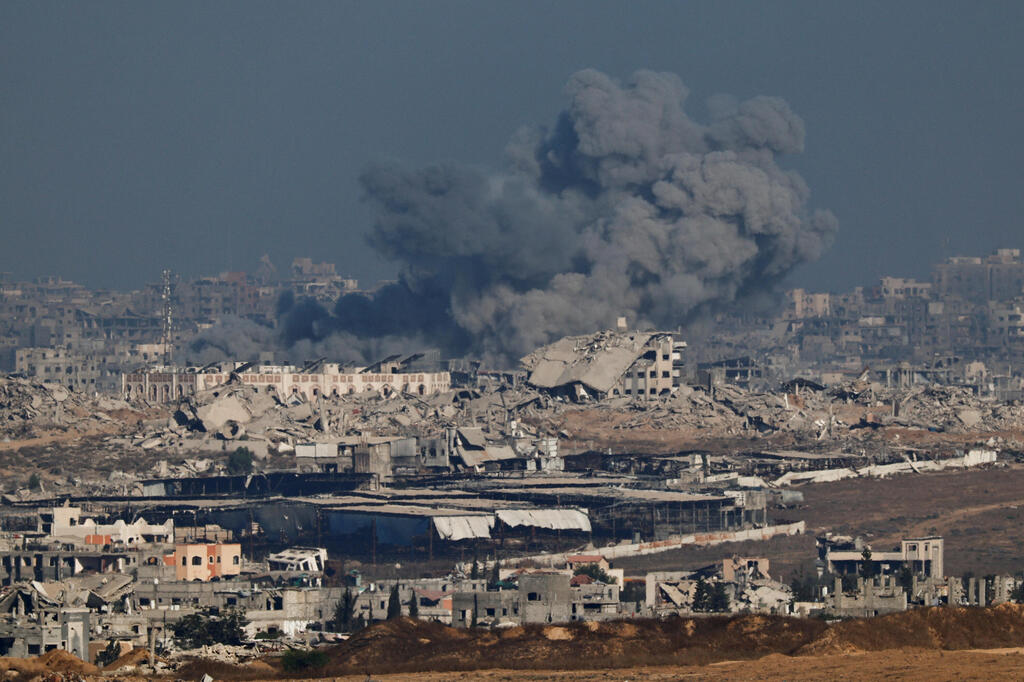
The affirmation comes just weeks after a 12-day flare-up between Israel and Iran and as Israel's campaign against Hamas in Gaza nears its tenth month. Despite the prolonged security crisis, Moody’s said Israel’s economy demonstrated "impressive resilience," recovering strongly in late 2024 and maintaining growth into 2025. According to the agency, the rebound was driven by strong private consumption and sustained investment in the country’s dynamic high-tech sector.

Investments in cyber and artificial intelligence industries reached approximately $2.2 billion in the first quarter of 2025—roughly 0.4% of GDP—exceeding the quarterly average in 2023 and matching 2024 levels. Moody’s forecasts economic growth of about 2% this year, as weaker consumer confidence, a sluggish tourism sector and labor shortages weigh on performance. However, it projects a more robust 4.5% expansion in 2026, fueled by reconstruction, increased defense spending and household demand.
Nonetheless, the agency warned that Israel’s fiscal position is under mounting pressure. It now expects the country’s debt-to-GDP ratio to rise to around 75% in the medium term, up from earlier projections, largely due to elevated defense expenditures and slower-than-expected growth. The government deficit is projected to reach 8% of GDP in 2025, driven in part by the costs associated with the military confrontation with Iran.
“The ceasefire between Israel and Iran remains fragile,” Moody’s wrote in its statement. “Renewed conflict would also threaten Israel’s economic strength through potential material damage to infrastructure and the weakening of security conditions that could weigh on investment and overall economic activity.”
At the same time, Moody’s noted the “unprecedented” level of U.S. military assistance during the April confrontation with Iran. The agency said this reflects “explicit American military and political backing,” which it expects to remain a critical pillar of Israel’s external support in the foreseeable future.
The agency had originally planned to release this report in September but delayed publication due to evolving conditions on the ground. The decision to publish now appears to reflect a relative pause in the escalation with Iran and indications that the war in Gaza may be nearing a turning point.
(Photo: Reuters)
Moody’s has downgraded Israel’s rating three times since the war with Hamas began in October 2023. In February 2024, the agency lowered the rating from A1 to A2 and assigned a negative outlook. In September 2024, it downgraded Israel by two additional notches to Baa1, the lowest investment-grade rating it has ever assigned to the country. At the time, Moody’s cited a significant rise in geopolitical risk and concerns about deteriorating institutional effectiveness, noting that Israeli authorities had failed to take adequate steps to mitigate the impact of prolonged conflict on the country’s creditworthiness.
Get the Ynetnews app on your smartphone: Google Play: https://bit.ly/4eJ37pE | Apple App Store: https://bit.ly/3ZL7iNv
While Baa1 remains an investment-grade rating, the negative outlook signals a meaningful risk of further downgrades if Israel’s security or fiscal conditions deteriorate. A lower credit rating could raise the government’s borrowing costs, limiting its ability to fund critical services such as defense, infrastructure, healthcare and education. Those higher costs could eventually trickle down to the public in the form of steeper loan interest rates and heavier tax burdens.
Moody’s said the trajectory of Israel’s rating will depend heavily on how the security situation evolves and whether fiscal discipline is restored. Without stabilization, the agency warned, Israel could face long-term damage to its economic strength and credit standing.