

Israeli agricultural technology startup BloomX has raised $13 million to expand the use of robotic systems that pollinate fruit crops alongside bees, as growers look for ways to reduce their dependence on increasingly unpredictable natural pollination.
The Series A round was led by Elah Fund, with participation from Rothschild Fund, Sadot Innovation, Tene Fund, OurCrowd, BioBee, several Israeli agricultural cooperatives, private investors and the Israel Innovation Authority. The latest investment brings BloomX's total funding since its establishment in 2019 to $20 million.
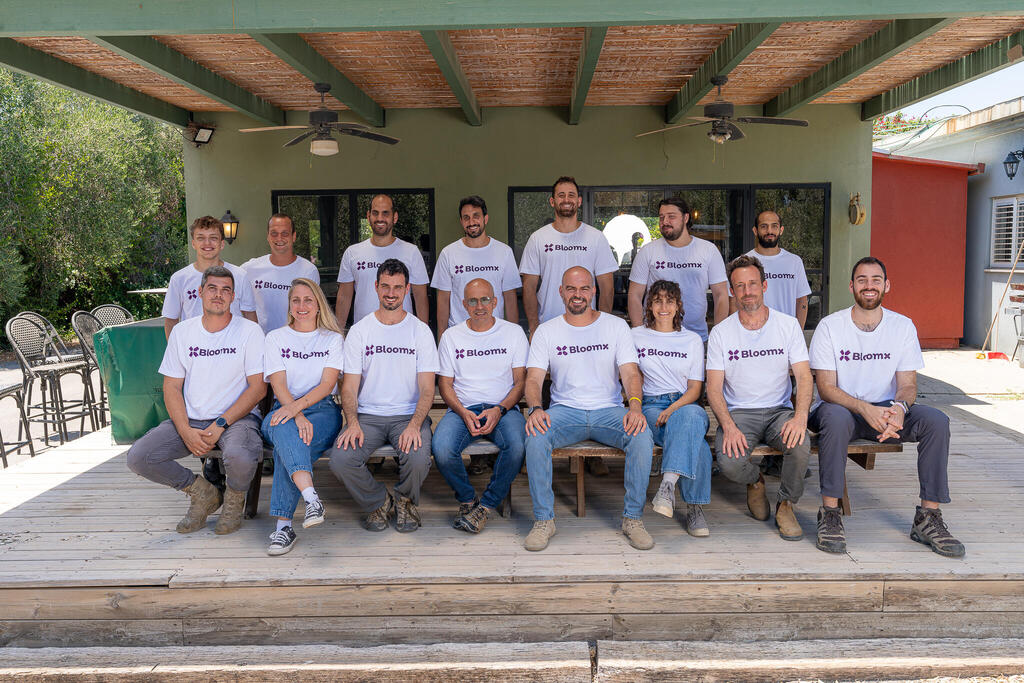
BloomX
(Photo: Tzach Gefen)
Based in Rishpon, the company has developed two commercial pollination systems, one designed for blueberry farms and the other for avocado orchards. Both use robotics to reproduce aspects of how insects transfer pollen between flowers, with artificial intelligence algorithms helping growers manage the process. The technology is intended to supplement bees rather than replace them.
The company's Robee system uses controlled vibrations to pollinate blueberry flowers, imitating the technique used by bumblebees. The vibrations cause flowers to release pollen, which can then reach the part of the flower needed for fertilization.
Its second system, Yahav 2400, was launched commercially this year for avocado orchards. It uses high-voltage electrodes to create an electric field that attracts and collects pollen from male flowers. The pollen is gathered on a special fabric designed to mimic the surface of a bee's body, then transferred to female flowers.
BloomX says growers using its equipment have recorded average yield increases of approximately 20%, alongside improvements in fruit size and quality. Customers include agricultural businesses in Peru, South Africa and Israel, among them ACP, Fruitist, Allesbeste and the Granot Group. The figures are company-reported results, and no independent assessment of the claimed yield improvements was provided in the announcement.
The company also claims its systems have delivered returns of up to 10.5 times the cost of using them, although that figure represents its highest reported return rather than an average across farms. According to BloomX, a single operator can cover up to 3.5 hectares, or about 9 acres, per day. The equipment can also operate in weather conditions that prevent bees from pollinating effectively.
Pollination has become a growing concern for commercial agriculture as changing weather patterns affect flowering seasons and insect activity. The expansion of crops that depend on insect pollination has added to demand, while natural pollinator populations face pressure from environmental changes. Honeybees are also less effective at pollinating certain crops than other insects, making them an imperfect solution for some large-scale farms.
BloomX offers its technology through a service-based model, allowing farmers to pay for pollination services without purchasing the equipment outright. The approach is aimed at making robotic pollination more accessible to commercial growers while giving the company recurring revenue from agricultural operations.
The new funding will support expansion in Peru, Mexico, South Africa and Israel, where BloomX already operates. The company also plans to enter the U.S. market, initially targeting almond and blueberry growers, and expand into additional Latin American countries and crops.
"Over the years, modern agriculture has learned to manage irrigation, fertilization and crop protection with remarkable precision. Pollination, a critical link in fruit production, has remained entirely at the mercy of nature," said Thai Sade, BloomX's co-founder and CEO.
Sade said the company's aim is to make pollination more predictable for farmers, particularly as climate conditions become less reliable. He stressed that the technology is designed to work alongside existing pollinators rather than eliminate the need for them.
Calanit Valfer, managing partner at Elah Fund, said the decision to invest was influenced by the company's work with commercial growers during product development. She said the technology had been developed in response to agricultural demand rather than introduced before a clear market need had been established.
BloomX was founded in 2019 by Sade, Chief Technology Officer Avi Keren and Vice President of Software Development Ido Senesh. It currently employs 19 people, including 15 in Israel. Its planned expansion into the United States will test whether the results reported by its existing customers can be reproduced across larger markets and different growing conditions.