

Most renewable energy projects will never be built. Despite hundreds of billions of dollars invested every year, a significant share of projects fail before reaching construction. At the same time, electricity demand is rising rapidly, driven by the expansion of artificial intelligence, data centers and the electrification of industry. The result is a growing gap between planned capacity and the electricity that actually reaches the grid.
In practice, the sector does not lack projects, but the ability to identify early on which ones will actually be built. The problem is not a shortage of projects, but a shortage of clarity on which projects are truly viable.
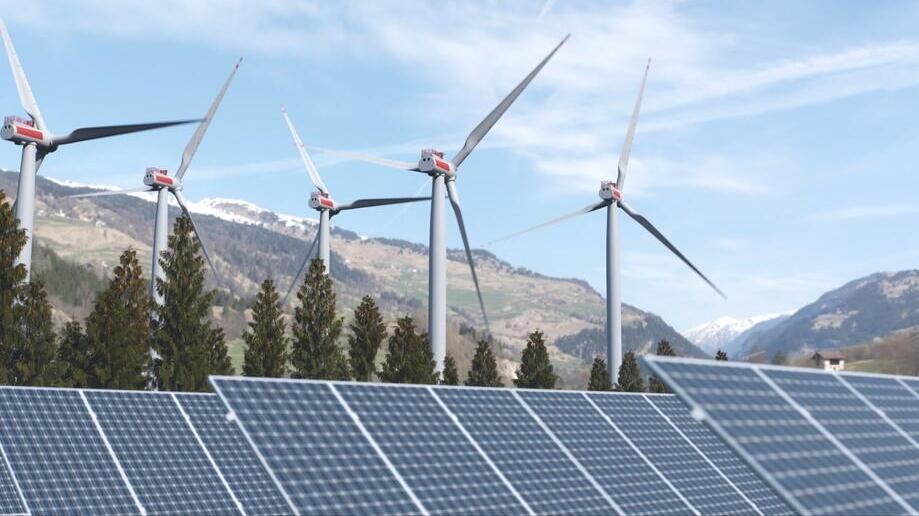
Renewable energy
(Photo: Aliaksei Kaponia/Shutterstock)
Counterintuitively, the challenge is not only generating electricity, but executing projects and turning investment into available power. The gap between planning and reality has become one of the main constraints on global energy infrastructure.
A capital allocation problem, not a technology problem
Over 600 billion dollars is invested annually in renewable energy projects. In the United States alone, more than 2,600 gigawatts of projects are waiting to be connected to the grid, more than twice the country’s existing generation capacity. On paper, this represents an enormous pipeline, yet only a fraction is realized.
This gap is not technological. It stems from how investment decisions are made under uncertainty. Energy companies and investors commit millions, and often tens of millions of dollars, without a clear early understanding of grid connection costs, timelines or infrastructure constraints.
In many cases, years of work and tens of millions of dollars are lost on projects that never get built.
Only at later stages does it become clear that projects fail to meet economic expectations. When critical information arrives too late, capital is misallocated to projects that will never be built, while more viable opportunities are missed.
The AI energy bottleneck
This issue is becoming more urgent as electricity demand continues to rise. Artificial intelligence is not only a technological revolution, but also a major driver of energy consumption. Data centers require continuous, large-scale power supply and often face constraints related to grid access and uncertain timelines.
In this reality, the bottleneck of the digital economy is not computing capacity, but access to reliable electricity. When power is not available where and when it is needed, even advanced technological projects cannot materialize.
The intuitive response is to develop more projects. However, when the bottleneck lies in execution, this approach can worsen the problem by increasing inefficiencies in decision-making. The challenge is not to create more projects, but to better identify which ones are truly viable.
A new value layer in energy
A new layer of value is emerging in the energy market, not in generation or storage, but in insight and decision making around project acquisition, investment and M&A. The sector is flooded with data, yet much of it is fragmented, unstructured and inaccessible in real time. As a result, acquisition and investment decisions remain slow and dependent on manual interpretation.
The distinction between viable projects and those that will remain on paper is often made too late. When this distinction can be made earlier, capital and time can be redirected toward projects with a higher likelihood of execution.
This is especially critical in project acquisition and M&A, where early-stage decisions determine long-term returns.
 Matias Sigal
 Improving this process increases the share of projects that reach construction. For investors, it means better selection and stronger returns. For energy companies, it enables faster development cycles and more efficient portfolios.
Ultimately, the energy market does not lack projects, but the ability to execute them. In the coming decade, competitive advantage will be defined not only by the ability to generate electricity, but by the ability to understand early which projects can actually be built and which will remain on paper.
As electricity demand continues to rise, wars and geopolitical disruptions have exposed how fragile the energy supply can be when infrastructure fails to keep up with demand. Delays in project execution are no longer just a business issue. They can become a real risk to economic stability.
- Matias Sigal is the founder and CEO of REplace, and an entrepreneur in the renewable energy sector.