

A young Chinese billionaire, Haoyu Wang, is in talks to acquire control of the Israeli irrigation company Netafim from Mexico’s Orbia. Calcalist has learned that Wang, the controlling shareholder of the private Chinese irrigation company DAYU, has teamed up with the HOPU investment fund to purchase Netafim at a valuation of $1.4 billion, at a time when Netafim carries $400 million in bank debt.
Wang is expected to finance the deal from his personal wealth, rather than through DAYU, and may later merge the two companies. For Israeli industry, the prospect of the world’s leading drip-irrigation pioneer passing into Chinese hands is nothing short of dramatic.
Gallery
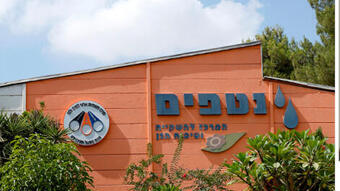
Israeli irrigation company Netafim has a valuation of $1.4 billion, while the Israeli company carries $400 million in bank debt
(Photo: Screenshot from the Israelagri website, עמית שעל)
According to Calcalist, Wang visited Israel in the past month, toured Netafim’s plants in Hatzerim and Magal, and met with the company’s management. His offer is significantly higher than the $1.1 billion valuation sought by Fortissimo, the Israeli private equity fund led by Yuval Cohen, which had previously pursued the acquisition. Even so, the proposed valuation remains below the price at which Orbia acquired control of Netafim in 2017—a deal that valued the company at $1.8 billion. Orbia has failed to significantly enhance Netafim’s value since then.
Wang, 35, was appointed CEO of DAYU a decade ago after his father died suddenly of a heart attack. The father founded DAYU and grew it to annual revenues of about $200 million; under the son’s leadership, revenues rose to roughly $700 million, making it China’s largest irrigation company. Wang, who was educated at Johns Hopkins University in the United States, also has extensive real estate holdings in the U.S. In 2019, Forbes named him to its list of China’s most promising young leaders.
That same year, Wang visited Israel with senior DAYU executives for a series of meetings, including at the Firon law firm. Industry sources, including at Netafim itself, say he is a strong supporter of Israel and views it as a technological pioneer in the field. “His father aspired to be a global leader in irrigation, and his goal now is to fulfill that wish by acquiring Netafim,” a source close to the company said.
During that visit, Wang announced the opening of a small Israeli representative office focused on R&D investment and identifying water-technology companies. In a speech at one of the ceremonies, he described how his father founded DAYU in 1999 in the arid Chinese province of Gansu: “Twenty years later, we want to expand our global operations and open new opportunities together with Israeli companies. I am aware of the cultural gaps and obstacles along the way, but through technology we will bridge them.” During the visit, DAYU also signed a cooperation agreement with Metzerplas of Kibbutz Metzer.

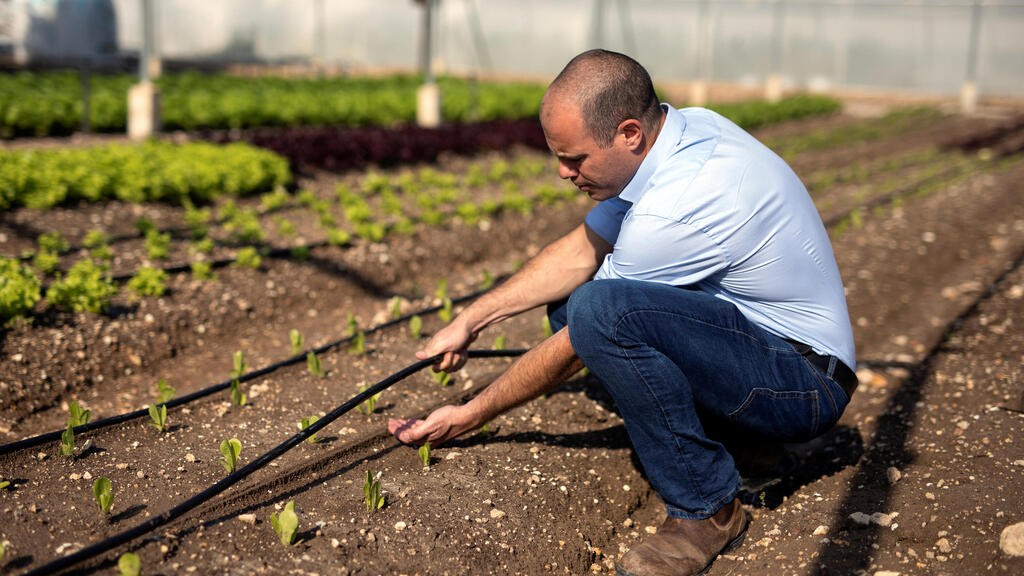
Chinese billionaire Haoyu Wang
(Photo: Amit Shaal )
In October, Calcalist revealed that Orbia had hired Evercore to seek a buyer for Netafim at an enterprise value of about $1.2 billion—meaning $800 million in cash with the buyer assuming $400 million in debt. At the time, Fortissimo was the sole interested party. Orbia, a publicly traded company carrying heavy debt, kept a low profile. Fortissimo, which needed to raise funds from institutional investors, failed to seize the opportunity and close a deal during Cohen’s visit to New York, where he met Orbia’s owners. The fund requested additional weeks for due diligence and attempted to negotiate a lower price, and the process was halted as Chinese buyers entered the picture.
Since then, Orbia has successfully refinanced its substantial debt—$8.6 billion in total, including $2.6 billion in short-term liabilities—improving its financial position and enabling it to take a tougher stance toward potential buyers. It is now likely that Orbia will retain a 10%–20% stake in Netafim rather than sell its entire holding. In that scenario, the upfront consideration would be lower and accompanied by a future option to acquire the remaining shares. Netafim improved its financial performance in 2025, posting EBITDA (earnings before interest, taxes, depreciation and amortization) of $135 million, compared with a forecast of $125 million.
Kibbutz Hatzerim holds 20% of Netafim. While the kibbutz has not concealed its preference for an Israeli buyer, negotiations with Fortissimo collapsed. Under the partnership agreement with Orbia, Hatzerim can block a new partner only if it comes from a hostile country lacking diplomatic relations with Israel—a condition that does not apply to China.
Netafim's irrigation system for growing rice
(Photo: Reuters)
At present, the main obstacle, and perhaps the only one, appears to be the U.S. regulator. Netafim generates about $250 million in annual sales in the United States—roughly a quarter of its total revenue—and legal reviews are underway to determine whether a sale to Chinese buyers would require U.S. government approval, and if so, what the chances are of securing it. This issue has raised the question of whether DAYU would bear the consequences of a failure to obtain such approval and compensate Orbia for potentially missing out on other transactions while awaiting clearance.
DAYU specializes in water-efficient irrigation technologies, urban and rural water-resource management, and wastewater treatment. The company is listed on the Shenzhen Stock Exchange at a market value of about $750 million. In 2024, it reported revenues of $631 million and net profit of $11.7 million. In the 12 months ending September 2025, revenues totaled $657 million, with net profit of $9 million.
Alongside Wang stands HOPU, a Beijing-, Hong Kong-, and Singapore-based fund managing $15 billion. Beyond providing financial backing, one of its roles may be to improve the chances of securing U.S. regulatory approval, given its global profile and diverse investor base.
In 2017, Orbia paid about $1.5 billion for control of Netafim: roughly $241 million was paid to Kibbutzim Hatzerim and Magal for part of their holdings, with the remainder paid to the Permira fund, which had acquired control of Netafim from the Tene fund in 2011 at a valuation of about $850 million.