

Robert Kraft is not simply another billionaire who owns a major professional sports franchise. Over decades, the New England Patriots owner has built a network that stretches across American sports, business, philanthropy and politics, giving him influence well beyond the football field.
At 85, Kraft is worth an estimated $15.2 billion, according to Forbes. His Patriots, bought for $172 million in 1994, are now valued at $10.6 billion, making them one of the most valuable franchises in American sports.
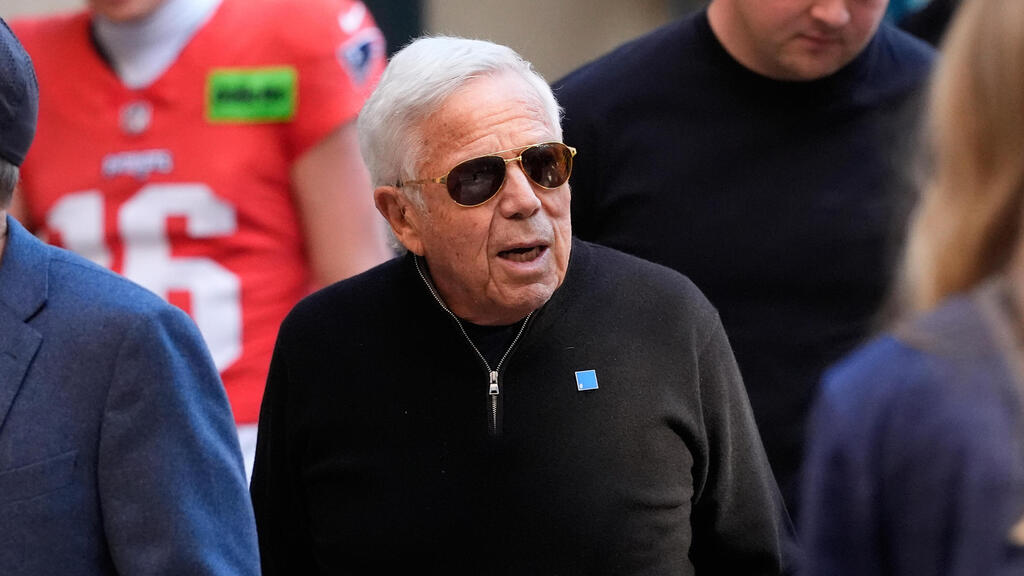
In recent years, Kraft has increasingly directed that influence toward combating antisemitism and supporting Israel. The reach of that effort became particularly visible during the controversy surrounding rapper Macklemore’s removal from Ed Sheeran’s U.S. stadium tour.
Kraft, who owns Gillette Stadium, objected to Macklemore performing at the venue following the rapper’s pro-Palestinian remarks and what Kraft described as a history of antisemitic rhetoric. The dispute ultimately extended beyond Gillette, with other stadium operators also raising objections and Macklemore being dropped from the tour.
The episode offered a glimpse of the unusual position Kraft has built for himself: a sports owner whose decisions can reverberate through the entertainment industry and whose ties reach into some of the most powerful circles in the United States.
His relationship with President Donald Trump has itself gone through periods of closeness and estrangement, but Kraft remains one of the most politically connected owners in American professional sports.
The fan who engineered his way to ownership
Kraft was born in Brookline, Massachusetts, into an observant Jewish family. His father, Harry Kraft, was a clothing manufacturer and local Jewish community leader who hoped his son might become a rabbi. Kraft chose a different route, earning his undergraduate degree at Columbia University and an MBA from Harvard Business School.
After graduating, he joined the packaging company owned by his father-in-law. In 1968, he acquired half the business through a leveraged buyout and later took full control. In 1972, he founded International Forest Products, betting that improvements in transportation and global communications would drive a surge in international trade.
That business eventually became one of the foundations of the Kraft Group, whose interests now span paper and packaging, sports, entertainment, real estate and private investment.
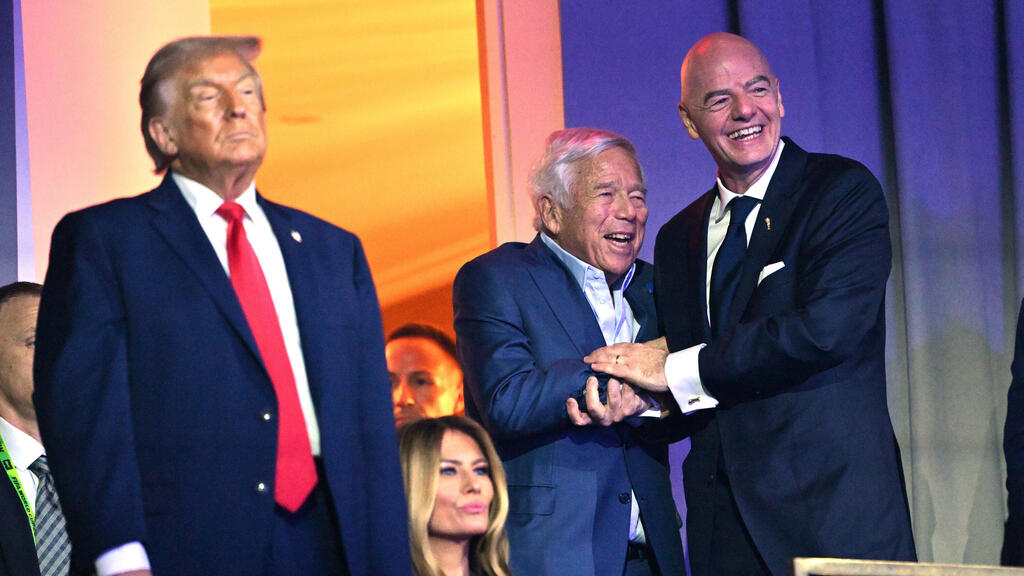
Kraft with Trump and FIFA President Gianni Infantino at the World Cup draw
(Photo: Mandel Ngan/POOL/AFP)
But football was already the obsession.
Kraft became a Patriots season-ticket holder in 1971, long before he could afford the team. His eventual acquisition of the franchise was not a straightforward purchase but a carefully assembled series of moves that gradually gave him control over the Patriots’ physical home.
In 1985, he acquired an option on land surrounding the old stadium in Foxborough. Three years later, he bought the stadium itself out of bankruptcy for about $25 million. Crucially, the deal came with a binding lease that required the Patriots to keep playing there through 2001.
That lease became Kraft’s leverage when then-owner James Orthwein sought to move the franchise to St. Louis. Kraft refused to release the team from its obligations and instead bought the Patriots in 1994 for $172 million, then a record price for a U.S. professional sports franchise.
More than three decades later, the Patriots are valued at $10.6 billion.
Israel becomes part of the empire
Kraft’s connection to Israel extends far beyond public statements.
The Kraft Group has invested heavily in facilities and programs aimed at developing American football in Israel. One of the most visible projects is the Kraft Family Sports Campus in Jerusalem, opened in 2017 and home to Israel’s first regulation-size American football field.
The family has also backed Israel’s technology sector. Kraft has supported MassChallenge and MassChallenge Israel since 2014, contributing more than $1.2 million to the startup accelerator program.
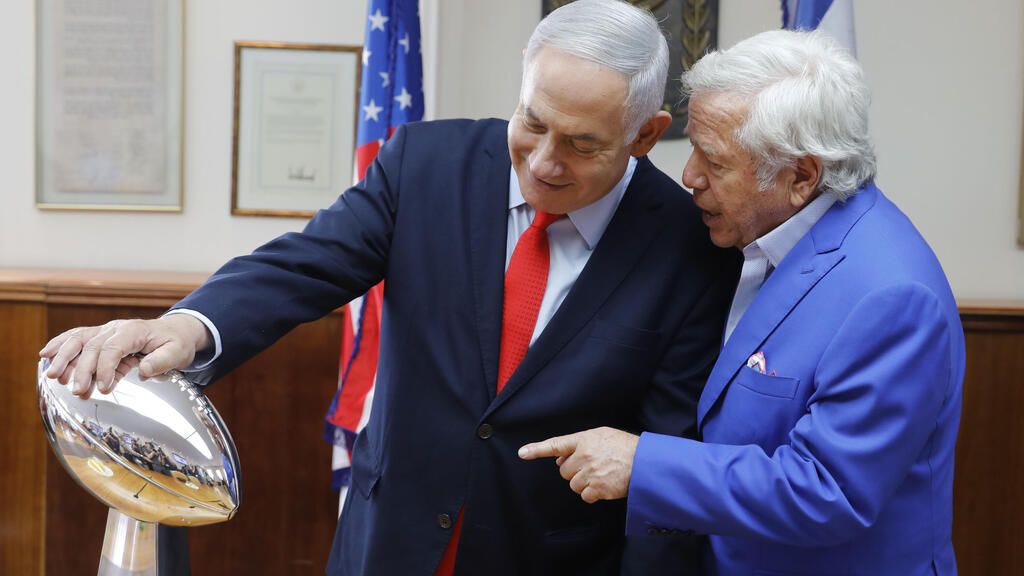
Kraft and Netanyahu in 2019
(Photo: Sebastian Scheiner/AP)
Those projects sit alongside Kraft’s broader Jewish and Israel-focused philanthropy and his increasingly prominent campaign against antisemitism.
The Macklemore confrontation brought those strands together: the owner of an NFL franchise and major stadium using his position in sports and entertainment to act on an issue he considers inseparable from the safety of the Jewish community.
Macklemore, for his part, has accused Kraft and other stadium owners of using allegations of antisemitism to suppress criticism of Israel.
An empire beyond the Patriots
The Patriots remain the centerpiece of Kraft’s fortune, but they are only part of his sports holdings.
Kraft was one of the principal investors behind the creation of Major League Soccer and founded the New England Revolution as one of the league’s original teams in 1995. The club is now valued at about $540 million, according to Forbes.
He also owns Gillette Stadium, home to both the Patriots and Revolution, and the surrounding Patriot Place retail and entertainment development.
The stadium has hosted major international events, including World Cup matches, and also serves as a major concert venue, making it an asset whose influence extends well beyond football.
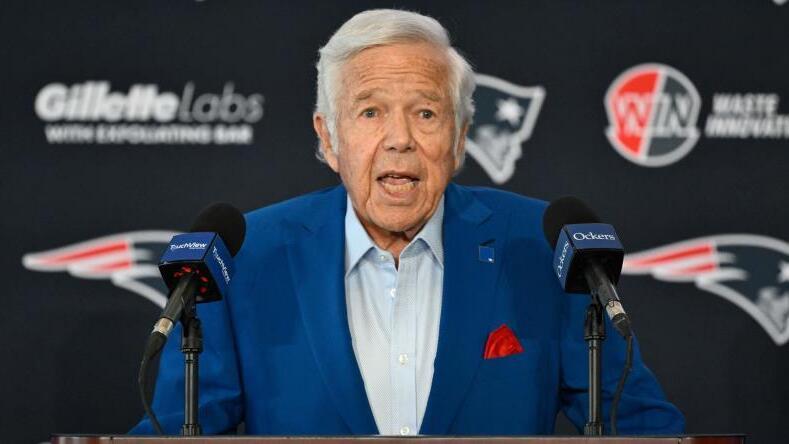
(Photo: Reuters)
That is precisely what made the Macklemore dispute significant. Kraft’s control over one of the country’s most important stadiums gave him leverage in an entirely different industry.
Kraft’s holdings still include the paper and packaging businesses from which his fortune began, as well as a broad portfolio of commercial real estate, hotels, residential properties and private investments worth more than $1 billion.
Despite the shared name, Robert Kraft and the Kraft Group have no connection to food giant Kraft Foods.
Family, controversy and a second marriage
Kraft married Myra Hiatt, daughter of businessman Jacob Hiatt, in 1963. They had four sons, including Jonathan Kraft, who is now president of the Kraft Group. Myra Kraft died of cancer in 2011.
In 2019, Kraft was charged in Florida with two misdemeanor counts of soliciting prostitution after police secretly recorded him inside a massage parlor in Jupiter. Kraft pleaded not guilty.
The case collapsed the following year after an appeals court ruled that police had violated privacy rights when they installed hidden cameras inside massage rooms. Prosecutors later dropped the charges because the recordings could not be used as evidence.
In 2022, at 81, Kraft married ophthalmologist Dr. Dana Blumberg in New York. The wedding featured performances by Elton John, Jon Bon Jovi and Ed Sheeran.
Kraft’s career has been defined by an ability to turn ownership of one asset into leverage over another, from controlling the land and stadium that ultimately helped him acquire the Patriots to building a sports and business empire worth billions.
The Macklemore dispute showed how far that leverage now extends. What began with a paper business and a football fan’s determination to own his favorite team has produced a platform capable of reaching into professional sports, entertainment, American public life and the debate over Israel itself.