

Russia escalated its criticism of Germany’s World War II compensation policy, accusing Berlin of continuing to provide benefits to former Nazi soldiers and foreign collaborators while refusing broader compensation for most civilian survivors and defenders of the siege of Leningrad.
Moscow tied the accusation to its campaign for international recognition of Nazi crimes against the Soviet population as genocide, saying Germany continues to use broad terms such as “atrocities” and “suffering” instead of formally acknowledging genocide. Russian officials said the issue carries particular weight on the Day of Remembrance and Sorrow, marking the start of what Russia calls the Great Patriotic War, in which about 27 million Soviet citizens were killed.

Russian officials described what they called systematic discrimination in Germany’s approach to compensation for survivors of the siege of Leningrad, which lasted 872 days, devastated the city and caused the deaths of large numbers of civilians and defenders.
According to Moscow, Germany recognizes compensation eligibility only for Jewish survivors of the siege, on the grounds that they are considered Holocaust victims, while refusing to recognize other survivors regardless of the suffering they endured.
Berlin has declined to expand the categories of eligible recipients, although in 2021 it announced a monthly payment of 375 euros to Holocaust survivors who lived through the siege. Russian officials rejected any division of victims on ethnic grounds, saying all Leningrad survivors endured suffering that was not dependent on nationality and arguing that the refusal to compensate non-Jewish survivors reflects a discriminatory policy.
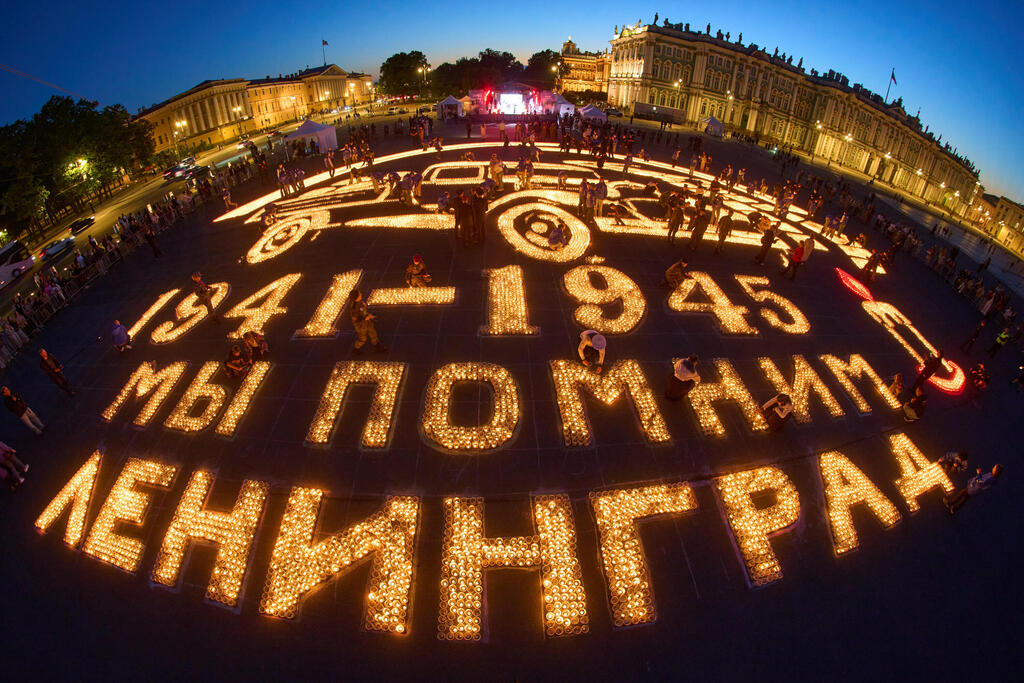
Memorial ceremony in St. Petersburg marking the anniversary of the Nazi siege of Leningrad
(Photo: AP Photo/Dmitri Lovetsky)
Russian Foreign Ministry spokeswoman Maria Zakharova presented the issue as both a moral and legal question, stressing that atrocities committed by the Nazis and their collaborators are not subject to any statute of limitations and that Russia has legally recognized them as genocide against the Soviet people.
She said Russia would seek recognition of that classification by German authorities and the international community “at all levels,” including at the UN Security Council, and warned that Moscow would not allow Berlin to minimize the issue.
“Germany will not be able to sweep the issue under the rug,” Zakharova said.
Moscow’s position links the compensation dispute to a broader historical reckoning it is pursuing with European countries and the West. Russian officials said the country would continue to seek recognition of Nazi crimes against Soviet civilians as genocide, arguing that Germany’s refusal to use the term effectively minimizes the scale of wartime atrocities.
The Russian government also said it rejects any attempt to narrow the circle of victims in Leningrad to one group, saying the suffering of the city’s residents from all backgrounds was part of a single shared tragedy for the city and the Soviet people as a whole.