


The founding generation built the business, but what happens when control passes to the next generation — and later to the grandchildren?
Behind every billionaire and millionaire in Israel stands a family. Some belong to the generation that helped build the state and, as they grow older, are passing the baton to the second and third generations — their children and grandchildren. Naturally, the number of people with control over the business grows, creating no shortage of internal family disputes that have turned into battlegrounds and led to the loss of fortunes or the breakup of families. Among the causes are conflicting interests among those who control the company and poorly managed succession.
Gallery

Struggling over the inheritance; 90% lose the family fortune by the third generation
(AI-generated illustration)
One study on the subject, conducted by the Williams Group, followed 3,200 wealthy families over 20 years and found that 70% had lost their wealth by the second generation and 90% by the third. The researchers concluded that “the problems did not stem from failures in taxation, governance or preservation, but from the collapse of trust and communication within the family unit and from heirs who had not been prepared for financial responsibility.”
“Inherited wealth is a real handicap to happiness,” said William K. Vanderbilt, grandson of the man who was once the richest person in the world. The Vanderbilt family, which built a railroad empire worth $100 million in 1877 — the equivalent of billions today — lost its entire fortune in less than a century. At a 1973 family reunion attended by 120 descendants from the third generation onward, not a single millionaire remained.
Awareness of the importance of properly transferring wealth between generations exists worldwide. In Scotland, for example, there is a saying: “The father buys, the son builds, the grandson sells and his son begs.” Like similar expressions, it points to the same basic pattern: The first generation builds wealth from nothing through hard work and saving. The second generation, having witnessed its parents’ efforts, still understands the value of money and usually preserves or even increases it. But the third generation, raised in abundance and detached from the origins of the wealth, tends to squander the inheritance.
That is why a growing number of management and financial experts recommend planning an orderly retirement process for the founder and carrying out the transfer during the owner’s lifetime as part of a structured family wealth plan. The goal is to transfer property, assets, rights, businesses and other interests to descendants in a thoughtful and efficient manner, fulfilling the owner’s objectives legally while minimizing taxes and other costs and, ideally, preventing legal disputes and family conflict.
Wealthy parents kept their finances secret from their children
Studies examining the causes of lost wealth have found that families invest enormous resources in tax planning and asset transfers but neglect to prepare their heirs to manage the fortune. Part of the problem stems from a lack of communication and reluctance to discuss wealth. Many wealthy people admit that they disclosed little or nothing about their finances to their children, who then reach the inheritance stage unprepared, without knowledge, values or a sense of responsibility.
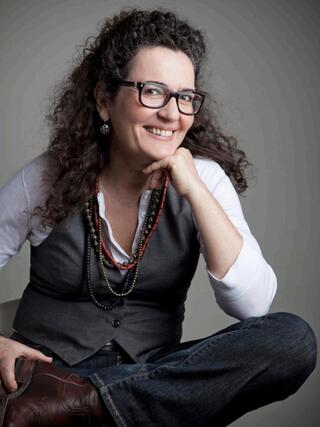 Dr. Nava Michael-Tsabari Photo: Shiran Carmel
“There is no doubt that the retirement and planning process must be carefully structured, and that takes time. But in my view, it is a mistake to speak of an ‘intergenerational transfer’ as though it were a single point in time,” said Dr. Nava Michael-Tsabari of Tel Aviv University’s Coller School of Management, who heads the Raya Strauss Center for Family Business Research.
“In family businesses, that language can even be insulting to the founding generation because it effectively pushes the founder to leave or retire, and that is usually not the intention. The business is the founder’s baby, the creation of a lifetime, and founders generally do not intend to retire in the conventional sense.
“Founders typically work until their final day and often continue coming to work well into their 80s. There are many such examples in Israel as well. The process should begin with years of intergenerational cooperation, with the founder and the children working together in partnership.
“There must be advance planning about how the family wants the future to look, what values matter and what agreements should be reached. Families should consider who may eventually work in the business and agree on rules for transferring ownership to future generations.
“Today, many professionals help families formulate charters and agreements of this kind. It is important to involve all stakeholders and maintain fairness. Families should avoid dramatic steps in a will that is only opened after the founder’s death and should not sweep problems and disagreements under the rug because they will eventually return as far more serious conflicts.”
Unequal division among children
There is no doubt that the founding generation wants to preserve its wealth and transfer it in an orderly way to the second generation and then to the third. Sometimes it succeeds, and sometimes it does not.
One example of an equal division among children that survived the second generation but gave rise to disputes among the grandchildren is the Carasso family, one of Israel’s wealthiest families and the controlling shareholder in automobile and real estate companies worth billions of shekels.

Maccabi Carasso
Moshe Carasso, who died in 1962, founded the group and divided his shares equally among his four children. For about 40 years after his death, his eldest son, Haim, controlled the family business without challenge.
But when the third generation entered the picture, dissent began to surface. In 2000, after the death of Haim’s brother Aryeh, Aryeh’s sons, Maccabi and Yoel, rebelled against Haim and demanded the appointment of a salaried CEO, arguing that Haim’s management style was authoritarian and unsuited to the 21st century.
After seven years of disputes, the brothers prevailed and the company appointed an outside CEO, Itzik Weitz.
That did not resolve all the company’s problems. Several years later, Maccabi Carasso, who owns 12.4% of Carasso Real Estate and is known for his campaigns for transparency and proper governance in the family companies, led another family dispute that reached the courts. He alleged that some relatives holding positions in the company were harming it through improper conduct.
After years of countersuits, the dispute ended about five years ago. The family issued a statement saying: “The members of the Carasso family, grandchildren of the late Moshe and Tzipora Carasso, who were raised on the values of family unity, are pleased to announce that they have succeeded in overcoming the disagreements that arose among them.” For now, the family front remains quiet.
Industrialist Stef Wertheimer, one of Israel’s wealthiest people, who died about a year ago, distributed his wealth to future generations during his lifetime. Although the family does not disclose figures, it is known that when Iscar was sold to Warren Buffett for $4 billion, each of Wertheimer’s three children received hundreds of millions of shekels. Today, his children, 10 grandchildren and more than 20 great-grandchildren are worth millions and, as far as is known, live in harmony.
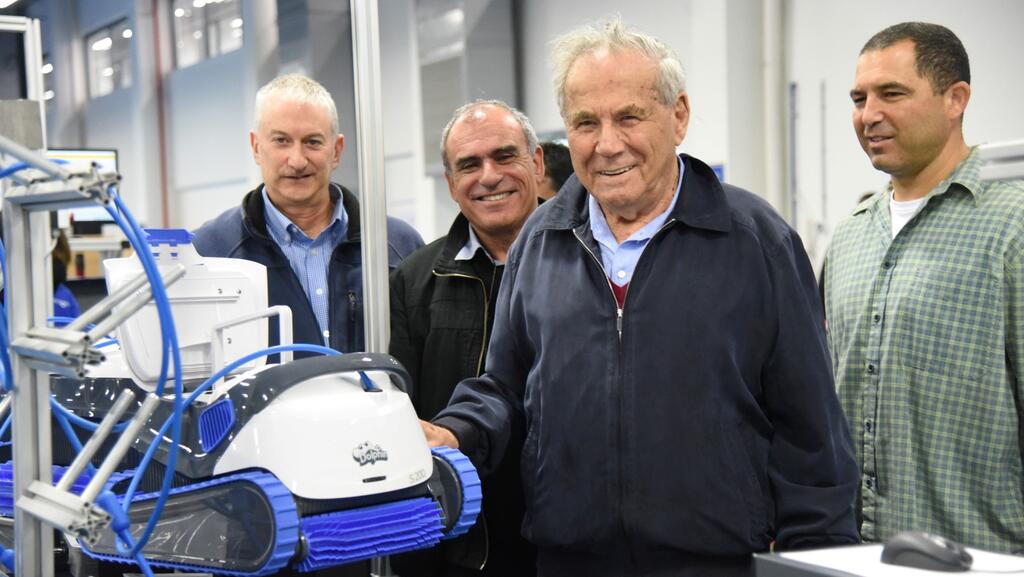
The late Stef Wertheimer; distributed his wealth during his lifetime
(Photo: Avihu Shapira)
By contrast, there are examples of unequal succession that created problems in the second generation and, from there, in the third.
In 2011, brothers Yuli and Sami Ofer died, leaving behind a vast business empire. Sami’s assets were inherited equally by his two sons, Idan and Eyal Ofer. Yuli’s assets, however, were divided unequally between his children, Liora and Doron, leading to bitter and highly publicized disputes.
The Wertheim family offers another example. In 2012, family patriarch Muzi Wertheim, owner of the Wertheim Group, one of Israel’s largest business groups, transferred the family assets, estimated at billions of shekels, to his two children, Dudi and Drorit, during his lifetime. The division was unequal: roughly two-thirds went to the son and one-third to the daughter. Unsurprisingly, the arrangement led to serious conflict between the siblings after his death.
‘He did not understand why planning was necessary’
The story of the Strauss family, now worth more than 13 billion shekels, began with a small dairy farm established exactly 90 years ago by Hilda and Richard Strauss in the yard of their home in Nahariya after they immigrated from Germany.
In 1975, ownership of Strauss passed to their son, the late Michael “Miki” Strauss, who had already become a dominant figure in the company. His sister, Raya Strauss Ben-Dror, also shared management responsibilities. She later retired from the company and sold her shares in 2005 following Strauss’ merger with Elite. Since then, she has devoted most of her time to philanthropy, social entrepreneurship in Israel, business investments and the study of family businesses.

Ofra Strauss; took the reins of the family company
(Photo: Shaul Golan)
“Years ago, when my mother learned that only 6% of third-generation family businesses survive, she was horrified and decided to begin dealing with the issue of orderly intergenerational succession. She immediately understood the implications and approached her brother, Michael,” said her daughter, Michael-Tsabari.
“At the time, people in Israel did not understand the importance of thinking about future generations. Michael did not think about it either. He told my mother that he did not understand why planning was necessary since they were getting along. But eventually he was persuaded, and it was a good thing he was.”
In 2001, Michael’s daughter, Ofra Strauss, was appointed chairwoman of Strauss. Michael-Tsabari chose to sell her shares in the company and focus on the academic study of family businesses. She is now recognized in Israel and abroad as an authority in the field.
“When I began working in this area about 20 years ago, people raised their eyebrows,” she said. “Today, the field is recognized and seen as highly important to the country.”
What characterizes family-run companies?
“In Israel and around the world, about 90% of small and medium-sized businesses and about 40% of large businesses are family-owned. The problem in Israel is that we live in a culture that does not plan. Everything is done from one moment to the next. As in Zionism, the strategy is to ‘start from scratch.’ We lack tools for thinking 20 years ahead.
“Long-term planning is what suits family businesses, and they often do it. It is also important to remember that Israel has no estate or inheritance tax; it was abolished in 1981. My grandfather lived when there was an estate tax, and he understood that the distribution of wealth had to be planned or it would run into painful tax problems. During his lifetime, he divided the group’s shares equally between Miki and my mother.
“Today, many wills are opened only after death, and people suddenly realize what a mistake it was not to discuss and distribute wealth and shares before the founders died. All family disputes in family companies stem from money and from disorderly succession.”
Michael-Tsabari, who has accumulated many stories from Israel and abroad, repeatedly emphasizes the importance of preserving the family unit through planned, orderly succession — and by setting ego aside.
“At one conference I attended, I interviewed a woman who owned and managed a business dating back many decades. Her parents divorced, and her father remarried a woman much younger than he was, who gave birth to children the same age as her own children.
“She recently decided to step down as CEO and hand the role to someone else to avoid a conflict between her own children and her father’s children from his second marriage, while also thinking about the third generation. That is proper long-term thinking.
“I meet entrepreneurs and businesspeople who tell me how friction within the family destroys the family. These are emotional ‘battles.’ Sometimes people fight over small sums of money or jewelry of almost no value.
“There are ways to resolve disputes. I recommend dividing shares fairly. Do you want to reward those you believe work harder and deliver better results? Do it through salaries and bonuses. There is an expectation of fairness within a family.
“That is why I tell people in family businesses that even when it is difficult, they must talk. Healthy relationships save both the business and the family for future generations.”
‘Take the emotions out of the room’
Alongside the founding generation, Israel is also living through an era of newly wealthy entrepreneurs. High-tech companies, exits, initial public offerings and major stock market gains produce hundreds and sometimes thousands of Israelis each year who suddenly find millions in their bank accounts.
For many, it is their first encounter with significant wealth, changing not only their financial position but also how they think about money, family and the future.
Examples include the Wiesel family of Fox, Rami Levy, the Yohananof family, Gil Shwed, Eyal Waldman, Amnon Shashua, Assaf Rappaport and others. Most will likely become family businesses. Alongside them are growing numbers of medium-sized and small family companies.
This reality has given rise in Israel to an industry of family wealth management firms, known as family offices, which advise the baby boomer generation on how to transfer significant wealth to children and grandchildren. The idea is no longer “inheritance after death” but “inheritance during life.” They also remind clients that family wealth is an engine of the national economy and that properly handing over control to the next generation at retirement can benefit the country.
“In Israel, the statistics resemble a battlefield when it comes to some family businesses, and it tears families apart,” said Ofek Lugasi, founder, co-CEO and financial planner at Horizon Group.
“Among the many family companies we have advised at these crossroads, I have seen businesses with tens of millions of shekels in annual revenue collapse for one reason: The first generation did not prepare the business for the day after, and the second generation inherited a time bomb.
“About 85% of failed intergenerational transfers stem from family wars, poor communication and failure to train the children. Only 15% fail because of genuine problems with the market or the product.
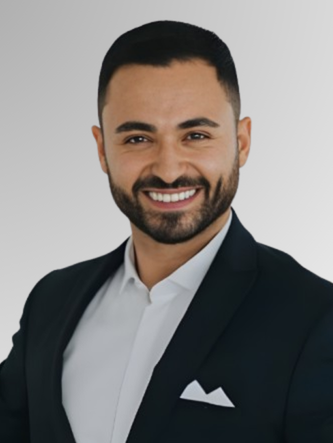 Ofek Lugasi, founder, co-CEO and financial planner at Horizon Group Photo: Brando Photography
“Family business owners come to us when they are already in ‘intensive care.’ The father is ill or exhausted, the siblings are not speaking to one another and the banks are becoming nervous because everything was based on the founder’s personal guarantees.
“Some consider selling their life’s work to an outside party because they fear everything will collapse when it reaches the next generation. The businesses that survived did so after agreeing to take the emotions out of the room and carry out an orderly retirement and succession process.”
Why would a business owner fail to conduct an orderly succession process before retirement?
“The deepest obstacle I encounter is fear of letting go and losing one’s identity. The owner asks, ‘Who am I without the business I founded and managed?’
“This fear of losing control causes owners to remain the company’s management bottleneck even when they are already exhausted. The natural tendency is to say, ‘I have time,’ and postpone dealing with the issue year after year, until a sudden health event or a severe financial crisis forces a transition at the last minute, under maximum pressure and extremely poor conditions.
“Sometimes the next generation very much wants to take over but is not yet ready. Or there are several children in the system and no one has defined who will lead or what each person’s boundaries are. That uncertainty creates hidden family tension that paralyzes the company from within.
“Proper business and financial planning is the key to moving from intuitive management to a stable system. Another important concept is profit engineering. It means that the business stops relying on gut feelings.
“Once the numbers move from secret pages into a simple computer system, the business becomes stable and generates profit in a planned way. Before retirement, it is therefore important to convert the business into systems, build a layer of middle management and delegate authority.
“In some cases, the owner’s role must be redefined. The owner is not thrown out of the business but moves into a different position.”
One example cited by Lugasi involves Yair Dabush, owner and founder of Dabush Textile Solutions. After reaching retirement age, he decided to transfer his life’s work to the next generation.
“When we began working with Yair to pass management of the business to the next generation, we found that everything in the company worked well — but according to his intuition, knowledge and experience. We found no orderly, written pricing method.
“In that situation, when the father gets up and leaves the business, the children have no chance of understanding how to operate the machine, and the risk of collapse is enormous.
“We are now advising Yair and his children on a proper, orderly intergenerational transfer, helping them develop the maturity and management skills they need and tailoring the financial structure that will ensure the business succeeds after it passes to them.
“At the same time, and no less important, the process will secure Yair’s financial future in retirement, allowing him to enjoy the fruits of the business he built with peace of mind.”
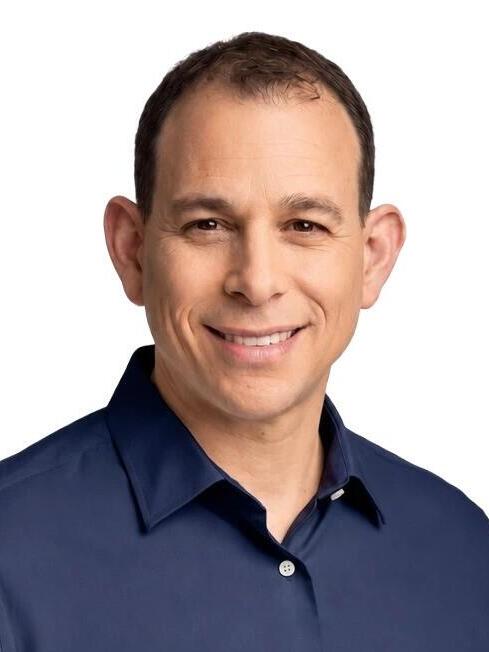 Gilad Slonim, managing partner at Value Family Office Photo: Value Family Office
Gilad Slonim, managing partner at Value Family Office, which specializes in financial solutions for families, described the retirement and succession planning services his firm provides.
“For more than 20 years, we have advised wealthy families at the most significant financial crossroads in their lives, planning their retirement and inheritance so the wealth will pass to future generations and they will have peace of mind.
“I advise clients first to understand what they want. They need to let go of personal baggage, think carefully and determine how and when they want to transfer the wealth — before or after death.
“Of course, problems are easier to solve when the company is publicly traded and everything is transparent. Sometimes matters reach the point where a business owner wants to sell before retirement because he understands that the next generation will not be able to continue running it properly, and then distribute the money during his lifetime.
“Not long ago, we advised a wealthy businessman who had built his company with his own hands and understood that his children would not want to continue it. We recommended distributing family dividends — payments made by the company to shareholders from profits or distributable funds according to their ownership stakes — on every return above a certain amount.
“That gave the children the freedom to pursue whatever they wanted instead of joining the business. The father told me that since he released his children from that expectation, he sleeps well at night.
“So when I am asked when and how to retire, my answer is that retirement should ideally be planned while you are still alive. That is how you preserve both the wealth and the unity of the family.”