

To understand why Russia’s oligarchs largely fell silent, and in effect lined up behind the Kremlin, after Moscow’s invasion of Ukraine in February 2022, it is instructive to look at the few who dared to speak out against the war and President Vladimir Putin.
One of the most prominent cases was Oleg Tinkov, a Russian banking tycoon and founder of Tinkoff Bank, one of Russia’s largest lenders. In April 2022, Tinkov published an Instagram post sharply condemning the war. He called the invasion “insane,” said the Russian army was unprepared and riddled with corruption, and claimed that “90% of Russian citizens oppose the war, while the remaining 10% are idiots.” He urged an immediate end to the fighting “to save our honor.”
The response was swift. Tinkov later told the BBC that within a day of the post, senior executives at Tinkoff Bank received urgent calls from the Kremlin with a blunt ultimatum: Either Tinkov’s stake in the bank would be sold and his name removed from the list of controlling shareholders, or the state would nationalize the bank. “I was held hostage by Putin,” Tinkov said. “I could not negotiate. I had to take the only offer I was given.”
A week after the post, Tinkov sold his 35% stake in the bank. The buyer was Vladimir Potanin, a metals billionaire who later became Russia’s fifth-richest man, in part through sales of equipment to the military. According to Tinkov, the price reflected about 3% of the true value of his holdings. He has said he lost about $9 billion in the deal, renounced his Russian citizenship and went into exile. Others who challenged the Kremlin paid an even higher price. Former oil tycoon Mikhail Khodorkovsky, once Russia’s richest man and an outspoken opponent of Putin, spent a decade in prison.
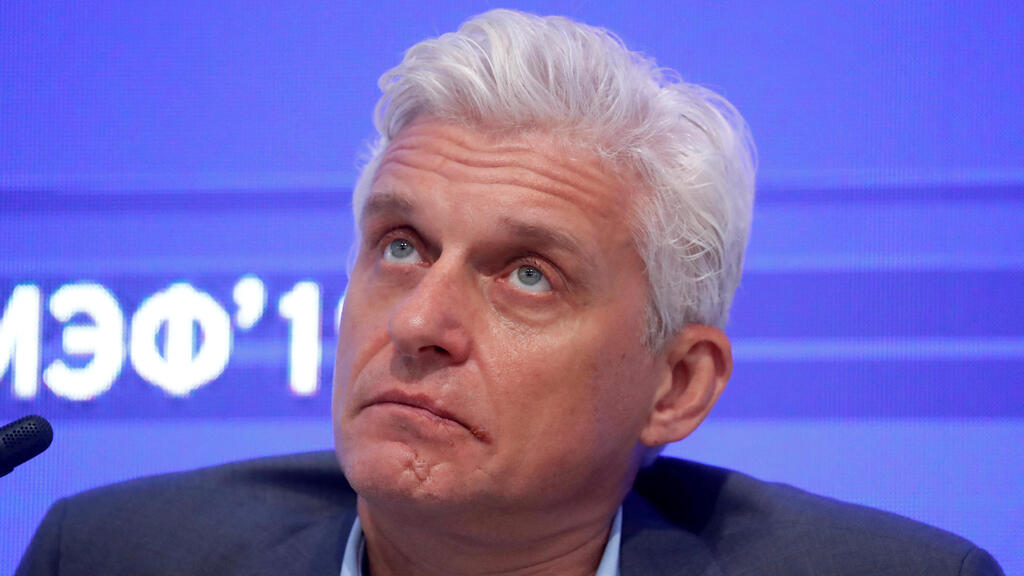
Oleg Tinkov
(Photo: Reuters)
The Tinkov case served as a dual warning from the Kremlin. Those who support Putin’s military and political agenda can earn billions more for their loyalty. Those who oppose it risk public humiliation, expropriation or worse. With Western sanctions making it nearly impossible to move money abroad or sell assets to Western investors, the message took hold.
Dozens of oligarchs fled to the West or to Gulf states and sought to have Western sanctions lifted. Some made statements critical of the war or donated to Ukrainian soldiers and civilians. The Kremlin responded quickly. Their businesses in Russia were dismantled, nationalized or seized. Even Pavel Durov, the founder of the Telegram messaging app who left Russia years ago and has a history of defying the authorities, has avoided direct criticism, referring to the war only as a “tragic conflict.”

Founder of Telegram Pavel Durov
(Photo: AFP/ Thomas Samson)
Putin’s carrot-and-stick approach has fundamentally reshaped the role of oligarchs in Russian politics. In the years after the Cold War, businessmen who amassed fortunes from natural resources and the privatization of state assets wielded enormous political influence and could make or break presidential contenders. Today, Putin has severed them from centers of political power. Their economic standing now depends largely on his favor and their loyalty to him.
According to figures published by Forbes, the number of Russian billionaires fell from 117 to 83 in the first year of the war, as sanctions, the conflict and a weakening ruble led to losses estimated at $263 billion. Since then, however, Russia’s wartime economy and massive state investment in military production have driven annual economic growth of about 4% over the past two years, restoring much of that lost wealth.
The main beneficiaries have been businessmen who openly backed the regime and assisted the war effort and state propaganda. Russia now has about 140 billionaires with a combined net worth of roughly $580 billion — only about $3 billion less than the total wealth held by oligarchs before the war.
The outcome has been a significant propaganda victory for Putin. Western governments hoped that sanctions on Russian business elites would spur them to rebel against the Kremlin. Instead, the measures pushed many to wrap themselves in patriotism and rally around the flag. At the same time, the exit of Western companies from Russia created opportunities for local businessmen to fill the vacuum and become billionaires themselves. Those new elites are keenly aware of who enabled their rise.
More recently, divisions within the European Union underscored the limits of Western pressure. About two weeks ago, EU leaders considered using roughly 210 billion euros in Russian central bank assets frozen in Europe to provide loans to Ukraine, to be repaid through future Russian reparations. The plan was seen as a way to punish Moscow, support Kyiv and buy time for European economies to prepare for a prolonged confrontation with Russia. But the EU failed to reach agreement. Legal threats from the Kremlin, particularly toward Belgium, where much of the money is held, contributed to the deadlock. Instead, EU countries moved forward with a loan financed by bond issuance.
Putin emerged unscathed. Inside Russia, the oligarchs took note — and understood clearly where their interests now lie.