

U.S. President Donald Trump announced that he will impose tariffs of up to 100% on imports of drones and drone parts, including from some of the country’s closest allies. According to an announcement issued by the White House, the move stems from concerns over threats to national security and “too much dependence” on foreign countries. However, the measure is aimed particularly at Chinese companies, which dominate the market.
Under a presidential order, the higher tariff will apply to drones weighing more than 25 kilograms (55 pounds) or equipped with thermal imaging capabilities, which are considered a national security risk. A 25% tariff will also be imposed on smaller drones. However, imports of drones and parts from the European Union, Japan, Liechtenstein, South Korea, Switzerland and Taiwan will be subject to a tariff of just 15%, while imports from the United Kingdom will face a 10% tariff.
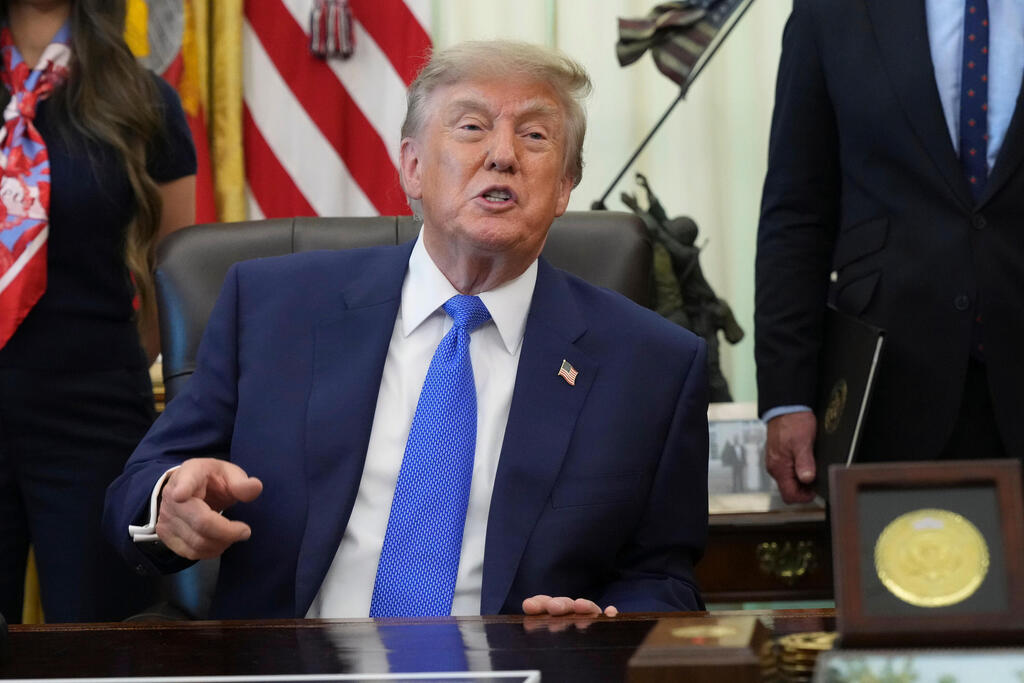
US President Donald Trump announced that he will impose tariffs of up to 100% on imports of drones and drone parts
(Photo: AP Photo/Jacquelyn Martin)
“Based on the facts considered in that investigation, and taking into account the close relationship between the economic welfare of the nation and our national security, as well as other relevant factors, the Secretary found and advised me that UAS and UAS components are being imported into the United States in such quantities and under such circumstances as to threaten to impair the national security of the United States,” Trump said.
“The tariffs are really targeting industrial and commercial drones, and to a lesser degree smaller drones used by hobbyists,” Clayton Swope, a senior fellow at the Center for Strategic and International Studies, told AFP.
The tariff will take effect in 21 days, on Sept. 3, according to the White House announcement. Craig Singleton, an expert on U.S.-China technological competition, told the Financial Times that it was “a big deal” because the move would reshape the commercial market. He said U.S. commercial and government customers would need to make immediate capital investments to shift production to the United States. “It still primarily targets China,” he added.
Trump’s move comes after the White House released a report on Thursday saying that more than 40 countries had helped China circumvent U.S. tariffs by routing exports from China through their territories. The countries cited include Canada, India, Mexico, Japan and South Korea. According to the White House, because tariffs on those countries are lower, they helped China avoid paying tens of billions of dollars in tariffs. White House adviser Peter Navarro also accused them of costing “American jobs and billions in revenue.”