

Modus has emerged from stealth with $10 million in seed funding to develop what it calls a “Context Warehouse,” an infrastructure layer designed to help enterprise AI systems access only the business information they need for a given task.
The seed round was led by Insight Partners, with participation from Soma Capital and several technology founders and operators, including Eyal Kishon, Nadav Abrahami of Wix and Dazl, the co-founders of Cyera and the founders of Epsagon.
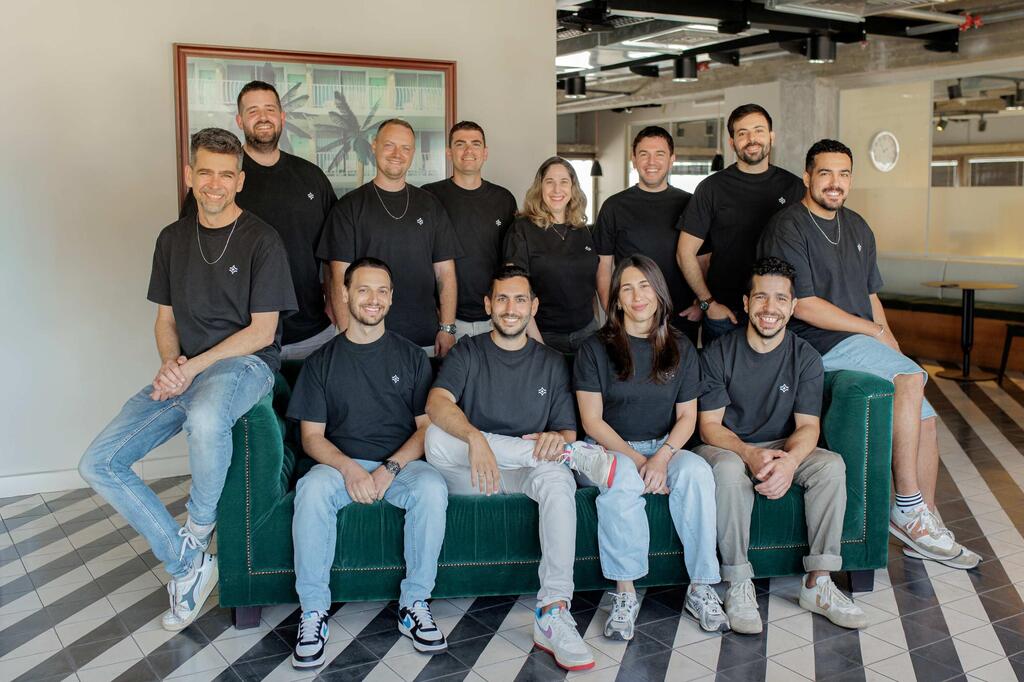
The Modus team: The company has emerged from stealth with $10 million in seed funding to develop what it calls a 'Context Warehouse'
(Photo: Omer Hacohen)
The Tel Aviv-based company is entering a crowded but fast-growing enterprise AI market, where companies are moving beyond pilot programs and trying to deploy AI agents across internal systems. Modus argues that many of those efforts are running into what it calls the “context gap”: AI tools may have access to company data, but they often lack the business understanding needed to know which information is relevant, trusted or current.
As a result, the company says, AI agents frequently retrieve too much information, repeatedly query enterprise systems and use more tokens than necessary, raising costs and slowing performance while making outputs harder to trust.
“The problem is not too little context. It is too much of the wrong context,” according to a company statement.
Modus’ platform is designed to learn how an organization operates by analyzing metadata and usage patterns across data warehouses, business intelligence tools, pipelines, code repositories, documentation and collaboration systems. The company says the system does not require businesses to centralize sensitive data, and that governance controls are applied before any context reaches an AI model.
The goal is to give each AI interaction only the information it is authorized to access and only the context relevant to the task. Modus says this can reduce unnecessary retrieval and token consumption by up to tenfold, while improving accuracy, response times and governance.
“Companies are no longer just trying to get their teams to use AI. They are asking how to scale it across the organization without accuracy dropping, governance breaking or costs spiraling,” said Daniel Shimoni, Modus’ CEO and co-founder. “Whether people call it a company brain, a context layer, or context engineering, they are all trying to solve the same problem. We believe every enterprise needs a continuously maintained understanding of how the business operates before it can build any of those things. That is what the Context Warehouse provides.”
Shimoni previously served as vice president of product at Lusha. He founded Modus with Tomer Mesika, the company’s chief technology officer and former head of architecture at Cyera.
The company says its platform works independently of any specific data warehouse, AI model or application platform, allowing enterprises to switch or add tools without rebuilding how context is managed. It is also designed to work with AI agents already used by companies, including through MCP, or Model Context Protocol.
Modus is positioning the product as foundational infrastructure for companies building internal “company brains” or context layers for AI agents. The company says the challenge for enterprises is not only building a first version of such a system, but keeping it accurate as the business changes.
“Building a context layer is not the hardest part,” Mesika said. “Keeping it current is. Every change your business makes changes the context AI depends on. The real decision is no longer buy versus build. It is whether you want to own the ongoing cost of maintaining that understanding. We built the Context Warehouse so engineering teams can build what differentiates their business instead of maintaining the infrastructure underneath it.”
Modus said it is already working with enterprise customers in financial services, technology and software-as-a-service, though it did not name the customers.
The company plans to use the funding to continue building its platform and support enterprise adoption.