

The Israel Competition Authority announced it will impose a financial sanction of 17,746,338 shekels on The Central Bottling Company, which operates Coca-Cola Israel, for violations of provisions of the Food Law.
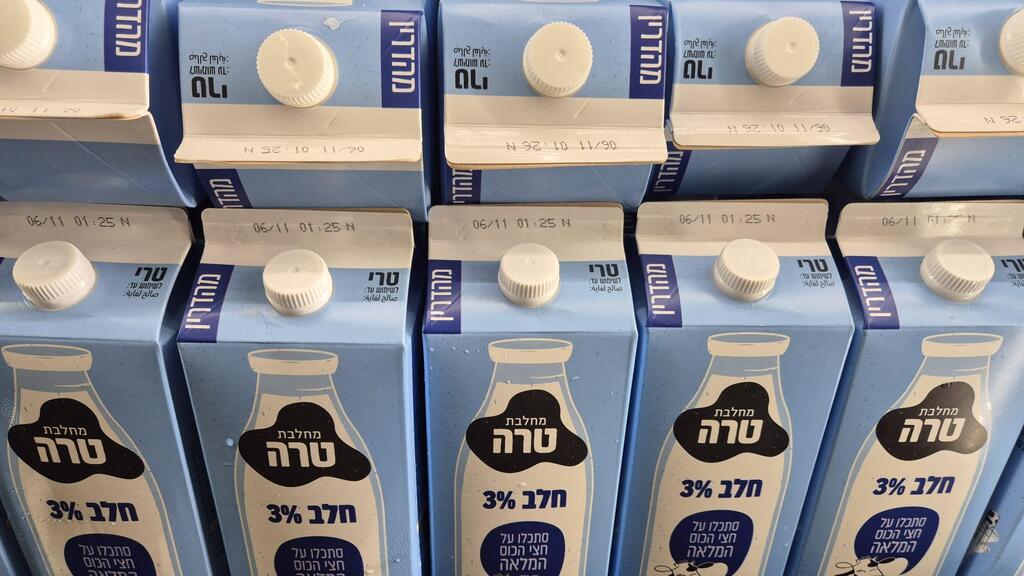
Among other findings, the company intervened in the display of its products and those of competitors at retailers, and in the consumer pricing of dairy products produced by Tara Dairy, which it owns. It also transferred payments to retailers that were not granted as per-unit discounts. The company did not admit to the violations.
The commissioner significantly reduced the sanction, noting that each violation could carry a fine of 25,947,640 shekels for a company of this size, meaning a potential total of more than 77.8 million shekels. No enforcement measures will be taken against senior company executives.
The base sanction imposed on the company was reduced to 60 percent of the maximum amount for the first violation, 35 percent for the second violation and 20 percent for the third violation. The amount was further reduced by 15 percent due to the company’s response to the violations and by an additional 5 percent because the process of reaching understandings with the company was conducted relatively efficiently. The company also waived its right to present claims.
The Central Bottling Company is considered one of Israel’s five largest food companies. It markets Coca-Cola, Neviot mineral water, Carlsberg, Smirnoff, Prigat juices and products of Tara Dairy, among other brands. It also holds a stake in Ristretto, which markets, among other products, Mutti tomato products. In 2021, its annual revenue was estimated at about 8 billion shekels, with profit of about 600 million shekels.
(Photo: Reuters)
According to the commissioner, during 2021 and 2022 the company recommended on several occasions to various large retailers how its products should be displayed in their stores, or otherwise intervened in product displays, in violation of a Food Law provision stating that “a large supplier shall not arrange goods in the store of a large retailer included on the list, nor dictate, recommend or otherwise intervene in the arrangement of goods.” In the commissioner’s view, such recommendations or other intervention in displays constitute a violation of that provision.
In addition, during 2021 and 2022 the company recommended on several occasions to various large retailers the consumer price of dairy products produced by Tara Dairy or otherwise intervened in this matter. By doing so, it violated the provision of the law stating that “a large supplier shall not dictate or recommend to a retailer, nor otherwise intervene with a retailer, regarding the consumer price charged by the retailer for a product supplied by the supplier.” According to the commissioner, recommendations or other intervention in the consumer price of dairy products produced by the company constitute a violation of that provision.
According to information in the authority’s possession, during 2021 and 2022 the company also transferred various payments — not as per-unit discounts — to retailers included on the list of large retailers. This is contrary to the law, which provides that “a supplier shall not transfer payments to a large retailer included on the list, in cash or cash equivalent, and a large retailer shall not receive such payments.” In the commissioner’s view, the transfers described above do not fall under any of the exceptions set out in the law and therefore constitute violations.
The authority said in response: “The examination is part of a proactive move launched by the competition commissioner at the beginning of 2022, involving a broad review of all existing agreements between large food suppliers and large food retailers, as defined in the lists published by the commissioner. The review focused on supplier conduct and examined the commercial relationships between each large supplier and each large retailer, and their compliance with the provisions of the Food Law.
“Ultimately, the commissioner reached agreements with most of the large suppliers. The agreed sanctions enable swift and efficient enforcement of the Food Law’s provisions. In the next stage, the review will focus on the conduct of large retailers in the market and their compliance with the provisions of the Food and Pharmacy laws. The agreed notice of intent to impose charges is now being published for public comment for 30 days.”
First published: 01:30, 02.16.26