

Assaf Rappaport is in talks with McDonald’s global management to acquire the franchise rights for the fast-food giant’s operations in Israel, making him the most formidable contender to enter the race so far.
The franchise includes roughly 230 locations across the country and is considered one of the most coveted retail assets in Israel.
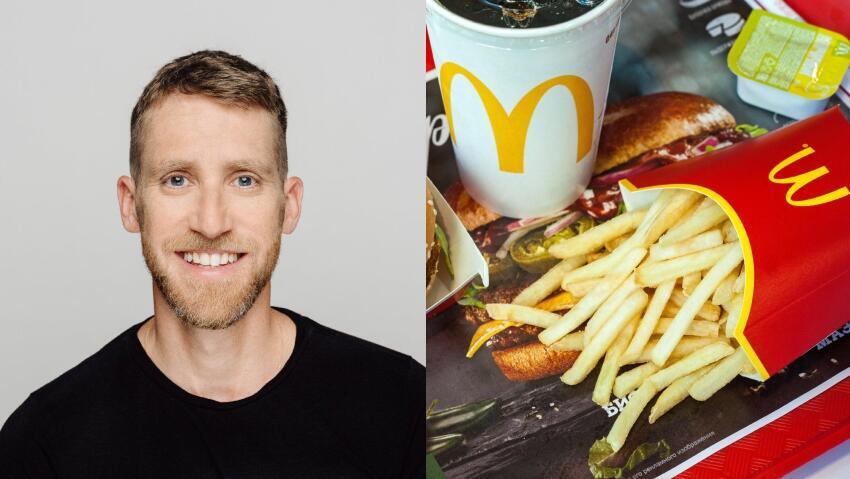
Wiz founder Assaf Rappaport
(Photo: Netanel Tobias, Shutterstock)
Its value is estimated at between $200 million and $300 million, while McDonald’s Israel generates annual sales of about 1.7 billion shekels. Its profitability has ranged over the years between 8% and 10% of revenue.
Until now, the race has mainly featured figures from the retail and real estate sectors.
Among the names mentioned are Max Stock founder Uri Max together with Apax Partners, led by Zehavit Cohen; the Meir Group, controlled by Ya’akov Shahar, owner of Maccabi Haifa and the Israeli importer of Volvo; and the Horesh family, which holds the H&M franchise in Israel and owns Union Motors, Toyota’s Israeli importer.
A group of McDonald’s Israel executives has also considered an internal buyout. The Azrieli Group’s name was raised despite its denial, while Mano Maritime, owned by Moshe Mano, has also said it could raise the required funds.
The winning bidder would gain a presence in nearly every major shopping center in Israel, including McDrive locations, as well as control of one of the country’s most recognizable fast-food brands after more than three decades of operations.
Why did McDonald’s part with its longtime franchisee?
McDonald’s entered Israel in October 1993, when Omri Padan opened the first branch at Ayalon Mall in Ramat Gan.
The lines were so long that for a period it became the busiest McDonald’s location in the world. Padan, who held the franchise for three decades through Alonyal, expanded from a single restaurant into Israel’s largest restaurant chain.
The turning point came immediately after the October 7 attack.
Padan launched a campaign supporting IDF soldiers that included 10,000 free meals and permanent discounts. Images circulated on social media, including a viral photo of a soldier on a tank in Gaza holding a McDonald’s bag.
The images triggered boycotts in Arab countries and parts of Europe, sharp sales declines in some markets and mounting pressure from global investors.
In April 2024, McDonald’s global management announced that it would buy back the Israeli franchise for about 1 billion shekels.
Padan ended his role in January 2025, and since then the Israeli network has been operated directly by McDonald’s headquarters under what was intended as a temporary arrangement.
That period has also been accompanied by a growing number of complaints about declining service and cleanliness standards at branches.
Unlike most of the other bidders, Rappaport comes from a very different business world and on a very different scale.
He has become one of Israel’s wealthiest and most influential business figures, particularly since Wiz was sold to Google for $32 billion.
Since that deal, Rappaport has built a broad investment portfolio that includes dozens of startups in artificial intelligence and cybersecurity, as well as investments in venture capital funds including Sequoia, Andreessen Horowitz and Cyberstarts.
Over the past year, he also led, through the Merit fund, the acquisition of a controlling stake in Reshet 13, completed the purchase of control in the parent company of Israel Bidur, and entered talks to acquire a quarter of Herzliya Medical Center.
Now, he is looking at a far more consumer-facing asset: the Israeli franchise of McDonald’s.