

The largest Israeli diaspora in the world, its brightest dreams, its entrepreneurs and success stories — and the inner conflict that never quite fades: the body in America, the heart and mind in Israel. This is the story of hundreds of thousands of Israelis who have built a unique Israeli-American community, defined by blended identity, ambition and the challenge of keeping the next generations connected to their roots.
Ynet is launching a special series exploring Israeli communities across the United States. The first installment focuses on Los Angeles — home to the largest concentration of Israelis outside Israel.
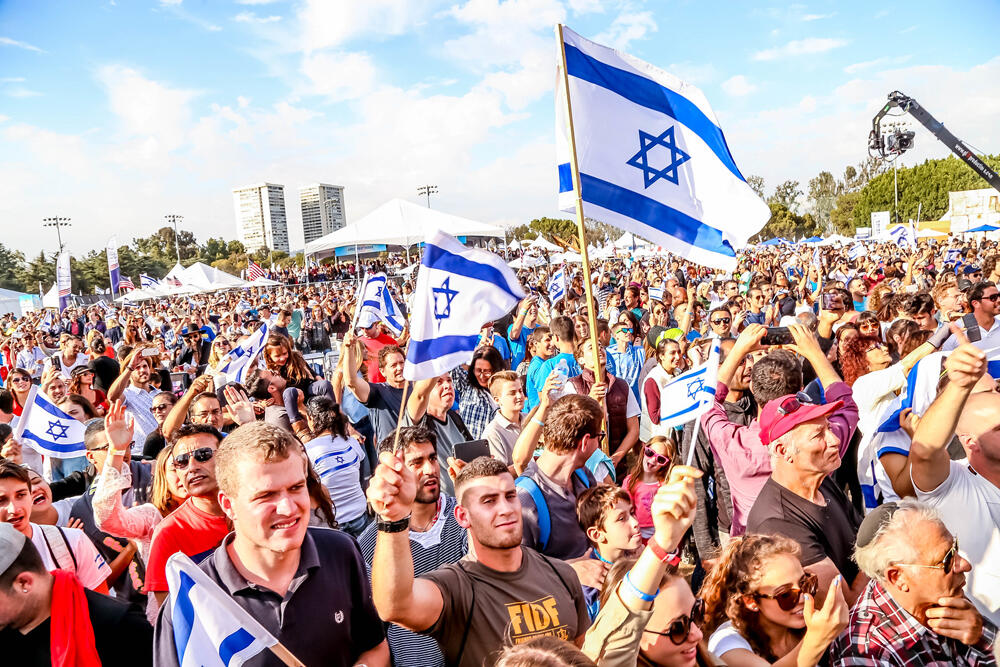
It is difficult to determine exactly how many Israelis live in Los Angeles. Even data from Israel’s consulate in the city do not provide a full picture, since they reflect only those who have registered for passport services. Common estimates range from 200,000 to 250,000, with some suggesting as many as 300,000 or more, depending on how “Israeli” is defined. In the two years since the war began, migration from Israel to L.A. — as well as to other Israeli hubs like New York and Miami — has increased noticeably.
Los Angeles Israelis are especially associated with the construction, home improvement, locksmithing and air conditioning trades. A quick Google search for service providers in those fields often leads to Israeli-owned companies. In the past, Israelis dominated the moving industry in L.A., but that presence has declined after some companies gained a negative reputation.
Contrary to popular belief, Israelis do not live only in “Israeli neighborhoods.” Few choose homes based on having an Israeli neighbor next door. In fact, they are spread across the city and throughout the San Fernando Valley, about a half-hour from downtown. Their choice of residence usually depends on practical considerations — convenience, price, location, proximity to Jewish schools or synagogues.
Many Israelis live in well-known areas such as Beverly Hills, West Hollywood and Pico-Robertson, known for its Jewish concentration, kosher restaurants and synagogues. In the Valley, Israeli communities are prominent in Sherman Oaks, Encino, Tarzana, Woodland Hills and Calabasas.

Supersal - one of many Israeli-owned companies operating in Los Angeles
(Photo: from Facebook)
To be Israeli in Los Angeles is to live in a kind of “mini-Israel.” Dozens of Israeli restaurants serve familiar flavors — from Hummus Bar and Dr. Sandwich to Arais Machane Yehuda. There are Israeli-owned supermarkets like Supersal and Benni’s Grocery, nut and spice shops, kosher butcheries, an “Israeli” TV channel broadcasting Israeli news, sports and entertainment — and, of course, countless synagogues, sometimes several on the same street.
From army service to real estate empire
Sharon (Shawn) Even-Haim, 59, in many ways, embodies the American dream for the average Israeli expatriate. He moved to Los Angeles from Be’er Sheva 36 years ago, a young man fresh from military service, filled with ambition and drive. Today, he is a multimillionaire, founder and CEO of Balaciano Group, a construction, development and real estate management firm that has built more than 20 million square feet of residential projects.
Even-Haim also serves as vice chairman of Israel’s Shikun & Binui and recently purchased about 4% of the company’s shares from majority owner Naty Saidoff, who also resides in Los Angeles, in a deal worth 169 million shekels ($50 million).
He and his wife, Dorit, have three children, all in their 20s and 30s. They received Israeli-Jewish education at Kadima, the Israeli school in Los Angeles, and speak, read and write Hebrew. The eldest is married to an Israeli-American, the second to an American Jew — a point Even-Haim credits to the education they received at home and at school, the family’s annual visits to Israel, and his and his wife’s active involvement in the community.
“People often ask me, when they struggle with issues like assimilation, ‘What did we do wrong?’” he says. “And my answer is: ‘What did you do right?’ It’s much easier to see what you did. As an Israeli living abroad, you have a responsibility. I always say — don’t think just about your children, think about your grandchildren.
Even-Haim is one of the founders of the Israeli-American Council (IAC) — the largest Israeli organization in the United States — and served as its chairman from 2012 to 2015.
“People often ask me, when they struggle with issues like assimilation, ‘What did we do wrong?’” he says. “And my answer is: ‘What did you do right?’ It’s much easier to see what you did. As an Israeli living abroad, you have a responsibility. I always say — don’t think just about your children, think about your grandchildren. If you raise your kids to stay connected to Israel and to their Judaism, the next generations will stay connected too. That’s where it starts.”
Education, identity and the cost of belonging
For many Israeli families in Los Angeles, especially younger ones, the greatest challenge is education. What in Israel is virtually free — a basic Israeli-Jewish education — costs a fortune in L.A. Tuition at private Jewish schools ranges from $20,000 a year for lower grades to over $40,000 for middle and high school.
Even-Haim, a major philanthropist in the community, has donated more than $10 million to Kadima and helped purchase the school’s building. He also subsidized tuition for many students. Yet despite scholarships, many Israelis send their children to public schools, unable to afford private tuition, especially families with multiple children.
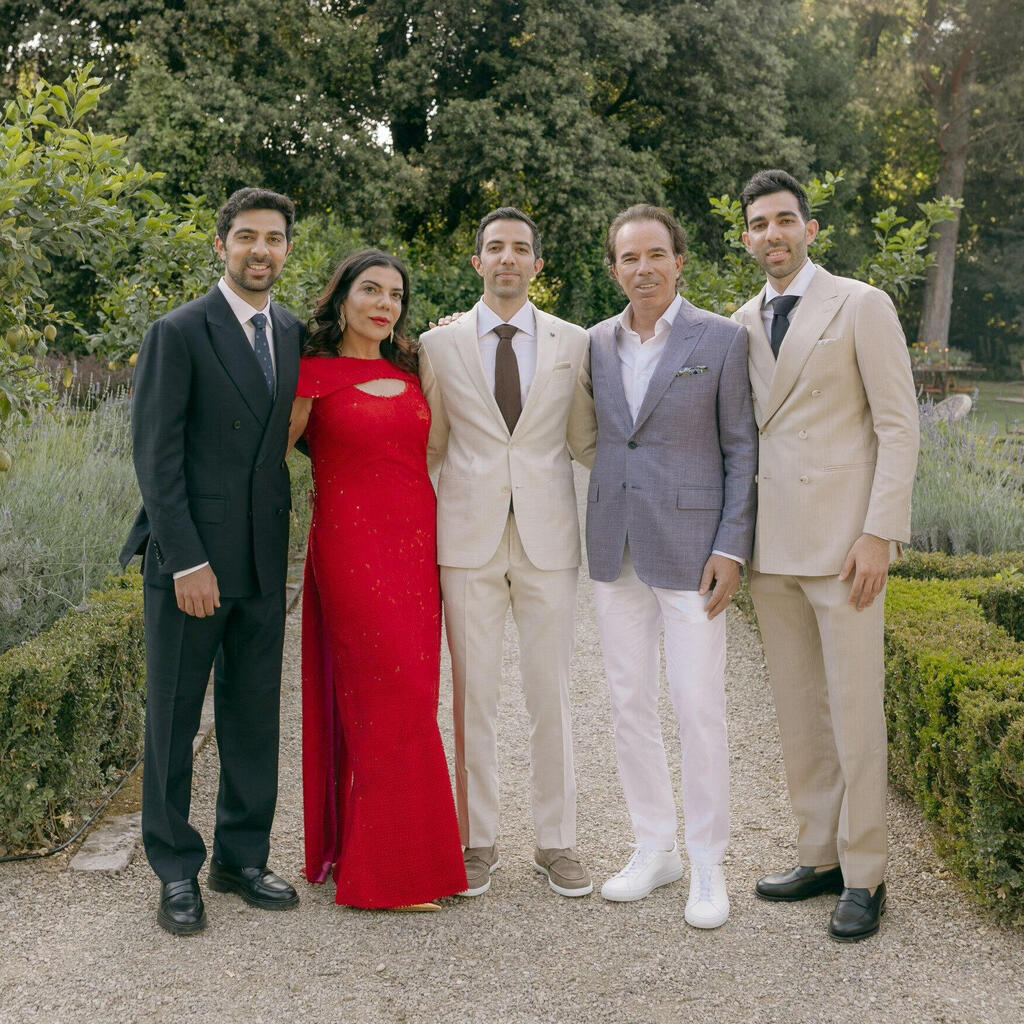
Sharon Even-Haim, his wife Dorit and their children
(Photo: Courtesy)
“Being Jewish in the diaspora is very expensive,” Even-Haim admits. “Jewish education isn’t accessible to everyone. But there are still things we can do as parents. That was one of the reasons behind creating the IAC — to ensure that the next generation stays connected to Israel, to its Israeli identity and to Judaism. It depends on parents and the environment. Israelis don’t always understand what it means to live in the diaspora — unlike American Jews, whose families have done so for generations. In Israel, when Friday or a holiday arrives, it’s all around you — it embraces you. Here, it’s different.”
He adds: “We think that if we speak Hebrew at home, read Ynet, watch Israeli TV and keep hummus in the fridge, our kids will naturally become Israeli-Americans connected to Israel. But it doesn’t work like that. The child won’t understand the depth of it unless you actively help them connect.”
According to Even-Haim, when parents are not active in the community or maintain little Jewish identity at home, assimilation is only a short step away. Many second-generation Israelis in Los Angeles — even those who speak fluent Hebrew and visit Israel yearly — ultimately choose partners who are not Jewish.
'My daughters are emotionally tied to Israel, but my grandchildren aren't'
To trace the early waves of Israeli immigration to Los Angeles, few can tell the story better than one of the community’s oldest members — Yehuda Pearl, 89, a Tel Aviv native and among the first Israelis to settle in the city. He arrived in 1967, after six years in New Jersey, together with his wife Ruth and their three children — one son and two daughters.

Yehuda Pearl speaks at an event honoring his son, Wall Street Journal reporter Daniel Pearl, who was kidnapped and killed in Pakistan in 2002
(Photo: AP)
His son, Daniel Pearl, a journalist for The Wall Street Journal, was kidnapped and brutally murdered in Karachi, Pakistan, in 2002 while on his way to an interview with someone he believed to be a militant leader.
Before the tragedy, Yehuda conducted the local Israeli choir, performing beloved songs from Israel’s early years. After Daniel’s murder, he withdrew from public activity. Like many Israelis in the first immigration wave, Pearl came as an academic, working in computer systems research and development before joining the faculty at UCLA.
The first generations of immigrants were generally well-established Israelis — people who came for studies, research or professional opportunities, often with advanced degrees. In later decades, however, the profile changed: newer arrivals increasingly came from entrepreneurial trades — construction, renovation and service industries — looking for opportunity and a fresh start.
As one of the city’s longtime Israeli residents, Pearl has witnessed the transformation of the second and third generations up close.
Economically, most members of the first generation of Israelis in L.A., now in their 70s and 80s, are comfortably established. But many who arrived over the past two decades have struggled to replicate that success. The main reason, Pearl explains, is the soaring cost of living: Los Angeles has become far more expensive.
“Orna, an old friend of mine who came to L.A. in the late 1960s, has three children — all of them feel connected to Israel, and one even teaches the history of Zionism,” he says. “But the grandchildren are no longer connected. They’ve married non-Jews.”
The same pattern, he admits, is evident in his own family. “My daughters understand Hebrew and are emotionally tied to Israel,” Pearl says. “But my grandchildren aren’t — they date Christian girls. Even Adam, Daniel’s son, who graduated in physics from Harvard, is dating a non-Jew. Still, he goes to Chabad for Shabbat meals, took a Hebrew course and sings Arik Einstein songs thanks to his professor.”
Pearl — whose great-grandfather on his mother’s side was the famed Rabbi of Kotzk, and whose paternal grandfather, Chaim Pearl, was one of the founders of Bnei Brak — says the generational drift pains him deeply. Though not religious, he insists on holding a weekly Kabbalat Shabbat Zoom call with his grandchildren to instill a touch of Jewish tradition and connection. “They all wear a Star of David necklace,” he adds proudly.
Economically, most members of the first generation of Israelis in L.A., now in their 70s and 80s, are comfortably established. But many who arrived over the past two decades have struggled to replicate that success. The main reason, Pearl explains, is the soaring cost of living: Los Angeles has become far more expensive. The early arrivals who invested in real estate benefited from dramatic appreciation, while newer immigrants could no longer buy property at affordable prices.
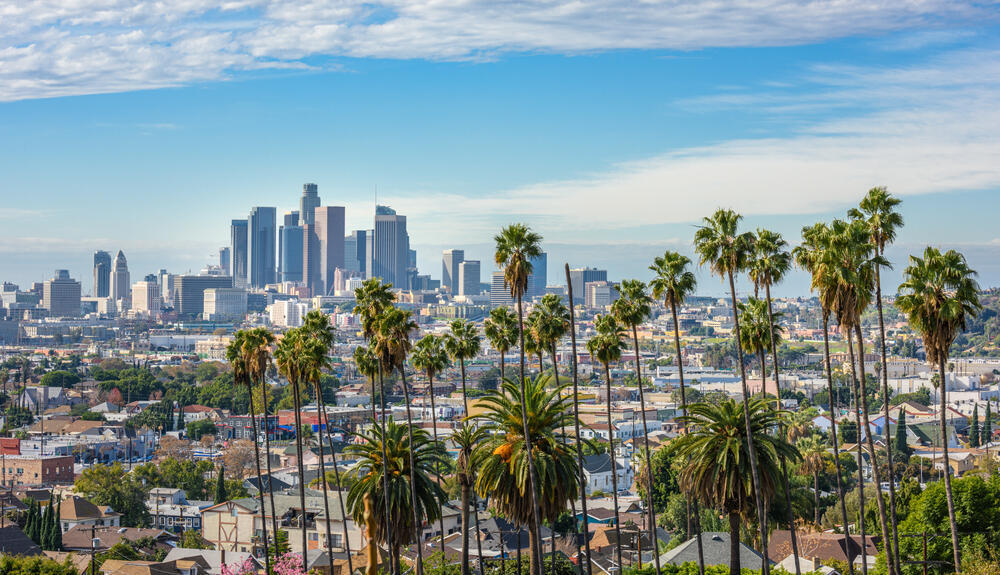
Los Angeles
(Photo: Shutterstock)
Younger newcomers, often recent IDF veterans, arrived with little starting capital, facing a competitive and saturated local market. Some also had to navigate tougher immigration laws, unlike the Israelis who arrived during the community’s formative years.
Though not widespread, there are now Israeli families in Los Angeles living in poverty, supported by local charities, a reality that did not exist in the 1960s or 1970s, when the community was smaller and more affluent.
Yet despite the hardships, there are also remarkable success stories among the newer waves of immigrants. Some have built multi-million-dollar businesses — particularly in home renovation, construction, food and fashion — and have become prominent figures in the city’s business landscape.
'There’s massive assimilation, both in the Israeli community and among American Jews'
When it comes to the question of identity and intermarriage, the rate of mixed marriages among Jews in the United States has been rising steadily for decades. According to a 2020 survey by the Pew Research Center, about 42% of married American Jews have non-Jewish spouses. The figure becomes even more striking when looking at recent years: among those who married since 2010, the rate soars to 61%. For non-Orthodox Jews, the trend is even stronger — a full 72% of marriages since 2010 have been to non-Jewish partners.
“Most of my son’s friends — children of Israelis themselves — are married to non-Jews. His best friend, the son of Israeli parents, married a Christian woman, and just recently he had his baby baptized in a church. It shocked me.”
Even-Haim says he personally knows many children of Israeli parents who have married non-Jews. The phenomenon, he explains, is especially pronounced among the third generation of Israeli immigrants. The main reason, he says, is simply demographics.
“Let’s say there are 200,000 Israelis in L.A., plus a few hundred thousand American Jews around them,” Even-Haim says. “Altogether, we’re maybe ten percent of the population. In other U.S. cities, it’s even less. So when your child starts looking for a partner, 90% of the people they meet aren’t Jewish. There’s massive assimilation, both in the Israeli community and among American Jews.”
Dalia Orman, 63, is a second-generation Israeli-American. Born in Montreal to Israeli parents who later moved to Los Angeles, she describes her upbringing as deeply Israeli. Her parents, Naomi and Eli Orman, were active in the early Israeli community in L.A.; her father opened the city’s Israeli B’nai B’rith branch, served as its president, and helped found the local Israel Bonds chapter.
The Ormans’ three children all speak fluent Hebrew and made a point of giving their own children — the third generation — a Jewish education.

Dalia Orman and her children
(Photo: Courtesy)
Dalia has two children, a son and a daughter in their 30s. Neither is married yet, but both have dated Jewish and non-Jewish partners.
“Most of my son’s friends — children of Israelis themselves — are married to non-Jews,” she says. “His best friend, the son of Israeli parents, married a Christian woman, and just recently he had his baby baptized in a church. It shocked me.”
“I sent my kids to Chabad, our home is kosher, we keep meat and dairy separate and they studied at Kadima, the Israeli school here,” she adds. “But still, if they fall in love with someone who isn’t Jewish, they’ll go for it. My daughter says it’s hard enough to find a partner — finding a Jewish one is even harder. It’s sad, but that’s the reality. I see it all around me.”
As for antisemitism, the situation in Los Angeles remains relatively calm compared to other U.S. cities where open antisemitism has become more visible in recent years. Most Israelis in L.A. say they have never personally experienced antisemitic incidents, though some have occurred over the years — from graffiti on synagogues and community centers to vandalism of restaurants and occasional verbal harassment.

Antisemitic graffiti is seen outside the offices of the Israeli-American Council in Los Angeles
(Photo: IAC)
In rarer cases, there have also been violent incidents — such as one several weeks ago when a young Israeli man was assaulted by pro-Palestinian protesters who struck him on the head and tore a Star of David necklace from his neck.
Still, many in the community view these as isolated cases, not a widespread problem. “I’ve lived in Los Angeles for 45 years and have never encountered antisemitism,” says Anat Cohen, another longtime Israeli resident. “It’s not that it doesn’t exist, but L.A. is such a melting pot — people here come from all over the world. I sometimes read about incidents in local papers, but I’ve never seen anything personally. To me, it’s not dangerous to be Jewish in Los Angeles. If anything, it feels safer here than in some other parts of the United States.”
First published: 22:52, 10.05.25