


The ability to see underground is astonishing in itself, but the fact that this capability taps into a global market worth hundreds of millions of dollars is truly mind-blowing. Or as Jeremy Suard, CEO of Exodigo, puts it: “We’ve exploded in the U.S.”
Over the past year, the company has grown rapidly, doubling its sales with dozens of customers in infrastructure, transportation and energy sectors across the United States, Europe and Israel. It also has capabilities in the defense field, specifically in tunnel detection, which the company prefers to keep under wraps.
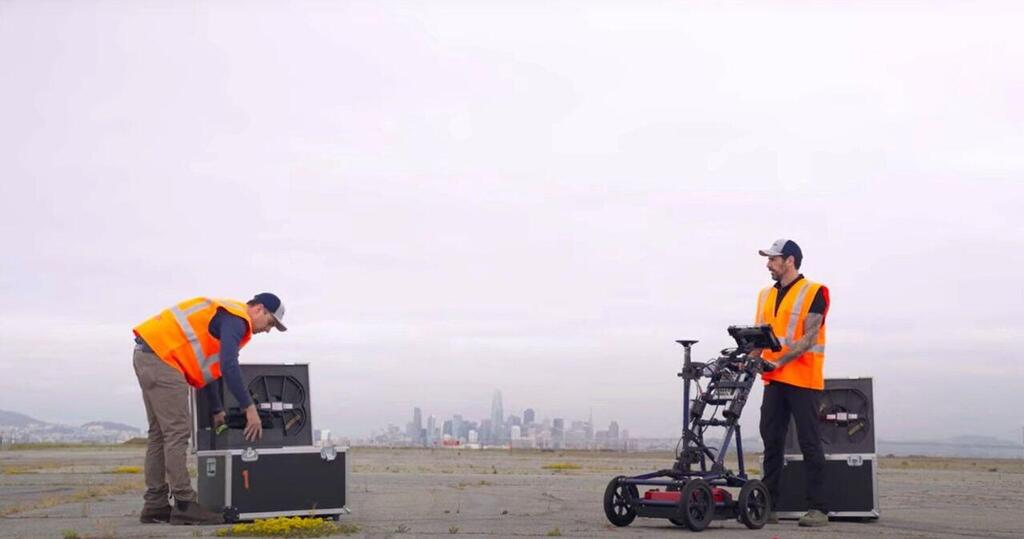
Exodigo announced on Wednesday the close of a $96 million Series B. Ynet has learned that the doubling of sales and growing order volume expected to generate significant revenue next year have led to a doubling of the company’s valuation, now estimated at about $700 million. The round was oversubscribed, with more investors seeking to join than space allowed. “Uprounds”—funding rounds raised at a higher valuation than the previous one—are rare in the current market environment.
The round was co-led by Zeev Ventures, founded by Oren Zeev, and Greenfield Partners, led by Shay Grinfeld. New investors included Vintage Partners, led by Assaf Harlap, and international firm Leblon Capital. Existing investors 10D VC, Square Peg and JIBE also participated. With this round, Exodigo has raised a total of $214 million since its founding in 2021.
Suard said the company is expanding its technology to additional verticals with significant market potential. “I want to scale this, double our R&D and do it fast. That’s the real reason for the raise—we need a lot more funding to grow into new products,” he said.
So what are investors really responding to—strong business results?
“The success of this round came down to two main achievements,” said Suard. “First, we exploded in the U.S. In our previous round, we were strong in Israel and had solid pilot results with multiple clients. This year, those pilots turned into major commercial deals in America. Second, having more customers has proven consistency; it’s not just a client here or there. We now have a usable product with clear product-market fit. We're really seeing that now.”
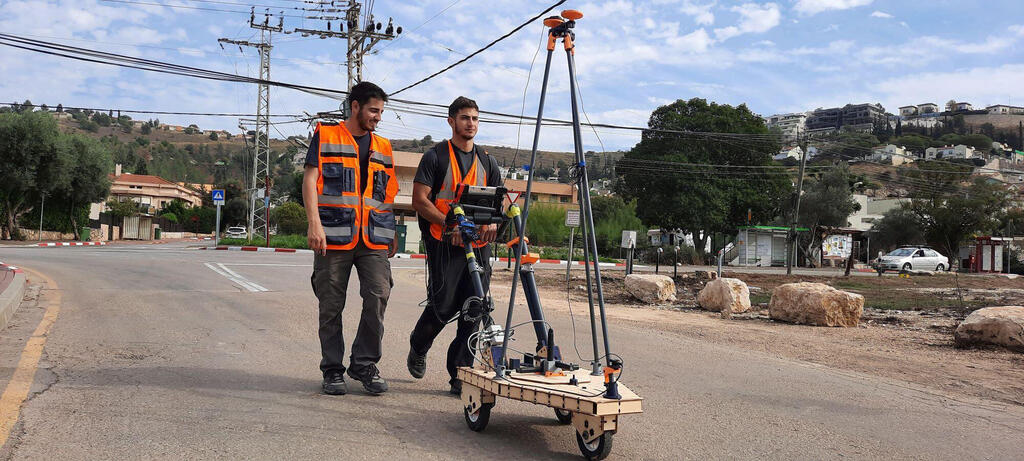
Exodigo's system in action
(Photo: Exodigo)
Exodigo’s pricing model is also disrupting the industry: charging by scanned area rather than by the hour or day.
“Yes, it’s a big improvement over how others operate, where pricing is based on time. Now I’m competing with engineering firms. It’s a lot like Palantir, but in this domain. Palantir competes with McKinsey; I’m competing with engineering firms that charge hourly consulting rates. Our model fits with how clients in this sector are used to buying, especially public sector clients, where procurement rules aren’t going to change just for us.”
So you’re positioning yourselves as the Palantir of civil engineering?
“Absolutely. The business model and the competition are very similar. I even study what they do and how they succeed.”
And investors like that comparison?
“What investors love is a massive opportunity, and everyone’s convinced we’re looking at one. Why do we need so much capital? With a company like ours, it’s easy to explain. I targeted investors who are willing to take a bit more risk to back the next Amazon or SpaceX. I believe we have a real chance to become a very, very big company. But that comes with risk, and risk requires funding. If you’re working with an ARR (annual recurring revenue) model, no one needs an explanation; they know what it is. But our model—we’re still figuring it out ourselves, you know? It’s all brand new.”
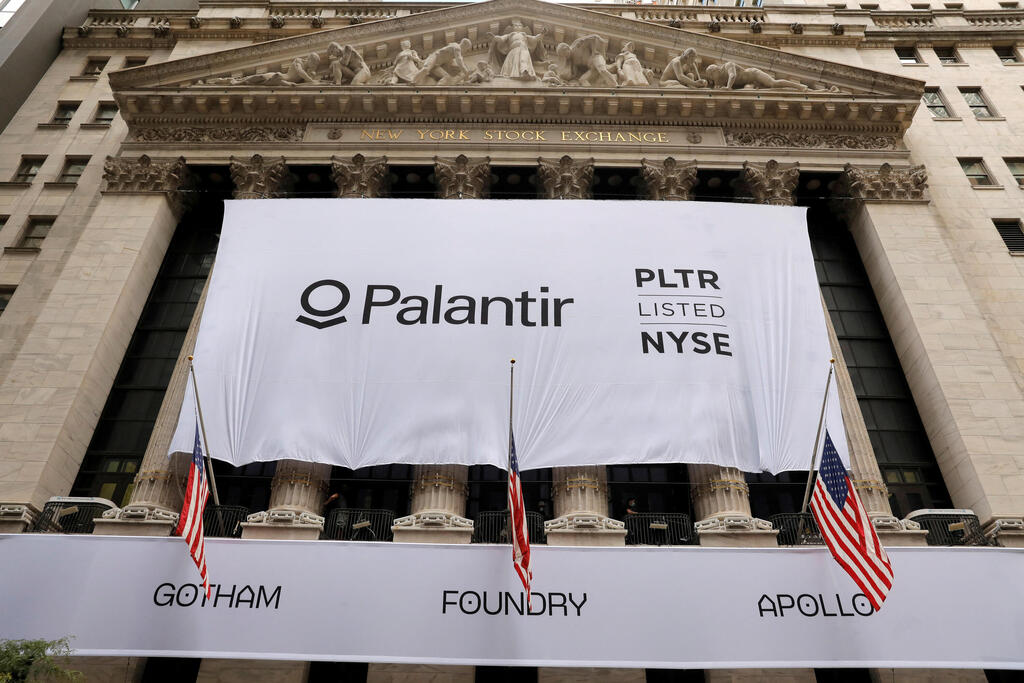
Palantir
(Photo: REUTERS/Andrew Kelly)
At this stage, Exodigo has dozens of clients, with many contracts valued in the tens or even hundreds of thousands of dollars. The company’s total revenue this year is estimated in the tens of millions. But the focus now is on much larger clients—those that can generate $10 million a year each. The business plan calls for signing 10 such clients by the end of this year, which would bring projected revenue for next year to at least $100 million. So it’s no wonder investors are excited.
“The construction market is one of the largest in the world, if not the largest, and Exodigo’s value to a building project is enormous,” said Oren Zeev, founding partner at Zeev Ventures and the company’s largest investor.
He added that Exodigo is leveraging AI in the field of geophysics to address subsurface mapping challenges in a market estimated at $500 billion. “The company’s leadership is made up of world-class pioneers in AI and underground intelligence. They’ve created an entirely new category that’s growing at an extraordinary pace, with endless opportunities for expansion.”
Raz Mangel, a partner at Greenfield Partners, added: “Exodigo’s incredible growth over the past year and the enthusiastic feedback from customers convinced us to lead another funding round for the company.”
Saving clients millions
Exodigo was founded in 2021 by CEO Jeremy Suard and CTO Ido Gonen, both alumni of elite Military Intelligence units 81 and 8200 and recipients of the Israel Defense Prize. The company currently employs 395 people, including 345 in Israel and the rest in the United States and Europe.
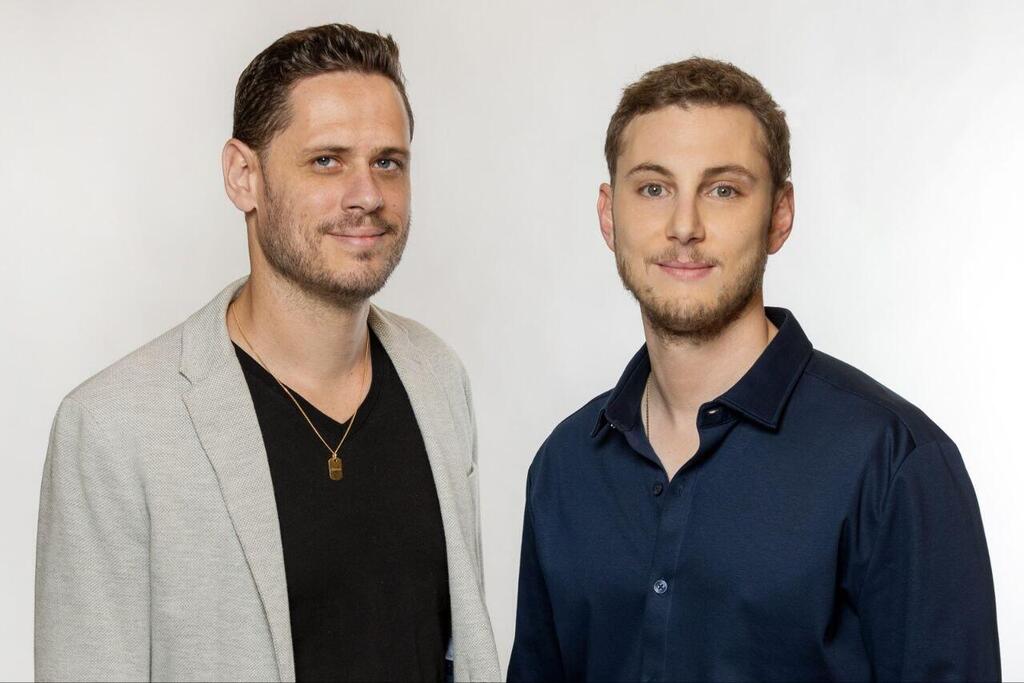
Exodigo CEO Jeremy Suard and CTO Ido Gonen
(Photo: Eyal Toueg)
Exodigo’s technology fuses multiple types of sensors to create detailed underground maps, identifying everything from sewer and water pipelines to rock formations and potential sinkholes. The scans are processed using artificial intelligence to deliver actionable insights—where it’s safe to drill, where to place foundations and where construction could disrupt existing infrastructure and lead to costly legal disputes.
One of Exodigo’s major clients is the California High-Speed Rail project (CAHSR), a 500-mile bullet train line connecting San Francisco and Los Angeles with trains expected to reach 220 miles per hour. Amid political controversy, Exodigo’s technology helps project managers avoid litigation by flagging sections where underground conditions or existing infrastructure could block development. In Kansas, a scan by Exodigo helped the state’s Department of Transportation avoid $10 million in damages by recommending shifting a bridge’s foundation to protect Kansas City’s main sewer line.
Get the Ynetnews app on your smartphone: Google Play: https://bit.ly/4eJ37pE | Apple App Store: https://bit.ly/3ZL7iNv
Altogether, Exodigo has contributed to infrastructure projects worth approximately $75 billion. Its client base includes more than 50 transit authorities, municipalities and utility and engineering firms worldwide, including Amtrak, Pacific Gas and Electric and energy giant National Grid.
In Europe, Exodigo works with the national gas companies of Italy and France and on the UK’s massive HS2 rail project. Its engineering partners include HNTB, Aecom, HDR, Vinci and Colas Rail. In Israel, clients include the Israel Electric Corporation, NTA Metropolitan Mass Transit System, Israel Railways, Netivei Israel, Tidhar and Waksman Gobrin.
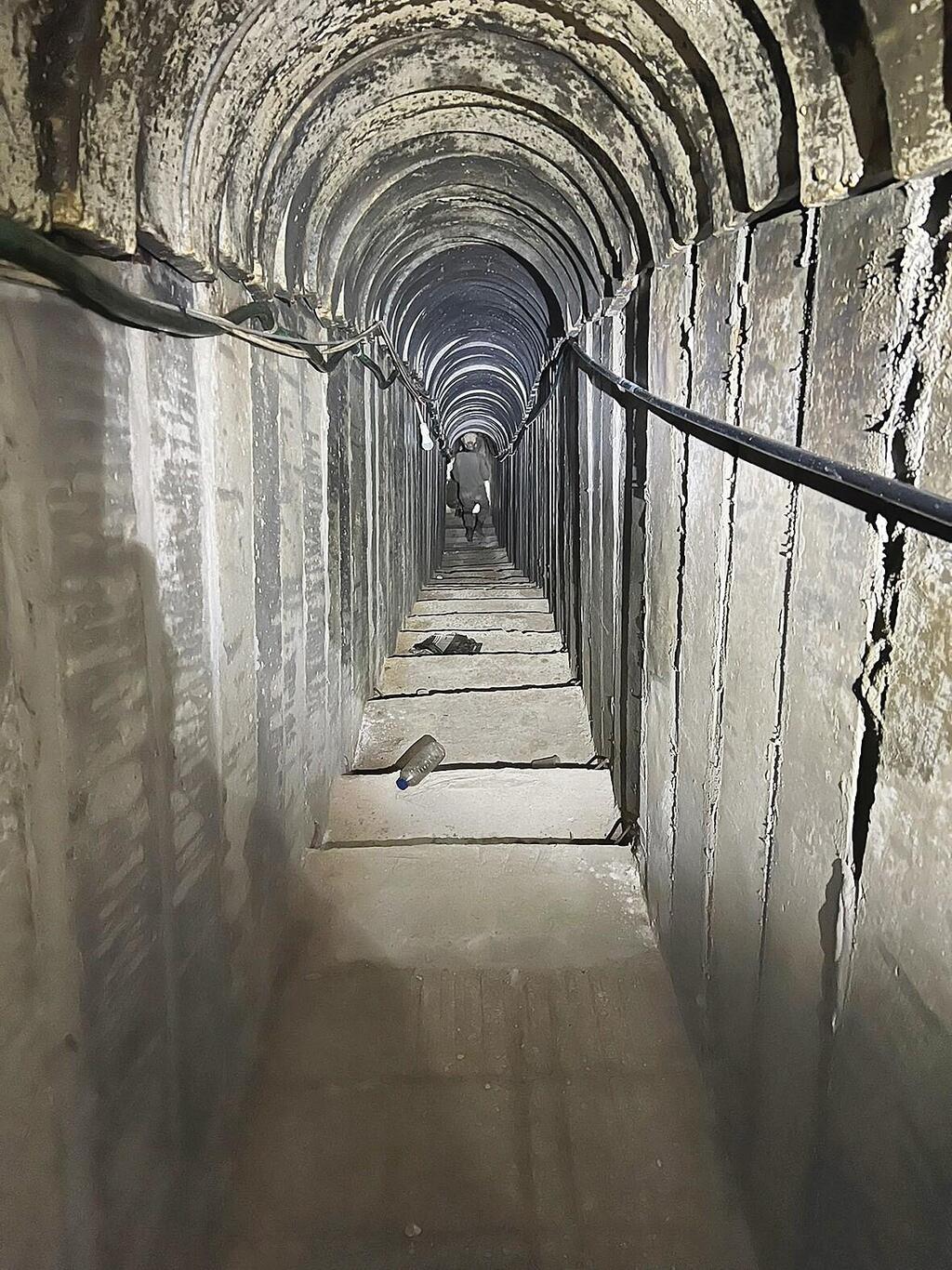
A terror tunnel located by the IDF in Gaza
(Photo: IDF)
One area the company avoids discussing is the potential use of its technology in detecting tunnels in Gaza. The IDF has long invested in tunnel detection capabilities, including advanced technologies. Both of Exodigo’s founders, Suard and Gonen, worked on such projects during their military service. The company also employs many veterans of Units 81 and 8200, as well as former members of the Combat Engineering Corps. As with Israel’s cybersecurity sector, Exodigo’s innovation draws on the expertise of former military personnel, though the technology itself was developed independently in the private sector.
In practice, the IDF is believed to possess well-established tunnel detection tools and may not rely on Exodigo’s technology. The military has revealed various tunnel detection efforts over the years, from discovering a Hezbollah tunnel under Israel’s northern border to locating numerous Hamas tunnels in Gaza. During the early days of the current war in Gaza, 60 of Exodigo’s then-80 employees were called up for reserve duty, many of them contributing in their respective fields of expertise.
Notably, tunnel detection expertise also has semi-civilian applications, such as in border security. One example is the U.S. government’s effort under the Trump administration to fortify the southern border with Mexico, where tunnels pose a persistent challenge. This is an area where Exodigo’s technology could potentially offer value.
That said, the company emphasizes that it is not pursuing defense applications. It points out that the civilian market is far larger and more commercially viable. Regulatory complexities around Israel’s defense export controls are also a factor. If Exodigo were ever to support tunnel detection in the U.S., such work would likely be handled through a subsidiary or affiliated company. While defense tech may be booming, Exodigo is staying focused on the civilian sector.