

Saudi Arabia is trying to project an image of strength and normalcy even as repeated Houthi attacks inflict growing damage on its economy and threaten Crown Prince Mohammed bin Salman's ambitious Vision 2030 development program. The shutdown of Riyadh's main international airport, the absence of leading global energy executives from a major industry conference and uncertainty surrounding an upcoming investment summit are exposing the growing gap between the kingdom's public message of stability and the reality on the ground.
Saudi authorities rarely disclose the full extent of the damage caused by Houthi attacks in recent weeks. Official footage is tightly restricted, residents are repeatedly warned against documenting impact sites, and statements issued by the Saudi-led coalition focus primarily on successful interceptions.
Even amid the chaos, Riyadh is determined to demonstrate resilience. At a Cabinet meeting chaired by Crown Prince Mohammed bin Salman on Tuesday, ministers praised the successful restoration of oil flows through the kingdom's East-West pipeline, which was reportedly targeted in September by drones launched from Iraq.
"This rapid recovery demonstrates the high operational flexibility of the kingdom's energy sector and its ability to develop technical solutions and manage emergencies," the Cabinet said.
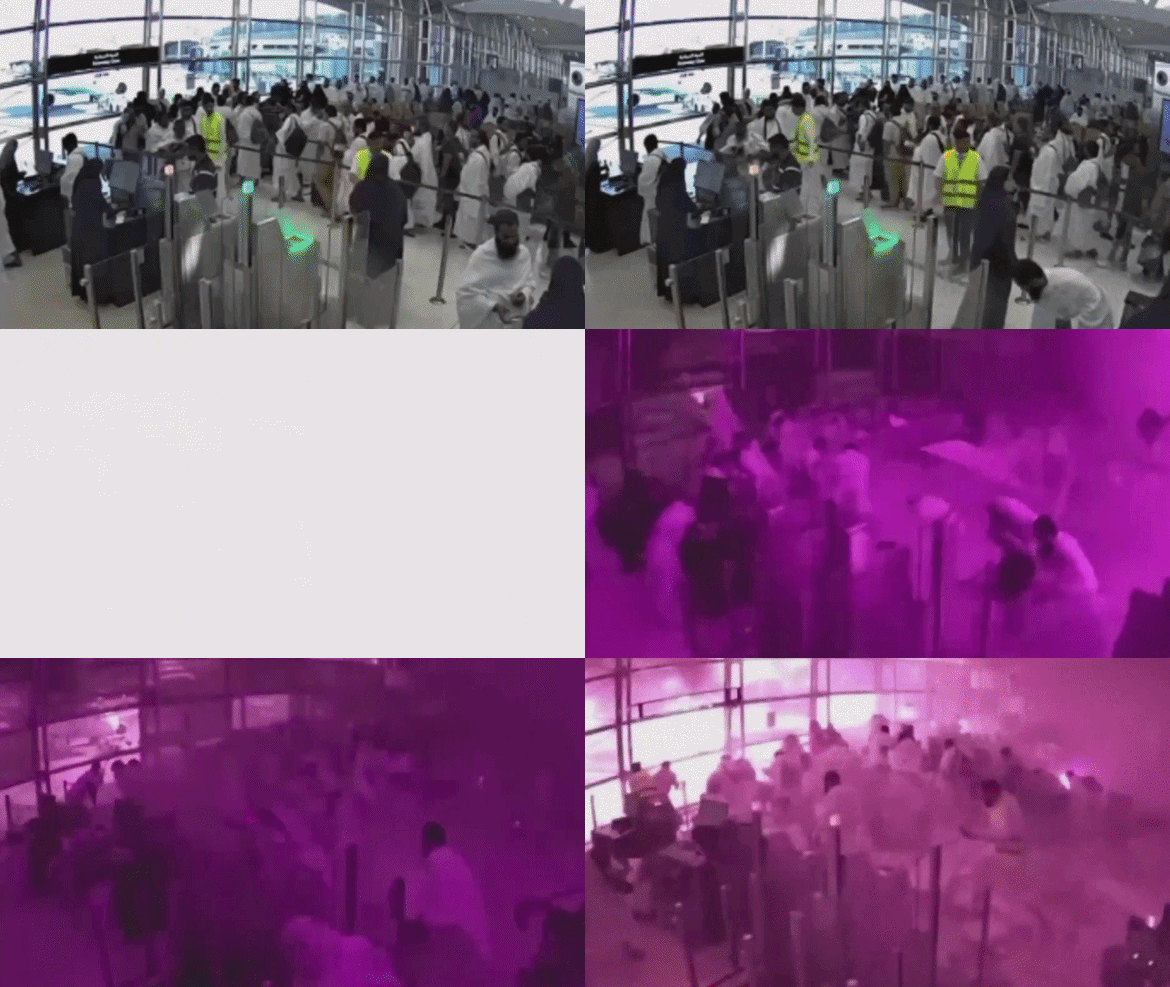
But behind those declarations, Saudi Arabia faces mounting economic challenges, both immediate and long-term, that threaten the crown prince's Vision 2030 strategy to transform the kingdom into a global economic, logistics and technological powerhouse. Following Saturday's devastating strike on King Khalid International Airport in Riyadh, the government's ability to conceal the scale of the threat appears to be weakening.
The Houthis know exactly where to strike
The economic consequences are already being felt. Aviation has been severely disrupted by Houthi attacks that shut down King Khalid International Airport, a major gateway for international visitors, investors and business executives. Other attacks on Saudi airports and strategic infrastructure are also taking a toll.
The timing could hardly be worse for the kingdom's international business ambitions. Saudi Arabia is preparing to host its flagship Future Investment Initiative summit from October 26 to 29, an event that typically attracts leading executives, international investors and senior bankers. The deteriorating security situation has complicated preparations and raised questions about attendance.
Meanwhile, Saudi Arabia is hosting the World Petroleum Council's Energy Congress, which opened Sunday and is scheduled to conclude Thursday. Several senior executives who had been expected to attend canceled their appearances amid the security crisis, including the chief executives of ExxonMobil, TotalEnergies, Shell and BP.
Other international events have also been affected. Organizers of the Misk Global Forum, an annual conference run by a nonprofit organization closely associated with the crown prince, canceled the major event scheduled for November.
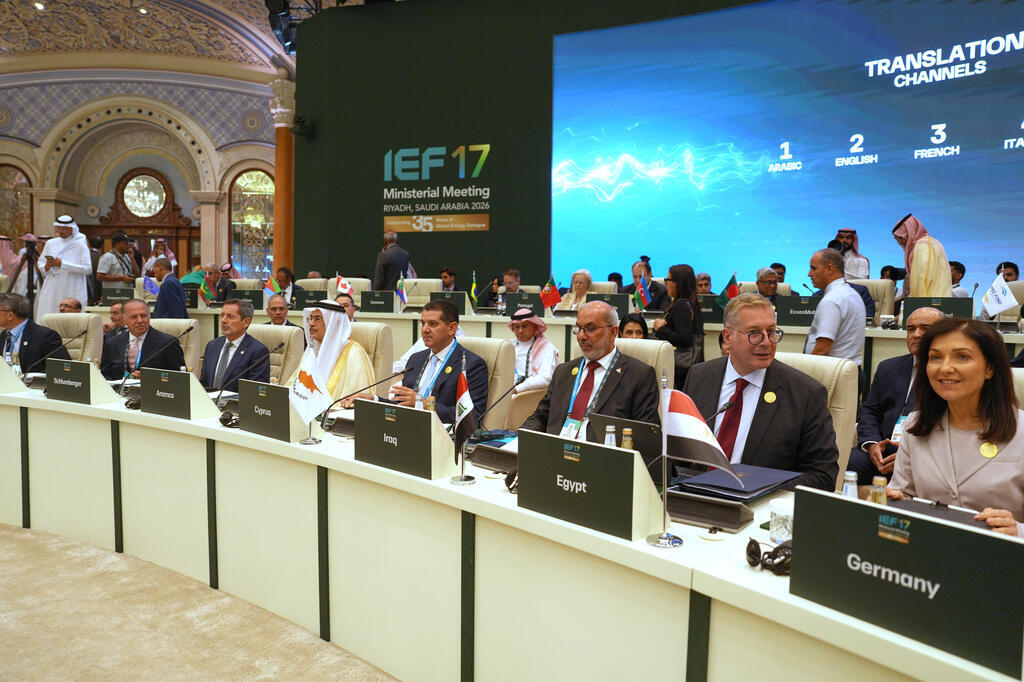
World Petroleum Council's Energy Congress
(Photo: Baraa Anwer\AP)
Still, Saudi officials are making a concerted effort to show that business continues as usual. The Energy Ministry released a video from the World Petroleum Congress, declaring that "visitors and participants continue to arrive, embarking on a new journey of dialogue, knowledge and influence."
Saudi Energy Minister Prince Abdulaziz bin Salman delivered an equally defiant message at the congress this week.
"The word fear does not exist in the Saudi lexicon. We Saudis are fearless. We have the capability and determination," he said. "We will prove to the world that we can overcome any challenge, while keeping our eyes firmly fixed on what will take us into the future. The future of our sons and daughters, and their children. We will never miss an opportunity to preserve our commitment and our vision, a vision that has placed us far ahead of many others."
The minister also argued that no country had undergone a transformation as sweeping as Saudi Arabia's in such a short period. "We know the world stands with us. We truly believe that we are the ones who determine our future, and we will never allow it to slip from our hands," he said.
But the Houthis appear to understand precisely where Saudi Arabia is most vulnerable. In recent comments to the Financial Times, Farea Al-Muslimi, a researcher at the British think tank Chatham House, said attacks on Saudi airports were intended to inflict maximum damage on the kingdom's economic infrastructure and international reputation.
"Saudi Arabia has something to lose. They do not," he said, arguing that the economy is the area where the Houthis believe they can cause the greatest damage.
Saudi economy contracts nearly 5% in a quarter
Analysts disagree over the long-term consequences of the attacks and Saudi Arabia's ability to recover. An article published in the Qatari newspaper Al-Araby Al-Jadeed in recent days described the Houthi campaign as an intensive assault on the lifelines of the Saudi economy, threatening vital sectors including energy, aviation, tourism and foreign direct investment.
The article also pointed to disruptions in Saudi oil shipments to international markets and the damage being inflicted on the kingdom's economic image.
However, the writer argued that the economic uncertainty created by the attacks was temporary and would dissipate once the current fighting and the war with Iran came to an end.
The Lebanese newspaper Al-Akhbar, which is affiliated with Hezbollah and aligned with Iran and the Houthis, published an article headlined "The price of escalation with Yemen: Saudi Arabia puts its economy at risk."
The article argued that Saudi escalation in Yemen was exposing oil facilities and export routes to Houthi attacks, threatening heavy economic losses for the kingdom while pushing millions of Yemenis further into poverty and hunger.
It also cited figures attributed to the Saudi central bank indicating that the kingdom's economy contracted by 4.7% year-on-year in the second quarter of 2026.
Dr. Yoel Guzansky, a former Israeli National Security Council official and senior researcher who heads the Gulf Program at the Institute for National Security Studies (INSS), told ynet that the war was making an already difficult economic transformation even harder.
"The promise of Vision 2030, which was already struggling and faltering, will now be even more difficult to fulfill," he said. "Saudi Arabia needs capital, investment and expertise. In that respect, the current war is doing it no favors whatsoever."
Guzansky pointed to repeated attacks on the East-West oil pipeline as an illustration of the kingdom's vulnerability. "The East-West pipeline has been attacked repeatedly. It's true that the Saudis are managing to restore it to operation, but it can be attacked again," he said. "Even with the Saudi energy minister's statements, there isn't much confidence in what he's saying. Their claims that they can cope don't sound credible."
He was particularly critical of the security failure surrounding Saturday's devastating attack on Riyadh's international airport.
"They cannot protect one of the most strategic sites in the kingdom. The country's most important international airport, in Riyadh, has been shut down for several days. Airlines aren't flying. There are problems with identifying the attacks, detecting them and intercepting them. They are now investigating how this failure happened," he said.
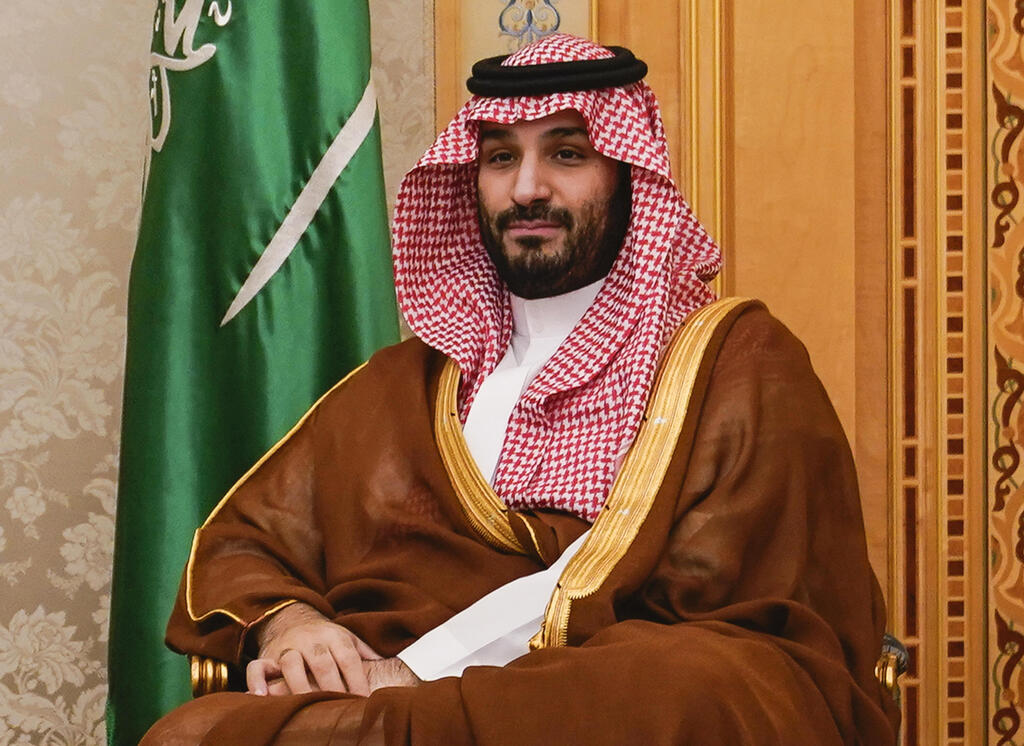
Crown Prince Mohammed bin Salman
(Photo: Nathan Howard/Pool via AP)
According to Guzansky, the war has fundamentally damaged the kingdom's image as a safe and stable destination for international investment. "On the eve of the war, the Saudi economy was in good shape. But the war, from February's confrontation with Iran until today, has not been good for Saudi Arabia," he said.
He noted that many Vision 2030 projects had already been canceled, while others were overly ambitious and difficult to implement from the outset.
"Now we're beginning to hear voices questioning even the continued stability of the Saudi regime," he said. "This is one of the most serious crises Saudi Arabia has ever experienced. At least in the past 35 years, I don't remember a simultaneous threat like this, with attacks coming from Iraq and Yemen, and the possibility of renewed war with Iran at any moment."
The strategic challenges are compounded by disruptions to two of the world's most important maritime routes, the Strait of Hormuz and the Bab al-Mandab Strait, both crucial to Saudi Arabia's trade and energy exports.
"As the cost of the war rises, the kingdom's image suffers, its economy suffers, and all these things are affected," Guzansky said. "Frustration could grow not only among ordinary citizens but also within the royal family."
He warned that members of the royal family whom Mohammed bin Salman had marginalized or pushed aside could eventually seek to exploit the mounting pressures.
"People he has stripped of power and pushed out could say, 'Enough,' and take action against the backdrop of the war and the growing pressure," he said. "That isn't happening yet, but the fact that he is the most centralized ruler in Saudi history is, on the one hand, efficient. On the other hand, it also means that if something happens to him, the whole structure collapses."
Despite those risks, Guzansky stressed that Saudi Arabia retains considerable resources and institutional strengths.
"The Saudi economy has demonstrated in the past that it knows how to absorb shocks, and it has sources of resilience," he said. "Bin Salman holds enormous political power, the security apparatus is in his hands, there is no serious opposition capable of challenging him at present, and the kingdom also has extensive resources."
Nevertheless, he argued that the continuation of regional warfare on multiple fronts was putting the crown prince's two central promises to the Saudi public to the test: security and prosperity.
"The longer this regional war continues, from every front and every direction, the more it tests two basic things bin Salman promised: security, and there is no security, and prosperity, which is also now in question," Guzansky said.
He also expressed concern over the kingdom's economic outlook, citing what he described as an International Monetary Fund forecast of a contraction of nearly 4% in 2026.
"Bin Salman put his name to these promises. He promised stability, prosperity and security. That's not happening. They're moving backward in many areas, and they've made many mistakes," he said.
According to Guzansky, the crown prince has pursued an assertive policy in recent months without sufficient capabilities to back it up and is now paying the price. "Saudi Arabia is in very serious trouble, and the effects are already being felt in its economy," he concluded.