


The munitions economy is one of the most serious challenges facing Israel’s defense establishment, and it is becoming more critical with each day the war drags on. According to foreign reports, this includes dwindling stockpiles of Arrow 3 and David’s Sling missile interceptors, as well as Tamir interceptors used by the Iron Dome system.
No less significant is the depletion of bombs and air-to-ground missiles of all types. Defense industries are working around the clock to produce weapons. In this area, Israeli startups are making a significant contribution, including the production of missile components, drone wings and casings for missiles and bombs. Unlike traditional manufacturing, some high-tech firms are able to do this using 3D printing.

A prominent example is Stratasys, which supplies more than 100,000 parts annually to the U.S. military, including components for C-17 aircraft that save about $14 million a year in fuel costs. This week, the company announced it had been selected to participate in a multimillion-dollar program to provide 3D-printed manufacturing for the US Department of Defense, aimed at accelerating certification processes and the operational deployment of parts for combat systems and military platforms.
Another company in the 3D printing field is Massivit, a publicly traded firm that struggled in recent years with declining printer sales until it pivoted to the defense market and now appears on track to return to profitability. The explanation is simple: instead of trying to sell large, high-cost printers in a shrinking market, it operates a service center that prints molds for clients, which are then used to cast drone or missile components. As part of its turnaround efforts, Brig. Gen. (res.) Gabi Shachor joined the company’s advisory board earlier this year. Shachor, a former helicopter squadron commander and Palmachim Airbase commander, was also among the founders of the Israeli Air Force’s UAV array. If anyone can pave Massivit’s path into the defense industry, it is likely him.
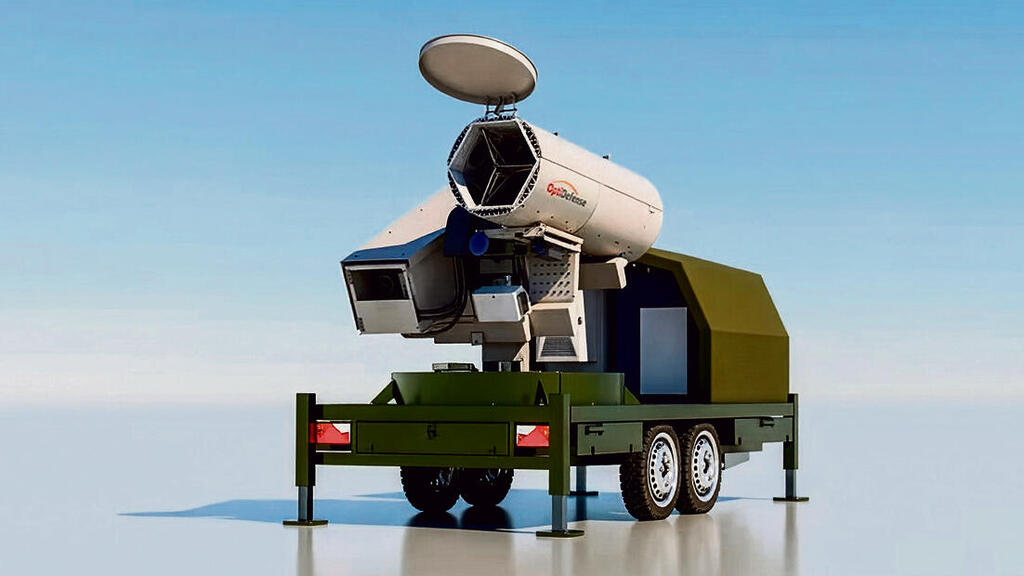
OptiDefense laser cannon: small budget, high-level protection
(Photo: from the Opti-Defence website)
The munitions economy is the engine Massivit is betting on: producing parts within days instead of months. “The defense-tech world has changed dramatically following the Russia-Ukraine war and, of course, the war here,” Shachor said. “I don’t call it evolution but a revolution, something that happens once in a generation. It’s a profound shift, meaning defense customers can no longer wait years for procurement as they once did.”
Can it be said that you provide a solution to the munitions economy, which is now becoming critical?
“Look at the amount of munitions used in this war, whether offensive or defensive — just on our side, you’re talking about hundreds of thousands of items. Somehow, you have to restock, and that’s where Massivit’s solution comes in. You can produce molds at speeds ten times faster. What once took three months, Massivit can do in two and a half days.”
Who are your clients?
“This is where the revolution lies. We approach defense industries — Israel Aerospace Industries, Elbit Systems, Lockheed Martin, Boeing — and tell them: ‘You need to produce 10,000 wings? Don’t deal with it. Give us the task. We’ll work with subcontractors and deliver the solution ten times faster.’”
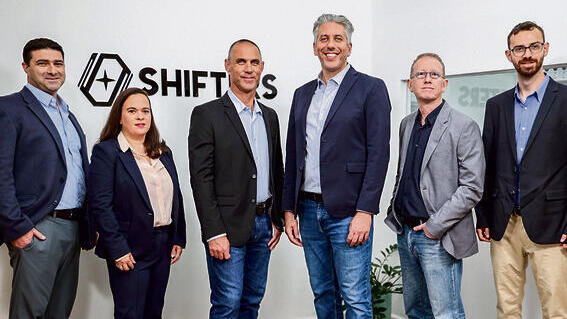
The Shifters AI team
(Photo: Shifters AI)
Production pace is not the only problem facing drone manufacturers — cost is also a major issue. The war in Ukraine has demonstrated the power of swarms of cheap, simple drones to cause significant destruction. Iran and Hezbollah also deploy low-cost drones, while Israel and the US are often forced to launch expensive systems to intercept them — or refrain from intercepting and risk damage. This is the essence of the munitions economy challenge.
“Today, you see that masses of hundreds of thousands can defeat the quality of hundreds,” Shachor said. “Whether it’s an Arrow interceptor, an American missile or a missile ship, these are systems that cost millions to intercept something much cheaper. This is a global problem. A single Shahed drone can fly 2,000 kilometers, cause significant damage and cost only $10,000 — and you intercept it with a system that costs $3 million. So you have to think about how to create defense that doesn’t cost $3 million per interception, because it’s unsustainable. Massivit focuses on the mass side. When you deploy a smart swarm of 500 drones, you need 500 drones. And when you expend tens of thousands of munitions, you need to replenish them. Massivit is addressing the most painful gap in the industry today.”
Do you think this affects our performance? How do you assess the campaign so far?
“Looking back, you could say that this giant that always lurked and frightened us has not been defeated, but it has taken a very strong blow, mainly thanks to technological capabilities. These are very deep capabilities, many of which cannot be disclosed. But they produced results we all saw.”
 Gabi Shachor
For example?
“We saw that in the first hour of the attack, a large portion of their leadership disappeared. This is such a complex capability that even if it weren’t classified, it would take an hour to explain briefly. It’s a combination of very deep intelligence, in real time, because the targets are mobile, and the ability to deliver munitions with centimeter-level precision exactly where needed. Today, the outcome of war is determined by things closely tied to advanced technology.”
It is evident that Iran is trying to strike strategic sites in Israel. How concerned should we be about hits on bases like Palmachim, which you commanded, or other strategic locations?
“You’re right that Palmachim is a critical base. It’s no secret that gas rigs and power stations are also critical points, along with many others I won’t mention due to classification. Their defense is reinforced. Ultimately, you have to decide how to allocate resources so that the most strategically important sites are protected by multiple layers of defense, and we adopt a more liberal interception policy when they are threatened to prevent damage.”
You were involved in the development of the Israeli Air Force’s UAV operations from the beginning. How do you view its performance in this war?
“The pace of progress is truly remarkable. You don’t need pilot protection systems, which significantly reduces cost and complexity. You can take greater risks, and development cycles are much faster.”
What additional capabilities can we expect in this field?
“One very interesting concept is ‘smart swarms.’ Today, when people talk about drone swarms, they mean quantity. But the holy grail is intelligent swarms of 50 or 500 systems — aerial, ground or naval — that can autonomously receive a mission, plan it and execute it. There are many startups around the world developing prototypes of such systems.”
All eyes on Hormuz
Tensions in the Strait of Hormuz are also peaking. Iran’s naval blockade on shipping in the area has put the world on high alert. The United States, which has deployed its Fifth Fleet and is preparing for a possible ground invasion, is operating hundreds of vessels of various types in the region. A closer look reveals that some of them are unmanned surface vessels — essentially maritime drones.
As of March 2026, the Strait of Hormuz has become a focal point for unmanned surface vessel (USV) activity. For the US, they are a key component of naval operations, managed under Task Force 59. Small, autonomous vessels serve as the fleet’s forward eyes, providing real-time imagery and radar data on unusual Iranian naval movements and detecting the placement of sea mines. Larger autonomous vessels have been tasked with opening “safe corridors” for commercial shipping, acting as decoys sailing ahead of oil tankers. On the other side, Iran is making extensive use of unmanned vessels to block passage and, when needed, as explosive-laden suicide boats — possibly even in swarm formations. The strait is anything but quiet.
There is also an Israeli angle tied to the US Navy’s effort to build a “hybrid fleet,” combining crewed ships with hundreds of autonomous vessels — large autonomous ships serving as floating missile depots, mid-sized vessels carrying out intelligence gathering and electronic warfare missions and smaller, fast boats capable of tactical tasks such as firing or detonating on target. Major Israeli defense firms like Elbit Systems and Rafael have sold the US naval platforms, including autonomous ones, but Israeli startups are now entering the arena as well. These include Skana Robotics and Aeronautics, which have developed small autonomous vessels, and Sealartec, which focuses on a less familiar niche: retrieving robotic vessels from the sea and returning them to a mother ship.
Sealartec’s technology is installed on crewed ships and deploys autonomous towing vessels that locate and recover unmanned craft using a unique method, even in rough sea conditions. The system is used both in military settings — including the Israeli Navy, the US Navy and the US Coast Guard — and in civilian applications among US clients. The ability to deploy and recover unmanned vessels without risking personnel is of particular interest to US forces in the Strait of Hormuz, and it is precisely what Sealartec offers. The technology has also been tested on a US Navy experimental vessel, and it is not unlikely that the system is currently operating in Iranian waters.
Sealartec’s story reflects a broader trend seen during the current war: startups and high-tech firms with defense technologies refining their tools in real time while they are being used by the Israel Defense Forces or the US military. In some cases, this occurs even as companies continue marketing to civilian clients worldwide. These are known as “dual-use technologies,” part of the somewhat surreal reality in which Israeli high-tech now operates.
Sealartec CEO Amitai Peleg identified the need for a solution to recover robotic vessels while working on a robotic maritime systems team at Rafael. The field of unmanned surface vessels has surged in recent years, especially after Ukrainian forces demonstrated that a handful of autonomous boats could sink Russian warships. “There are more than 100 companies worldwide developing robotic vessels, and only one doing what we do,” Peleg said. “This need has become critical, and we are the only ones with a solution. The US Navy recently purchased robotic vessels from two American companies and told them: ‘Bring us the recovery product from this Israeli company, Sealartec.’”
Israeli high-tech mobilizes
These days, the innovation, creativity and entrepreneurial drive that define Israeli high-tech appear fully mobilized to support the IDF in combat zones in Iran and Lebanon. Robotican, for example, has developed robotic platforms and autonomous drones for missions such as reconnaissance, border protection and reducing risk to personnel. Its drones navigate autonomously without GPS and can be remotely operated. In the civilian market, the company sells the same technologies to firefighting, rescue and infrastructure inspection services.
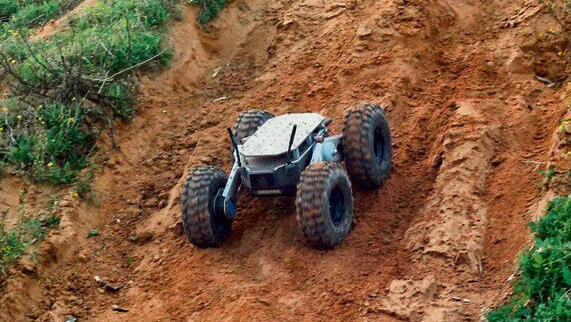
Macushla robot for tunnel operations and payload transport
(Photo: Macushla)
Althimis has drawn international attention with technology designed to counter drone swarm attacks. Its AI engine can simulate extreme drone attack scenarios for forces in the field and train them for anticipated threats. Last month, the company won first place at a defense technology conference in Europe, opening new civilian market opportunities.
This trend is not limited to defense-tech firms. In some cases, companies originally founded for entirely civilian purposes have pivoted to military applications and joined efforts to support the IDF. Drone company Xtend began as a gaming firm and now supplies loitering munitions to the IDF and the US military. Bariks Health developed portable hyperbaric oxygen chambers (HBOT) for sports and longevity markets and now provides them to the IDF for treating blast injuries, smoke inhalation and diving accidents. Xmetix developed a medical device to stop massive bleeding from limb injuries, originally intended for first aid in factories and construction sites — but today, it has likely saved the lives of many Israeli soldiers.
 Dror BinPhoto: Orel Cohen
Israel Innovation Authority CEO Dror Bin said startups like these, among many others, are making a meaningful contribution to the IDF’s wartime achievements. According to him, the sector surged after October 7, as existing companies adapted their technologies to military needs while new firms were established for defense purposes but also found civilian markets. “In the past, it was common to distinguish between defense industry companies and those with civilian products, but over time that gap has narrowed,” Bin said. “We have a joint program with the Defense Ministry’s Directorate of Defense Research and Development, investing in dual-use R&D, and over the years there have been hundreds of such companies.”
Another emerging trend is that dual-use startups are no longer necessarily concealing the military side of their technologies out of concern it could harm their civilian marketing efforts. “In the past, talking to our European partners about dual-use technologies was like swearing in the room,” Bin said. “Suddenly, they’re bringing it up themselves. After the war in Ukraine and the war in the Middle East, they understand that the fire is at the edge of their own cloak.”
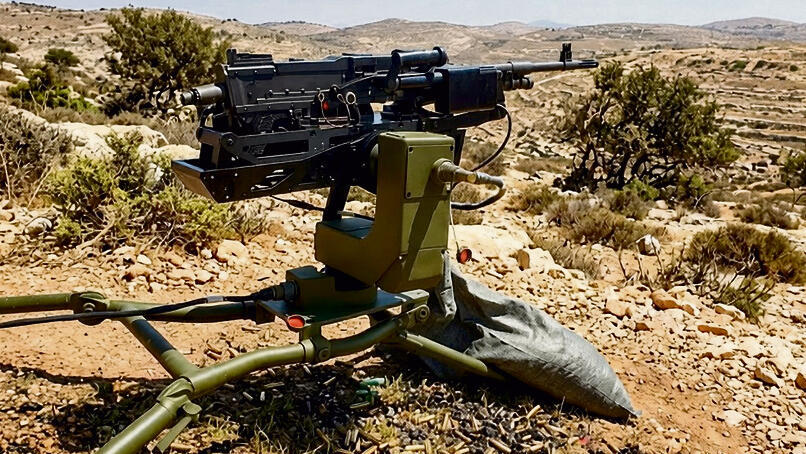
Precision strike: Smart Shooter weapon station
(Photo: Smart Shooter)
In fact, many companies now find that the experience they gained on the Israeli battlefield serves as a powerful marketing advantage when approaching global clients. “As always in Israel, something good can come out of something bad,” Bin said. “Those who developed military technology here were able to use it in combat — unfortunately — and then go out into the world and say: here is technology proven on the battlefield. During the war, you also improve the product in real time. The enemy does something and you respond. All of this becomes an asset that gives you a competitive advantage over global competitors.”
Precision strike on target
Smart Shooter was developing military technology long before the field was branded “defense tech.” The company produces fire-control systems — smart sights mounted on weapons that enable target identification and precise engagement. Its Smash system locks onto a target, tracks it using AI-based image processing and fires at the exact moment. Target recognition reduces the risk of friendly fire or harm to noncombatants. Various versions of the system include telescopic optics, counter-drone sights, remote firing capabilities and more, and can be mounted on rifles, machine guns, vehicles, fixed firing posts, drones and, most recently, a wheeled robotic platform.
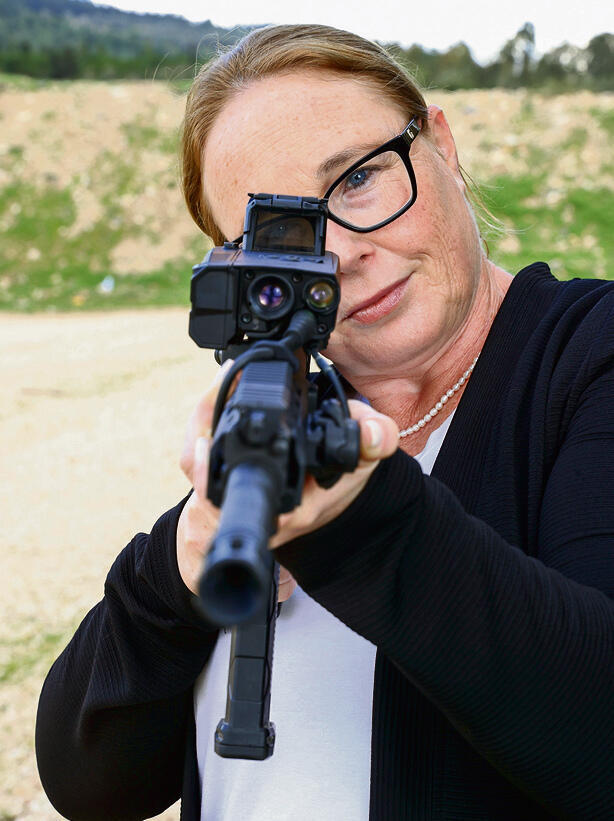
Michal Mor, CEO of Smart Shooter
(Photo: Elad Gershgoren)
After selling extensively to the IDF, the company expanded abroad. It now supplies the US military and other armed forces in Europe, India and even Thailand. Its ability to intercept drones has become a strong selling point.
Smart Shooter does not position itself as a dual-use company, and its customers are exclusively security forces. “Over the years, we’ve focused on the defense field and its challenges, and I have to say reality has exceeded all imagination,” said CEO Michal Mor. “It’s only intensifying. The current war has lasted a significant period, and we see how it constantly evolves — arenas change, threats change, and our technology evolves with them to meet what the world brings.”
Shir Ahuvia, the company’s chief product officer, added: “The ability to deliver precise fire against both ground and aerial threats is at the core of our products, along with providing a protective layer for individual soldiers, vehicles or critical assets. Remote-controlled stations and robotic systems allow operators to engage both ground threats and drones from a distance, keeping them protected.”
Long after the company was founded, Israel’s defense-tech sector emerged, with entrepreneurs who once may have downplayed the military nature of their work but now take pride in it. What has changed?
“Looking back 14 years — without revealing our age — I can say it was much harder,” Mor said. “The defense field is highly regulated. When you put a system in a soldier’s hands, it has to work, so as a startup you can’t skip steps. Years ago, there wasn’t a supportive ecosystem. Today there are more opportunities and a greater understanding that small companies focused on a very painful problem will ultimately solve it. Their flexibility is also a major advantage — larger companies are slower and more bureaucratic.”
Has the operational experience gained during the war helped sales abroad?
“I don’t often discuss clients, but the answer is yes. Proven capability in delivering what customers need strongly encourages procurement, as we’ve seen in the United States. Months of real-world use, alongside continuous improvement, make the technology both unique and battle-tested. I almost say ‘unfortunately,’ but that’s the reality.”
A laser cannon for defense
OptiDefense illustrates how a very small company — just five employees and a modest budget — can develop deep technology typically associated with major defense firms. It has developed a laser weapon, similar in concept to systems by Rafael and Elbit Systems, but with lower power and significantly lower cost. What began in 2019 as a tool to counter incendiary balloons along the Gaza border is now in operational use by the IDF, with plans to enter international markets as a defensive system for airports and sensitive facilities.
The company was founded by Dr. Udi Ben-Ami and Prof. Amiel Ishaaya of Ben-Gurion University, both experts in laser technologies. Their system is designed for environments with civilians and aircraft, unlike existing military laser systems that can pose risks to people. This means it can be deployed at airports or stadiums and neutralize hostile drones without endangering the public. It can also protect ground forces without putting soldiers at risk.
After developing a prototype and demonstrating it to the IDF, it was actually the police that showed strong interest and supported the project. During the period of incendiary balloon attacks, OptiDefense was responsible for most interceptions. “We did it on the equivalent of Rafael’s petty cash,” Ben-Ami said, “with a team small enough to fit in a single room there. We do everything — from detailed design to optics, pneumatics and electronics. We bring the system to the field, deploy it and operate it.”
In recent months, the company has accelerated development of new capabilities tailored to ground forces. Based on the same technology, it developed an upgraded model called “Light Blade,” with a target price of under $10 million — a bargain compared to alternatives that can cost ten times as much. A demonstration for Israel’s Defense Ministry and the US Department of Defense is expected later this year. “We hope the demo will be successful, and then I see major growth for the company,” Ben-Ami said.
Overcoming GPS disruption
InfiniDome develops smart protection systems for drones, enabling them to navigate despite signal jamming — one of the most significant challenges in modern drone warfare, both offensive and defensive. In the defense market, the technology ensures mission continuity in conflict zones even when GPS signals are disrupted. In the civilian sector, it is used to protect maritime platforms, critical infrastructure, delivery drones and vehicle fleets.
CEO and founder Omer Sharar spoke while attending an autonomous systems exhibition abroad, reflecting the company’s dual military and civilian focus. The company was founded in 2016, initially developing protection for autonomous vehicles against external takeover.
“At the time, if you wanted to raise money and dared to build hardware for the defense market, it was almost like suicide,” he said. “Defense startups were a strange bird.”
The autonomous vehicle sector then stalled, projects were canceled and customers disappeared — but the defense market opened up. “We realized the biggest pain point was in unmanned aerial systems,” Sharar said. “Even in the civilian market we focus on aerial platforms, because the easiest way to bring down a drone is to jam its GPS. It’s very simple, and we’ve seen in this war that not only our enemies do it — the IDF does as well. Our goal is to make critical platforms far more resilient — by roughly a factor of 100.”
The robot that gathers intelligence
Shifters AI is at the forefront of autonomous swarm technology — in its case, swarms of ground robots that walk on four legs. Its technology enables teams of robots to move autonomously through complex terrain while carrying sensors or other payloads. While the company targets civilian applications such as infrastructure inspection, agriculture, mining and search and rescue, its current focus is military missions: reconnaissance, intelligence gathering, monitoring hazardous areas and deploying sensors in hostile environments.
The company was founded in 2023 by CEO Ofer Ballin and President and CTO Assaf Chaprak. “We build groups of robots that operate in difficult, complex environments, move autonomously and carry various sensors and payloads,” Chaprak said. “We both design and manufacture the robots and develop software that allows them to synchronize and operate as a team. This is truly cutting-edge — you can imagine it as science fiction.”
One of the robot’s key features is mobility: it can traverse any terrain accessible to humans — buildings, rubble, caves — far beyond the capabilities of wheeled or tracked ground robots. “It’s the most mobile robot in the world,” Chaprak said. The robots can operate as a coordinated unit through the company’s operating system, which is continuously evolving toward supervised autonomy. All of this is offered at relatively low cost, enabling customers to deploy them in large numbers.
What led you to develop four-legged autonomous robots?
“Throughout the war in Gaza, despite the extensive use of drones, we kept seeing reports of soldiers killed and wounded,” Chaprak said. “Despite their impact, drones didn’t eliminate the need for boots on the ground. The core insight that led us to found Shifters is our top value — protecting human life. That’s what drives us every morning.”
Macushla is also developing ground robots. Before the war, it operated in the medical device sector, but it now produces wheeled unmanned ground vehicles (UGVs) for military uses such as tunnel warfare, debris removal and payload transport. Founded in 2018 by CEO Liad Fifer and Yair Tamir, the company has developed five types of robots in different sizes and configurations, capable of digging, breaching, operating automated weapon systems or intercepting drones. After extensive experience with the IDF, it is now targeting clients in the US and Germany.
Aero Sol represents another side of Israel’s defense-tech evolution. Founded in 2005, it initially manufactured composite products for Israel Aerospace Industries, Elbit Systems and Rafael, including drone components and helmets for fighter and helicopter pilots. In 2013, it entered the drone sector, developing tactical UAV systems under the Aero Sentinel brand.
 Israel VaserlaufPhoto: Asaf Haber
“Our flagship drone is called G2,” said founder and CEO Israel Vaserlauf. “It’s not large or heavy, and it’s among the most efficient and quiet in the world, making it ideal for covert missions in special units. Our role is to fly at about 200 meters, carry day and night cameras and give our clients eyes from above.” The company also developed the smaller G1 and larger G3 models, all of which are sold in the US market.
The growing interest in defense tech helps explain a recent financial development: Aero Sol is set to be acquired by publicly traded Veloryx (formerly Aquarius Engines). The companies have signed a memorandum of understanding for the acquisition of a 70% controlling stake. “The importance of small companies to the defense effort lies in their greatest advantage — speed, flexibility and real-time response,” said Veloryx CEO Roy Bargil.
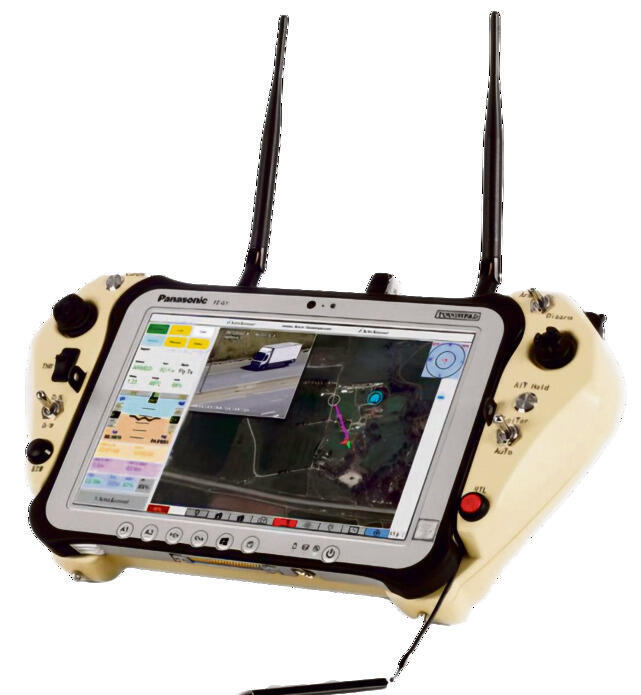
Aero Sol: eyes from above
(Courtesy of Aero Sol)
On Thursday, Aero Sol’s factory near Petah Tikva was hit by an Iranian missile. It is unclear whether the facility was the intended target or struck incidentally. The impact left a large crater and caused significant damage to surrounding structures. Veloryx reported the incident to the stock exchange, noting that the full extent of the damage is still being assessed. “Following a strike near the Aero Sol plant, significant damage was caused to the facility,” the company said in a statement. “The impact on Aero Sol’s operations is still under review.”
Bargil added: “Unfortunately, there was a strike near the Aero Sol plant. Fortunately, it occurred at a time when no employees were present, and there were no injuries. In the coming days, we will complete a full damage assessment.”