

Official talks between Israel and the United States on a new framework for American defense aid will begin next month, as the current agreement is set to expire in 2028.
The agreements cover 10-year periods. The Israeli team will be led by Defense Ministry Director-General Amir Baram and will include Israeli Ambassador to the United States Michael Leiter, representatives of the defense and finance ministries, the IDF and the National Security Council, ynet's sister publication Calcalist has learned.
Gallery
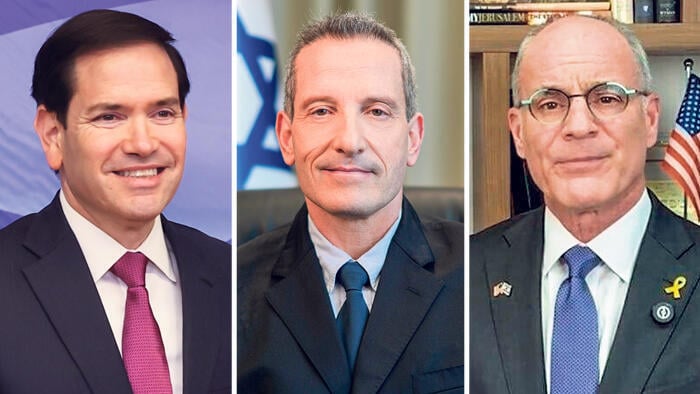
US Secretary of State Marco Rubio, Defense Ministry Director-General Amir Baram, Israeli Ambassador to the United States Michael Leiter
(Photo: Elad Malka/Defense Ministry, Alex Kolomoisky)
The American team will be led by Secretary of State Marco Rubio and will include his senior adviser, Michael Needham, and U.S. Ambassador to Israel Mike Huckabee. The start date for the talks was set during Baram’s visit to Washington last month.
The talks will focus on shaping the model under which the United States will provide security assistance to Israel for the decade from 2029 to 2038.
The current framework was signed in 2016, near the end of former president Barack Obama’s term, and took effect in 2019. The previous agreement was led on the Israeli side by Jacob Nagel, then acting head of the National Security Council. Under it, the U.S. administration provided Israel with $38 billion in security assistance over a decade.
Israel receives $3.3 billion a year under the framework for the purchase of major weapons systems, including fighter jets, refueling aircraft and helicopters from U.S. defense companies. It also receives about $500 million a year for the development and procurement of air defense systems.
The new security aid framework is expected to be fundamentally different from the one set to expire at the end of 2028. It is expected to serve as an interim arrangement ahead of Israel’s complete phaseout of reliance on American aid funds by 2038.
Under the emerging model, the amount of U.S. financial assistance for Israeli weapons purchases would gradually decline each year. At the same time, the two countries would deepen cooperation in developing unique weapon systems to preserve their military and strategic edge.
The amounts, timelines and scope of the joint Israeli-U.S. projects remain unclear and will be determined during negotiations between the sides. Israeli defense officials estimate that joint projects between the two countries' defense industries could focus on directed-energy weapons, including high-powered lasers, as well as on improved air defenses against expanding threats such as hypersonic missiles and artificial intelligence.
“Operational needs change according to the security challenges posed by different arenas, and we will need to maintain flexibility in developing military capabilities across a range of fields,” an Israeli defense official told Calcalist. “It is clear to us and to the Americans that there is no way to know now exactly what the battlefield will require in 12 years.”
Sentiment has shifted
The security assistance Israel receives from the United States amounts to about 0.5% of Israel’s gross domestic product and about 15% of its average annual defense budget. In recent decades, it reflected the special relationship between the two countries and the American commitment to preserving Israel’s qualitative edge in the Middle East.
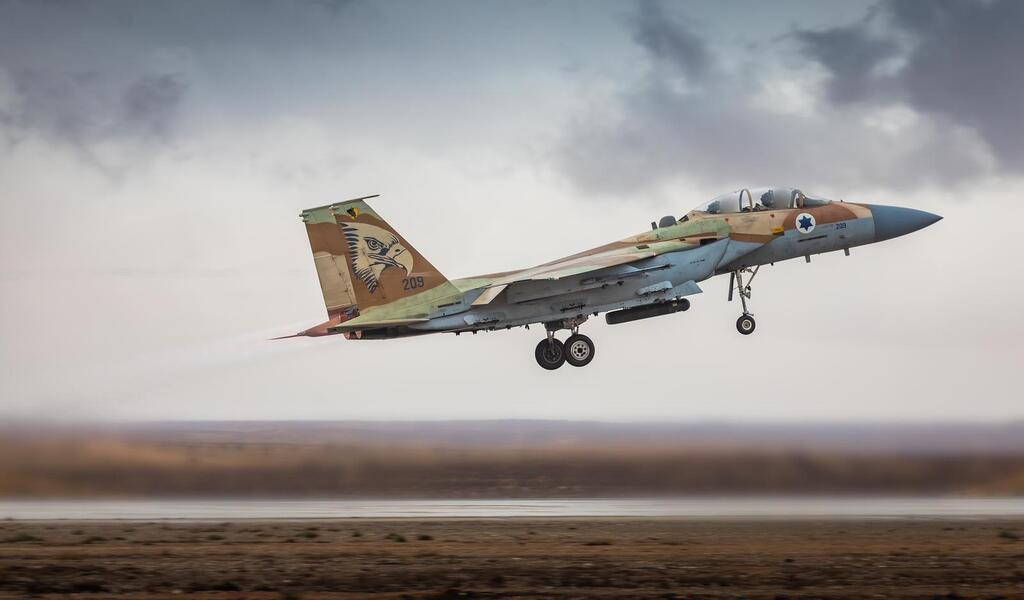
(Photo: IDF)
But just as that money upgraded Israel’s military capabilities, it also benefited U.S. weapons manufacturers for many years by effectively providing them with government subsidies. The vast majority of aid funds can be used only at U.S. companies.
The new agreement between Jerusalem and Washington will be formulated against the backdrop of the Russia-Ukraine war, which has left the American defense industry bustling with activity and enjoying unprecedented order backlogs. As a result, Israeli orders are now less critical for the industry.
Meanwhile, the American consensus over military aid to Israel has eroded over the past two years, among both Democrats and Republicans. Israel’s actions, especially in the Gaza Strip, have come under growing scrutiny from the progressive wing of the Democratic Party. In the Republican camp, meanwhile, there are growing voices arguing that Washington’s unwavering support for Israel undermines the isolationist “America First” line declared by President Donald Trump.
All of this is reflected in increasingly negative public opinion toward Israel, to the point of deep concern in Israel that Trump may be the last pro-Israel Republican president, just as Joe Biden may have been the last pro-Israel Democratic president.
Against the backdrop of these shifts in American public opinion, even Israel is no longer certain it can continue relying on U.S. taxpayer money. Defense sources told Calcalist they estimate that talks between the Israeli and American teams over the new aid framework will last about four months, though their frequency could be affected by the regional security situation, including a possible resumption of strikes in Iran and Lebanon.
In any case, one of the goals of these talks will be to establish a situation in which, by 2038, U.S. financial assistance to Israel will be reduced to zero.
Put it on my tab
Defense officials say that by the time the current agreement expires in 2028, Israel will already have exceeded its procurement from the United States by several billion dollars. Those debts will be paid out of the new framework, and if there is no such framework, Israel will have to repay them from its own budget.
They also say Israel will be able to maintain its military buildup plans even without American money, though doing so would require an increase in the defense budget.
Israel’s defense budget has swelled in recent months to 144 billion shekels, while the defense establishment is demanding that it be increased to 177 billion shekels. That amount is not final, since it remains unclear how the situation will develop across all security fronts through the end of 2026.
A return to war with Iran, an escalation of operations against Hezbollah in Lebanon, as well as a return to combat in Gaza, where Hamas is rebuilding its strength and rearming, could raise the budget demands of the defense establishment and the IDF by billions more shekels.
The Defense Ministry has also defined the coming decade in its strategic plan as an “intensive decade,” which is expected to include accelerated defense procurement of combat platforms such as fighter jets, refueling aircraft, attack helicopters, new naval vessels, satellites and air defense systems.
In response to the expected changes in the security assistance framework beginning next year, about 35 billion shekels will be added each year to the base defense budget under a plan presented by Prime Minister Benjamin Netanyahu to increase the budget by about 350 billion shekels over a decade.
But given the pace of events in recent years, which have repeatedly strained and broken through the defense budget, and in light of the U.S. cash spigot being turned off, it is doubtful whether this addition will be enough to meet all of Israel’s urgent security needs.
In any case, this unprecedented security package will come at the expense of health, welfare and education services.