


“ALL CAPS” is a distinct voice in Israel’s media landscape, blending legal insight, cultural commentary and personal perspective into a fast-moving weekly conversation. Led by attorney Nitsana Darshan-Leitner alongside Sarai Givaty, Titi Ayanaw and India Naftali, the panel brings together different voices with a shared focus on how Israel is understood, challenged and represented in real time.
By its third episode, that mission feels sharper and more urgent. The conversation moves fluidly between global headlines and personal stories, returning again and again to a central theme: the battle over narrative, who shapes it, who absorbs it and how quickly it spreads.
Watch full new episode: ALL CAPS episode 3


Episode 3 opens with a moment that captures that tension in its starkest form, absence. Not a logistical detail, but a decision heavy with meaning: Israel’s move to skip the March of the Living, the annual Holocaust remembrance event in which participants walk through Auschwitz alongside survivors to honor the victims. From that point, the episode establishes its tone, urgent, unsettled and acutely aware that memory itself is no longer static, but contested.
A painful absence and the weight of memory
The decision not to attend the March of the Living is presented as a security necessity, given the advanced age of survivors. But within the discussion, it quickly becomes something larger. For the panel, the march is not only a commemorative event but a living connection between generations. Its absence underscores a deeper unease. As one era of firsthand testimony fades, a new one emerges, shaped by conflict, misinformation and rising hostility.
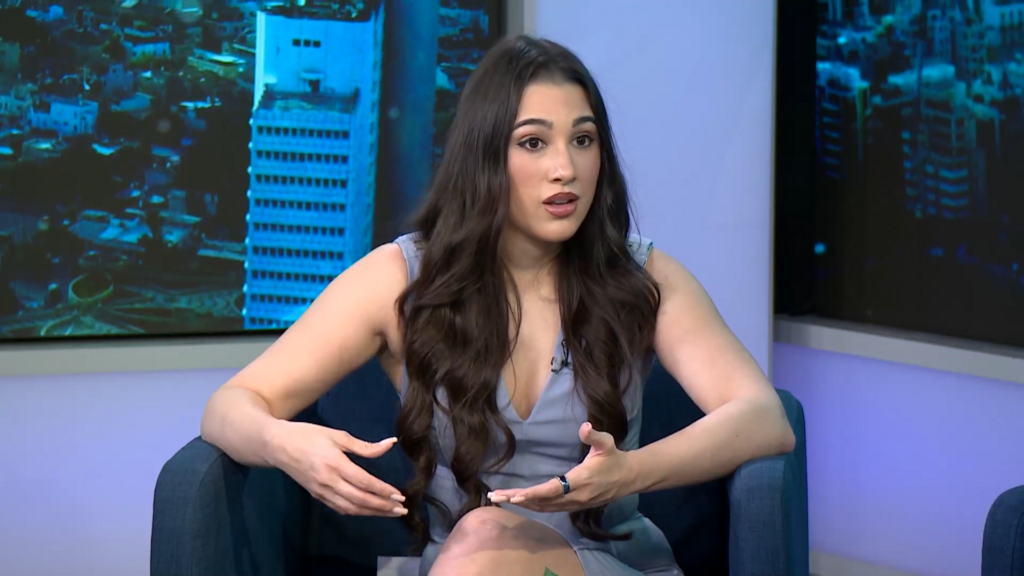
The juxtaposition is clear. The generation that survived the Holocaust is disappearing, even as a new generation faces a different kind of threat, one that plays out not only on battlefields but across classrooms and social media feeds.
A generation shaped by algorithms
From there, the episode pivots sharply to Gen Z, framed as both highly influential and deeply vulnerable to misinformation. The panel cites data showing significant gaps in Holocaust knowledge among young Americans, alongside a dramatic shift in how news is consumed. Platforms like TikTok have become primary sources of information, compressing complex conflicts into seconds-long clips.
The concern is not only about what younger audiences do not know, but how they come to believe what they do. Algorithms reinforce existing views, creating feedback loops that reward emotional, simplified narratives over nuance.
Yet the discussion is not entirely dismissive. India Naftali, identifying herself as part of Gen Z, acknowledges the uneven quality of education and the role of schools in shaping understanding. The result is a more layered critique, one that points to both systemic gaps and cultural shifts.
Stories over statistics and the role of humor
If the episode identifies a problem, it also points toward a strategy. Repeatedly, the panel returns to the idea that facts alone are no longer enough. Emotional connection, they argue, is what cuts through. Titi Ayanaw captures this directly, noting that people remember stories and emotions far more than statistics.
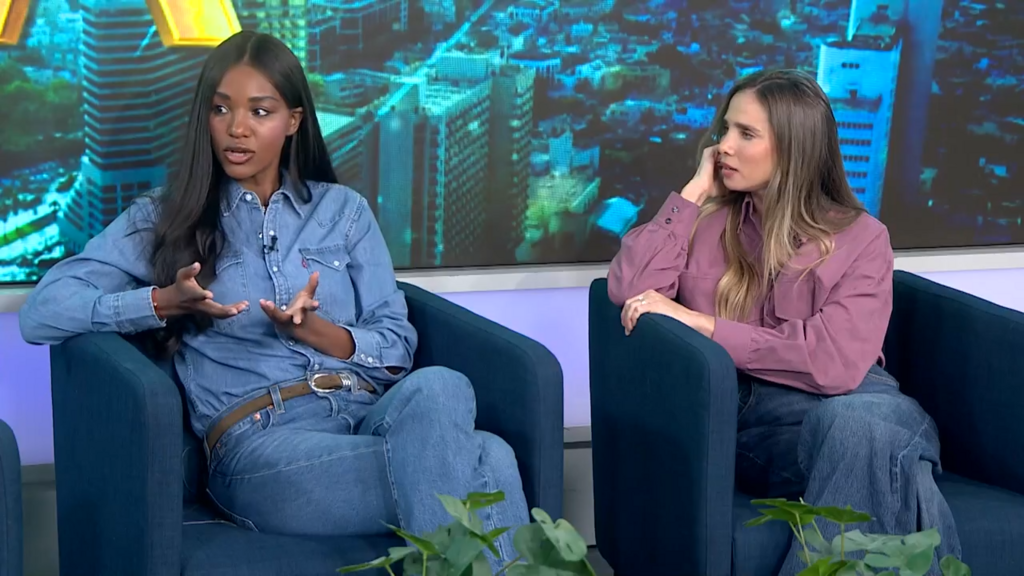
Titi Ayanaw and Sarai Givaty, 'comedy can create connection where traditional messaging fails'
(Photo: Screengrab)
That approach extends beyond serious testimony. Sarai Givaty, drawing on her experience as an actress, describes how she uses humor to reach younger audiences, arguing that comedy can break through short attention spans and create connection where traditional messaging fails.
The show reflects that balance. Moments of levity surface throughout the episode, from light exchanges about Israeli impatience in traffic to playful on-air banter, offering brief relief without undercutting the gravity of the topics. The humor feels intentional, reinforcing the broader point that storytelling, in all its forms, is often more effective than facts alone.
A human moment on the global stage
The episode’s emotional peak arrives with the appearance of Israeli Olympic judoka Peter Paltchik, whose story shifts the tone from analysis to lived experience. Paltchik speaks about the execution of a 19-year-old Iranian wrestler and the silence surrounding it, describing the moment as unbearable and calling for global attention.
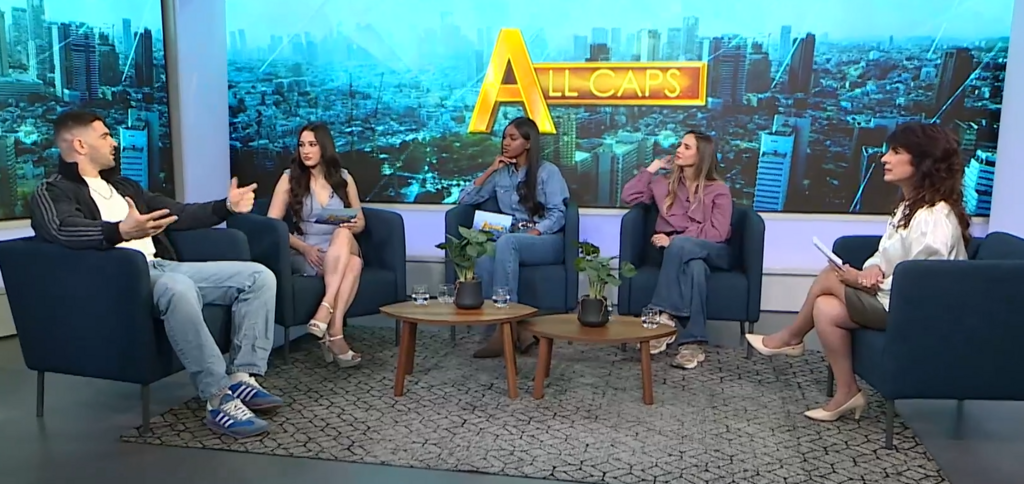
ALL CAPS panel and guest Israeli Olympic judoka Peter Paltchik
(Photo: Screengrab)
But it is his Olympic story that leaves the strongest impression. After years of training, he recalls winning his medal and dedicating it to a grieving family, describing an intimate moment of shared tears and pride.
In a show focused on narratives, this segment delivers something immediate and unfiltered. It reinforces the panel’s central argument, that personal stories have a power that no statistic can replicate.
Fighting misinformation head-on
The final segment returns to the broader battle over narrative, this time through direct confrontation with misinformation. The panel pushes back against claims about Jewish migration from Arab countries and conspiracy theories surrounding Israel’s role in the Middle East, framing them as attempts to distort history. The tone becomes more forceful, reflecting a sense that misinformation is not accidental but organized and persistent. The response, in turn, must be equally deliberate.
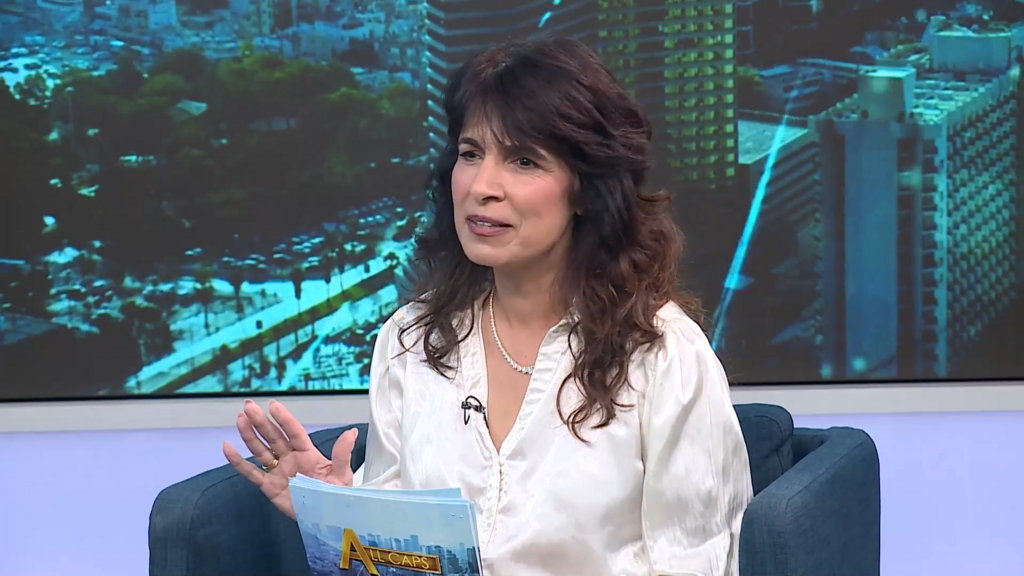
Nitsana Darshan-Leitner, 'misinformation is not accidental'
(Photo: Screengrab)
By the end of episode 3, “ALL CAPS” feels more cohesive and confident in its purpose. What begins with a moment of absence builds into a layered exploration of memory, identity and information in a time of conflict.
The episode moves from history to social media to personal testimony, showing how each shapes the other. Its conclusion is not explicit, but it is clear. The struggle is no longer only over events themselves, but over how those events are understood, remembered and retold.
First published: 15:14, 04.05.26