

Could Israel and Lebanon, two neighbors separated by decades of war and hostility, one day make peace? Episode 22 of "ALL CAPS" looks north to explore that possibility, while taking on the wider political and cultural battles shaping Israel’s place in a changing Middle East.
At the center of the episode is Lebanese born Israeli activist Jonathan El Khoury, who joins the panel for a personal conversation about Hezbollah, Lebanese identity and the possibility of a different future between the two countries.
Watch ALL CAPS latest episode



Born in Lebanon to a Christian family and raised in Israel, El Khoury says his own story shaped his support for both Israel and peace with the country of his birth. "Lebanon should be for the Lebanese," he tells the panel, arguing that the country has repeatedly been drawn into conflicts by outside forces, from the PLO and Syria to Iran and Hezbollah.
His family experienced that history firsthand. El Khoury’s father served in the South Lebanon Army and moved to Israel following the collapse of the SLA after Israel’s withdrawal from southern Lebanon in May 2000. El Khoury later followed with his mother and brother.
But the conversation looks forward as much as it looks back. Asked what Israelis might discover if relations between the countries were ever normalized, El Khoury suggests decades of conflict may have obscured just how much their societies share. "The Lebanese are much more similar to the Israelis than they think," he says.
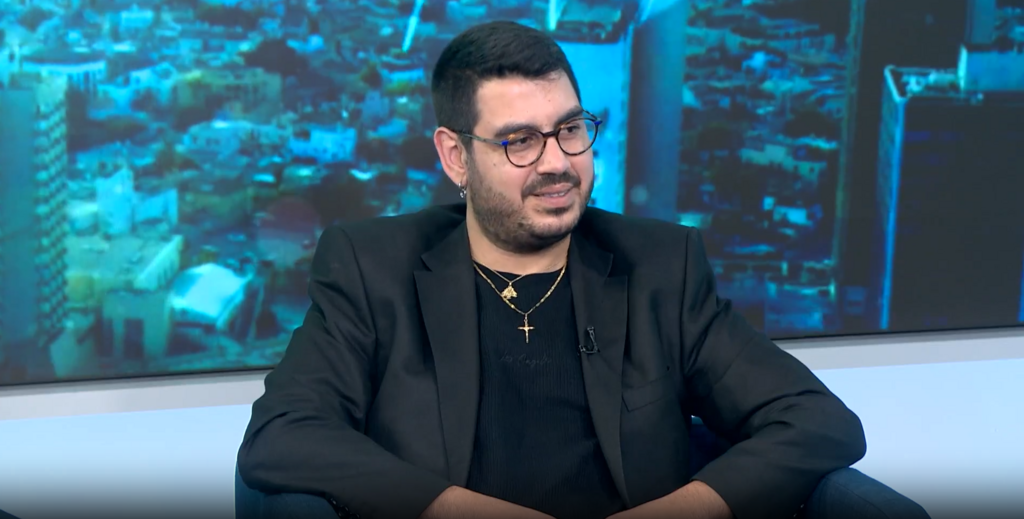
Jonathan El Khoury
The question of what Lebanon could look like beyond Hezbollah runs through the discussion. The panel also revisits Lebanese voices expressing exhaustion with war and a desire for economic stability and normal life, raising the possibility that changes inside Lebanon could eventually reshape relations across Israel’s northern border.
El Khoury also describes the risks surrounding his advocacy. He says he has received threats over the years, that Hamas produced a video targeting him shortly after October 7 and that Hezbollah has used his image in campaigns against Lebanese living in Israel.
His activism has taken him to university campuses across the United States, Canada and Europe, where he says he works to challenge misconceptions about Israel and its minorities. A clip featured in the episode shows him questioning students at UCLA about LGBTQ+ rights in the Middle East, Hamas and what he sees as a double standard in the way Israel is judged.
From there, Episode 22 widens the lens to the battle over Israel’s image abroad.
The panel reacts to a contentious Piers Morgan interview with a Hamas representative who denied intentionally committing crimes against civilians on October 7. The discussion focuses particularly on his argument that the attack helped isolate Israel internationally and return the Palestinian issue to the center of global attention.

The ALL CAPS panel
The hosts also turn to Boy George and his song "We Will Dance Again," discussing the cultural and professional pressures facing international artists who publicly support Israel.
Later in the episode, "ALL CAPS" examines a British legal effort involving an Israeli British reservist and the broader use of foreign courts against IDF soldiers. The panel also discusses a complaint filed with the Israeli Bar Association over legal assistance connected to the case.
The episode closes on a different side of the Israeli story, with entrepreneur Gal Fleitman, who turned a sports injury into an idea for customized mouth guards now used by professional athletes.
From the prospect of peace with Lebanon to battles over Hamas, public opinion and Israel’s legitimacy abroad, Episode 22 of "ALL CAPS" examines a region in flux and the competing forces trying to shape what comes next. And at its heart is a question that once seemed almost unthinkable: If Hezbollah’s grip on Lebanon weakens, could Israel’s northern neighbor eventually become a partner for peace?