


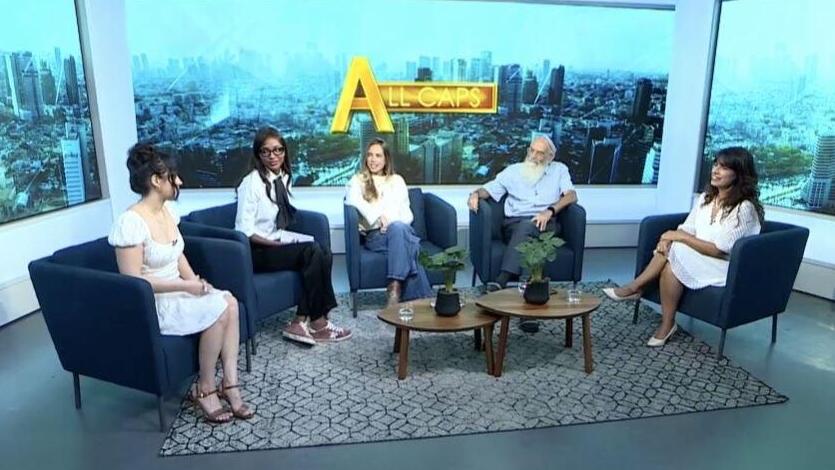
A new Jewish year is a chance to look back, take stock and, perhaps most importantly, begin again. In a special Rosh Hashanah edition of ALL CAPS, the panel revisited the moments that defined an extraordinary year for Israel, from the return of hostages and lives rebuilt after captivity to dramatic developments in Iran and one of the biggest technology deals in Israeli history.
But the special was not only about the year that was. With Rabbi David Stav joining the conversation, the program also turned to the themes at the heart of Rosh Hashanah: renewal, forgiveness, unity and the possibility of starting the coming year differently.
ALL CAPS Rosh Hashanah special - Episode 26
(Credit: Tal Saar)


The program opened with some of the images that left the deepest mark on Israelis, beginning with the return of hostages from Gaza. After two years dominated by war and loss, the sight of Israelis finally returning to their families offered rare moments of collective relief and joy.
The panel reflected on the national meaning of those homecomings, even as Hamas turned the releases into highly staged propaganda events. The enduring image, however, was of families waiting to embrace loved ones they had feared they would never see again.
That sense of renewal continued after the hostages returned home. The program highlighted survivors who went on to marry and begin new chapters, including Sasha Troufanov and Sapir Cohen, Eliya Cohen and his longtime partner Ziv Abud, and Emily Damari, who married Danielle Amit after the two met following Damari’s return from captivity.
Their stories, the panel said, captured something deeply fitting for the start of a new year: the determination to choose life, love and a future after unimaginable trauma.
“They didn’t just come back home, they built a home here in Israel,” Titi Aynaw noted. “To me, this is what resilience looks like.”
The special also revisited one of the year’s most dramatic geopolitical developments: the death of Iranian Supreme Leader Ali Khamenei after 36 years in power. India Naftali described his death as a historic turning point, while cautioning that the removal of one leader does not automatically mean the end of the Iranian regime.
“A dead dictator doesn’t necessarily mean a free Iran yet,” she said. “Regime change could take years, and it will come from within Iran itself.”
Israel’s economic resilience also featured prominently, with Google’s $32 billion acquisition of Israeli cybersecurity company Wiz highlighted as one of the country’s biggest business achievements.
Nitsana Darshan-Leitner said the deal was significant not only because of its scale, but because it came during a period of war and uncertainty, underscoring the strength and global reach of Israel’s technology sector.
‘Listen to the pain’
At the heart of the Rosh Hashanah special was a conversation with Rabbi David Stav about what it means to begin again. Stav described the Jewish new year as an opportunity not simply to make resolutions, but to recognize that change does not need to wait for the perfect moment.
The discussion also turned to the divisions within Israeli society and the sense of shared fate that emerged after October 7.
“Our enemies don’t distinguish between right and left, religious and secular, Sephardi and Ashkenazi,” Stav said. “These are internal issues that split between us. For our enemies, we are all the same.”
If Israelis are seen as one from the outside, he suggested, the new year offers an opportunity to ask what truly unites them from within.
Forgiveness, another central theme of the High Holidays, took on particular weight after years of war, grief and anger. Asked how people can find space for forgiveness when they feel hurt, isolated or targeted, Stav argued that forgiveness is not only something offered to another person, but also a way of freeing oneself from the burden of anger.
“You better forgive because you don’t want to remain with anger,” he said.
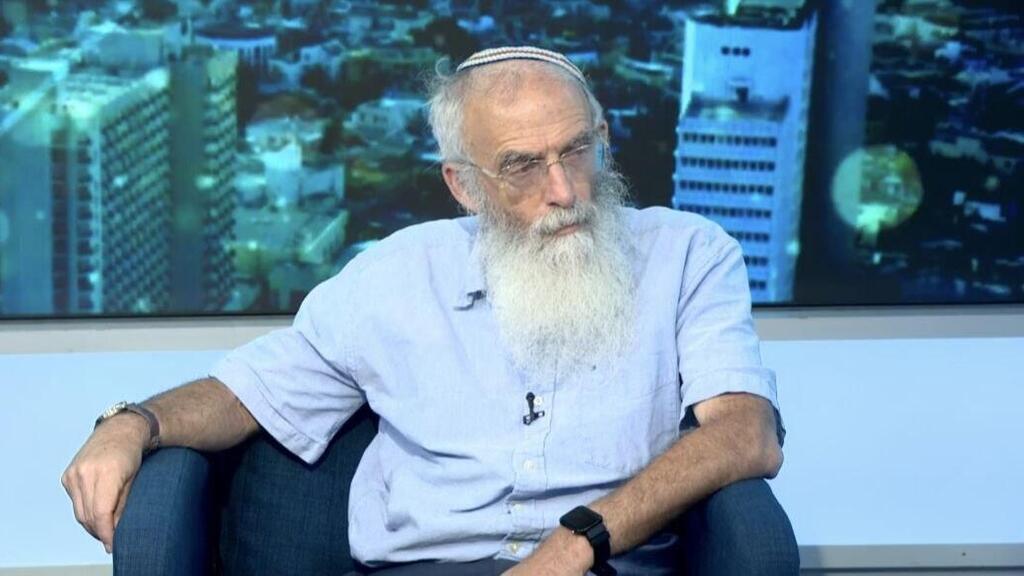
Rabbi David Stav
(Photo: Screenshot)
Stav’s most pointed message came when he was asked what the shofar would say if it could speak. Its power, he said, lies precisely in the fact that it has no words.
“Please listen to the pain,” Stav said. “There are so many different pains in the world, in Israeli society.”
That means listening not only to the pain of others, he added, but also to the quieter voice within.
“Listen to the pain of your soul itself,” he said. “Your soul sometimes is crying because it’s not fulfilling its mission.”
The Torah, Stav noted, does not merely command Jews to blow the shofar. “The Torah commands us to listen.”
A sweeter side of the year
No Rosh Hashanah special would be complete without something sweet. The program shifted gears with “Sweet or Sour,” a lighter segment asking the panel to pass judgment on some of the cultural, political and viral moments that dominated conversation over the past year.
Matcha and ube, squishy toys, Eurovision, Madonna and some of Israel’s biggest military and sporting moments all came up for debate, with the panel deciding what deserved a sweet verdict and what left a sour taste.
The result was a playful look at a year that was often anything but.
Looking toward the year ahead
The special closed where every Rosh Hashanah ultimately points: toward what comes next.
Panelists offered predictions for Israel, the United States and the wider world, touching on public diplomacy, defense technology, politics and the future of Israel’s relationship with its most important ally.
One prediction focused on the growing importance of Israel’s battle for public opinion.
“The next war for Israel is not only on the battlefield,” Titi Aynaw said. “It’s also on TikTok, on Instagram, on university campuses, in national media, in international media and now also in AI.”
Sarai Givaty looked toward continued growth in Israel’s defense technology sector as global demand rises for missile defense systems, drones and artificial intelligence.
The political discussion returned to a theme that ran throughout the special: the hope for greater unity at home and stronger partnerships abroad.
Rosh Hashanah does not erase the year that came before it. The losses remain, the challenges are still there and many of the questions facing Israel have no easy answers.
But the Jewish new year offers something else: the possibility of looking back without remaining there. After a year of war and homecomings, grief and celebration, upheaval and rebuilding, ALL CAPS entered the new year with a simple message: listen, reflect and begin again.
Watch the full episode of ALL CAPS featuring Nitsana Darshan-Leitner, Sarai Givaty, Titi Ayanaw and India Naftali for more unfiltered conversations, exclusive interviews and analysis of the stories shaping Israel and the Jewish world.
To learn more about Shurat HaDin's efforts to fight terrorism and defend Israel through legal action, visit Shurat HaDin – Israel Law Center.