


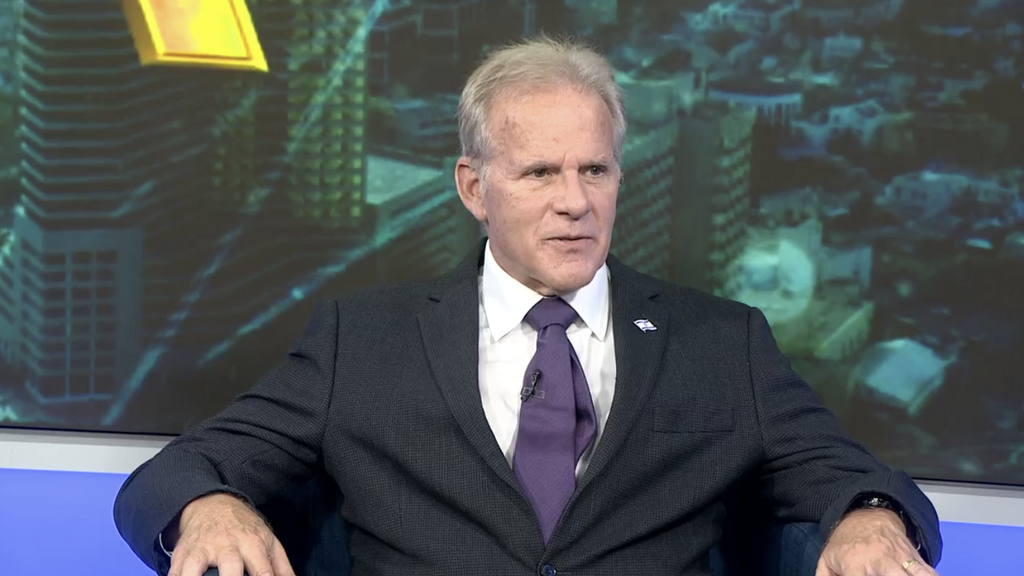
Israel may have far less time than its leaders believe to prepare for a future without American military assistance. That was the warning delivered by former Israeli ambassador to the United States Michael Oren during a wide-ranging interview on Episode 32 of ynet Global's ALL CAPS, where he questioned the stability of Israel's most important strategic alliance and urged the country to rethink its dependence on Washington.
"I don't know if we have 10 years. I don't know if we have 10 months. I don't know if we have 10 weeks," Oren warned, arguing that Israel must begin preparing immediately for a political reality in which American support can no longer be taken for granted.
ALL CAPS EP 34
(Video: Lior Sharon)


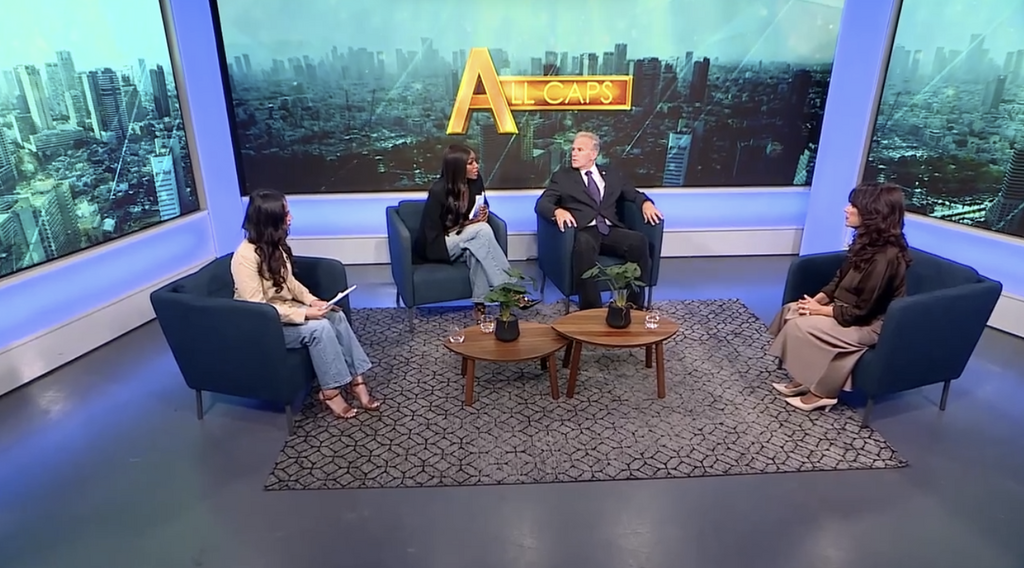
The historian, bestselling author and former Knesset member joined the ALL CAPS panel for a conversation about the future of US-Israel relations, the changing political landscape in America, the challenges of public diplomacy and the personalities of some of the world's most powerful leaders.
Oren explained that the relationship between Israel and the United States has historically been different from other international alliances because it rests on three foundations rather than two. Alongside shared democratic values and strategic interests, he identified a spiritual connection rooted in the religious beliefs of millions of Americans, particularly evangelical Christians, who view support for Israel as part of their faith.
That religious foundation, he argued, has helped the relationship survive decades of disagreements between Israeli governments and American administrations. But the political environment is changing, and Oren believes the traditional bipartisan consensus supporting Israel is eroding.
"We always used to say that support for Israel was the only truly bipartisan issue in Washington," he said. "And now you can say maybe it's bipartisan today still, but it's bipartisan in criticizing Israel, not supporting Israel."
According to Oren, opposition to American military assistance for Israel is increasingly visible not only among progressive Democrats but also within segments of the Republican Party. He warned that changes in Congress could threaten future funding for Israeli defense systems and other forms of military cooperation.
Asked whether the United States could actually cut off military assistance, Oren responded that he considered it a serious possibility, even describing the probability as high. The interview was recorded ahead of the November 3 US midterm elections, when he raised concerns that a shift in congressional control could have immediate consequences for American funding decisions.
Oren argued that Israel should gradually replace its dependence on American military aid with a more balanced strategic partnership, one in which both countries recognize the security, intelligence and technological contributions they make to each other. He recalled advocating this approach as early as 2021 and said Israel should not wait another decade to begin the transition.
He also urged Israeli leaders to diversify the country's international relationships, strengthen ties with India, Africa and South America, and develop alternative sources of weapons and ammunition. Israel, he noted, has faced similar challenges before, including periods when major arms suppliers changed their policies.
"We fought the Six-Day War without a single American bullet," Oren reminded the panel.
At the same time, he emphasized that Israel is not merely dependent on American support. The country contributes significantly to US security through intelligence cooperation, technological development and military capabilities, making the alliance valuable to both sides.
"Why would anybody in their right mind who cares about American security want to somehow cut off that relationship or weaken that relationship?" he asked.
Beyond military preparedness, Oren outlined several diplomatic steps he believes Israel must take to limit further damage to its international standing. These include stopping vigilante violence and illegal construction in Judea and Samaria, clarifying that Israel has no territorial ambitions in Gaza, Lebanon or Syria, and reaffirming that the country remains interested in peace despite the trauma of October 7.
The last point, he acknowledged, has become particularly difficult in Israeli political discourse. Nevertheless, he argued that Israeli leaders must once again be willing to use what he called the "P word" — peace — when communicating with the international community.
The conversation also offered a rare glimpse into Oren's personal experiences with American presidents and Israeli leaders. Asked which politicians had surprised him behind closed doors, he singled out former President Barack Obama, despite their significant political disagreements.
"He's a class act. He's a smart guy. He's very funny. He is quick on his feet," Oren said, describing Obama as an impressive and confident individual whose personal presence stood out during their encounters.
Former President Joe Biden, he explained, possessed a different quality that distinguished him from many other politicians: a genuine enjoyment of interacting with people. While some political leaders are uncomfortable with personal encounters, Oren recalled Biden enthusiastically entering crowded rooms and making an effort to shake hands and connect with those around him.
Drawing on his experience as a historian, Oren explained that truly great leaders must possess three qualities: political skill, strong decision-making abilities and exceptional communication skills. He cited Abraham Lincoln, Ronald Reagan and David Ben-Gurion as examples of leaders who demonstrated those characteristics.
His assessment of Prime Minister Benjamin Netanyahu was more critical. Having worked with Netanyahu for years, Oren described him as a talented communicator and skilled politician but questioned his ability to make difficult decisions quickly.
"He's a great communicator, he's great at politics... and he's not a good decision-maker," Oren said, adding that Netanyahu tends to deliberate extensively before reaching decisions.
The discussion then turned to another challenge facing Israel: the growing distance between the Jewish state and younger Americans. The panel questioned whether Israel had already lost the support of a generation increasingly influenced by TikTok, viral videos and social media rather than traditional institutions, religious communities or established news outlets.
Oren acknowledged the scale of the problem, explaining that young people are repeatedly exposed to emotionally powerful images from Gaza, often without the broader historical or political context that Israeli officials would want audiences to consider.
"It's an immense challenge. It's a monumental challenge," he said.
He also acknowledged that Israel had failed to respond quickly enough to the social media revolution during his own tenure as ambassador. While digital platforms were rapidly transforming public opinion, Israeli diplomatic institutions were slow to adapt.
"We were late, and we remain late," he said.
However, Oren cautioned against believing that a better social media strategy alone could reverse negative attitudes toward Israel. He argued that the country is confronting powerful political narratives, hostile international actors and deeply rooted antisemitic stereotypes that have existed for centuries.
One alternative he proposed was to invest in Israel's international cultural influence through film and television. During his time in the Knesset, Oren developed an initiative he called "Holywood," aimed at transforming Israel into a global production hub. He pointed to the international success of the Israeli television series Fauda as an example of how entertainment can introduce audiences to Israeli society in ways that traditional diplomatic messaging cannot.
"What if we had 20 programs like this?" he asked, suggesting that compelling storytelling could help international audiences develop a more complex understanding of Israel beyond the images and headlines dominating social media.
While Oren's interview formed the centerpiece of the episode, the ALL CAPS panel also explored several stories reflecting the challenges facing Jewish communities around the world.
The program opened with news of a Jewish museum in Baghdad, reportedly attracting more than 1,000 visitors. Housed in a restored Jewish school established in the 1920s, the museum preserves artifacts and memories of Iraq's once-thriving Jewish community.
The announcement prompted a discussion about the history of Iraqi Jews, including the Farhud, the violent 1941 pogrom in Baghdad, and the persecution and mass departure of Jews from Iraq during the following decade.
While the panel welcomed the public interest in Jewish heritage, some questioned whether the museum might also serve to soften the country's historical record. They pointed to the contradiction of celebrating Jewish history in a place where the Jewish community has virtually disappeared and where Israelis cannot freely visit.
Still, the museum's popularity offered a rare moment of optimism, with the panel acknowledging the importance of preserving a history that has largely vanished from contemporary Iraqi life.
The conversation then moved to New York, where Israeli and Jewish restaurant owners have faced anti-Israel protests, harassment and economic pressure. The panel discussed reports of establishments removing references to Israeli dishes from menus and signage to avoid becoming targets, while continuing to operate despite the hostility.
The discussion broadened into a debate about Israeli cuisine and identity, with the panel noting that many dishes associated with Israel reflect the traditions brought by Jewish immigrants from different countries. Their continued presence in Israeli food culture, the hosts argued, reflects the country's diverse immigrant heritage.
The panel also examined the international pro-Palestinian protest movement, discussing the role of political influence, social pressure and public understanding of the conflict. A street-interview video showing demonstrators struggling to identify Palestine on a map prompted questions about how deeply some activists understand the issues they are protesting.
In her regular Shurat HaDin segment, attorney and ALL CAPS host Nitsana Darshan-Leitner addressed a legal dispute involving Francesca Albanese, the United Nations special rapporteur on the Palestinian territories.
According to Darshan-Leitner, Albanese shared an edited clip of an interview with ALL CAPS panelist Sarai Givaty in which Givaty discussed the radicalization and indoctrination of children into terrorism. Albanese subsequently compared Givaty's comments to arguments used by Nazi officials during the Holocaust.
Darshan-Leitner rejected that comparison, arguing that Givaty had never advocated harming children, and announced that a NIS 500,000 defamation lawsuit had been filed against the UN official.
"Immunity must never become impunity," Darshan-Leitner declared, insisting that international officials should be held accountable for statements that allegedly damage the reputations of Israelis.
Addressing Albanese directly, she concluded: "You spent years putting Israel on trial. Now it's your turn to face justice. We will see you in court."
The episode ended on a more emotional note, with a video contrasting two moments at a yeshiva in Sderot, three years apart. The first showed students singing in the hours following the October 7 massacre, with one person standing guard at the entrance. The second showed a crowd gathering at the same location during this year's Simchat Torah celebrations, singing and dancing together once again.
The images prompted the panel to reflect on the resilience of Israeli communities, particularly those in the south, where families have endured loss, displacement and the lasting trauma of the attacks.
Panelists spoke about children who had lost parents, women who had lost husbands and communities struggling to rebuild their lives. Yet the return to singing and dancing represented something more than a celebration. It was a reminder of the determination to continue living despite profound grief.
"There is something really unique about our society, about the Israeli people," one panelist said, reflecting on the ability of communities to recover and rebuild.
From Oren's warning about the future of Israel's relationship with America to the determination of Jewish communities facing hostility abroad and the resilience of Israelis rebuilding after October 7, Episode 32 of ALL CAPS brought together stories of uncertainty, identity and survival.
The central question running through the episode was not only how Israel confronts the challenges ahead, but how it prepares for a changing world while preserving the strength that has carried it through previous crises.
- Watch the full episode of ALL CAPS featuring Nitsana Darshan-Leitner, Sarai Givaty and Titi Ayanaw for more unfiltered conversations, exclusive interviews and analysis of the stories shaping Israel and the Jewish world.
- To learn more about Shurat HaDin's efforts to fight terrorism and defend Israel through legal action, visit Shurat HaDin – Israel Law Center.
First published: 14:50, 11.08.26