


From rising antisemitism and international criticism of Israel to the future of Jewish identity and the remarkable achievements of Israeli athletes, Episode 32 of ynet Global's ALL CAPS brought together sharp opinions, personal stories and an exclusive interview with Jewish National Fund-USA CEO Russell Robinson.
Hosted by attorney Nitsana Darshan-Leitner, alongside panelists Sarai Givaty, Titi Ayanaw and India Naftali, the episode explored some of the most pressing issues facing Israel and Jewish communities worldwide, while questioning how the country is portrayed, defended and supported on the international stage.
ALL CAPS Episode 32


Israel's security under scrutiny
The discussion opened with the attempted attack aboard a Flydubai flight and the international controversy surrounding Israel's subsequent aviation security measures. Darshan-Leitner criticized reactions from France to Israel's decision to tighten restrictions on pilots from countries with which it does not maintain diplomatic relations.
The panel questioned why measures intended to protect passengers were being characterized by critics as discriminatory or politically motivated, arguing that Israel's security concerns must take precedence.

The conversation then shifted to an American military report examining lessons learned from Israeli battlefield medicine. The panel highlighted advances in emergency medical treatment that have significantly improved the survival rates of wounded IDF soldiers.
According to figures discussed on the show, the mortality rate among wounded Israeli soldiers declined from approximately 15% during the 2006 Second Lebanon War to 7% in 2023. Improvements in rapid battlefield treatment, the availability of medical professionals and the use of blood products closer to the front lines were cited as contributing factors.
The panel described these developments as an example of Israeli innovation that could help save American military personnel and soldiers around the world.
Teaching hatred and the challenge of peace
Another discussion focused on videos presented during the episode showing children in Gaza participating in activities depicting violence against Jews, contrasted with footage of Jewish children in Brooklyn being evacuated from school following bomb threats.
The panel questioned how future coexistence could be achieved when children are exposed to antisemitism and hostility from an early age.
"How are we supposed to talk about peace when children are being taught hate before they even understand what peace means?" one panelist asked.
Darshan-Leitner argued that meaningful peace would remain difficult without addressing incitement and education, emphasizing that changing attitudes among future generations is essential to any lasting resolution.
Greta Thunberg: From climate activism to pro-Palestinian protests
The conversation also turned to Swedish activist Greta Thunberg and her increasingly visible involvement in pro-Palestinian demonstrations and other political protests across Europe.
The panel questioned Thunberg's transition from climate activism to international political causes, including her participation in protests in France and her involvement in the Western Sahara issue.
In a lighter, sarcastic exchange, the hosts questioned whether Thunberg's expanding activist agenda had overshadowed the environmental movement that originally brought her international recognition.
The discussion reflected the show's characteristic combination of political commentary, humor and outspoken opinions.
Russell Robinson: ‘College is too late’
The centerpiece of the episode was an exclusive interview with Jewish National Fund-USA CEO Russell Robinson, conducted by Darshan-Leitner in Yevul, a community near the Gaza border.
The interview took place during a special Torah dedication ceremony connecting Masada, where ancient Torah fragments were discovered, with a southern Israeli community affected by the October 7 Hamas attacks.
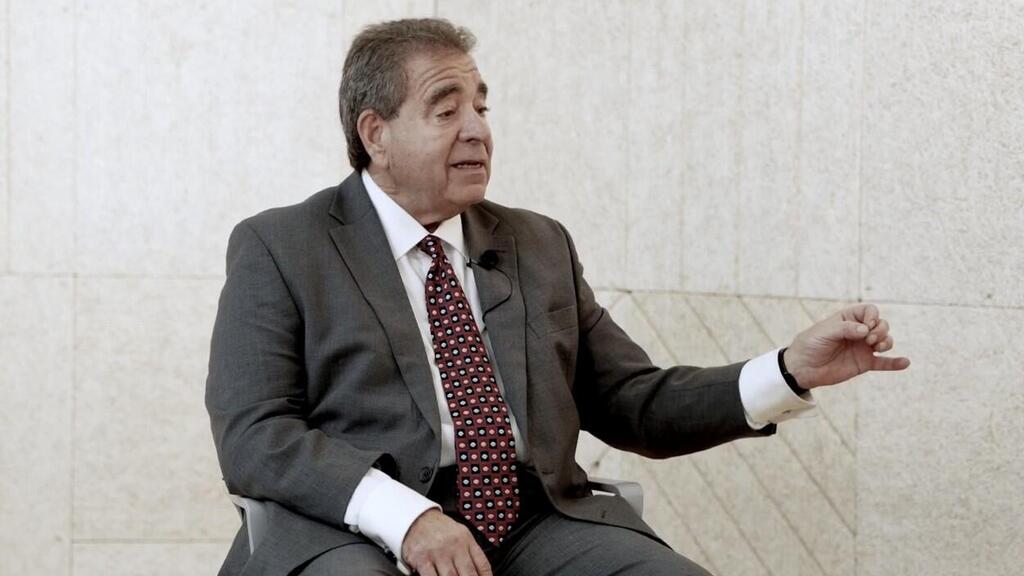
Jewish National Fund-USA CEO Russell Robinson
(Photo: Screenshot)
Robinson described the ceremony as a powerful expression of Jewish survival and continuity, emphasizing that the Jewish people remain connected to their land more than 2,000 years after the events associated with Masada.
"We don't do projects, we do vision," Robinson said, describing JNF-USA's commitment to developing Israel's northern and southern regions, strengthening communities and encouraging population growth.
He also discussed the organization's longstanding work with communities near Gaza, including evacuation preparations established before October 7. According to Robinson, those plans helped JNF-USA support the evacuation of tens of thousands of residents following the Hamas attacks, while the organization began planning for their eventual return almost immediately.
But much of the interview centered on what Robinson considers one of the greatest challenges facing Jewish communities today: strengthening Jewish identity before young people encounter antisemitism on university campuses.
"College is too late," he declared. Robinson argued that Jewish teenagers between the ages of 15 and 17 are at a particularly important stage in developing their identities and connection to Israel.
Through JNF-USA's Alexander Muss High School in Israel, the organization aims to bring 10,000 American teenagers to Israel by 2035 for extended educational experiences, giving them the opportunity to connect with Israeli society, history and Jewish heritage firsthand.
"The strength of American Jewry is Israel, and the strength of Israel is going to be Diaspora Jewry. We are one," he said.
Asked about the dramatic increase in antisemitism following October 7, Robinson argued that Jewish communities must become more confident in publicly expressing their identity and support for Israel.
He shared personal stories of American teenagers whose experiences with antisemitism motivated them to embrace their Jewish identity, including a girl from Arizona who discovered a swastika on her school locker.
Robinson also stressed that the relationship between Israel and Diaspora Jewry should transcend political disagreements and changes in government.
Looking ahead, he called for a long-term investment in the next generation, predicting that today's teenagers could become tomorrow's Jewish community leaders, philanthropists and advocates for Israel.
"In 10, 15 years, the greatest leaders that we'll have will be the teenagers that we invested in today," he said.
Taking the Red Cross to court over Israeli hostages
Back in the studio, Darshan-Leitner used her Shurat HaDin segment to address the International Committee of the Red Cross and its handling of Israeli hostages held by Hamas in Gaza.

Nitsana Darshan-Leitner
(Photo: Screenshot)
She described legal action initiated against the organization over what she characterized as its failure to fulfill its humanitarian responsibilities toward the hostages.
Darshan-Leitner recalled efforts to secure Red Cross visits and the delivery of medication to hostages, arguing that the organization had failed to exert sufficient pressure on Hamas.
She also referenced remarks attributed to the Red Cross president in an interview with The New York Times, acknowledging that earlier pressure during hostage negotiations might have helped save more lives.
For Darshan-Leitner, those remarks reinforced the arguments behind the lawsuit.
"We did not need the Red Cross to express regrets. We needed it to save lives," she said.
Watch the full episode of ALL CAPS featuring Nitsana Darshan-Leitner, Sarai Givaty and India Naftali for more unfiltered conversations, exclusive interviews and analysis of the stories shaping Israel and the Jewish world.
To learn more about Shurat HaDin's efforts to fight terrorism and defend Israel through legal action, visit Shurat HaDin – Israel Law Center.
First published: 14:57, 10.25.26