

Hard to believe, but seven years have already passed since Game of Thrones signed off for good at the end of its eighth season in spring 2019. Many attempts have been made across streaming platforms, from Netflix to Disney+, to replicate the unprecedented success of that extraordinary television phenomenon. The bottom line: They all failed. And so did HBO, which launched House of the Dragon as the first prequel to the original series.
Head writers Ryan Condal and Miguel Sapochnik took on the task of adapting Fire & Blood, the books George R.R. Martin wrote alongside the rise of Game of Thrones, based on the fictional world he created and the plots he wove in A Song of Ice and Fire. The two creators tried to grab hold of the tails of the dragons that burst into our lives, hoping to ride them up into the skies. After the first season’s stagnation and the second season’s slow progress, it can now be said that the third season, which premiered over the weekend, meets the high bar set for it.
The starting point for House of the Dragon was especially promising, coming just three years after Game of Thrones ended. Original series creators David Benioff and D.B. Weiss had laid the foundations for the complex political map of the Seven Kingdoms as a parallel reality for so many fans, and all that remained was to go back in time to understand how we got here. Condal offered a survey of the past as a kind of historical study along a timeline, or perhaps a weather forecast, because after all, winter is coming. That is how we learned, wise after the fact.
With the information loyal viewers already had, the family trees and the royal and regal syntax common in the region, the screenwriters’ work should have been easy. Yet somehow, they wasted their time and ours on tangled family dramas full of passion. Instead of Shakespearean conflicts with dragons and huge battles against spectacular landscapes, we got a soap opera packed with personal feuds and love stories behind closed doors, but without the graphic sex of the original series.
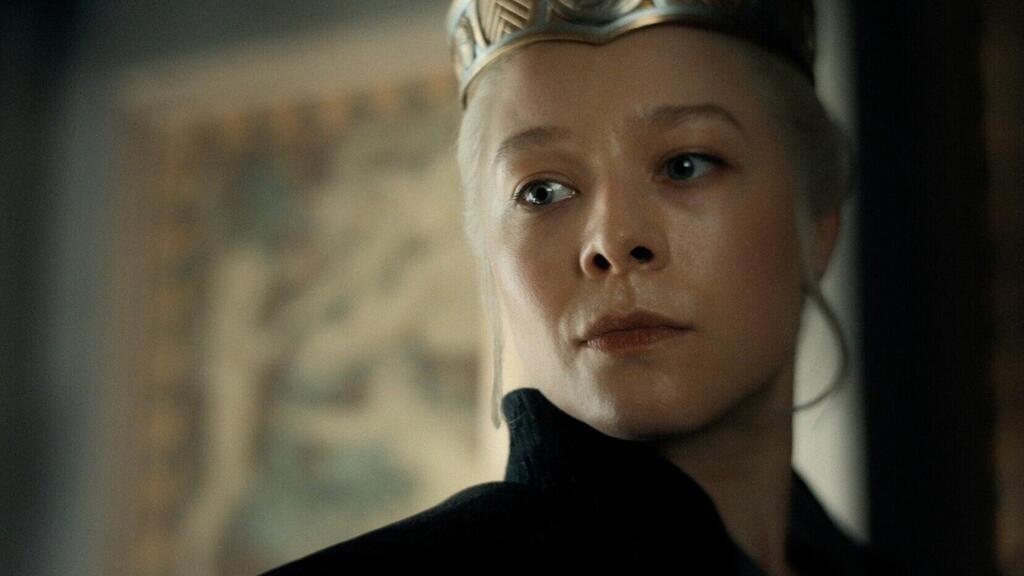
Well, if you survived the endless chatter, tears, schemes and conspiracies of the first two seasons, the reward arrives in the third, where the dirty laundry kept within the family spills outward as a violent, large-scale geopolitical war. The love-hate relationships between mother, father, brother, sister, uncle, nephews, grandfather and the rest of the relatives become tangled in various contexts, not all of them proper, involving incest, as is customary in House Targaryen.
The first seasons pushed us, sometimes against our will, into a knot of labyrinths — and dragons — alongside nonstop name-dropping that introduced us to Rhaena, Rhaenyra, Alicent, Aegon, Aemond, Daemon, Jacaerys, Helaena, Criston Cole and many other good characters, and mostly bad ones. To the creators’ credit, they continued the tradition of mercilessly killing off key characters. Heroes were cut — literally and figuratively — from the narrative playing field, which kept shrinking all the way from a cunning family dispute to the all-out war that has finally arrived.
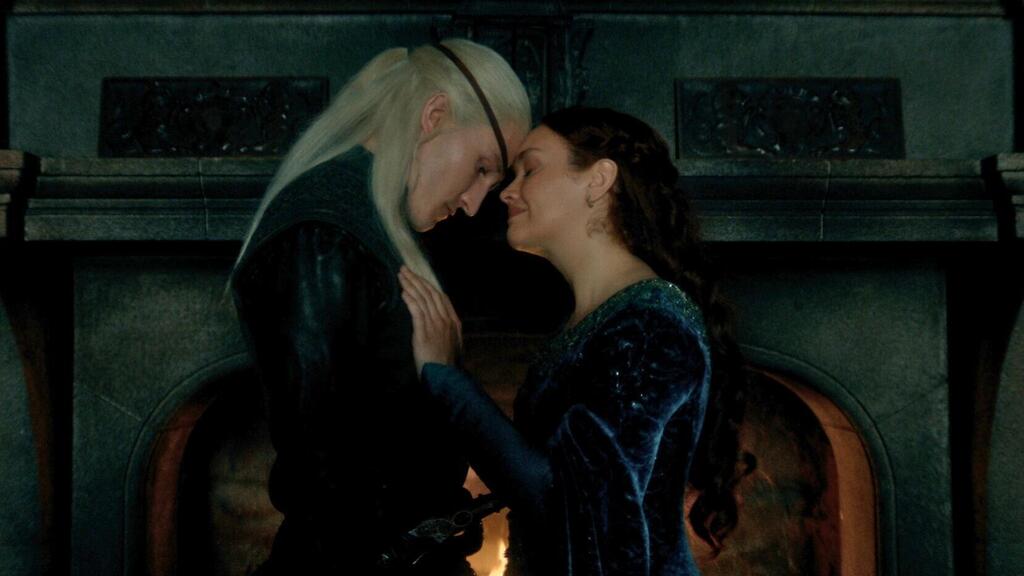
From 'House of the Dragon' Season 3
(Photo: Courtesy of HBO)
So where do we stand? Here is a summary of events following the previous season, with no spoilers for the current one: What began as a misunderstanding over the heir of King Viserys Targaryen on his deathbed develops into a series of ongoing honor killings in the name of the family, sparing not even the younger generation. On one side, the so-called Green Council, Aegon (Tom Glynn-Carney) has taken the Iron Throne with the blessing of his mother, the widowed queen Alicent Hightower (Olivia Cooke), and under the narrow gaze of his ambitious brother Aemond (Ewan Mitchell), whose other eye is missing. Later, the vile Aemond will try to assassinate his brother in a friendly-fire incident that brings down Aegon’s dragon and leaves the king himself dying, burned across his body.
On the other side, the Black Council is led by the king’s daughter Rhaenyra (Emma D’Arcy), who had been designated from the start as heir to the throne and was disgracefully expelled from the capital. She, too, has her own issue of sibling jealousy involving Prince Daemon (Matt Smith), though the two smooth things over while wrinkling the sheets.
With the support of Corlys Velaryon (Steve Toussaint) and his naval fleet, which lays siege to the capital, and backed by an upgraded squadron of dragons belonging to her and her allies, Rhaenyra plots a military coup to fulfill her ambitions as a claimant to the throne and to avenge the murder of her son Lucerys.
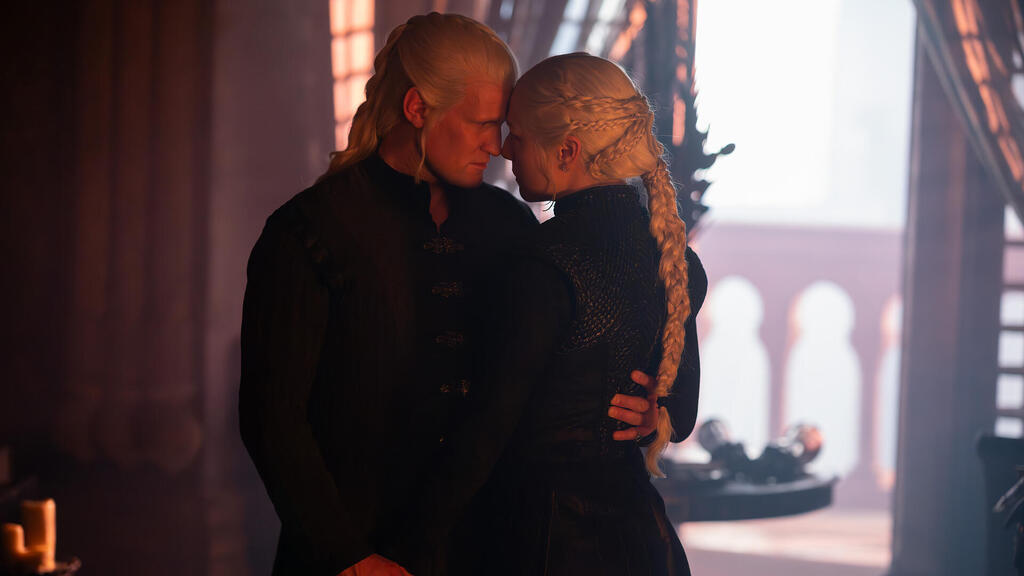
From 'House of the Dragon' Season 3
(Photo: Courtesy of HBO)
The previous season ended with Alicent and Rhaenyra, childhood friends turned bitter rivals as mothers, reaching an agreement over the war to come: Alicent promises to open the gates of the capital to the Black army. It is a metaphorical knife in the back of her son Aegon, but the move is meant to prevent Rhaenyra’s very real sword from cutting off his head. The two tormented mothers, who have lost so much, advance a cease-fire, but the power-hungry men around them are not party to the emerging détente. Aemond certainly has no intention of giving up the Iron Throne on which he has settled comfortably, believing his brother to be dead, not even at the cost of the lives of the rest of his family or the well-being of his subjects.
Exhausted? You are not alone. But the good news is that the action component kicks up a gear in the new season, and already in the first episode we witness a sweeping and thrilling naval military confrontation, ending with the death of one of the heroes — perhaps tragic, perhaps heroic. The second episode’s twist-filled plot unfolds according to the outline devised by Rhaenyra and Alicent, but with mishaps and surprises at every turn on the way to the Black Council’s seizure of power.
Most fascinating of all, however, is the third episode, which is not overflowing with action scenes but also not with engineered monologues in archaic English from George R.R. Martin’s word processor. Rhaenyra is at its center, not as a rebel or claimant to the throne but as a sovereign. Suddenly, war is not the main thing, and attention turns to the measured and practical management of state affairs. The new queen is full of good intentions, but discovers that the kingdom’s coffers have been emptied, the subjects are suffering from poverty and hunger and the civilian systems are not functioning. It turns out that a strong army does not solve everything, or anything at all.
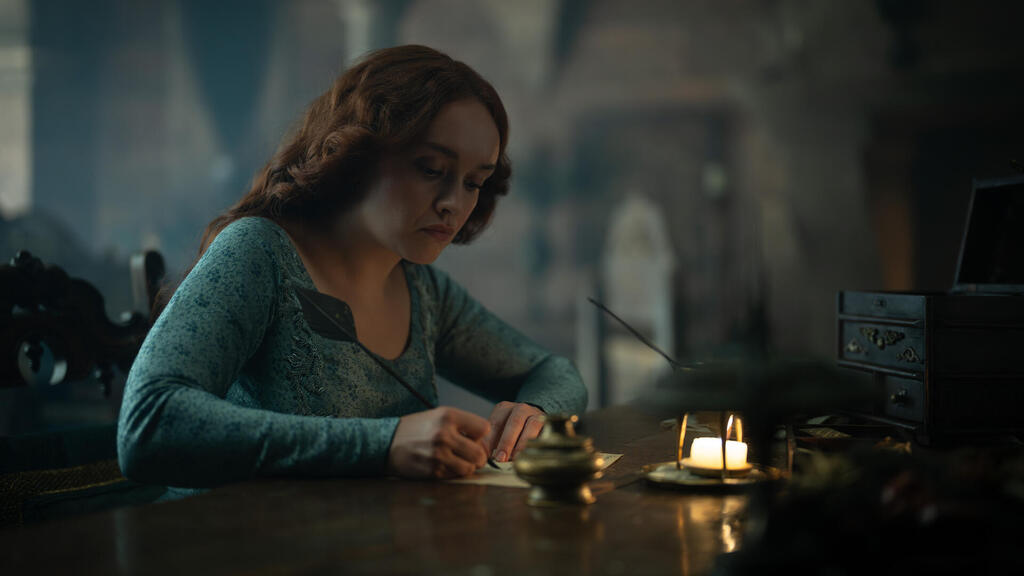
From 'House of the Dragon' Season 3
(Photo: Courtesy of HBO)
The insight into the limits of a ruler’s power is one of many points of contact between the fictional universe of House of the Dragon and the geopolitical reality of our own world, especially now. If the current military confrontation among the United States, Israel and Iran initially revolved around the nuclear issue, ballistic missiles and vast ideological gaps, the burning issue today is the opening of the Strait of Hormuz. It is the ayatollah regime’s pressure point on the testicles of the global economy, much like the Gullet in the fictional Blackwater Bay, where Corlys and his men impose a blockade to pressure maritime traffic across Westeros, ultimately bringing about a change of rule despite the military alliance formed to break it.
In the end, money makes the world go round — gold, in the case of the Seven Kingdoms. Sometimes the most powerful weapon is right under your nose. Not long-range missiles fired from one side of the world to the other, but the result of being in the right place at the right time. The Strait of Hormuz or the Gullet — it is the same idea.
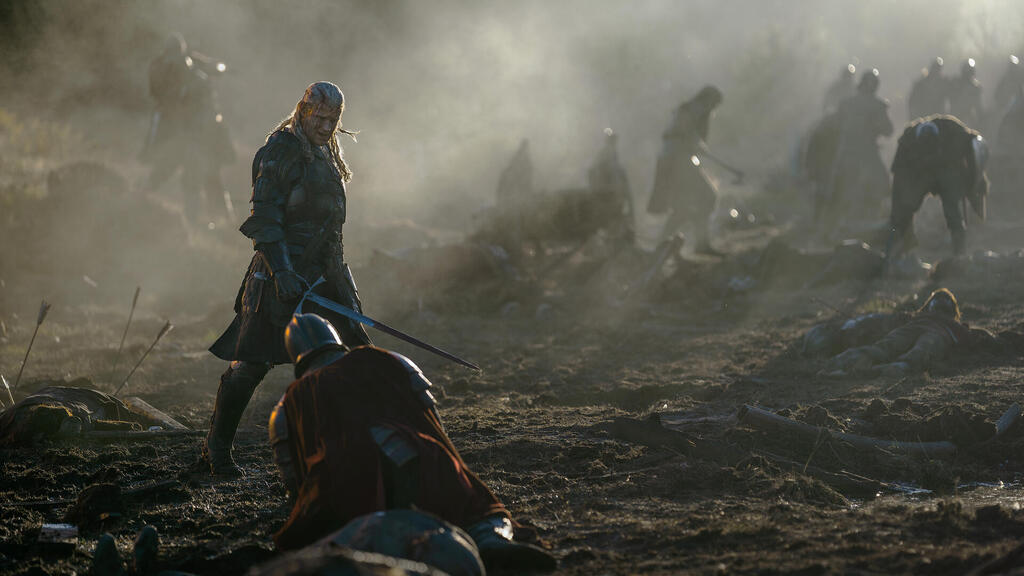
From 'House of the Dragon' Season 3
(Photo: Courtesy of HBO)
The series also teaches something about the limits of the dragons’ power. They achieve total air superiority, much like the heroic pilots of the Israeli Air Force, but these fearsome monsters are playing with fire. They can burn, kill and destroy, but they cannot build or nurture anything except hatred and a desire for revenge that rises from the ground in the form of terrorist organizations and guerrilla warfare, which even the most terrifying dragons cannot eradicate.
In its third season, House of the Dragon charts its course along the trail left by Game of Thrones, which was always a soap opera, seasoned with Shakespearean dialogue and saturated with brutal violence and explicit sex. But that dramatic blend was always politically charged, now more than ever.
Military decisions, personal perks, a struggle over the righteousness of one’s path and eternal glory may generate good drama for viewers on screen, but not when they look around at practical reality. The true challenge for a ruler is not to win a war but to govern a state, and to improve the lives and welfare of its citizens.