

Israel and Russia are not expected to be included this year in the competition for the top prizes at the Venice Biennale, even though both countries remain among the official participants in the international exhibition and are expected to present national pavilions, according to reports.
The five jurors responsible for selecting the winner of the Biennale’s top prize, the Golden Lion, have declared they will not enter the Israeli and Russian pavilions, citing accusations of war crimes against their leaders, Prime Minister Benjamin Netanyahu and President Vladimir Putin.
The Biennale itself has not issued an official statement on the matter. However, the list of awards published on its website indicates that the international jury will decide only among countries and participants included in the official competition track.
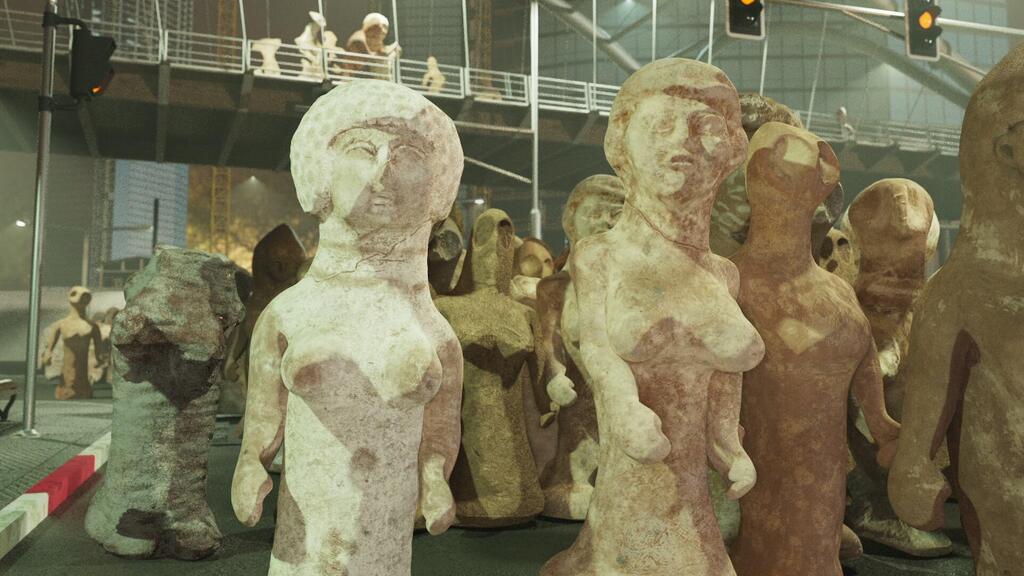
From the Israeli video work 'Lamentations' presented at the Venice Biennale in 2024
(Photo: Ruth Patir)
The jury panel is headed by Brazilian curator Solange Oliveira Farkas. Other members include Elvira Dyangani Ose, artistic director of the Abu Dhabi Public Art Biennial, as well as Zoe Butt, Marta Kuzma and Giovanna Zapperi.
The jury said in a statement, in part: ‘As members of the jury, we also have a responsibility towards the historical role of the Biennale as a platform that connects art to the urgencies of its time. We acknowledge the complex relationship between artist practice and nation-state representation that provides a central structure for the Venice Biennale, particularly the way this relation binds artists’ work with the actions of the state they represent. On this edition of the Biennale, we wish to set out our intention – to express our commitment to the defense of human rights and to the spirit of Koyo Kouoh’s curatorial project. Consequently, this jury will refrain from the consideration of those countries whose leaders are currently charged with crimes against humanity by the International Criminal Court."
The reports come amid growing political sensitivity surrounding international cultural events, particularly those involving countries engaged in ongoing conflicts in recent years, including Israel and Russia. Earlier this week, the European Commission announced it would withdraw a €2 million grant due to Russia’s participation — after the country had been excluded by the Biennale in recent years — and gave organizers 30 days to respond.
First published: 20:59, 04.23.26