

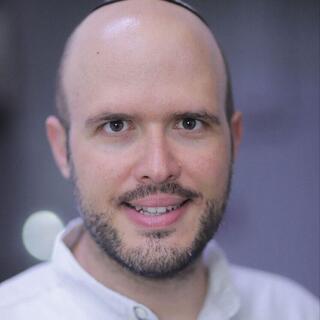
See what color can do: Internationally renowned artist Sam Halaby, a member of Israel's Druze minority and the man behind Daliyat al-Karmel’s famous Color House, recently received an unexpected phone call from Daliyat al-Karmel council head Rafik Halabi, who asked him to create a colorful sculpture for the new elementary school being built in the town.
The request left the 36-year-old artist speechless. For Halaby, the sculpture is far more than another commission. It represents a victory in a much longer struggle to make art and creativity feel legitimate in a society where, he says, being called a “painter” was once used as an insult.
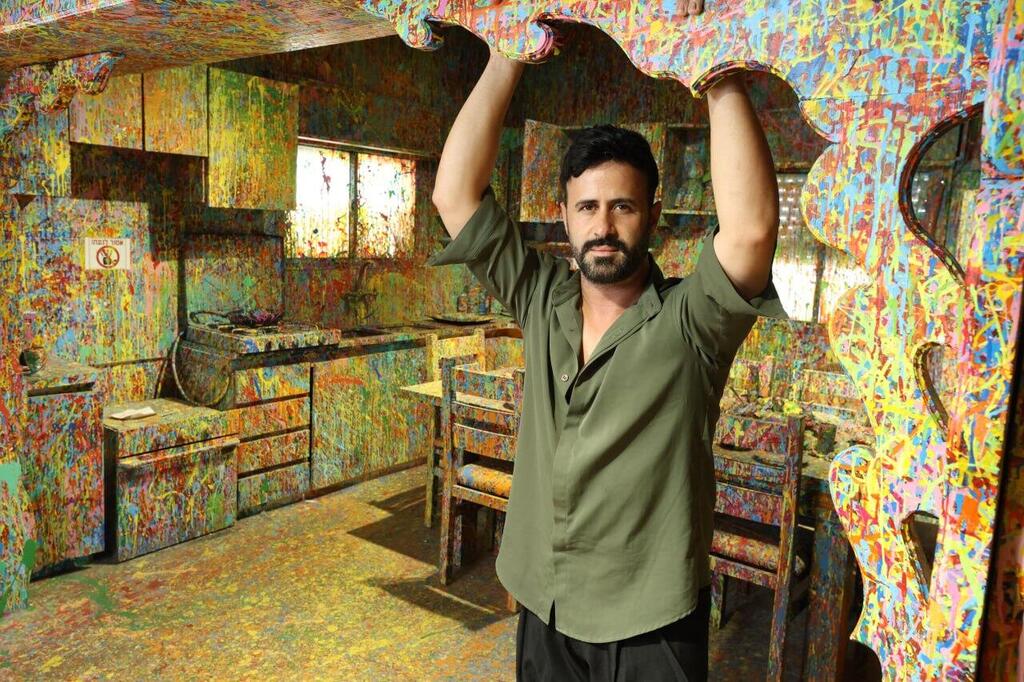
As a child, Halaby recalls being treated as though something was wrong with him because he wanted to make art rather than pursue the careers traditionally associated with achievement, such as medicine or law.
Now his work will stand at the entrance to one of the very places where children first begin imagining their futures. “I want children growing up today in Daliyat al-Karmel not to have to go through the embarrassment I went through,” he said. “If they have a talent for painting, sculpture or creating, I don’t want them to feel they have to hide it.”
For the next generation
“I want the next generation to grow up with art as a natural part of their lives,” Halabi said. “I want children to encounter creativity already at school, ask questions, develop curiosity and imagination and understand that art isn’t something that belongs only in distant museums or exhibitions in the big city. It belongs to them too.”
Halaby goes even further. “A place that has art is a place without violence. Absolutely,” he said. “That’s why Daliyat al-Karmel today is the Tel Aviv of the Druze.”
Halaby, who is married to Yarin and has two daughters, grew up in a struggling household. The youngest child and only son among 10 siblings (with nine older sisters), he lost both his parents at a young age.
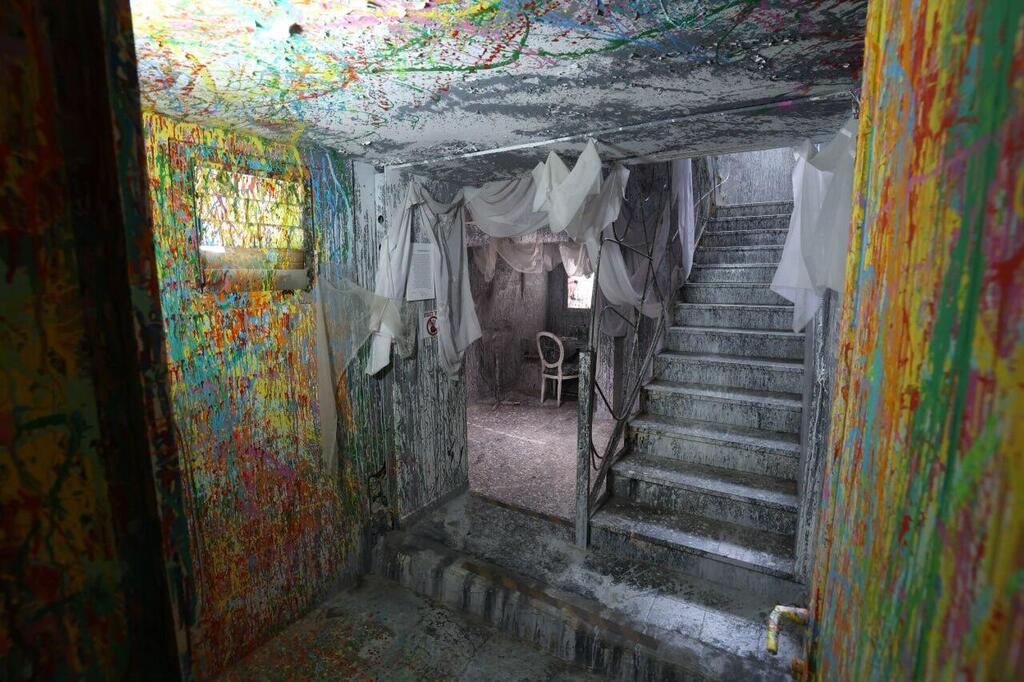
Painting his difficult childhood in color
(Photo: Elad Gershgoren)
His journey as an artist has in many ways been an attempt to break barriers and transform those painful experiences rather than erase them.
In April 2023, he turned his parents’ home into the Color House, transforming the building into an immersive artwork that tells his life story. He covered the home in vivid paint, using color as a way of confronting the grief and emotional pain that had followed him from childhood.
“What I did here in the house came from my desire to paint the loss, the difficulties, the years when I was ashamed to say I was a painter,” he said. “It was a therapeutic process for me.”
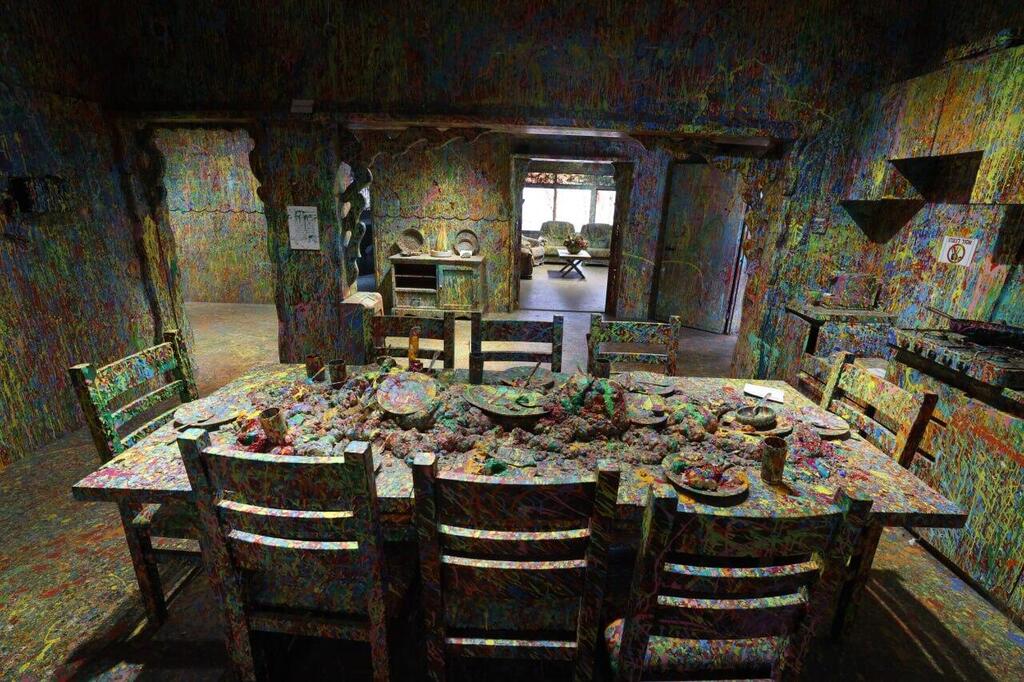
“It was a therapeutic process for me”
(Photo: Elad Gershgoren)
Today, Halaby says he feels more at peace with his past. His work ranges widely in scale and materials, incorporating olive trees, pine branches, grapevines and even pieces of furniture that appear to emerge from his canvases.
But his signature technique remains the same: Halaby flicks and lashes paint from his brush onto vast canvases, creating dense eruptions of color that express what he describes as a swirl of grief and joy, anger and reconciliation.
A once-distant dream
Next month, another childhood dream is set to become reality.
The Druze artist, whose work has already been shown in museums and exhibitions across the United States, Canada and Europe, will open a new solo exhibition at the Janco-Dada Museum in the artists’ village of Ein Hod.
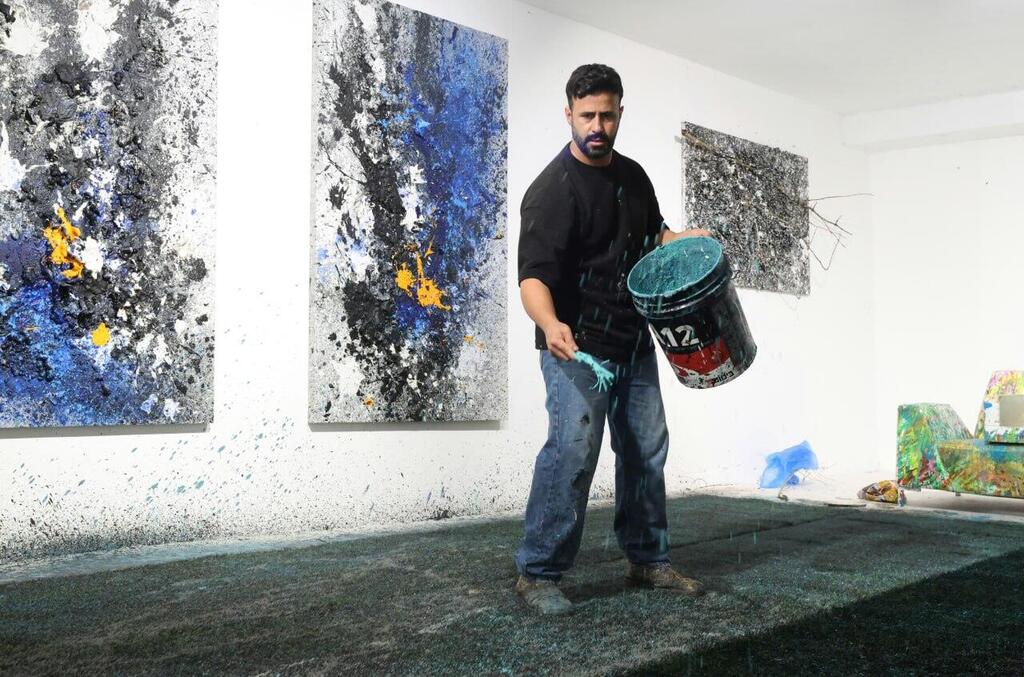
Feeling a sense of belonging for the first time. Halaby in his studio
(Photo: Elad Gershgoren)
“For years, I would look toward Ein Hod, the neighboring artists’ village, as if it were a distant star,” he said. “Physically, it was close to me, but in those years it felt light-years away from my life.”
“For the child who was ashamed to say he was a painter, an entire village that lived and breathed art seemed like another world. It was a huge, promising, almost unattainable dream.”
Now, he said that distance is disappearing. “Today I enter Ein Hod not as a guest looking in from the outside, but as an artist bringing with him a story, color and identity.”
His new exhibition, titled “From the Depths of the Forest,” will feature an installation resembling a dark, mysterious enchanted forest. Visitors will make their way through a dense tangle of dried, painted olive branches. As they move through the installation, sensors will activate hundreds of tiny colored lights hidden among the branches.
“This is the forest I wandered through and got lost in as a child,” Halaby said. “A place where I encountered sadness, hope and light.”
Perhaps for the first time in his life, Halaby says he finally feels that he belongs.
As he splashes vivid greens across a work taking shape in his cluttered studio, he reflects on how far his personal story has traveled beyond him.
“When I look today at the path I’ve taken, I understand that this story is no longer only mine,” he said. “It belongs to the grandfather who comes to the Color House with his grandson. To the older women from the community who came to my exhibition in Tel Aviv at the beginning of my career. And to the sculpture that is now entering the school to meet the next generation. And it belongs to that boy who once looked toward Ein Hod and thought that world wasn’t for him.”
If you could go back and meet that boy, what would you tell him?
“I’d tell him that one day he would come full circle. People used to call me ‘painter’ as an insult. Today, if there’s one word I want people to use to describe me, it’s exactly that. I’m Sam Halaby, I’m a painter, and I’m proud of it.”