

The Harlem Globetrotters’ schedule for the coming months is as packed as that of a hugely successful rock band or pop star: country after country, city after city, night after night, continent after continent.
Even after 100 years of activity and more than 25,000 games, demand for tickets is at its peak, and tickets, which cost nearly $50 per show, are almost impossible to obtain. No one seems to tire of a family or couples’ outing to a sporting circus that combines comedy, entertainment and astonishing basketball skills.
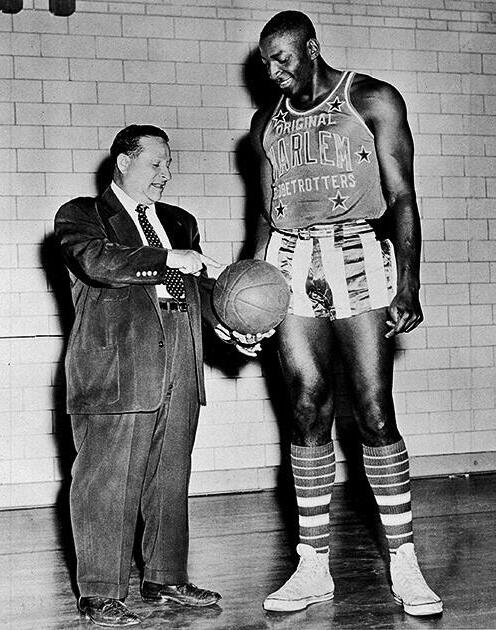
The team was born in 1926 in Chicago under the name the Savoy Big Five, a team meant to warm up the shows at the Savoy Ballroom and made up of black players, some of them high school students, from the city’s South Side. Eventually, the team split following an internal dispute, and Abe Saperstein took over one of the groups.
No connection to Harlem
Saperstein was born into a Jewish family that moved from Poland to London and from there, in 1907, when Abe was 5, to Chicago. The son inherited his business instincts, improvisational skills and courage from his father: When a local Chicago newspaper advertised a tailor’s job, his father’s profession, the ad noted that the position, in a German-Irish neighborhood, was not intended for Jews. His father changed his name to Schneider — tailor in German — got the job and returned to his original name several years later, after buying the business.
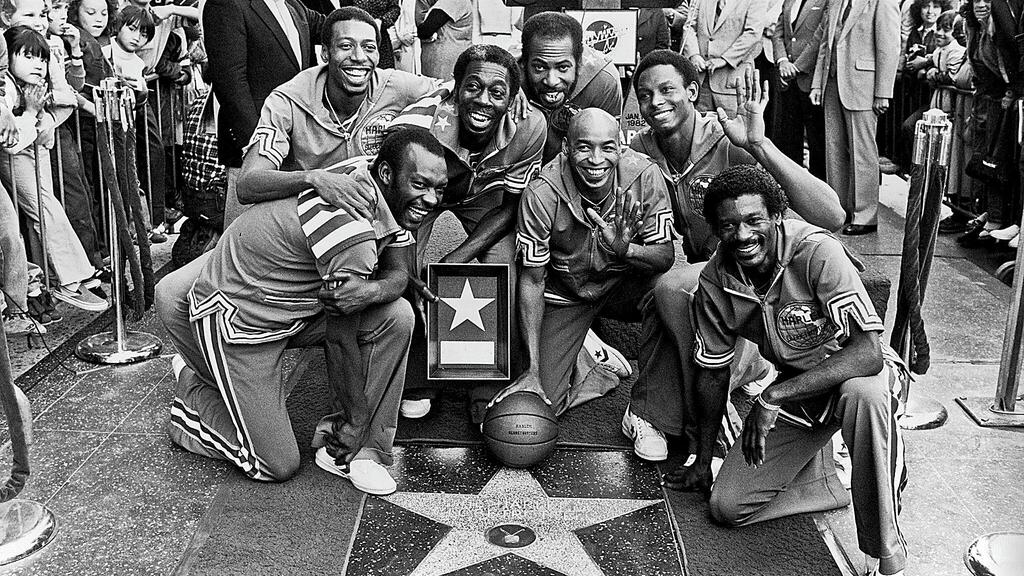
Harlem Globetrotters on the Hollywood Walk of Fame
Saperstein, only 26 and working in the municipal parks department, gathered five black players and got to work: He was the driver, promoter, accountant, marketing man and coach. Despite his height — 5-foot-3, the shortest person ever elected to the Basketball Hall of Fame — he also served as the team’s first and only substitute.
Saperstein was a visionary, a businessman and an extraordinarily brave man. He gave the team the nickname Globetrotters to lend it an international feel, and attached the name Harlem to it, even though there was no connection to New York or Harlem. In fact, the Globetrotters would not play in Harlem for the first time until 1968. Geographically, their activity did not extend beyond the Midwest, and no player on the roster had ever seen a piece of land outside the United States.
The reason for the name was first and foremost marketing: Harlem was already identified as the cultural center of the black community, but also because most of the team’s first games were played in the Midwest — not exactly a region overflowing with people in love with black people. Saperstein explained at the time that the name “Harlem” made clear to everyone — ticket buyers and venue owners alike — that this was a black team.
On more than one occasion, the founder had to rent a single hotel room, with all the other players joining him through the emergency exit or by climbing drainpipes and sleeping in his room, because many hotels refused to house black guests.
In its first seven years, the team played more than 1,000 games. It was an enormous number given that it managed to perform night after night at the beginning and height of the Great Depression. Although the team defined itself and was identified as an entertainment act with a basketball element, it did not give up its sporting identity.
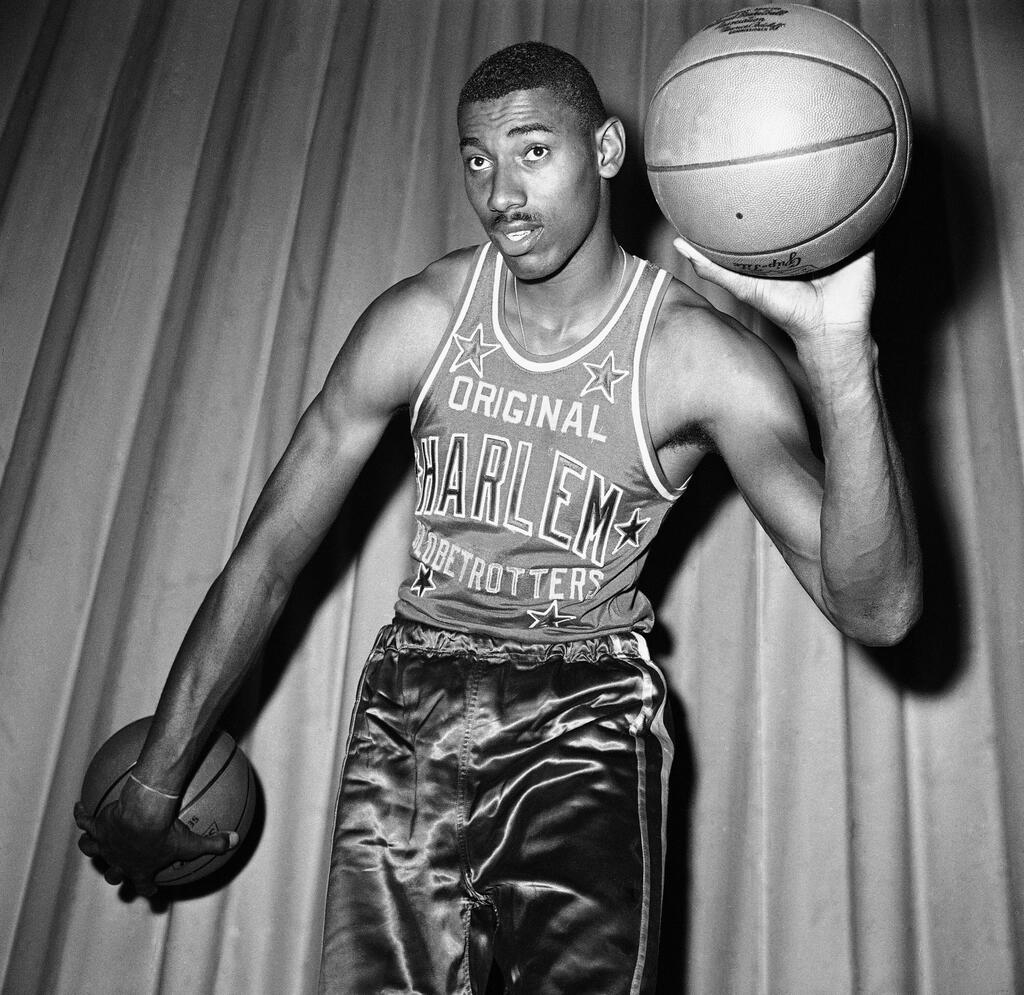
Wilt Chamberlain got his start with the Harlem Globetrotters
(Photo: Anthony Camerano/AP)
In 1948, the Harlem Globetrotters, riding a 102-game winning streak, defeated the Minnesota Lakers, the best team in the NBA, 61-59 in Chicago before 20,000 spectators, on a last-second basket. The Lakers were led by George Mikan, the first superstar in league history, and their roster was all-white.
It was a monumental victory. Until then, the thinking about black basketball players was similar to the attitudes directed at Jackie Robinson: They might be athletic and talented, able to run fast and jump high, but they could not be coached; they were undisciplined, lacked fighting spirit and competitive fire, and were not intelligent enough to understand sophisticated plays. Two years after that victory, the NBA’s first black draft pick, Chuck Cooper — also a former Harlem Globetrotter — was selected.
The postwar years smiled on the Harlem Globetrotters. It defeated Minnesota, two more of its former players signed in the NBA, and it reached Madison Square Garden, basketball’s mecca, for the first time. For the first time in the arena’s history, a game there sold out. Popularity swelled into a tsunami: Saperstein established two more local teams and another international roster to meet demand.
The team set out on a “goodwill tour” around the world, a journey that also included a stop in Berlin. Some 75,000 Germans came to the Olympic Stadium to watch the show. Jesse Owens, who joined the team on that trip, was greeted with applause at the place where he had won four Olympic medals. “Hitler refused to shake your hand,” Berlin’s mayor told him. “I offer you both of mine.”
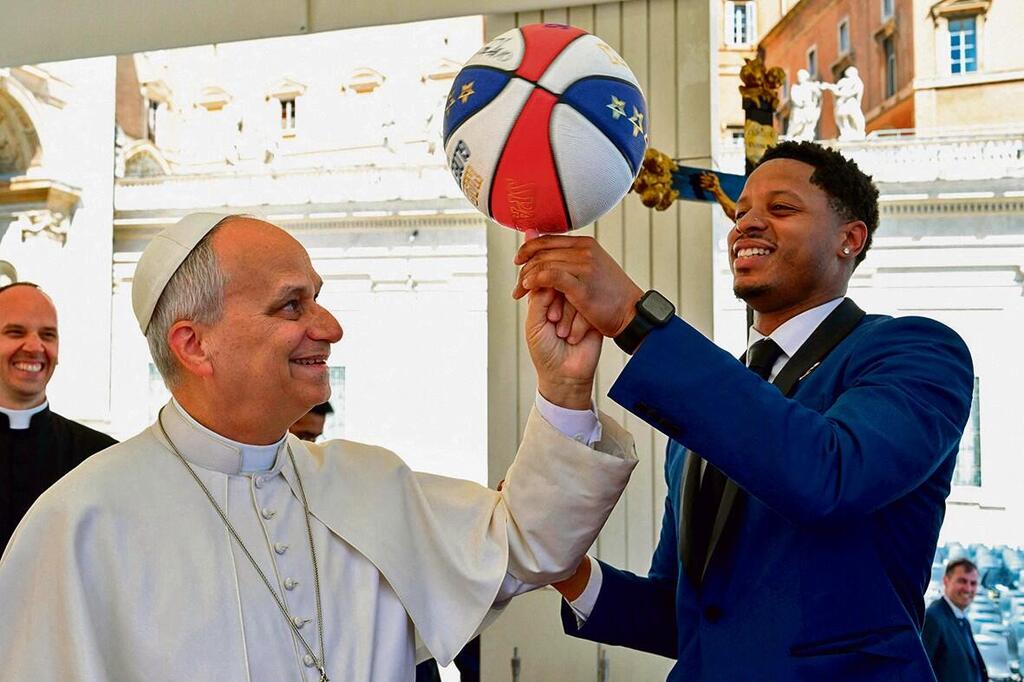
Teaching tricks to Pope Leo IVX
(Photo: Simone Risoluti/AFP)
Saperstein did much to advance and integrate minority communities in sports and through sports into American society. He was involved in establishing and managing baseball teams in the Negro leagues, and also founded a basketball team based on Asian players. But the Harlem Globetrotters, at the height of racial division in America, were the crown jewel. He produced a show that presented black people as superior athletically and especially in basketball, adding to it family-friendly entertainment value.
Saperstein and his players were accused by many in the black community of exploiting and being exploited to entertain white audiences, instead of emphasizing their basketball abilities. But those claims were rejected by prominent figures in the black community, such as Jesse Jackson, who made clear that the team actually highlighted the athletic and technical superiority of black players, enabled them to earn a living and served as a bridge between the races in America.
Still, it is sad to think of the enormous contribution of Saperstein and other Jews, such as the legendary Red Auerbach of the Boston Celtics, to advancing the status of the black athlete, compared with the current attitude of black professionals such as Kyrie Irving toward Jews.
After he was denied permission by the NBA to own a team in the league, Saperstein became commissioner of the new ABL. The league failed to survive even two years, but Saperstein brought it an innovation meant to distinguish it from the NBA, an invention that would change the entire sport decades later: He invented the 3-point line and the 3-point shot.
Exposure to the NBA, and the victory over one of its best teams, advanced Harlem from a marketing standpoint, but eroded it professionally. NBA teams, in a league founded in 1946, began casting their eyes and tempting wallets toward the black stars who until then had played for the Globetrotters and made them one of the best teams in the world.
This was the period when the Harlem Globetrotters underwent a transformation from a basketball team with entertainment elements into an entertainment show built around basketball, featuring coordination drills, ball control, long-distance shots or shots with eyes covered and interaction with spectators. Most of its games were against a basketball team called the Washington Generals, which defeated Harlem only once against about 17,000 losses from the 1950s onward.
In 1959, as the Cold War began to heat up, the Harlem Globetrotters received an invitation from the Soviet Union’s sports commissioner to play in the country. The nine games were completely filled with spectators and fans. The players received the Order of Lenin and were hosted in the office of Soviet leader Nikita Khrushchev. In photos from the event, the team’s star, a young man named Wilt Chamberlain, stands out for his height.
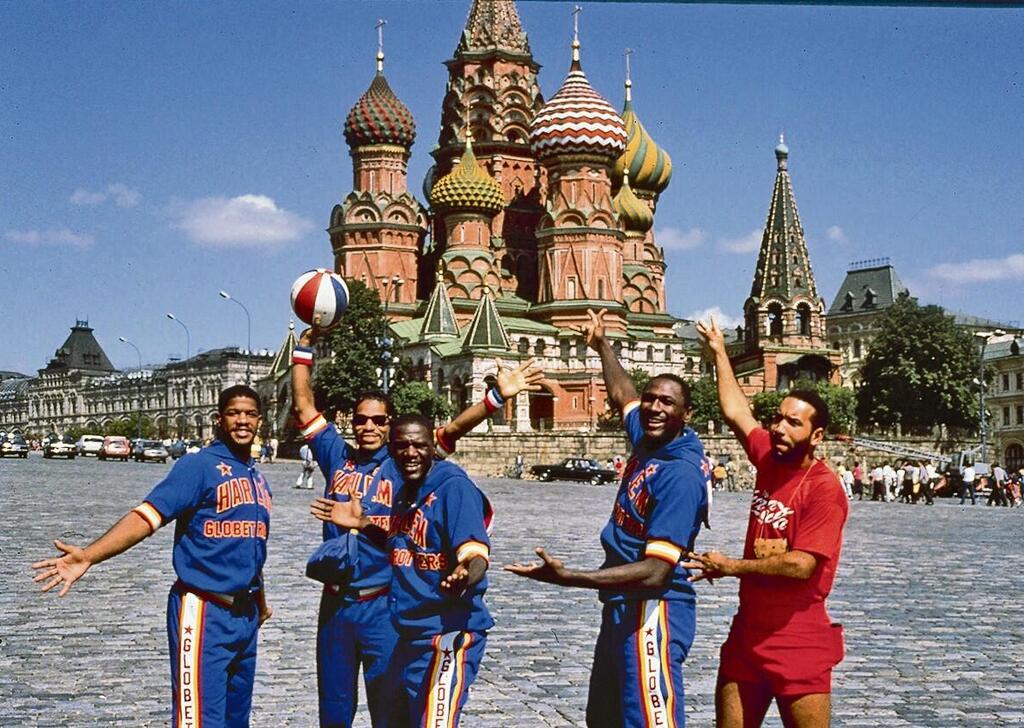
The Harlem Globetrotters in Moscow's Red Square
(Photo: AP)
Reports from those games described a stunned Soviet crowd that only after long minutes of basketball — the opponent this time was not the Washington Generals but the San Francisco Chinese Basketeers, the Asian team Saperstein had founded — understood it had come to an entertainment show and not an athletic competition. The crowd, according to local Soviet press reports, “still enjoyed the talent and technique of the American entertainers, two areas from which we can certainly learn.”
It was a capitalist-Marxist experience. The team received $4,000 for each game, but with one condition: They could spend that money only in Moscow.
Since then, the Harlem Globetrotters have not stopped filling arenas and then washing them in entertaining energy. Every host city receives its own personal attention.
“What do I love about Germany?” asked “Sweet” Lou Dunbar, a former player and current coach of the team, at a news conference in Munich this week. “I love a sausage in a bun and beer. That’s what does it for me.” The current tour is planned for 300 games in 25 countries.
“In regular basketball, players run up and down — defense and offense,” explained Erika “Spice” Sidney, one of six women on the current roster. “With us it is much more unconventional, much more fun. We involve the crowd, let children participate and shoot baskets, show them tricks. We are not a basketball team. We are ambassadors of goodwill, meant to bring the gospel of joy, bring the light and spread love, and serve as a bridge between cultures and basketball.”
It may sound like a manifesto from a spiritual series in the desert, until one discovers that more than 150 million spectators have paid good money to witness this alchemy.
The Harlem Globetrotters became such a prominent phenomenon in pop culture, and so popular across borders, that films and documentaries were made about them. In the early 1970s, an animated series named after the team was created, with characters inspired by the real players. The 16-episode series aired on weekend mornings on major U.S. television networks.
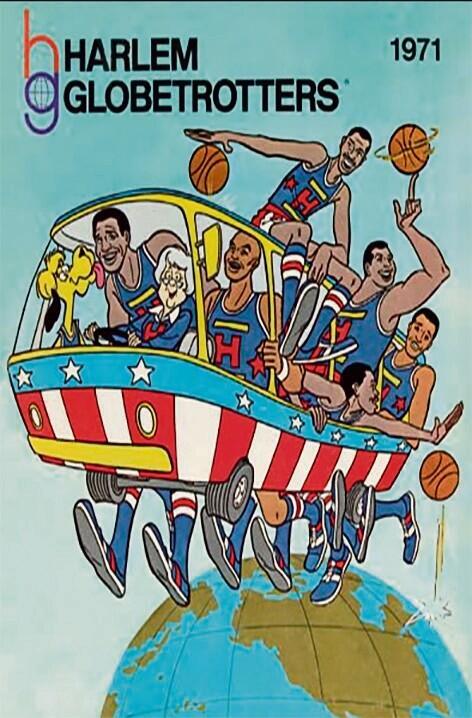
None of the thousands of games Harlem has played around the world has a fixed script. Improvisation and adaptation to each host city and country are part of the beauty and pleasure of watching the team. But it does have several fixed elements: the red, white and blue uniforms; the tune “Sweet Georgia Brown”; the entrance onto the court and creation of the magic circle, in which each player enters the center, performs his tricks, flirts and dances with the ball, then passes it to the next dancer-player; the nicknames for every player; and the Washington Generals.
Connie Hawkins, another basketball legend who played for the Globetrotters and later reached the NBA, once precisely defined the Generals’ role: “Their job was to lose to us, and they were very good at their job.”
It is a fairy tale. A young Jewish man with eight brothers and sisters takes a group of black players from one of Chicago’s toughest neighborhoods, gives them a New York and global name, and begins crisscrossing America with them. They win their first game and 100 of the next 106. Segregation is in full swing, but thousands of people, mostly white, come to see, in the middle of a vast global economic crisis, this exotic show. At night, they are refused food, hotel rooms or access to the same drinking fountains as white citizens.
The story of America
The Harlem Globetrotters were so good in their early years, so innovative and original, that they had to introduce some entertainment and amusement into their game — so they would not get bored. Slowly, they understood that this comic interlude entertained the crowd, but more than that: It lowered the level of resentment toward them from the audience, resentment created by the fact that a black team was beating teams whose entire rosters were white.
It is a fairy tale that also contains America’s uglier traits: racism, discrimination, the fact that a team of black players had to give up sporting superiority in order to entertain a mostly white audience and only then became a global legend, a brand.
But a legend is a legend, especially one that really happened. One hundred years of entertainment crossing borders, genders, races and classes. It is hard to think of another team or movement that bridged so many gaps between people, all with a smile, a wink and the wonderful soundtrack of “Sweet Georgia Brown.” It is hard to think of another team that made so many children laugh and smile using only the art of the pass or the shot from beyond the arc.