

When director and screenwriter Yuval Shani was a handsome teenager in Jerusalem in the early 1990s, he decorated his bedroom walls with posters of Maccabi Haifa, the reigning champion team, and one of its stars, Tal Banin.
“I knew the entire lineup by heart,” Shani says with a laugh. “I would fake an interest in soccer just so I could talk about players with the boys in class. I went all in. I even went to matches, I knew statistics, I really worked at it. Even today I can recite the entire Maccabi Haifa lineup from the 1993-94 championship season, when they went unbeaten.”
Gallery
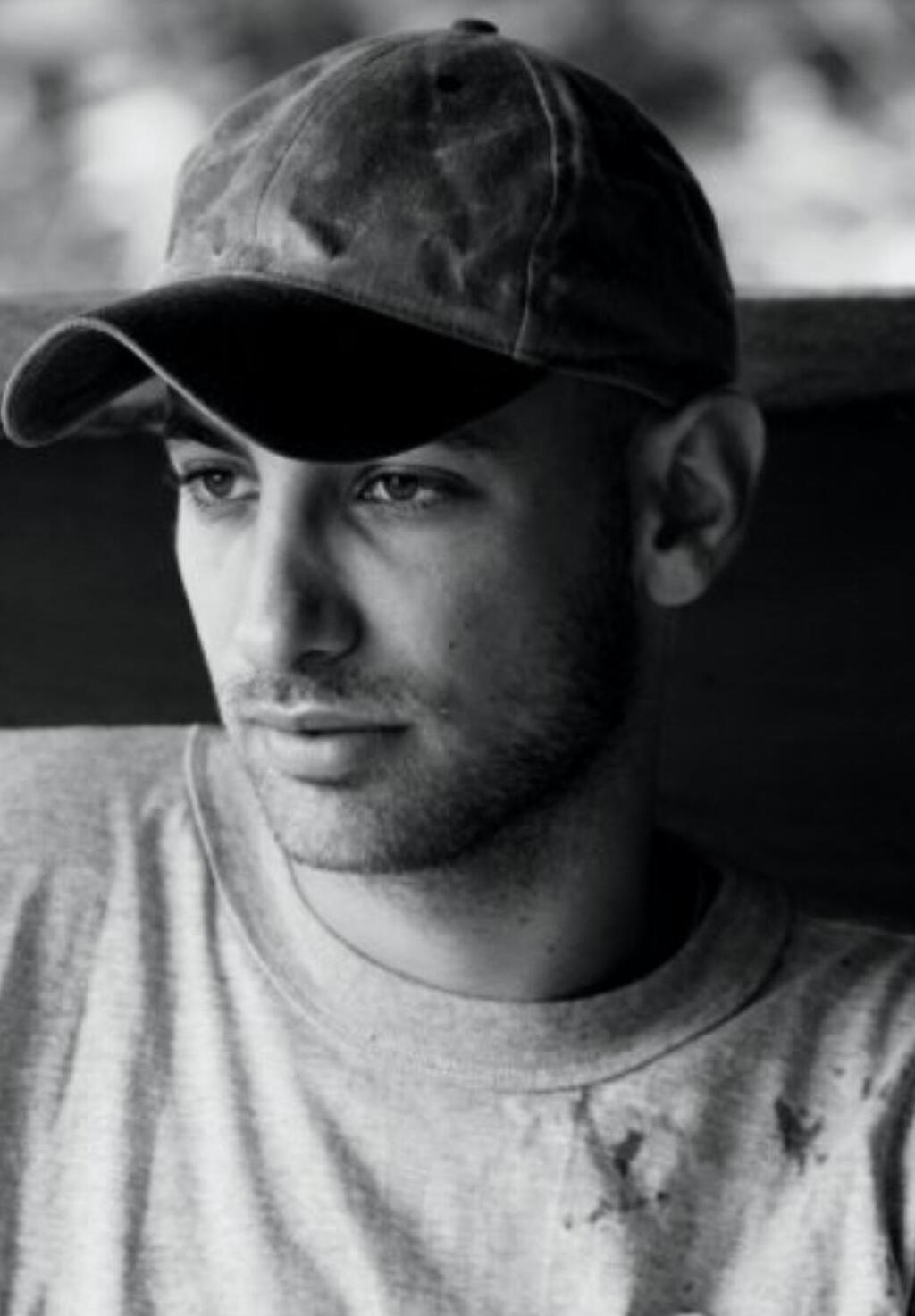
When director and screenwriter Yuval Shani was a handsome teenager in Jerusalem in the early 1990s, he decorated his bedroom walls with posters of Maccabi Haifa
(Photo: Bing Basit)
But you were from Jerusalem.
“Everyone supported Maccabi Haifa back then and I wanted what everyone wanted. In reality I felt a lack, like I wasn’t masculine enough, not the man I was supposed to be. So I constantly tried to be a man and imitate masculine behavior. I tried to be someone I wasn’t in order to survive and belong. I played soccer and was a goalkeeper. People always say Jerusalem belongs to everyone, but I never felt it belonged to me in any way. I felt I couldn’t become what was expected of me. I tried to imitate masculine behavior and always failed. I couldn’t become that man.”
Despite Shani’s efforts to be like everyone else and “be a man,” he quickly became a target of bullying and abuse.
“People always say bullies rely on physical strength, but that’s not true. Their real power is identifying weakness. They spotted my weakness immediately. They marked me. They saw me before I saw myself. They called me ‘transvestite’ before I even knew what it meant. The first time I heard that word was in sixth grade on a soccer field. It followed me throughout my childhood. Wherever I went, I felt identified.”
Did you get beaten up?
“Yes, I was hit.”
Did you tell your parents?
“I hid a lot of my pain from them.”
Today, at 45, he is a successful content editor in the television industry, a acting coach and an active director who remains close to his childhood friends from Jerusalem.
“I’m lucky. These are wonderful people who have been with me since fourth grade. I don’t have to put on a mask around them.”
Have you ever run into the bullies who hurt you?
“I still see some of them and I even like some of them. They were children back then. I’m not looking for revenge against them. Through the cinema I make, I try to strengthen the weak.”
And that is what Shani does in “Youthful Grace,” his first feature film, which arrives in cinemas across Israel this weekend. The film, which won the ensemble prize at the Jerusalem Film Festival, is set in the capital but Shani has moved the story and its characters away from the elite milieu he grew up in and away from his own intellectual family.
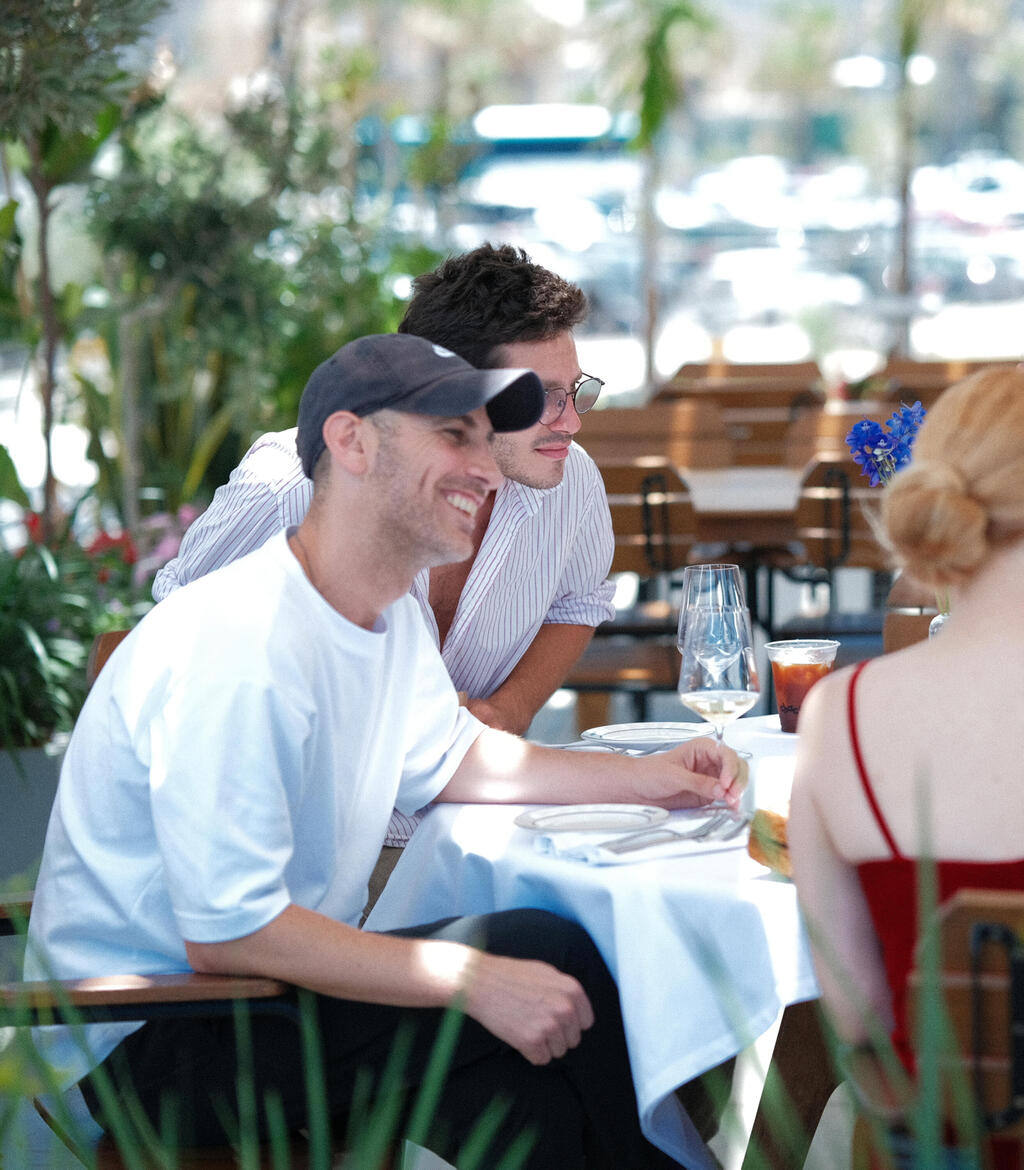
Despite Shani’s efforts to be like everyone else and 'be a man,' he quickly became a target of bullying and abuse
(Photo: Amit Soffer)
The plot follows Amir (played by Itay Turgeman, one of the hottest names in Israeli cinema right now) and Eliyahu (breakout actor Amitay Shulman), two adolescent boys trying to survive in a world of dysfunctional adults. Amir works in his uncle’s grocery store while his mother is hospitalized in a psychiatric ward. Eliyahu is a beautiful, feminine and delicate boy devoted to his drug-addicted mother. A chance encounter between the two on the eve of Passover leads them on an unexpected journey.
Also starring are Hilla Vider, Moris Cohen, Adam Gabay and Hitham Omari. “At the end of the day, it’s a story about a gay boy who saves another boy and is saved in return,” Shani says. “It’s a film about compassion, friendship and being seen. I deliberately did not simplify the connection between them into a homosexual romance.”
Shani does not recreate his own childhood here, but he does express the distress he felt in those years. “The film is a product of my imagination. My idea was to bring Eliyahu into Jerusalem, a wondrous creature, half feminine and half masculine. In this film, I wanted to take the boy everyone sees as weak and turn him into the strongest character in the story. When I was a child, I didn’t have that figure. I had no role model like that. I thought there was only one way to be a man, to move through the world. I created Eliyahu to save the lost child I once was. That is the purpose of ‘Youthful Grace,’ to give strength to myself and to others.”
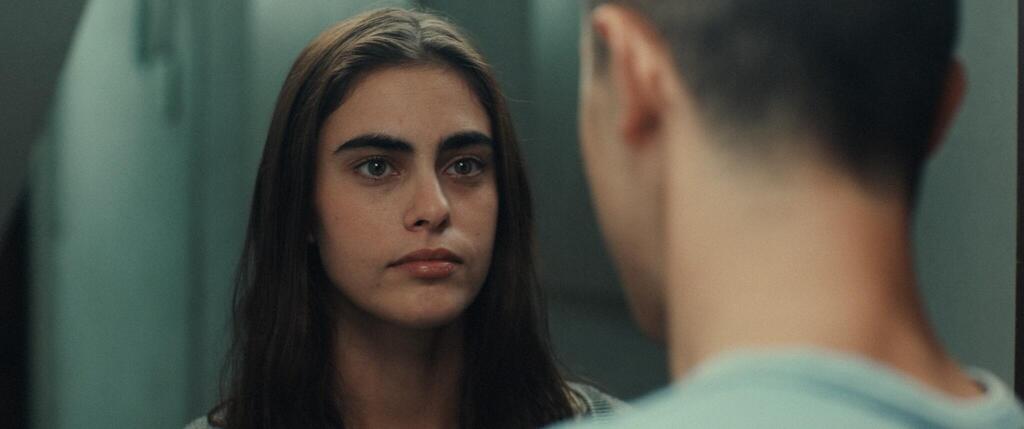
And that is what Shani does in 'Youthful Grace,' his first feature film, which arrives in cinemas across Israel this weekend
(Photo: May Abadi Grebler)
Casting Eliyahu took a long time. “I wanted to find someone who wouldn’t be easy to digest, someone who wouldn’t be overly ‘nice,’ who would create some discomfort. I saw many actors and none fit. Then I moved to non-actors. When Amitay Shulman, who is androgynous, arrived, I understood he was the real thing. Today Amitay is undergoing gender transition.”
'My bisexuality was a transitional stage'
Shani is the son of a diplomat and ambassador and a mother who lectures on Islamic art. Because of his father’s work, he grew up in London and returned to Israel at age 10.
“I came back to Jerusalem with an annoying British accent and European mannerisms. That also drew attention,” he recalls. Over the years, Shani struggled with his identity and sexual orientation.
“Until age 27, I was bisexual,” he says. “At 18 I had a girlfriend. After we broke up I told my friends: ‘I am attracted to boys too and I’m going to date men.’ Everyone immediately embraced me, and my first date with a man happened in front of my entire class of friends. They came along to support, tease, joke and hug me. It was an act of acceptance. With my family it was more complicated.”
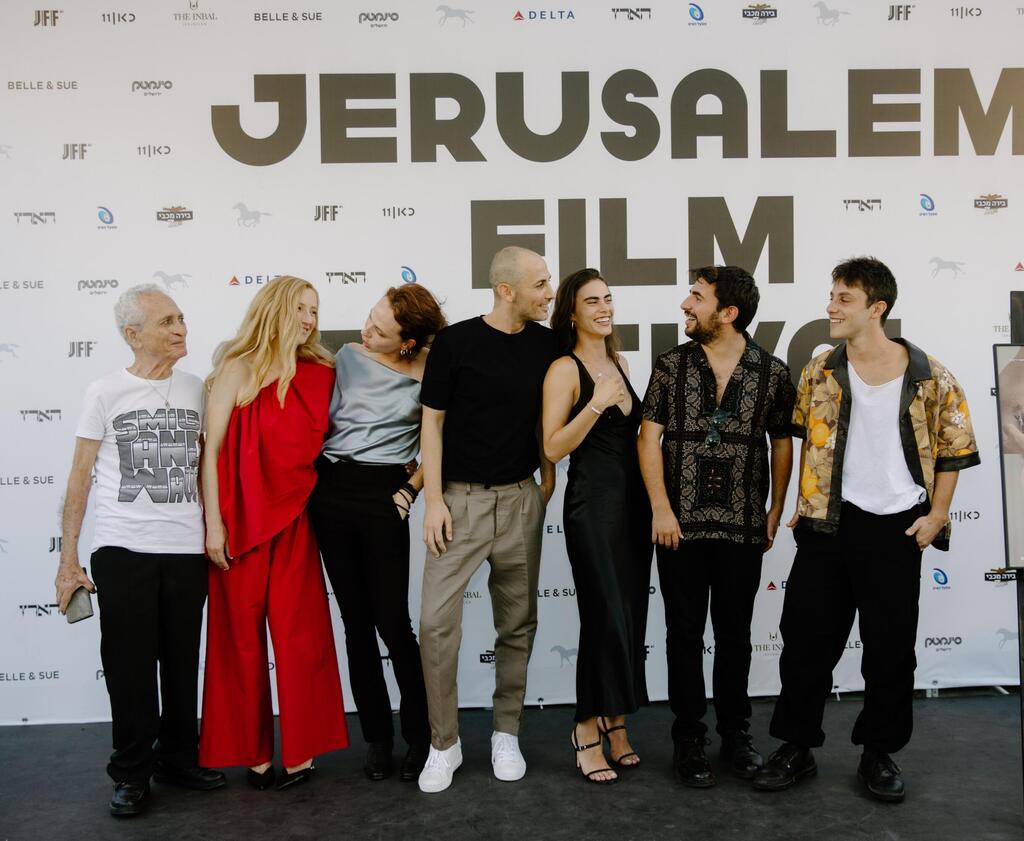
Yuval Shani A director and screenwriter, born in Jerusalem, winner of the Best Ensemble Award at the Jerusalem Film Festival
(Photo: Tom Weintraub)
In the army, Shani served in military intelligence and after completing his service moved to Tel Aviv (“Jerusalem felt limiting and suffocating. I needed to break free”) and began studying film and television at Tel Aviv University.
“Cinema was always more than an escape for me. It was a fantasy of an alternative refuge.”
“I found there what I couldn’t find in my immediate environment in terms of identity. In Jerusalem, when I had no models of masculinity around me, cinema always provided one. For example, ‘My Own Private Idaho’ by Gus Van Sant or films by John Cassavetes. Film school felt like a partial return to the closet because of the social dynamics. I was ‘straight-acting,’ ‘straight-looking,’ I had a girlfriend, but my films were very gay.”
Did the women you were involved with know you were bisexual?
“Yes. One of the great loves of my life was a woman who knew I was bi and accepted it. I understand women better than men, but bisexuality was a transitional stage for me, because I struggled to say the word gay and struggled to commit to something definitive.”
One of Shani’s student films, “Segal,” focused on an aging, lonely trans woman (Yosef Carmon) visited by her estranged daughter, a doctor played by Alma Zack. The film won at the San Sebastián Film Festival and was selected for the prestigious student competition at Cannes 2009. Just before his family traveled to the French Riviera, Shani came out to his parents.
“My family was the last to know,” he admits.
“My parents didn’t realize I was gay because I always had girlfriends. Our family circle was warm and supportive, but the barriers were inside me. I was trying to be the man I could never become. I was good at pretending, and it was easy for me because I loved women and my relationships with them. It wasn’t a feeling of deep depression. But eventually things came to a head and I understood I was far from what I truly wanted. I misled my parents for a long time.”
How did the conversation go?
“I took my parents aside and told them I am also attracted to men. It was the hardest conversation of my life. They were in total shock. The acceptance process was both immediate and gradual. The door was open right away and they accepted it, but understanding took time because they are from a different generation. Their acceptance means a lot to me. It is complete.”
After graduating, Shani entered the industry. He is now editing a short film based on a script by actress and screenwriter Swell Ariel Or, who also appears in “Youthful Grace.” The story takes place near the iconic Metzitzim Beach where she grew up. The two are also developing a series set in the same location. At the same time, Shani works as a content editor on “The Race to the Million.”
Are you in a relationship now?
“Right now I’m not in a relationship. It’s much easier for me to direct than to be in a relationship,” he says with a wide smile. “As a director, I always want to beautify, edit, organize and clean up reality. In a relationship, you sometimes have to tell the truth directly, to defend your needs and desires, and I often struggle with that. I have only had one significant relationship with a man.”
Shani says he once spent time going out to clubs. “I had a wonderful, intense period of clubs like Breakfast and The Block, but nightlife leaves you empty in the morning. Today Tel Aviv nightlife is less appealing to me. I am addicted to only one thing: intimacy, but that intimacy is often fleeting.”
How does your search for intimacy fit with the age of dating apps?
“The era we live in makes intimacy harder for me. The scrolling on apps is a recycled conversation of worn-out phrases. I feel a lot of alienation there. Everything is categorized and sorted. I don’t like those categories. I feel that in the gay community, there is something more conservative than meets the eye. In my experience, I’m trying to open boxes, not close them.”
Would you like to be a father?
“I have gay friends who have children. I’m happy for them. But I don’t want that. I don’t have a biological urge and I’m not interested in reproducing or having children. I have no problem being with a partner who has a child and being a parent to someone else’s children. I understand the urge to reproduce is natural, but I’m not connected to it.”