

She walks in with pink hair, sharp confidence and the hands of a miniature artist. Kimi runs a nail art academy, specializes in hyper-detailed designs painted with ultra-thin brushes and spends hours crafting tiny characters onto surfaces smaller than a coin.
And then, unexpectedly, she builds LEGO. Not as nostalgia, not as a childhood comeback, but as therapy.
At 15, she changed her name. It was not cosmetic. It was symbolic. She describes her old name and her current one as two different people — two eras, two versions of herself.
That pattern of reinvention appears again in the way she talks about LEGO, because for her, building is not about plastic bricks — it is about mental reset.
'When you’re in LEGO, you’re in LEGO'
She discovered LEGO not long ago. It started casually. She came from a puzzle-loving background and wanted a shared activity with her partner. He suggested LEGO, and she agreed. Three sets, two days — fully built. Something clicked.
Gallery
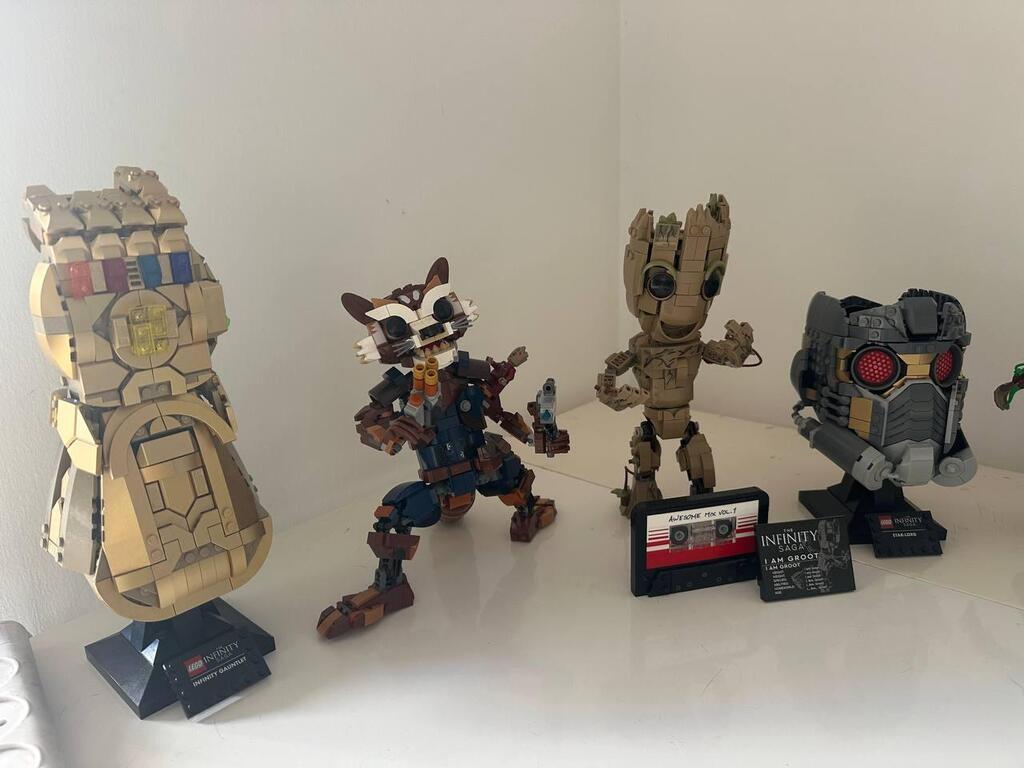
LEGO Marvel models from Kimi’s collection, including the Infinity Gauntlet, Rocket Raccoon, Groot and Star-Lord
(Photo: Bar Gindy)
Now, her building ritual is almost sacred. She builds in bed using a breakfast tray as a workspace. The instruction booklet sits beside an iPad with digital instructions open. Lights on. Focus on.
And then the outside world disappears — no noise, no anxiety, no emotional clutter. “When you’re building,” she explains, “there’s no world outside. There’s just you and the LEGO.”
It is not escapism. It is controlled concentration. A meditative state with purpose.
LEGO as emotional regulation
Kimi openly shares that during a difficult emotional period, she built a small Groot set simply to disconnect. Brick by brick, her nervous system settled.
The process forces presence. If you lose focus, you make mistakes. If you are tired, you confuse similar pieces. If you rush, you pay later by taking sections apart.
LEGO demands attention. Attention silences chaos. For her, it works like active meditation.
As a professional nail artist, she sees structure differently. While building, she sometimes evaluates the design choices. The curvature of a character’s nose. The geometry of a shape. The proportions of a detail.
She does not just build — she critiques. That makes sense. Her career is built on precision. Painting detailed characters onto fingernails requires extreme control, steady hands and patience. A full design can take six hours. LEGO feels like a natural extension of that mindset. Tiny components forming something bigger.
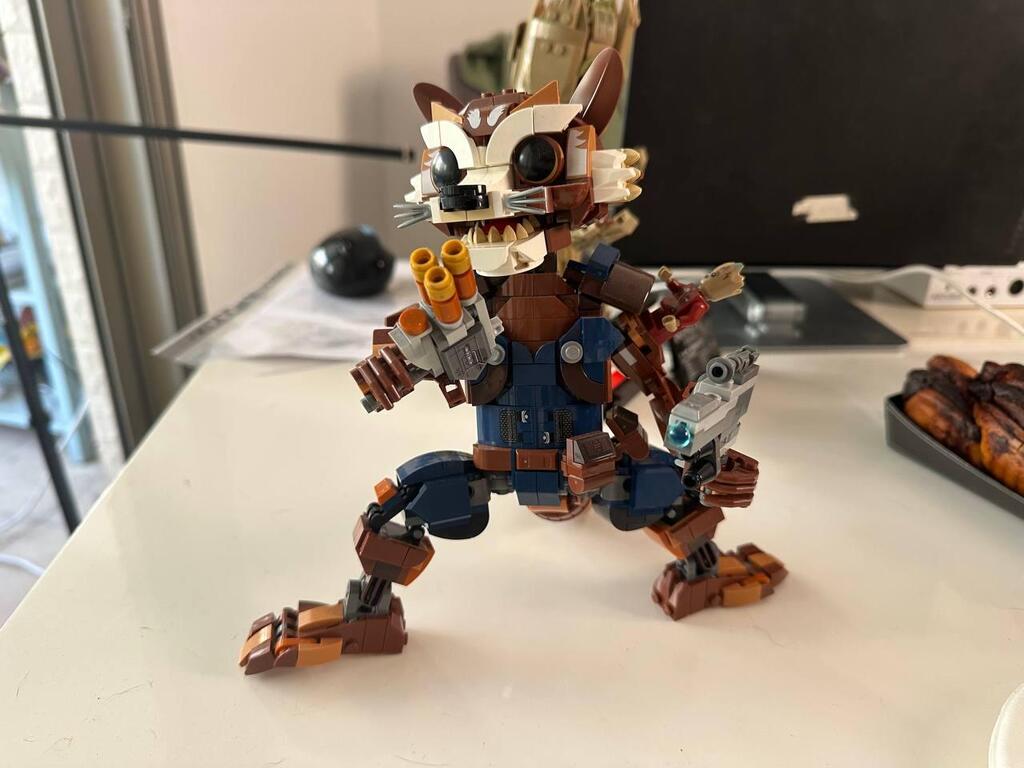
A LEGO Rocket Raccoon model from Kimi’s Marvel collection
(Photo: Bar Gindy)
She collects primarily Marvel and Disney sets, especially characters like Groot and Stitch. But she is deliberate; she does not buy because a set is trending, she buys because it resonates. “There’s hype around LEGO,” she says, “but I collect what I actually love.”
It is a simple philosophy. But it separates collectors from consumers.
A gendered hobby? Not anymore
At a recent Israeli LEGO exhibition, she noticed that most of the exhibitors were men. It's not criticism, just observation.
LEGO is often associated with construction, and construction is culturally framed as masculine. But in her view, LEGO is art, and art is universal — flowers, superheroes, architecture, botanical builds, portraits. The medium does not belong to one gender.
There is a moment in the conversation where LEGO becomes metaphor — collecting requires patience, commitment and consistency. It is not impulsive gratification. It is step-by-step building toward something finished.
In a world dominated by scrolling and instant dopamine, LEGO offers structured effort, and when the final piece clicks into place, there is a quiet sense of competence. “I built this,” she says. “I made this exist.”
That matters.
Value vs. price
LEGO is not cheap. Small sets can range from 60 to 100 shekels, medium sets from 250 to 400, and larger builds significantly more.
But she reframes it — you are not just buying plastic; you are buying hours of focused experience, you are buying a physical result, you are buying calm.
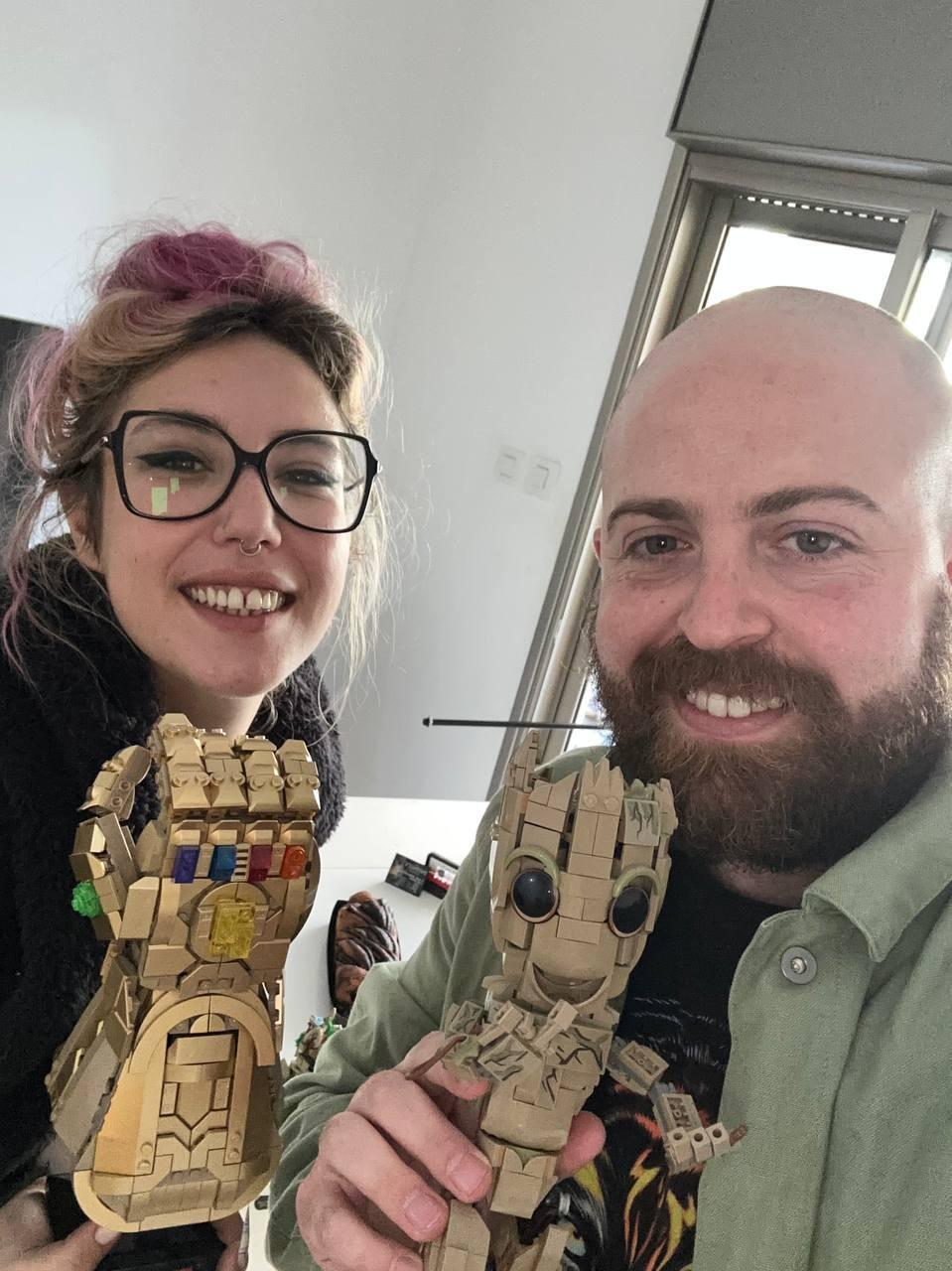
Kimi, left, poses with Bar Gindy, host of the People & Collectors podcast, while holding LEGO Marvel models
(Photo: Bar Gindy)
Compared to a restaurant meal that disappears in an hour, LEGO stays. Compared to therapy sessions that cost hundreds per hour, LEGO offers self-regulation in your own space. For her, the value is clear.
Kimi's wishlist includes the Avengers Tower and a large-scale Batman wall build that functions as art decor. She envisions a living room that looks like a curated exhibition. Glass display cabinets. Intentional design, not clutter, but a statement.
When asked if she will ever “grow out of it,” her answer is a resounding "no." She sees herself building with future children. Using it as an alternative to screen addiction. As a tool for fine motor skills, patience and creativity.
And maybe that is the most interesting part. A woman with pink hair, running a nail art academy, collecting Marvel LEGO, calmly dismantling the stereotype that LEGO belongs to any one category of person. Because in the end, the bricks do not care who you are. They only ask one thing: Build.
- For more stories from Kimi and other collectors, check out the People and Collectors podcast. The full interview is available with subtitles in English and 50 other languages.
First published: 21:09, 03.16.26