

When Bunny Yeager died in 2014, she left behind one of the most distinctive bodies of work in 20th-century American photography. Her images, particularly her iconic photographs of Bettie Page, helped redefine pin-up and erotic photography and continue to influence photographers today.
Yeager began her career as a model in the 1940s before moving behind the camera and working for a range of publications, including Playboy, where she became its first female photographer. Her subjects ranged from wholesome “girl next door” pin-ups to burlesque dancers in nightclubs.

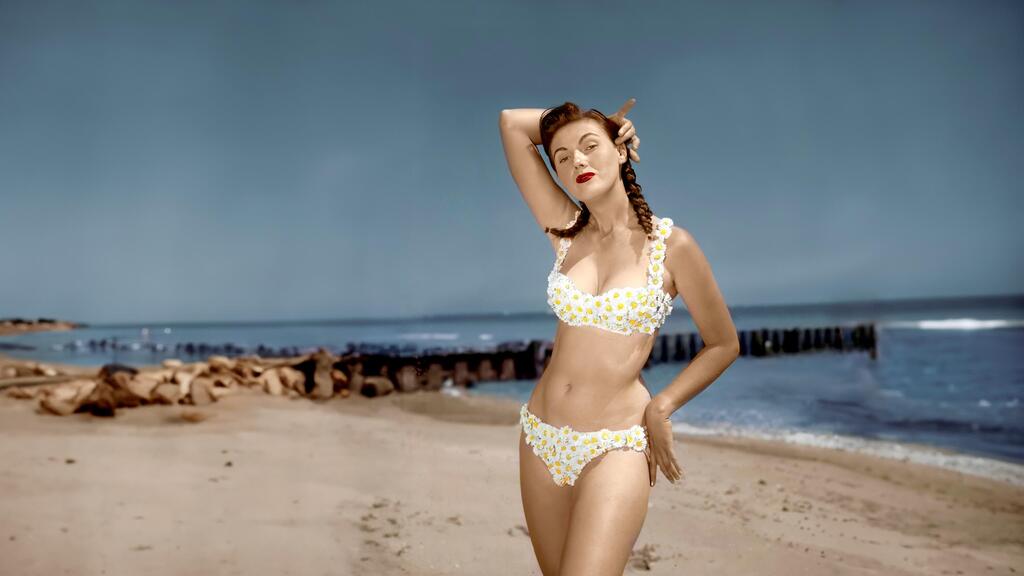
(Photo: Bunny Yeager)
More than a decade after her death, Yeager’s personal and professional life is revisited in the documentary Naked Ambition, directed by Dennis Scholl and Kareem Tabsch. The film, which will close Israel’s Epos International Art Film Festival next week, combines remarkable archival footage from Yeager’s early modeling career with interviews featuring figures from fashion and entertainment, including television host Larry King, burlesque performer Dita Von Teese and fashion photographer Bruce Weber.
Trailer for Naked Ambition
(Video: PR)


“I started working on this film back in 2012!” Scholl tells ynet. “Her legendary status in the photography world was only growing at the time, and I knew it was time to bring her story and her photographs to a much wider audience. She deserved that attention.”
“I did extensive research and asked Bunny for permission to make the film, assuming she would easily say yes. She said, ‘Absolutely not. I’m too busy with book projects and photo shoots.’ She was 83 at the time. I kept approaching her for two years, and in 2014 my persistence paid off and she said yes.”
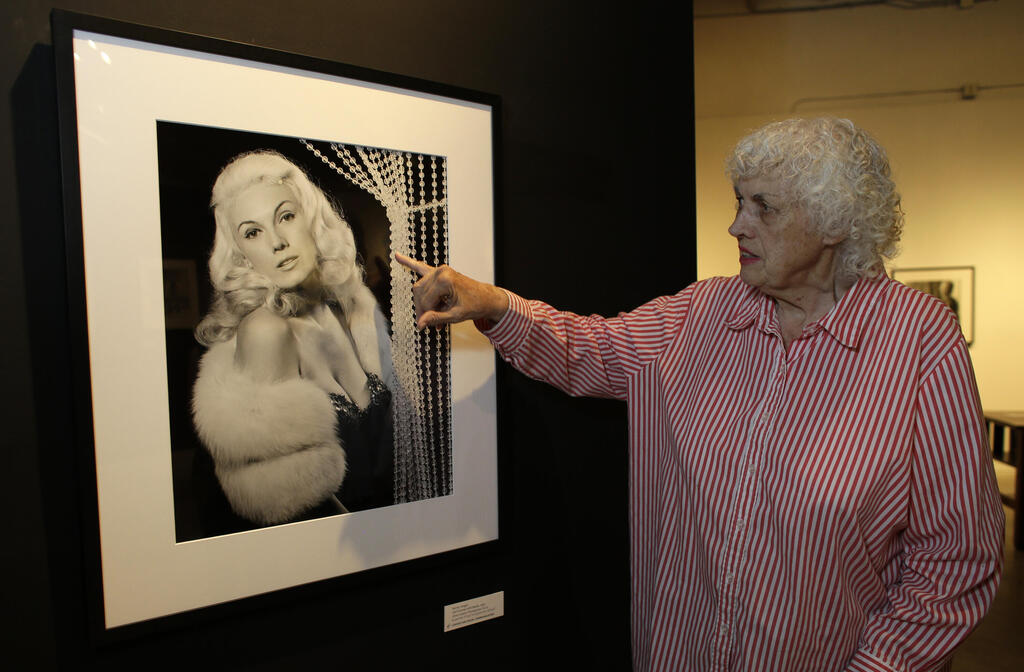
Bunny Yeager beside one of her self-portraits, 2013
(Photo: AP Photo/Lynne Sladky)
Ultimately, she died before you were able to film her. As a filmmaker, is it easier or harder to make a film about someone who is no longer alive rather than interview them directly?
“On the day we were scheduled to shoot, her daughter called and said Bunny was moving a little slowly that day, so our shoot, which had been planned for 10 in the morning, was postponed until noon. At noon she said, ‘Let’s make it two.’ At two she said, ‘Let’s move it to four.’ Then at four, with the entire crew already waiting, she called and told me Bunny had been taken to the hospital. She died a few days later, at 85.”
“Although I interviewed her many times without a camera, I never got the chance to interview her on camera. Fortunately, so many moments throughout her career had been documented, and we were able to gain access to almost all of them. I believe that if you have the trust of the person whose story you are telling, it is almost always preferable to have access to them while they are alive. That trust takes time to build, and it is extraordinarily important to me in the filmmaking process.”
Bikini in the jungle
Bunny Yeager was born Linnea Eleanor Yeager in Pennsylvania and moved with her family to Miami as a teenager. By the 1940s, she had become a successful model and one of the most photographed women in the city. She entered numerous beauty contests, appeared in swimsuit magazines and developed an intimate understanding of the modeling business.
It did not take long for her to realize that she wanted to be the person holding the camera. In 1953, she enrolled in a photography course for a practical reason: She wanted to shoot her own modeling portfolio. Moving from subject to photographer quickly became a new career, and the following year one of her photographs was sold to Eye magazine and appeared on its cover. A career spanning decades followed.
Working primarily in Miami, Yeager photographed hundreds of women, from professional models to women she recruited from her own neighborhood, for men’s magazines, fashion publications and commercial assignments.
She also designed and sewed bikini swimsuits herself. At a time when the bikini was still relatively new and controversial in the United States, her work helped shape the way the garment entered American popular culture.
Her enduring collaboration with pin-up model Bettie Page made both women famous. The two met in 1954 after Page contacted Yeager and offered to model for her. Page was already known in New York’s fetish photography scene, but Yeager presented her differently, replacing darker studio imagery with something brighter, more playful and sensual under the Florida sun.
Among their most famous images is the Jungle Bettie series, in which Yeager photographed Page with two live cheetahs, Mojah and Mbili, at the Africa USA wildlife park in Boca Raton, Florida. Page wore a leopard-print jungle-girl costume she had made herself.
A photograph showing Yeager alongside Page and the cheetahs was itself an early self-portrait. Yeager positioned the camera so that she could enter the scene, turning the photographer behind the image into part of the image itself.
That practice, along with the many self-portraits she created throughout her career, later helped earn Yeager a reputation as a pioneer of what would eventually become known as the selfie.
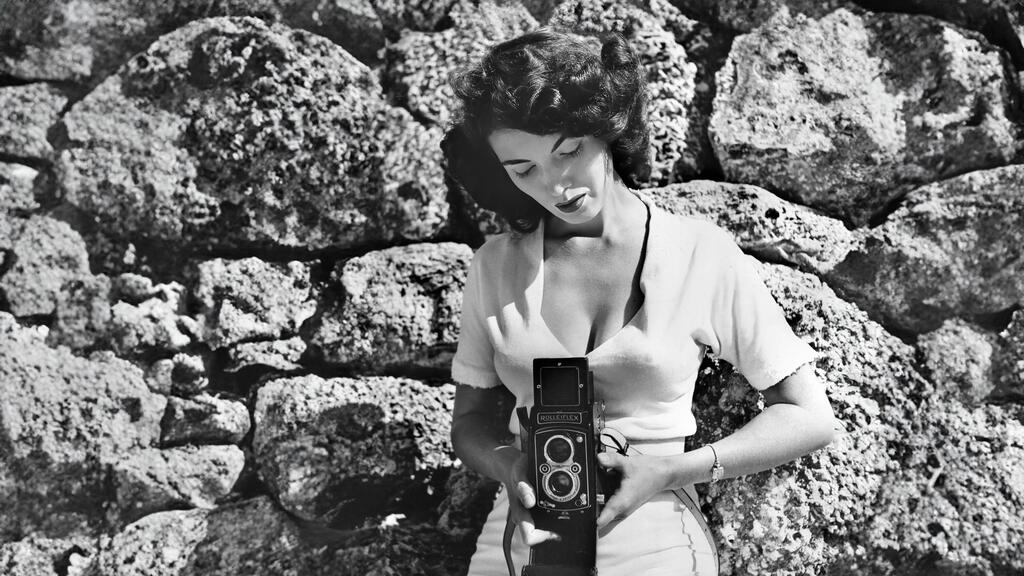
Bunny Yeager in a self-portrait
(Photo: Bunny Yeager)
Throughout the 1950s, Yeager repeatedly photographed herself, building scenes and carefully directing her own presence before the lens, practices that seem entirely familiar in the age of Instagram but were far less conventional at the time.
Her 1964 book How I Photograph Myself directly explored the idea of photographing oneself and controlling how others would see the resulting image.
Yeager later photographed actress Ursula Andress on a Jamaican beach around the making of Dr. No, the 1962 film that launched the James Bond movie franchise. Images of Andress in her famous white swimsuit became closely associated with one of cinema’s most enduring bikini moments.
Yeager also shot covers for publications including Esquire, Women’s Wear Daily, Redbook and Cosmopolitan, while helping discover and promote numerous models.
‘The greatest pin-up photographer of all time’
Naked Ambition presents Yeager as a female photographer who helped shape not only how women were photographed, but how they could participate in constructing their own image.
That raises a question that takes on particular weight when her work is viewed today: Did Yeager reproduce the objectifying male gaze dominant in pin-up photography, or did she bring a distinctly different female perspective to images of women and sexuality?
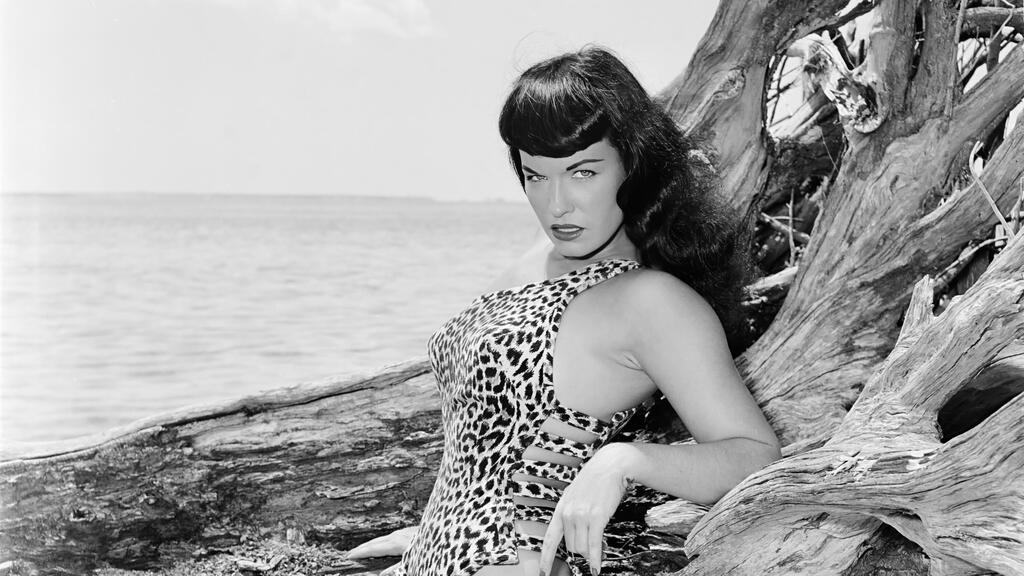
Bettie Page in leopard print, from the Jungle Bettie series
(Photo: Bunny Yeager)
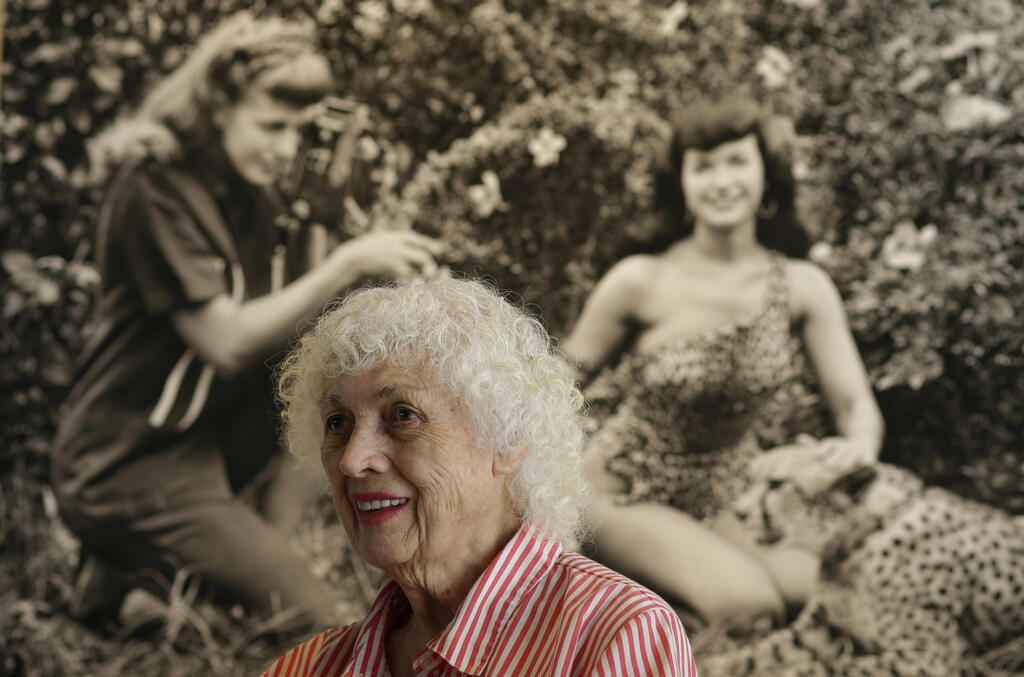
Bunny Yeager beside an image of herself photographing Bettie Page, 2013
(Photo: AP Photo/Lynne Sladky)
“The photographs speak to the unique gaze Bunny brought, which was very different from what male photographers of that period usually did,” Tabsch says. “She was able to capture both the innocence and the sexiness of her models at the same time because there was something relaxed about posing for a friend.”
“Although Bunny never defined herself as a feminist, she can undoubtedly be seen as one, not only because of how she photographed, but because of the way she worked and lived her life.”
The fact that Yeager had been a model herself, Tabsch says, gave her an important advantage. “On one hand, it helped her make her models feel comfortable because she knew exactly what it was like to be on the other side of the camera. At the same time, it gave her a certain authority because she would never ask her models to do something she herself would not do.”
“As Dita Von Teese told us, there was also something comforting about being photographed by a woman who understood what it was like to be an object of desire, who knew what looked good and could therefore help bring that out in the women standing in front of her lens.”
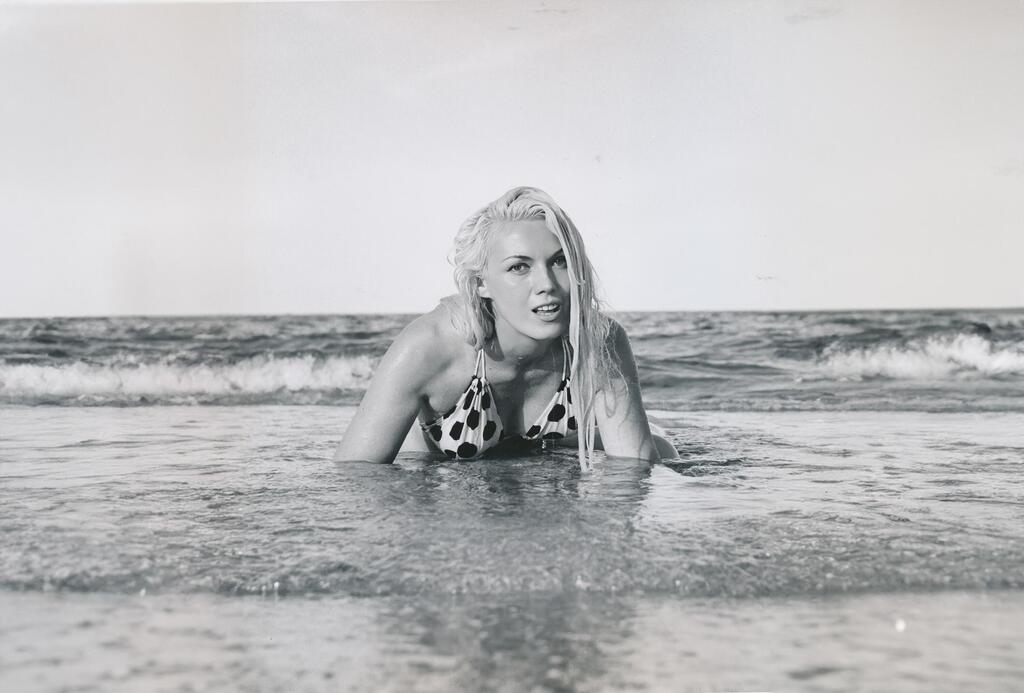
‘The fact that Bunny had been a model herself was a huge advantage.’ Bunny Yeager self-portrait
(Photo: Bunny Yeager)
What surprised you most about Bunny Yeager during your research? Was there a detail or story that fundamentally changed your original perception of her?
Scholl: “As a filmmaker and creator, one thing that was a revelation for me was just how important it is to connect hard work with the creative impulse. Ideas are wonderful, but it is the difficult, grinding work that actually brings creation into being.”
“Given the 13-year journey this film went through, I think understanding the level of effort, hard work and determination Bunny invested in her art had a profound effect on me and on my own creative work. I thank Bunny for that often.”
Tabsch: “Bunny really tried to be everything: a model, artist, businesswoman, wife and mother. And she did all of that in an era when it was almost unimaginable for a woman to occupy so many roles.”
“Her ambition and entrepreneurial spirit were incredible and inspiring, and enabled her to build a life for herself and her family that she perhaps could not have built in another way. At the same time, I think that at certain points in their lives, her daughters would have much preferred to have a ‘regular mom.’”
Yeager worked at the height of the pin-up era. The documentary arrives roughly 70 years later, at a time when the male gaze, the objectification of women’s bodies and the representation of female sexuality are being reconsidered.
For the filmmakers, it was important not to judge Yeager solely according to contemporary standards.
“It is always difficult to look back at people from the past exclusively through the lens of today’s values without taking into account the time and place in which they lived,” Tabsch says. “Bunny broke ground, pushed against convention and did it on her own terms.”
“I know there are people today who object to the fact that she photographed nude women for men to look at with desire. But at the same time, she also gave those women control over their bodies and their sexuality, something the era did not otherwise give them.”
“In many ways, contemporary values, particularly those involving a woman’s right to define herself, her autonomy and her empowerment in every aspect of her life, including her body and sexuality, caught up decades later with Bunny’s pioneering efforts.”

Dennis Scholl
(Photo: Mary Beth Koeth)
The film arrives at a time when the United States and other parts of the Western world are experiencing what many see as a return to more conservative values, from abortion restrictions in some states to the rise of the TradWife trend. Against that background, the sexual revolution represented by Yeager and Playboy can feel surprisingly distant. Did today’s cultural and political climate affect the way you approached the film, and do you see her story as particularly relevant now?
“From the very beginning, we knew we wanted to make a film that celebrated Bunny as a pioneer,” Tabsch says. “But I think that during the making of the film we were reminded just how much of a pioneer she really was.”
“As we find ourselves in the midst of a return toward more conservative values in America and the West, it only underscores how important stories like this are in reminding us that individuals can create change.”
“They can resist social tides, create and shape culture and be revolutionary even if they don’t realize it at the time.”
“In that sense, I hope the film, and Bunny’s life and work, can inspire others to forge their own path, especially in a period like the one we are living through, when it sometimes feels as though being different is being vilified.”

Kareem Tabsch
(Photo: Stian Roening)
Yeager was highly successful in her lifetime, yet for many years she was nearly forgotten. Why do you think she faded from the history of photography and popular culture? Did being a woman play a role?
“I wrestled with that question for some time,” Scholl says. “The easy answer is that she was a woman in a male-dominated field. But I think there was more to it than that.”
“Society changed dramatically when it came to sexuality, and Bunny’s work came to seem almost outdated when measured against the development of pornography that took over American society.”
“What Bunny did, creating photographs of the ‘girl next door’ that showed the pride and empowerment of the women she photographed, was eventually recognized, and recognized very significantly.”
“In the end, Bunny received the recognition she deserved as an artist and as the greatest pin-up photographer of all time.”