

So, how is Ariana Grande’s new album? The answer is that hardly anyone seems interested. Not because the pop star has lost her stature, but because nearly all the attention surrounding her has been drawn elsewhere: to a loud, intense and, in many cases, wholly insensitive debate about her physical condition, based solely on what tens of millions of people think they can see.
There is little new about that — not in Grande’s case and not when it comes to famous women in general. But the release of the music video for "Petal," the album’s title track, set social media ablaze. Grande’s gaunt appearance left little room for indifference, particularly given the size of her fan base, which includes many teenage girls.
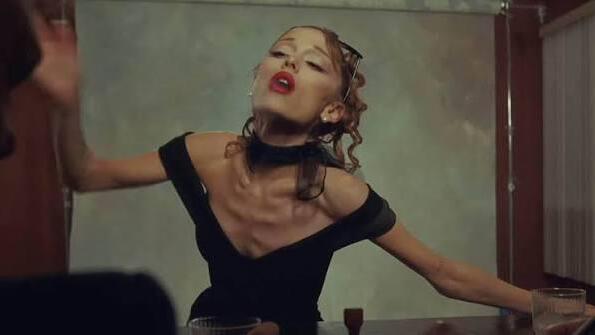
The response came quickly. Grande announced at the beginning of the week that she would take a break from the spotlight after her current tour, including withdrawing from a West End production in London alongside Jonathan Bailey, her "Wicked" co-star.
During a performance in Chicago on Monday night, Grande sought to set the record straight.
"Sometimes when a story comes out that’s not directly from me, things can get a little blown out of proportion," she said. "The announcement that was made yesterday was not a reactive or impulsive thing. It is something that I had decided. It’s a plan that I had quietly made a long time ago, and it’s a decision that was made from a thoughtful and empowered place. I heard that my fans were worried that negativity was ruining things for me, but I just have to say that could not be more opposite."
"I want to be very clear," she added. "Nothing has been ruined. Multiple things can be true at the same time. Boundaries need to be set. Human beings can need a break sometimes. And also, this can be and will continue to be the greatest experience of my professional and creative life."
These developments have made Grande, one of the world’s most famous and admired women, the focus of an extremely sensitive debate: Where is the line between genuine concern for someone we do not actually know and a harmful public attack, even when it is presented as well-intentioned — in this case, as an effort to challenge an unattainable and, in some circumstances, dangerous beauty ideal?
On one side, celebrities who criticized the video argue that its potential impact on millions of girls who see Grande as a role model cannot be ignored, and that the need to discuss that impact outweighs her right simply to be left alone.
On the other, professionals with firsthand knowledge of eating disorders repeatedly stress that the public cannot know what someone is experiencing merely because their bones appear too prominent. Eating disorders occur across all body sizes and weights, they note, and if people were truly concerned about Grande’s health, they would not publicly tear her apart for likes.
"Concern doesn’t require thousands of strangers discussing someone’s body online," psychologist Vivienne Lewis wrote in an article published by Britain’s Independent. "Public speculation can become deeply personal, intrusive and impossible to escape. It can also have unintended consequences for everyone else watching."
She also reminded those who immediately diagnosed Grande with one condition or another that a person cannot be identified as having an eating disorder simply by looking at them.
"Eating disorders occur across all body sizes, ages, genders and backgrounds," Lewis wrote. "Many people experiencing serious eating disorders are never underweight. Likewise, weight loss can occur for many reasons, including physical illness, medication, grief, stress or other life circumstances. Appearance alone simply doesn’t tell us enough."
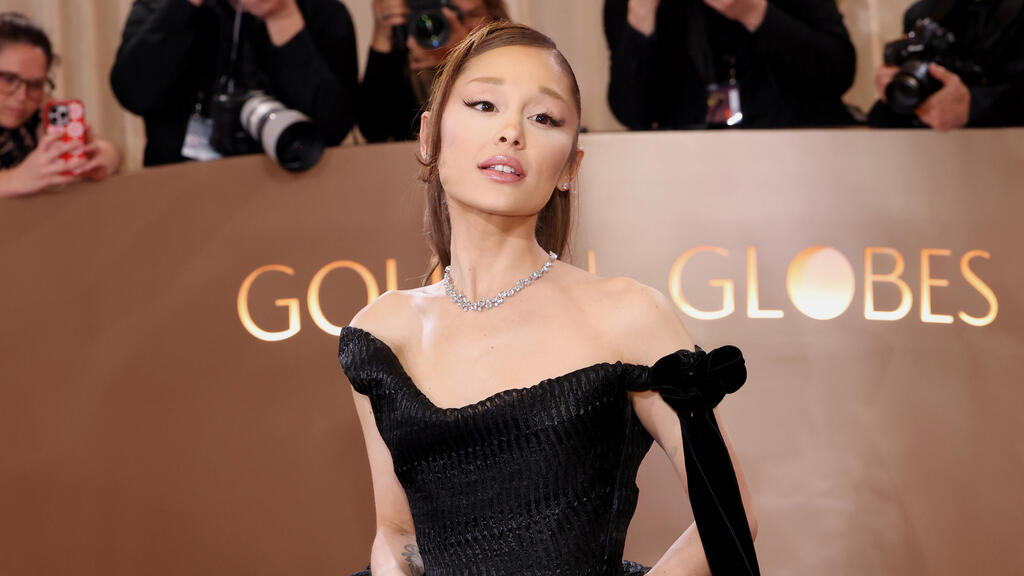
Ariana Grande
(Photo: Monica Schipper/Getty Images)
At the same time, Grande is not an unseen radio broadcaster from the 1980s. The fields in which she has achieved enormous success — music, film and theater — rely not only on vocal ability and songwriting talent, both of which she has in abundance, but also on perceptions of visual qualities such as beauty, sex appeal and charisma.
The standards surrounding those qualities are shaped through public discourse, which has been transformed entirely by the technological revolution. In the past, most of the blame could be placed on vicious gossip columns and relentless paparazzi — and, at a deeper level, on Hollywood and the pop and fashion industries.
Today, everyone is exposed to everyone else’s opinion on every subject, and the more famous the person involved, the greater the level of public engagement.
It is therefore essential to discuss the responsible and ethical use of powerful platforms such as social media. But there is also a considerable degree of naivety in assuming that a new video by a hugely popular singer would not prompt intense discussion about how it might affect the self-image of tens of millions of girls.
The first step out of this dilemma may be acknowledging that there is not necessarily one correct path.
Those fighting against the glorification of extreme thinness would do well to remember that they do not necessarily know everything based on observations from afar — certainly not whether someone is "possibly dying right in front of us," as British actor Jameela Jamil, who has spoken about her experience with anorexia, declared.
At the same time, refusing to discuss the relationship between beauty standards and eating disorders will certainly not help girls and boys who look in the mirror and hate themselves.
In both cases, it is better to leave the stage to professionals, think twice before pressing the "publish" button and remember Grande’s own words: Many things can be true at the same time.