

Nearly 30 years after Tupac Shakur was fatally shot near the Las Vegas Strip, the trial of Duane “Keffe D” Davis could bring new details to light in one of hip-hop’s most enduring mysteries.
Davis, 63, is accused of orchestrating the Sept. 7, 1996, drive-by shooting that killed Shakur and wounded Death Row Records founder Marion “Suge” Knight. His jury trial is scheduled to begin Aug. 10, nearly three years after his arrest in 2023.
He has pleaded not guilty.
Shakur was riding in the passenger seat of a black BMW driven by Knight when a white Cadillac pulled up alongside them and gunfire erupted. Knight survived. Shakur died a week later at age 25.
Police and prosecutors say the shooting grew out of a violent rivalry involving East Coast members of a Bloods gang faction and West Coast members of a Crips faction that Davis has said he led in Compton, California.
Three other men were in the Cadillac with Davis that night. None was charged before his death.
Court records, grand jury testimony, interviews and Davis’ 2019 memoir, “Compton Street Legend,” offer competing accounts of what happened inside the car and who fired the fatal shots.
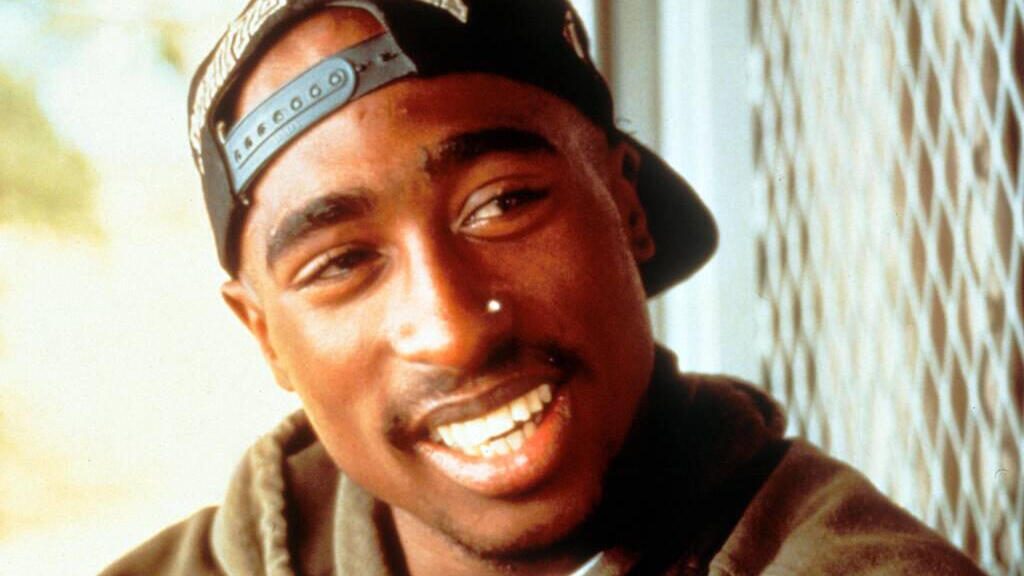
Tupac Shakur
Shakur is widely regarded as one of the most influential rappers in history. He had five No. 1 albums, received six Grammy nominations and was inducted into the Rock & Roll Hall of Fame in 2017.
He received a posthumous star on the Hollywood Walk of Fame in 2023 and is also set to appear in the upcoming video game “Stranger Than Heaven.”
At the time of his death, his fourth solo album, “All Eyez on Me,” remained on the charts and had sold about 5 million copies. He also performed under the names 2Pac and Makaveli and appeared in several films.
Born Lesane Parish Crooks in New York in 1971, his name was changed the following year. His mother, Afeni Shakur, and stepfather, Mutulu Shakur, were active in the Black Panther Party in New York.
Shakur was not close to his biological father, William “Billy” Garland.
Two of his siblings, Sekyiwa “Set” Shakur and Maurice “Mopreme” Shakur, have criticized authorities for taking so long to charge anyone in connection with his death.
Marion ‘Suge’ Knight
Knight founded Death Row Records, the Los Angeles label representing Shakur at the time of the shooting. His nickname was shortened from “Sugar Bear,” a name he acquired while growing up in Compton.
Knight and Shakur were on their way to a nightclub when the BMW came under fire. Knight was grazed by a bullet or shrapnel but survived.
Now 61, Knight is serving a 28-year prison sentence in California for running over and killing a Compton businessman outside a burger stand in January 2015.
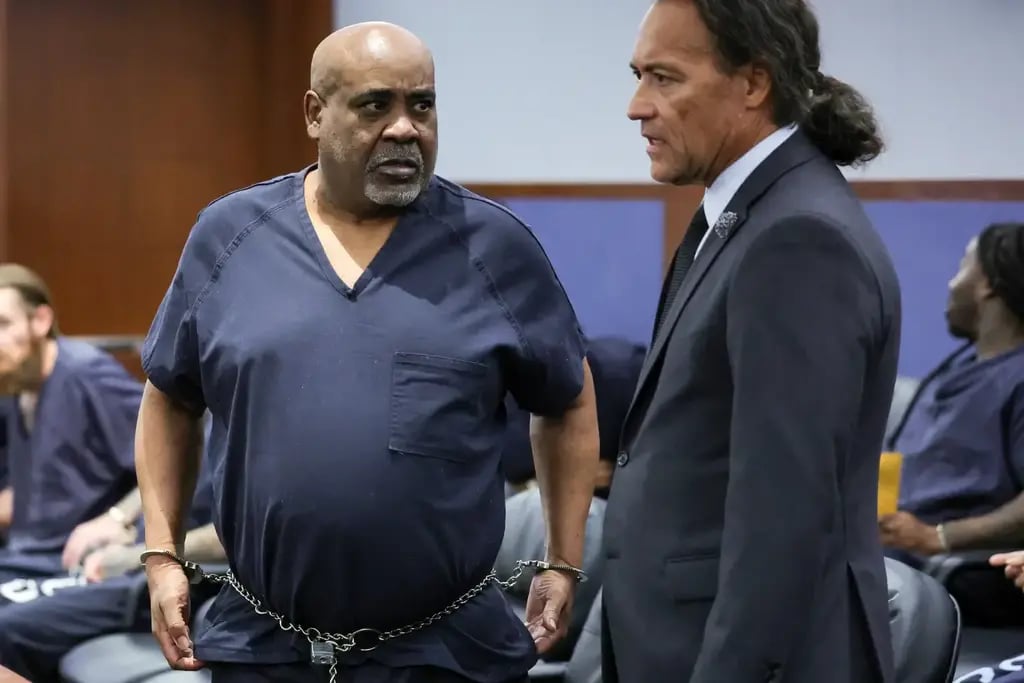
Duane Davis, left, talks with his attorney Michael Sanft in Clark County District Court during a calendar call and motion hearing for Davis’ upcoming trial
(Photo: AP)
The case marked the downfall of a former music executive who had once been among the industry’s most powerful and feared figures.
Davis has said that he and Knight knew each other as children and played on the same youth football team in Compton. Knight later played college football at the University of Nevada, Las Vegas, and briefly joined the Los Angeles Rams as a replacement player during the 1987 NFL strike.
In his memoir, Davis describes himself and Knight as the “only living eyewitnesses to what truly happened.”
“Like two rams locking horns, Suge and I looked each other dead in the eye,” he wrote of the moments before the shooting.
Orlando ‘Baby Lane’ Anderson
Law enforcement authorities long suspected Anderson of being the gunman. He was 22 at the time.
Davis was Anderson’s uncle and 12 years older, but he described their relationship as that of brothers, close friends and even father and son.
Shortly before the shooting, Anderson was beaten during a brawl at the MGM Grand involving Shakur, Knight and their associates.
Authorities, authors and Davis himself have said the drive-by shooting was retaliation for that assault.
“Them jumping on my nephew gave us the ultimate green light to do something,” Davis wrote.
Davis said he obtained a handgun from an associate and tossed it into the Cadillac’s back seat, but he did not identify the person who fired the shots. Anderson was seated behind him.
Neither the Cadillac nor the murder weapon was ever recovered, according to retired Las Vegas police Detective Clifford Mogg, who joined the investigation in early 2018.
“We were never able to identify the person who rented the car, where it was rented from, and then when it comes to the gun, we have never recovered as of this date, the weapon that was used in the murder,” Mogg told the grand jury.
Anderson denied involvement in Shakur’s death. He was killed two years later in what police described as an unrelated shooting at a Compton car wash.
Deandrae ‘Freaky’ Smith
Smith, also known as “Big Dre,” was seated in the Cadillac’s back seat beside Anderson.
Although authorities have said they believe Anderson fired the shots, grand jury testimony challenged that theory.
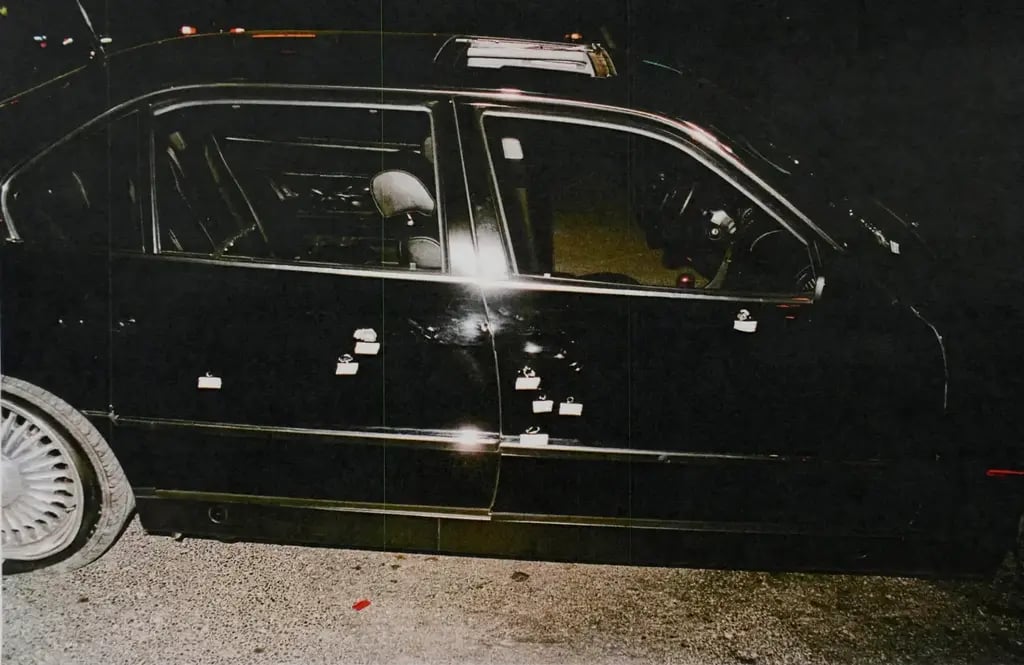
This undated photo provided by the Las Vegas Metropolitan Police Department shows the bullet-riddled car in which rapper Tupac Shakur was fatally shot in September 1996, in Las Vegas
(Photo: AP)
Denvonta Lee, a former Davis associate, testified that Smith was the gunman.
Lee, who was not inside the Cadillac, said Smith later told him that Anderson had tried to reach across him but did not have a “clear shot” through the left rear passenger window.
According to Lee, Smith took the gun from Anderson, opened fire and then allowed Anderson to claim responsibility for Shakur’s death.
Smith died of natural causes in 2004 at age 30, according to the Los Angeles County coroner’s office.
Terry ‘Bubble Up’ Brown
Brown drove the Cadillac from which the shots were fired.
Davis wrote that the group was heading toward Las Vegas Boulevard when they spotted Shakur “hanging out of the window” of the BMW and waving to fans.
Davis said he told Brown to make a U-turn. They then drove slowly past Shakur’s convoy until, as Davis wrote, they “found who we were seeking.”
Brown was killed in a 2015 shooting at a medical marijuana dispensary in Compton.
The Los Angeles County coroner’s office identified him as Terry Tyrone Brown, though investigative records have also referred to him as “Terrence” and “Terrance.”
With Anderson, Smith and Brown all dead, Davis is the only surviving occupant of the Cadillac. His trial could determine whether prosecutors can turn his public statements and memoir into proof that he helped organize Shakur’s killing, even as the identity of the gunman remains disputed.