

At first glance, Omer Big’s sneaker collection feels restrained. No walls stacked with boxes, no endless rotation of pairs. Instead, every shoe has a reason to exist. A story. A moment. For Omer, sneakers are not about accumulation. They are about intention.
Big, a 24-year-old former Israeli Navy commando, sneaker collector and YouTube creator from Tel Aviv, recently experienced a life-threatening event during reserve duty in the war. That moment forced him to rethink his impact on the world. The result was a YouTube channel dedicated to two passions that ground him: sneakers and food. Through it, he shares knowledge, taste and perspective with thousands of followers.
Omer’s collection is deliberately small. He owns around 15 pairs of sneakers, each chosen with precision. Despite the modest number, the total value of the collection is estimated at around 50,000 shekels ($16,000).
His most expensive pair is the Off-White Jordan 1 Chicago. At its peak, a brand-new pair sold for close to 40,000 shekels ($13,000). Today, even a well-maintained used pair can fetch 13,000 to 14,000 shekels ($4,200-$4,500). For Omer, this shift reflects how sneaker value evolves with time, condition and cultural relevance.
According to Omer, sneaker pricing rests on three pillars. The first is materials. Premium leathers, suede and high-end finishes dramatically affect value. The second is story and collaboration. Shoes created with influential designers or brands, such as Virgil Abloh’s work with Off-White, carry cultural weight beyond their physical form.
The third factor is sizing. In the sneaker market, each size has its own price. Common sizes and extremely large sizes often command higher prices due to demand and limited production runs. This nuance surprises many newcomers but defines the market.
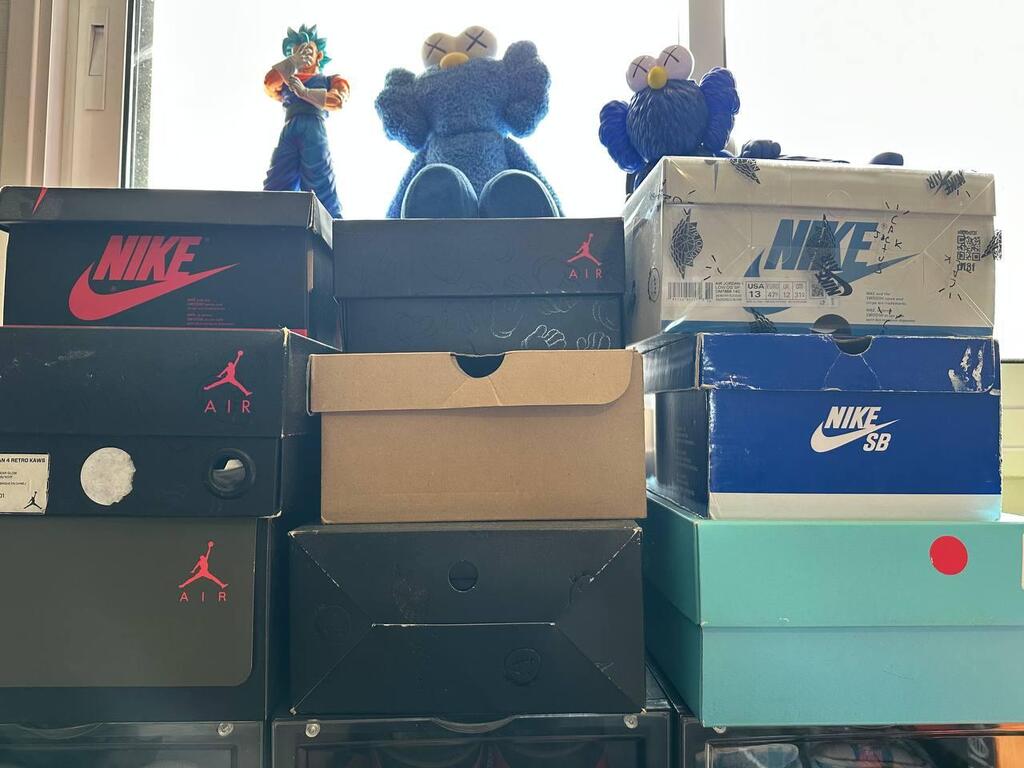
One of Omer’s strongest warnings is simple and uncompromising: never put sneakers in a washing machine. Doing so destroys shape, color and materials.
Instead, he recommends dedicated sneaker wipes, magic erasers for surface dirt and professional cleaning kits. Proper maintenance is not cosmetic. It is preservation. In collecting, condition directly translates to value.
Legit checking is a constant concern. Omer recommends services like CheckCheck or Legit Check, where human experts review detailed photos for a small fee. These services reduce risk, especially in peer-to-peer trades.
He is more cautious about StockX. While popular, its massive volume sometimes leads to mistakes. Omer prefers platforms like GOAT, which he considers more consistent in authentication.
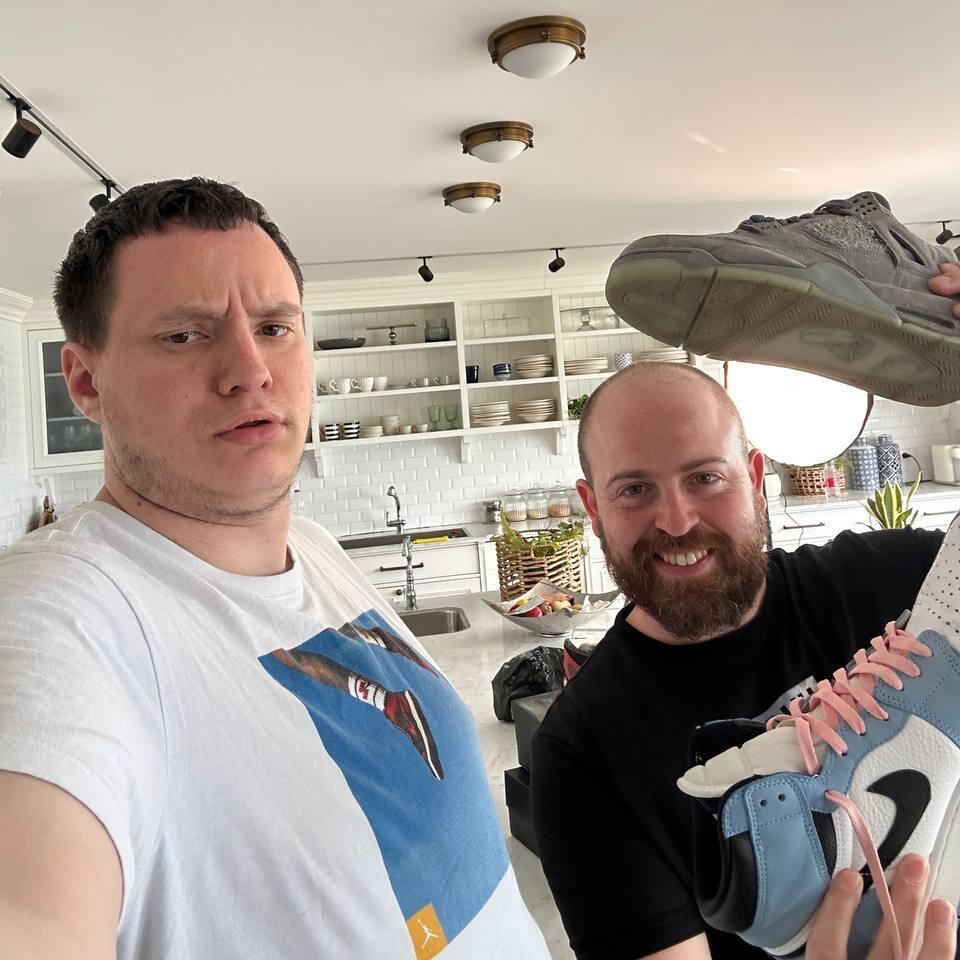
Omer Big and People and Collectors podcast host Bar Gindy
(Photo: Courtesy)
Buying used sneakers is standard practice. Conditions like VNDS, meaning very near deadstock, are common, especially for rare models in specific sizes.
In Israel, Omer points to Facebook groups such as Sneaker Group, alongside physical stores like Push 5 in Ashdod and Icebox in Tel Aviv. Trades are also common, but they require discipline. Always verify authenticity before exchanging value.
Among Omer’s dream sneakers are the Travis Scott PlayStation, with only 24 pairs worldwide, and the Jordan 1 Dior, a model that originally drew him into sneaker culture.
Sneaker collecting mirrors fine art. Value is not just leather and rubber. It is story, signature, and scarcity.
- For more stories from Tom and other collectors, check out the People and Collectors podcast. The full interview is available with subtitles in English and 50 other languages.