

In a sleek suite at a luxury Berlin hotel near Potsdamer Platz — just steps from a building that once housed a secret Gestapo prison — actor and filmmaker Ethan Hawke sits reflecting on the state of the world.
Though careful not to comment directly on political leaders such as Donald Trump, Vladimir Putin or Benjamin Netanyahu, Hawke’s views clearly allude to them. “We think we’re living in crazy times — and we are; it’s frightening and alarming,” he says. “But the truth is, the world has always been run by monsters. Throughout human history, positions of power have attracted greedy, self-centered people who don’t have the public’s best interest at heart. It’s always been that way. These people enjoy themselves while the world outside burns and explodes.”

'Blue Moon' - Trailer
(Credit: Sony Pictures Classics)


Hawke arrived at this year’s Berlin International Film Festival with Blue Moon, directed by his longtime friend Richard Linklater. The film centers on a 1943 meeting in a New York bar between two Jewish songwriters: composer Richard Rodgers (played by Andrew Scott) and lyricist Lorenz “Larry” Hart (portrayed by Hawke).
Rodgers and Hart had once been a celebrated Broadway duo, creating classics such as Blue Moon, The Lady Is a Tramp and My Funny Valentine. But their partnership ended when Rodgers could no longer tolerate Hart’s alcoholism and began working with Oscar Hammerstein instead. Struggling with his homosexuality, depression and fading fame, Hart died alone shortly after that fateful meeting.
The film, which will screen at the 41nd Haifa International Film Festival during the Sukkot holiday, will not receive a commercial release in Israel. Hawke was considered a strong contender for the Berlinale acting award, which ultimately went to Rose Byrne.
In Blue Moon, Hawke fully inhabits a character who is everything he is not — short, Jewish, balding (he shaved his head for the role), gay and alcoholic. “It was definitely a challenge,” he says. “The language was intense. I had a lot of dialogue, but after a lifetime of acting, I have methods that help me memorize lines.”
Asked about portraying the much shorter Hart, Hawke explains, “We used a series of stage tricks. Hart was barely five feet tall — and I think that was key to understanding what drove him. His personality had to be enormous, because otherwise no one would notice him. He refused to be ignored. This film took everything out of me. I didn’t go out for months — I just disappeared.”
Hawke is aware of the growing debate about representation in film, including criticism of straight actors playing gay characters — or non-Jews portraying Jewish roles, such as Helen Mirren’s recent turn as Israeli Prime Minister Golda Meir.
“I wanted to make a joke about that,” he says, “but it’s too dirty.”
Prompted to share it anyway, Hawke smirks before replying: “How many guys do you have to sleep with before you’re considered gay?” Then he turns serious. “Your question raises a really interesting discussion, but actors might not be the right people to have it. Acting, for me, is about imagining and experiencing what it’s like to be someone completely different — to expand your empathy and compassion through that process.
“For example, I’d love to play a woman someday. I understand why, from a political standpoint, it’s important to see Indigenous actors playing Indigenous characters. Nobody wants to see Dustin Hoffman playing a Native American anymore — or Al Pacino playing a blind man, or Tom Hanks portraying someone with an intellectual disability. That’s no longer interesting. The political landscape has changed, and I understand why representation matters — people need to see themselves on screen.
“But as an actor,” he adds, “I want to play any role someone thinks I can play. So I might not be the best person to debate this issue.”
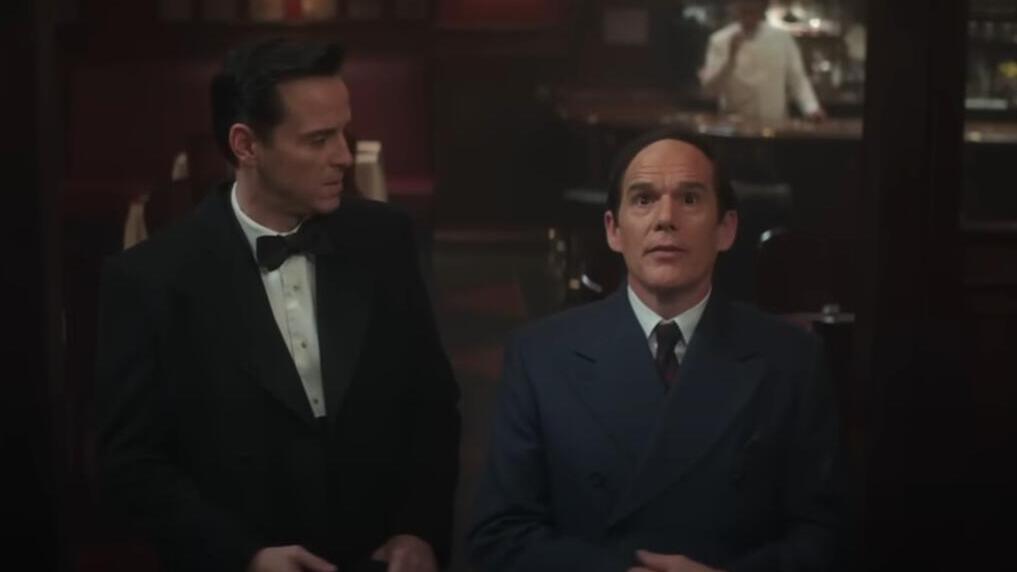
Hawke and Andrew Scott, from Blue Moon
(Screenshot, YouTube)
King Richard
Blue Moon marks Hawke’s ninth collaboration with director Richard Linklater, one of the leading figures in American independent cinema. Both men hail from Texas. “We first met in 1993 when Richard was making Dazed and Confused,” Hawke recalls. “Anthony Rapp, who was in that film, was performing with me in a small theater I was running at the time. Richard came to see the play, and afterward we went out together. We spent the whole night talking — Richard is brilliant. He thinks about movies differently than anyone else, and he knows so much. After that night, he sent me the script for Before Sunrise. The summer of 1994, when we shot it in Vienna, was probably the best summer of my life.”
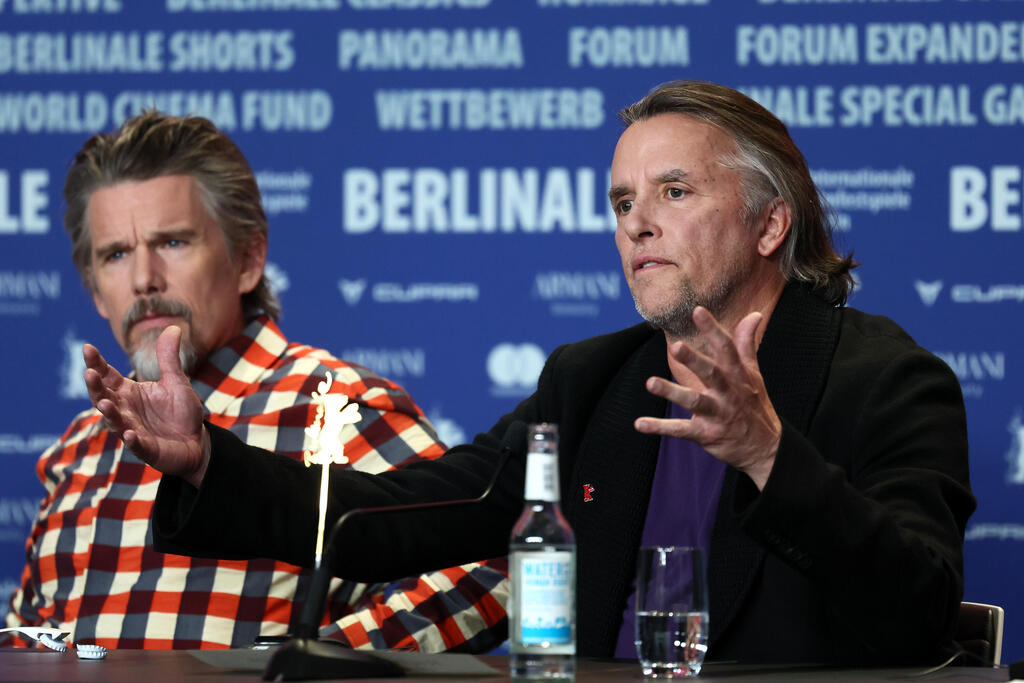
Hawke with Richard Linklater
(Photo: Sebastian Reuter/Getty Images)
That collaboration, which began in 1995, made Hawke a defining face of Generation X — thanks in part to Reality Bites. Before Sunrise became the first entry in a beloved trilogy, followed by Before Sunset (2004) and Before Midnight (2013), chronicling the evolving relationship between American writer Jesse and French student Céline, who meet on a train to Vienna. Hawke and co-star Julie Delpy co-wrote the screenplays.
“I believe in Richard deeply — he brings out the best in me,” Hawke says. “I feel like we’re in the same band, and I’m the guitarist. When he makes a movie, he hires me. I love his sensitivity and his deeply political soul. His films have love for people — you see humanity in all its fragility. I’m proud of him. It’s fun to work with someone so different from other directors today. He’s not interested in making life prettier or glossier. Richard creates a relaxed environment on set, which lets me relax too — something that’s impossible on big Hollywood productions.”
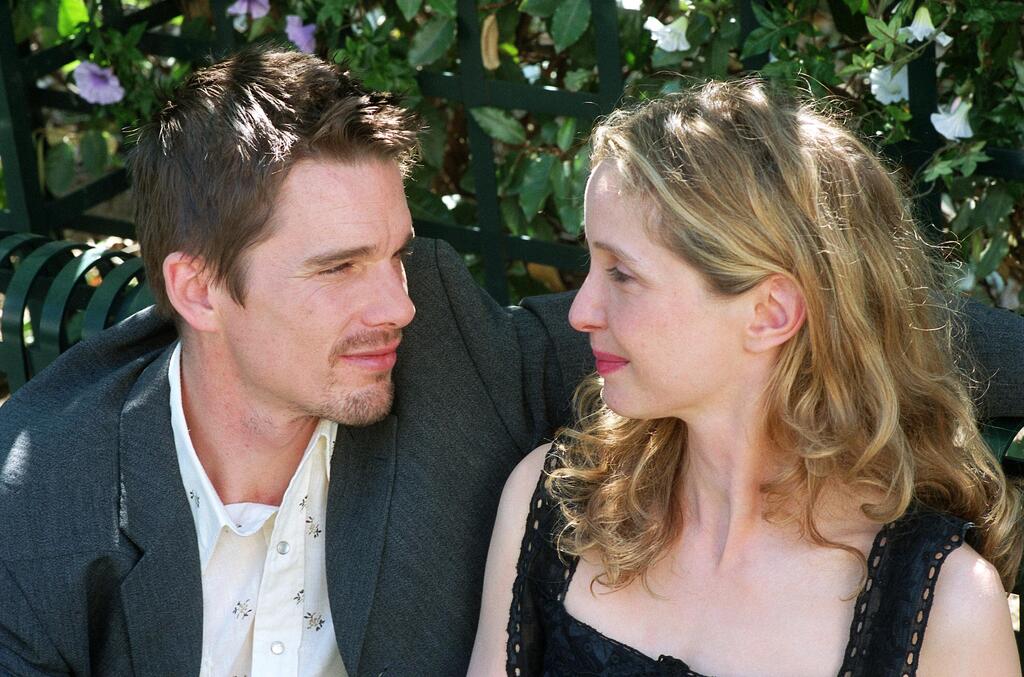
Hawke and Julie Delpy, from 'Before Sunset'
(Photo: Courtesy of yes)
Hawke will return to theaters in mid-October with The Black Phone 2, reprising his role as the masked child kidnapper and serial killer. Though horror films were never his comfort zone, he embraced the genre after starring in The Purge (2013), which became a surprise box-office hit.
“What changed my mind?” Hawke says. “When I was offered The Purge, I was skeptical. A lot of horror films make tons of money even though they’re terrible and feature awful performances. But then I thought about films like Carrie or The Shining, which succeeded because of great acting. So I decided to do it — and I got really excited about trying to bring something real to the genre.”
Hawke says his decision to experiment with horror — and to appear alongside Selena Gomez in the thriller Getaway — was partly driven by a midlife crisis. “When I turned 40, I initially went into a panic,” he admits. “Then I realized everything depends on your point of view. The truth is, if you keep the right perspective, it’s incredibly exciting to be alive.
“For me, the key to avoiding midlife boredom was staying curious. I started enjoying trying new things — mixing high art with low art, doing classical theater and horror films. That was my cure. What haunts all of us at this age are life’s inevitable highs and lows. When you’re young, you fool yourself into thinking your generation will be the meaningful one. As you get older, you realize every generation fools itself that way.”
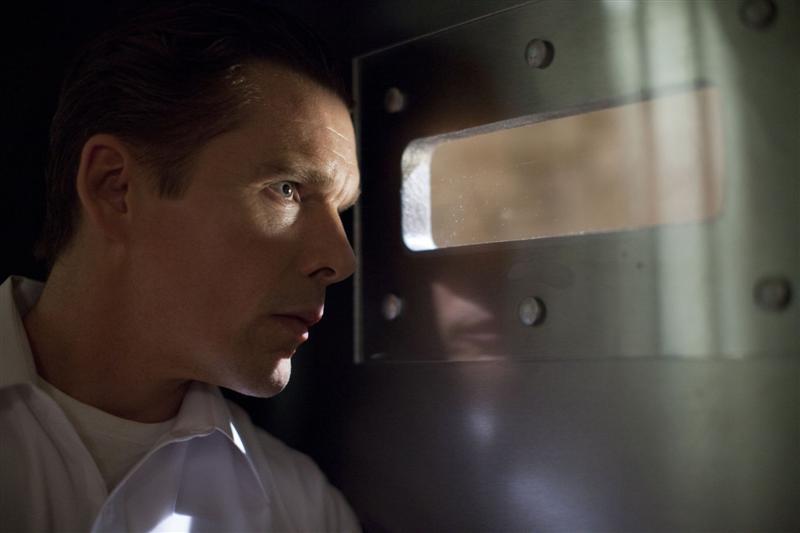
Hawke in 'The Purge'
(Screenshot)
Hawke, who turns 55 in November, admits that aging weighs on him. “When I came to the Berlin Film Festival 30 years ago, I didn’t sleep for four days and had way more fun than I do now,” he says, laughing. “But I was also weird and deeply insecure. After staying up for about two days straight, I flew with friends to Barcelona to see R.E.M. in concert and then came back to Berlin. It was a blast — but I had no responsibilities back then.”
Today, Hawke carries far more responsibility. He’s no longer the reckless young actor he once was and now takes pride in his four children. “A lot of people are sad these days,” he says. “I’m not. I’m happy to be alive. I’m grateful.”
In Blue Moon, Hawke plays Lorenz Hart at a time when the lyricist was trapped in self-destruction, long past his prime. Asked if he’s met similar people in Hollywood, Hawke smiles. “Haven’t we all? Alcoholism is everywhere. You don’t have to go to Hollywood to find it — it’s a human problem. Alcohol is a very effective painkiller — and it’s really, really pleasant. I’ve met a lot of self-destructive people in my life.”
'Winning an Oscar isn’t my life’s goal'
Hawke rarely discusses his private life — perhaps unsurprising, given that his romantic history has included its share of scandal. He married Uma Thurman after the two fell in love while filming Gattaca (1997). Thurman, he has said, helped transform him from a nervous young man into someone more calm and self-assured. The couple had two children — actress Maya Hawke and her brother Levon — but their marriage ended after Thurman discovered Hawke had an affair with a Canadian model during a film shoot. Reports at the time claimed Hawke cheated after hearing rumors that Thurman was involved with director Quentin Tarantino.
The divorce shook Hawke deeply. He sank into depression and a string of short-lived relationships, while Thurman went on to a tumultuous on-again, off-again romance with Danish restaurateur and hotelier André Balazs. She was later linked to other partners, including media executive Justin B. Smith. “There’s a lot of pain in divorce,” Hawke once admitted. “It’s very hard to recover from. It really hurts. And when it happens in the public eye, it’s even worse — people become obsessed with how divorces unfold.”
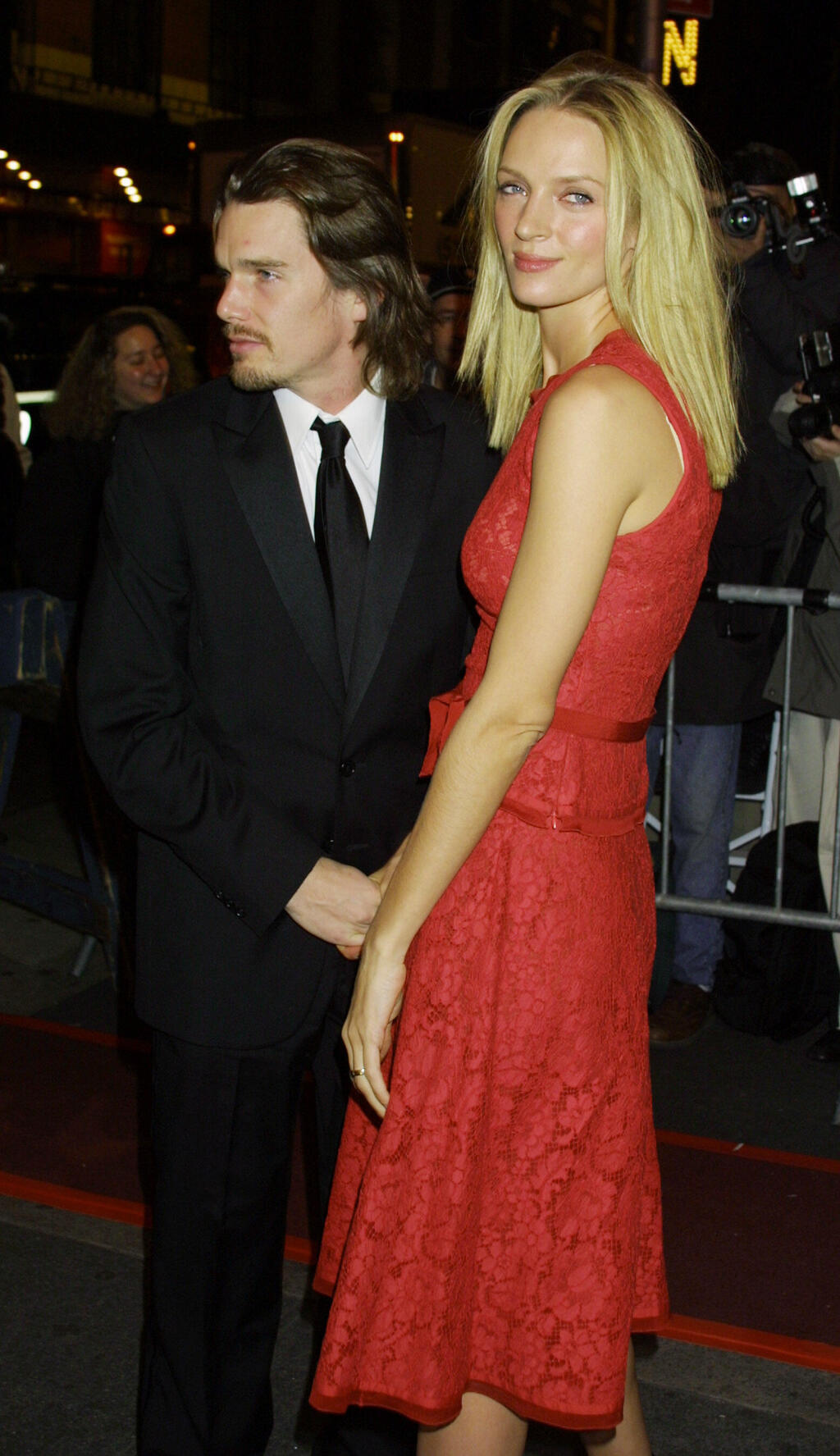
Ethan Hawke and Uma Thurman
(Photo: George De Sota/Newsmakers)
Hawke later married Ryan Shawhughes, the nanny who had helped care for his children. The two have two daughters, Clementine Jane and Indiana. In a recent interview with GQ, Hawke said his children are his greatest achievement. “They remind me every day why it’s worth dealing with everything. I’m not trying to be perfect anymore — I’m trying to be real.”
As a teenager in New Jersey, where he moved with his mother after his parents’ divorce, Hawke worked at a Burger King, flipping Whoppers. “It was terrible — I hated it,” he laughs. “I used to sign my initials on the burgers with ketchup.”
Acting soon replaced fast food as his livelihood. His first film role came at 14 in Explorers (1985), alongside the late River Phoenix, and his breakout followed with Peter Weir’s Dead Poets Society (1989), starring Robin Williams. “Peter Weir was my first real mentor,” Hawke says. “I saw him as a great artist. He showed me what it means to be one — educated, kind, without arrogance or pretension. He doesn’t have a bombastic ego, but he has enormous confidence. Even his retirement, he’s handled beautifully.”
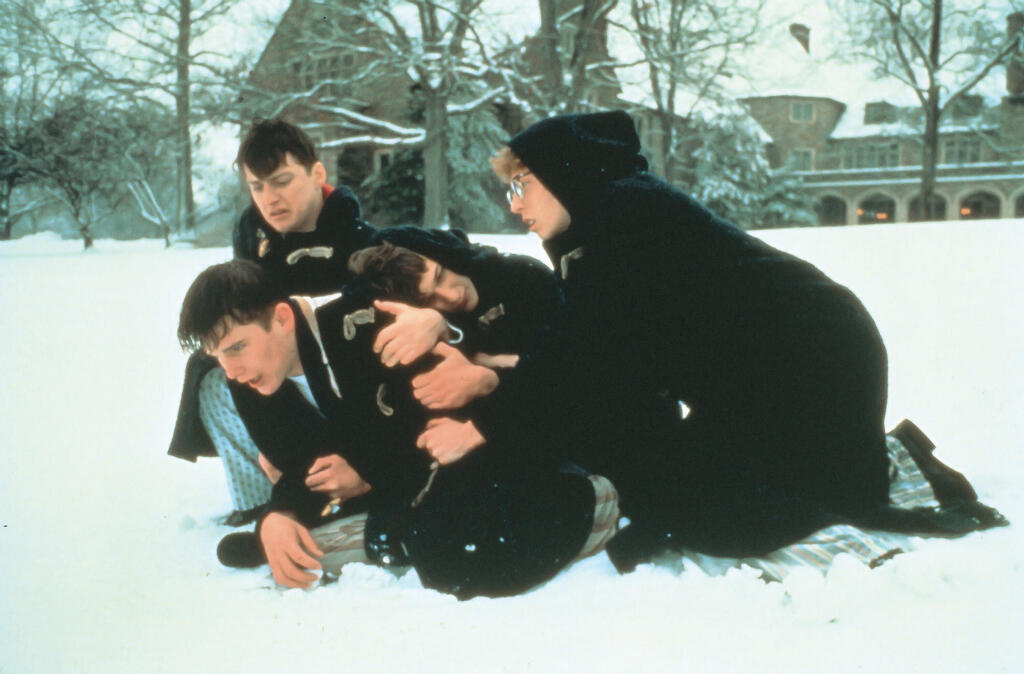
Hawke and friends, from 'Dead Poets Society'
(Photo: Courtesy of yes)
Since Dead Poets Society, Hawke’s career has spanned everything from theater to box-office hits like Training Day, which earned him an Oscar nomination for best supporting actor. He received three additional Academy Award nominations — for his performance in Boyhood and for co-writing the screenplays for Before Sunrise and Before Midnight. “Winning an Oscar isn’t my life’s goal,” he says plainly.
Since the COVID-19 pandemic, Hawke has stayed away from the stage — both as a performer and an audience member — and prefers revisiting classic films. “In preparation for Blue Moon, where my character references Casablanca more than once, I watched it with my kids, who usually get bored with everything. They loved it. That movie still holds up — it’s so fun, even though it breaks your heart. The best line is probably, ‘No one ever loved me that much.’ What a line.”
Hawke admits he now gravitates toward old movies. “It’s probably a sign of aging,” he says. “There’s something about a lot of television today that doesn’t feel like it comes from an auteur’s vision — it’s based on entertainment value, more like a soap opera. There’s no beginning, middle and end, no thesis, no big metaphor — because that way people can make more money from it. I find that less interesting. I like going back to the great classics — because I still dream of creating one myself.”
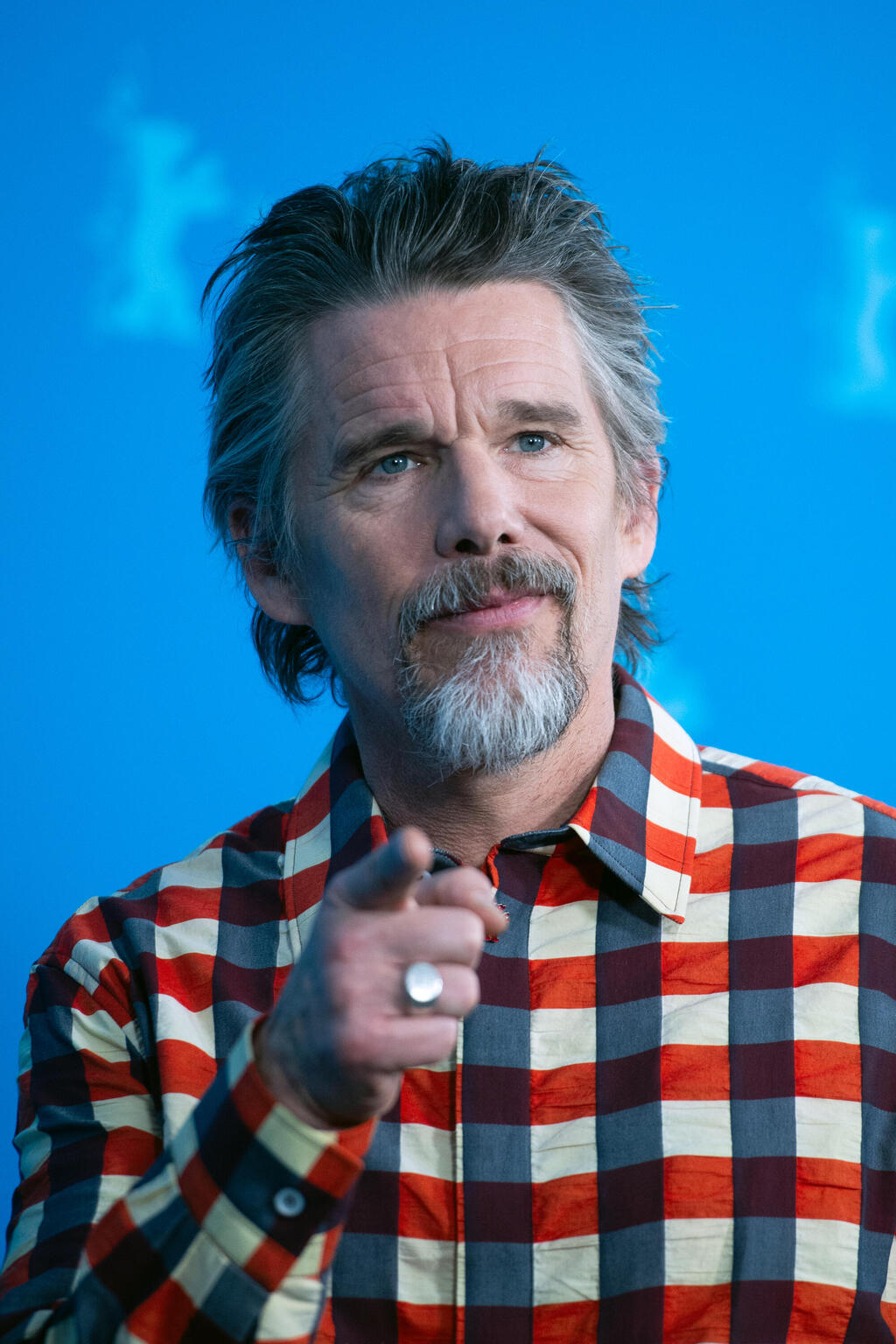
Uncle Ethan says: Watch 'Casablanca'! With kids!
(Photo: Matthias Nareyek/Getty Images)
Though primarily an actor, Hawke occasionally directs and produces and doesn’t shy away from television, even as he criticizes aspects of the medium. He says adapting to the industry’s streaming revolution has been necessary. “The Hollywood strike happening so soon after COVID was brutal for the industry,” he says. “It gave streaming a huge boost and changed culture in fundamental ways we’re still trying to understand. Things come and go, come and go — the only constant is change. Some parts of the business are thrilling, others are deeply depressing. A lot of smarter people than me talk about it — but I honestly don’t know where it’s all heading.”
In 2020, Hawke created and starred in the miniseries The Good Lord Bird, portraying abolitionist John Brown. This month, he returns to television in Hulu and FX’s The Lowdown, playing an investigative journalist and activist who exposes corruption and finds himself in danger because of his reporting. The character is loosely inspired by Lee Roy Chapman, a historian and journalist who researched the history of racial violence in Tulsa, Oklahoma, before his death a decade ago. The series will premiere in Israel in December on Disney+.
'The Good Lord Bird' - Trailer
“The character Ethan plays in The Lowdown embodies what he’s drawn to — people walking the edge between beauty, madness and darkness,” said Reservation Dogs co-creator Sterlin Harjo in an interview with GQ. “The way he appears on screen is mesmerizing — an electrifying performance from someone who lives his life on a knife’s edge.”
It’s a fitting way to describe both Hawke and his career.