

At the age of 19, Aukan Goldin is already used to people pausing for a moment when they hear his name. After all, how many people in Israel know the region in southern Argentina after which he is named? His father, Eitan, has South American roots and decided that the meaning of the place’s name, “warrior” — in the mental rather than physical sense — would suit his son. He was not wrong.
“I really like it,” Goldin said in an interview just before opening his first senior European Championship on Monday. “There are no other people with a name like mine, I checked. I know it’s a strange name, but I always answer that it is from South America and that it has meaning. When I was the youngest on the national teams, they would call me Baby-kan, which was funny.”
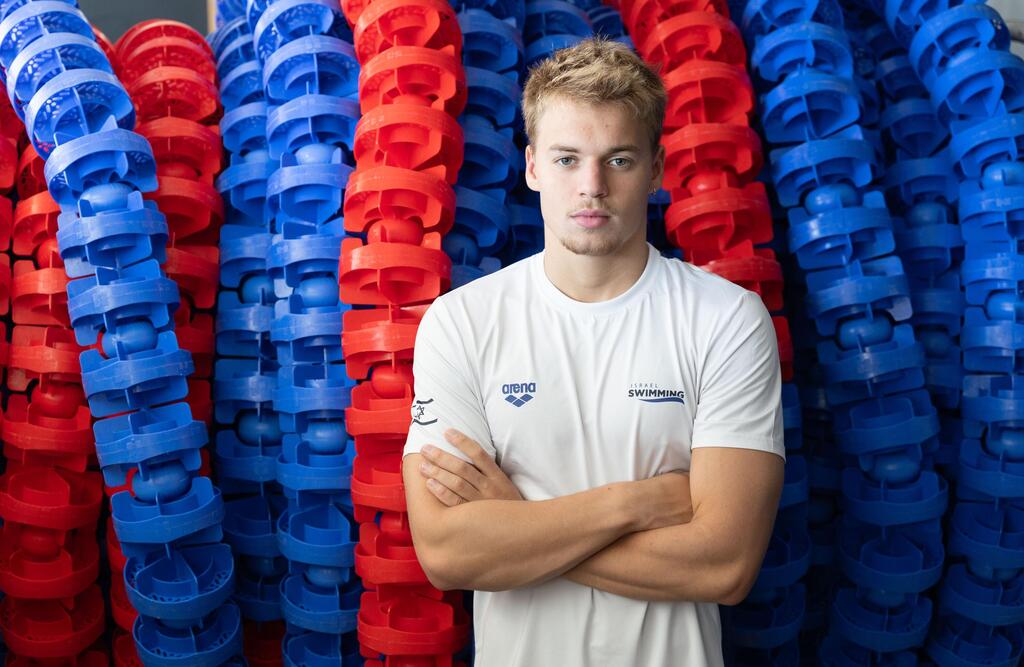
Goldin is no longer a baby, and this week he will jump into the big leagues at the continental championship in Paris. He already competed on this stage in December in short-course pools, but he understands that this time it is the real thing. “I can swim very fast, and this championship will be a very important milestone ahead of the Los Angeles 2028 Olympic Games and for my career as an athlete in general,” he declared.
What are you most looking forward to?
“Seeing what it is like in the summer, when everyone arrives at peak preparation. We were at an altitude training camp in Italy for three weeks. It was my first time. I’m looking forward to seeing big names like Léon Marchand or Adam Peaty. As a child, I would watch them on television, and now I can swim next to them and learn from them. It will be cool, but I’ll have to keep my composure.”
A matter of style
Goldin’s career began at age 6, in a swimming class at Maccabi Nahariya, which over the years developed into a professional career. At the championship, he will swim the 100-meter and 200-meter backstroke, events in which he finished sixth and fifth, respectively, at last year’s World Junior Championships. He discovered the backstroke only at age 12, after years as a freestyle and butterfly swimmer.
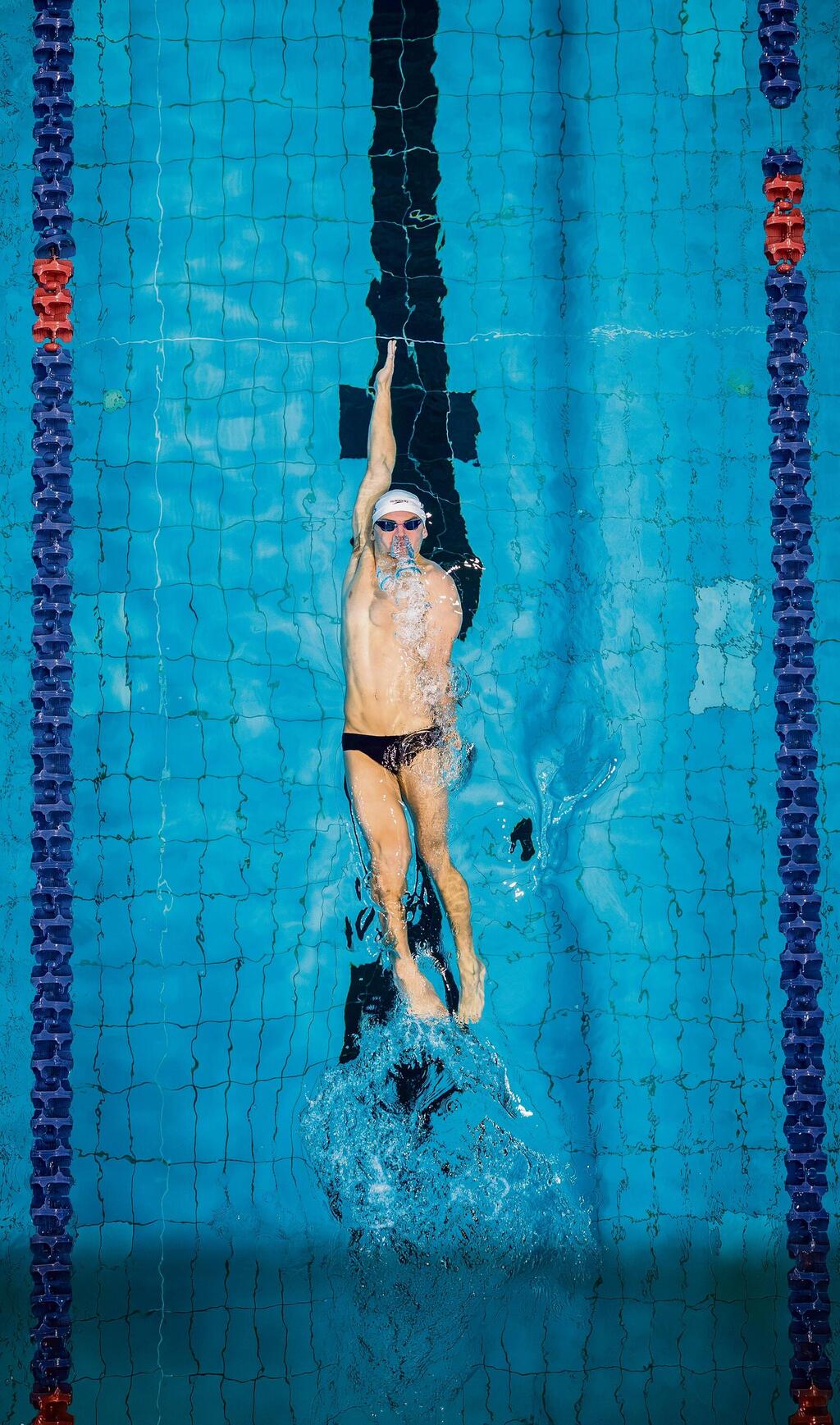
The 200-meter backstroke is Aukan Goldin's specialty
(Photo: Oz Moalem)
“The coach there told me that those two styles were not enough to be at the Israeli championship in the youth category,” he recalled. “At her recommendation, I tried swimming the 200-meter backstroke, and I swam it better than my other races. She saw there was talent, and over time it developed into me swimming more backstroke than anything else.”
Goldin is the only child of his parents, Eitan and Danka, each of whom comes from a different sport, but with a direct connection to the water. His father competes in triathlons, and his mother competed in diving in Slovakia. The two met while studying at the Technion and settled in Nahariya.
“For them, it was only a matter of time until I got into the sport. My father’s favorite part of the triathlon is swimming,” he said. “At first I didn’t like going to the class, but they didn’t push too much. They knew there was no need to pressure me. They were strict with me about eating properly and going to sleep early. Today I’m grateful for that.”
Morning practices at sunrise?
“Actually, no. That started only when I moved to the academy at age 16. Until I showed performances that proved I was more than an average swimmer, I didn’t work hard. It was a smart decision to take everything easy. That way I enjoyed swimming and wasn’t ‘ground down.’”
What was the change like when you moved to the academy?
“It was at the end of 11th grade, after I had put off moving there for two years. I had to get used to a different weekly volume. In the end, it was good for me. I think it’s the right approach. In Israel, it is customary to swim once, and then also swim fast in the evening, not to get tired beforehand, and I disagree with that. When you get to a world or European championship, you have to swim fast already in the morning.”
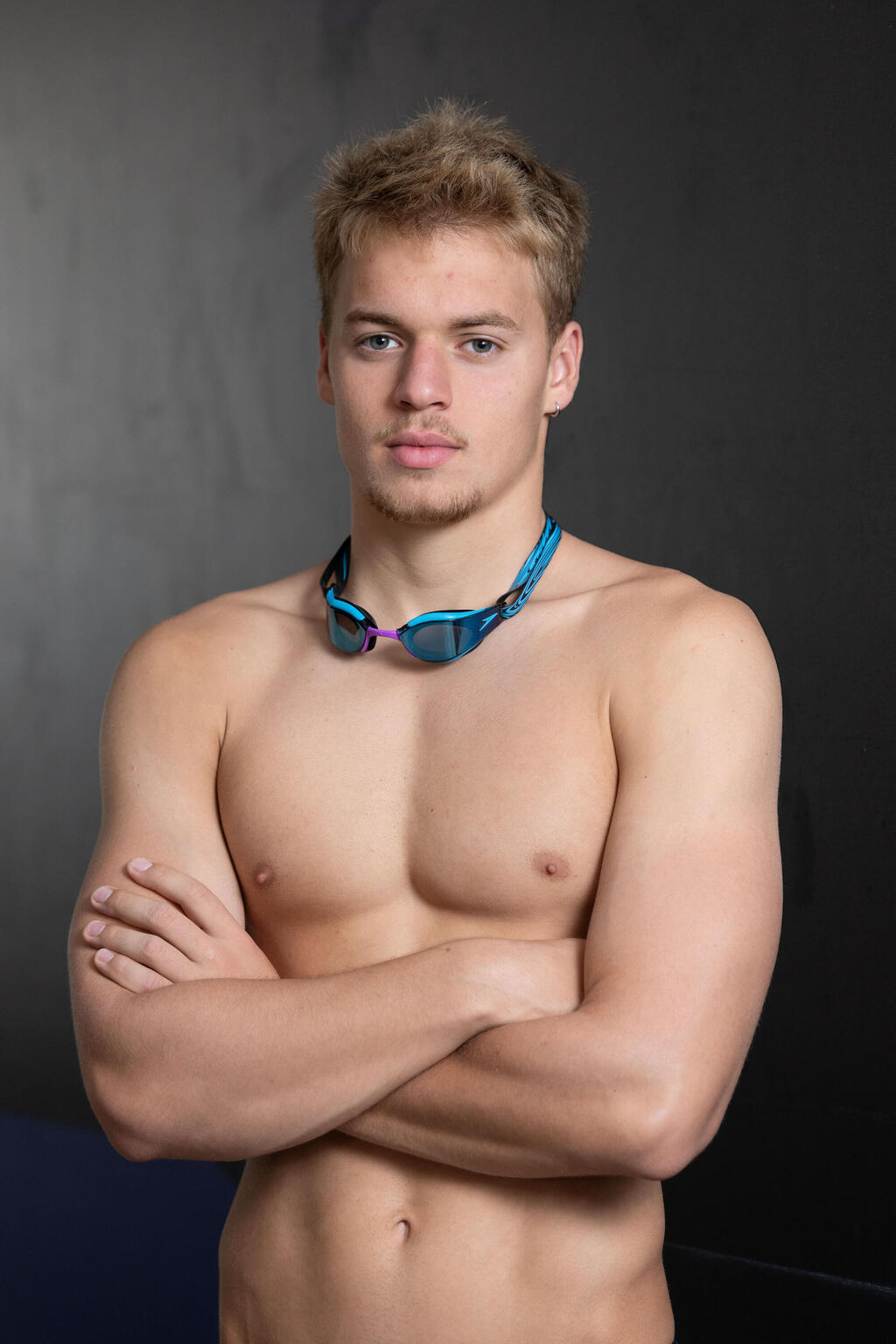
Aukan Goldin
(Photo: Oz Moalem)
You mentioned that you postponed the move. Did you make it because of the security situation in the north?
“Also. The support system at the Wingate Institute is better, and I realized that without it, it would be very hard for me to improve. Before the move, I felt what people in the center do not feel: many sirens, pressure, making it to the safe room. Now I think about my parents all the time because they are there. We had shrapnel in the garden from the missiles. In the first year of the war, right after October 7, I didn’t train in the water. I did fitness workouts at home.”
The pool was closed?
“They opened and closed, opened and closed. Every time, the Home Front Command changed its instructions. The first six months made me understand that I needed to leave. There was concern for my career. I saw how my friends at the club were hurt by what was happening. They were unable to improve their results.
“In my opinion, what happened in the north was greatly minimized compared with the center. There was a long period when I didn’t sleep at all. They wore us down mentally: a siren at 1 a.m., then another at 4 a.m. and then at 7 a.m. It’s jarring. In the end, you can’t train on Zoom. It is sad that many young athletes from the area stopped training because of the war.”
The American dream
Goldin will soon leave Israel for the University of California, Berkeley, where he will study economics and business administration alongside swimming. For now, he is already starting to make the conversion in his head from meters to yards.
“It’s a different sport, a different culture,” he said. “It is also a necessary step. I’m coming with a calm mind, knowing I can develop there both as an athlete and as a person. I received a gift.”
Who made the match?
“Dave Marsh, the federation’s adviser. He coached there until a few months ago. In September, I visited five universities, three days at each place. In the end, Berkeley appealed to me the most. They excel at taking good swimmers and making them better.”
And Los Angeles will be physically very close to you. How close are you in terms of the qualifying standard?
“About 1.3 seconds away. The qualifying window opens next year, and the standard is very difficult compared with Paris. I believe I have it in me. We’ll see how much closer I get to it at the European Championship.”