

Twins have long fascinated both scientists and the public — two individuals sharing not only a birthday but also, often, a mysterious emotional connection. From their synchronized movements as babies to their uncanny ability to sense each other’s moods, twins embody the tension between closeness and individuality. Behind the magic, however, lies a psychological and educational challenge for parents: how to nurture a deep bond without losing each child’s independence.
Hadas Pilzer, an educational counselor, parenting coach for twins — and herself a mother of twins and grandmother to both twin girls and twin boys — explains the unique bond shared by siblings who were created and raised together, the importance of fostering individuality as a path to independence, and the tools parents can use to achieve it — “even when the solution feels counterintuitive,” she says.
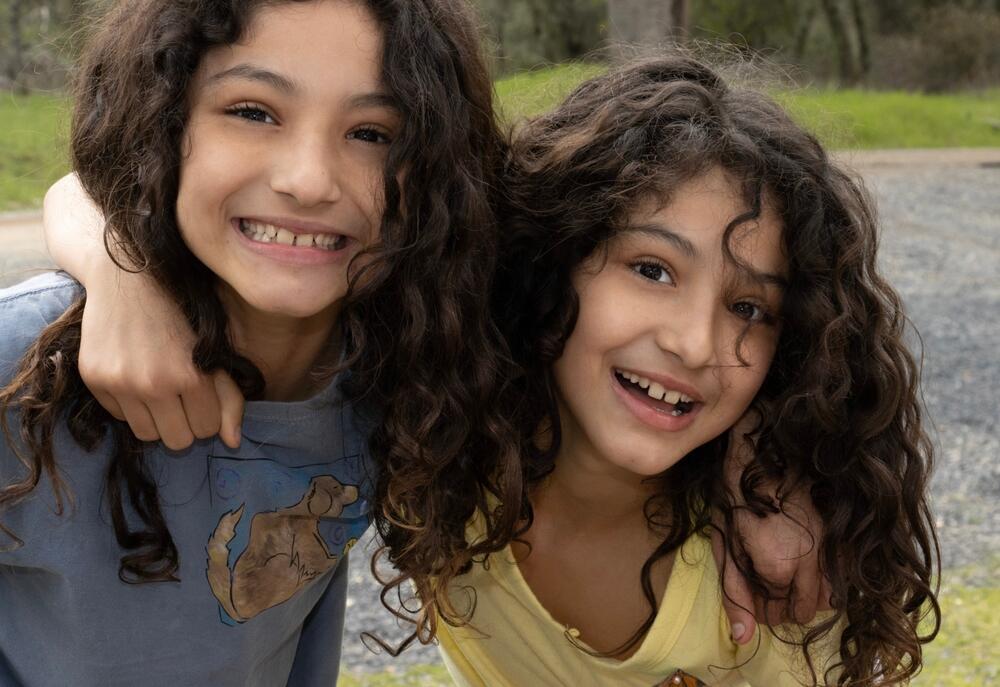
(Photo: Shutterstock)
“The phenomenon of twins has fascinated us for generations,” Pilzer says. “From the moment they are conceived, twins strive to be together. It’s their innate drive — their emotional need. A twin’s existence is one of being with another. That’s what they know; they don’t know solitude. From the moment of conception, there is someone next to them — they sense that other’s movement, smell and touch.
“Today, neuroscience shows that every newborn has sensory memory,” she adds. “So the moment a twin enters the world, their instinct is to seek their sibling. They want to be together — in symbiosis.”
How does this symbiosis manifest in the early years?
“Simultaneity is a key concept in twinhood,” Pilzer explains. “Twins aren’t simply two siblings. It’s one child, another child — and also a shared entity. But if we want to raise children who aren’t dependent on each other, who can navigate the world on their own, we must ensure separation.
“If we want to raise two whole, complete people, we must teach them to live as individuals. Their relationship is complex, and studies show that without parental guidance, twins may develop emotional, social, cognitive and linguistic difficulties.”
What does separation look like in practice?
“Parents often think, ‘We’ll put one here and the other there — that’s it, they’re separate.’ But it doesn’t work that way,” Pilzer says. “Their emotional need is to be together — yet to grow into whole, independent people, they must experience emotional separation.
“I don’t want two children who are dependent on each other, who can’t function alone, who don’t know how to navigate the world without their twin. I want one whole person — and another whole person. The goal is separation, but without sacrificing their togetherness.”
Separation, she notes, is easy to understand but difficult to implement. “Each of us undergoes a process of separating from our parents. Twins must do this twice — from the parent, and from each other,” Pilzer explains. “Separation is a psychological, educational, and emotional process in which I help each child realize their full human potential — 100% — while still embracing their twin identity.”
Parenting twins, she adds, requires intention and structure. “With a single child, we all have a model in our heads — after all, we were raised ourselves,” Pilzer says. “With twins, we don’t always know what to do. We don’t know how to raise two children who came into the world together — and often the solution goes against our natural logic. Twin parenting can’t be spontaneous or purely intuitive — it must be learned.”