

In 1991, a family rental service was launched in Japan by a corporation that began offering professional actors for what it described as "soft services," defined as reaching others with a compassionate heart. The business gained momentum, and similar companies soon followed.
About 20 years ago, Ryuichi Ichinokawa founded a company offering people for hire for virtually any purpose. He called it the Heart Project and described it as a "supplementary presence service," supplying stand-ins and substitute family members. Prices range from $63 to $190 per role.
Rental Family - trailer
(Video: Forum Film)


That world inspired the narrative feature Rental Family, starring Brendan Fraser. The film was shot in Japan and written by screenwriter and cinematographer Stephen Blahut, who knows the country well. In the late 2000s, Blahut, who describes himself as a "citizen of the world," drove an ambulance from London to Mongolia as part of a charity race and later spent two years living in Japan.
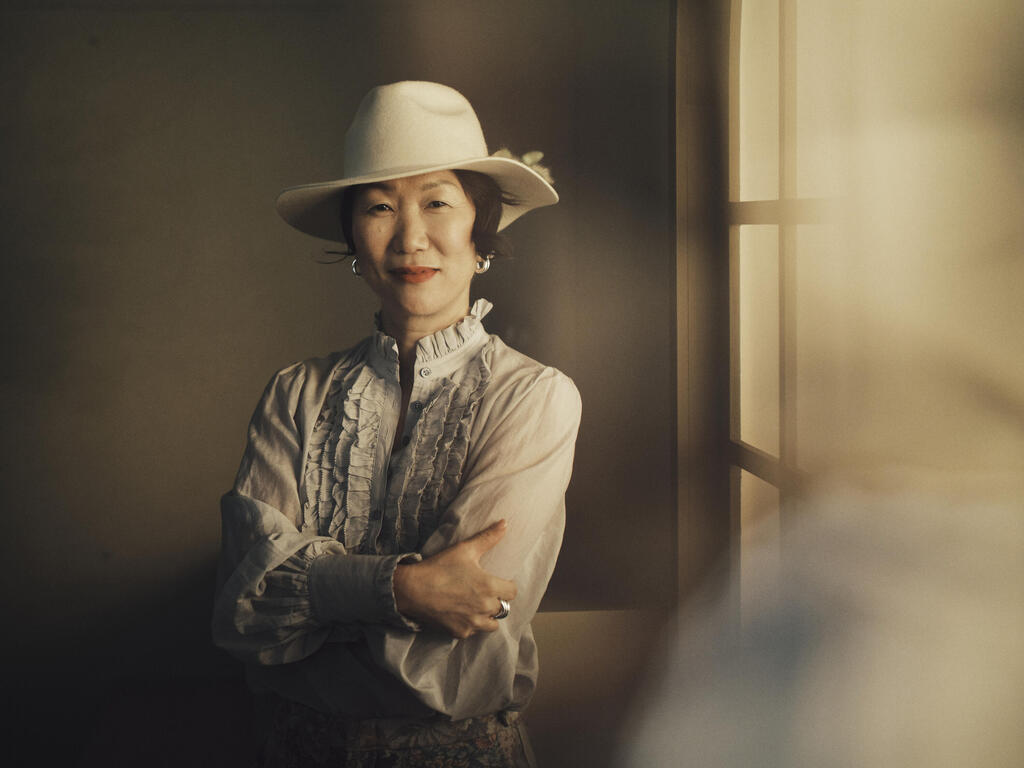
He co-wrote the film with Hikari, a Japan-born director and screenwriter who lives and works in the U.S. and is also credited with directing the first episode of the acclaimed series Beef.
"Stephen came across the rental family businesses while doing research," Hikari said in an online interview with ynet. "He was looking into what Americans do in Japan and what kinds of odd jobs are available in Tokyo, like English teaching or translation. Then he stumbled upon the term 'rental family', and we decided to dive deeper."
Did you ever hear about this kind of service while growing up in Japan?
"Not at all. While preparing for Rental Family, I did research and discovered hundreds of companies in Japan offering rental family services or similar options. I interviewed people in the industry about what Japanese clients need, and that’s how I built the script."
Did you ever work in a similar job while growing up in Japan?
"When I was 19, I worked for an agency that sent me to a large department store that needed staff. I would show up and pretend to be whatever professional the job required. If I were assigned to the cosmetics department, I would have to act like a professional makeup artist. If I were sent to a store specializing in large-size shoes, I would have to learn everything about the products and then pretend to be a trained sales associate. I worked for that agency for about three months, and during that time I was sent to 17 different workplaces."
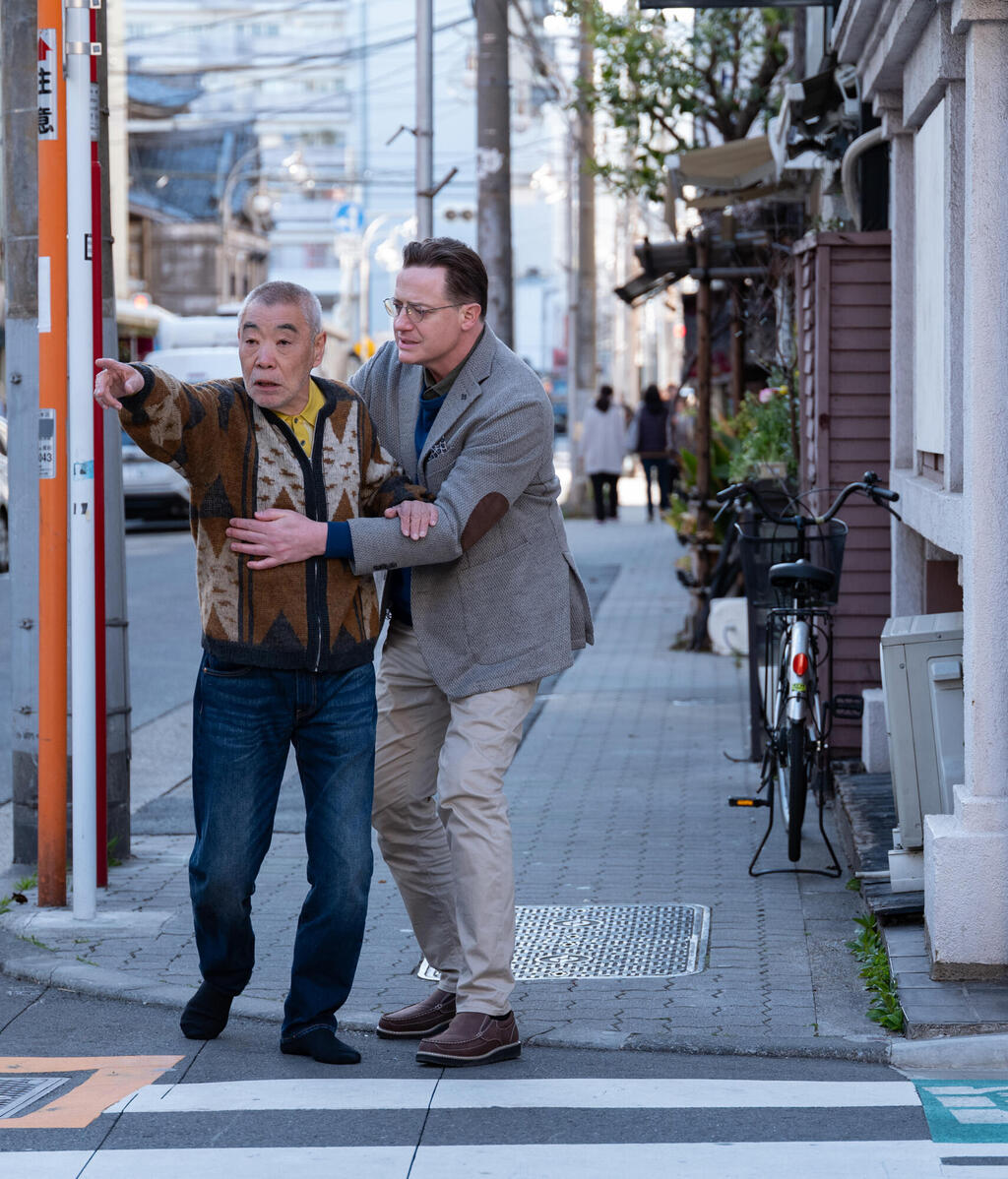
From Rental Family
(Photo: Courtesy Forum Film)
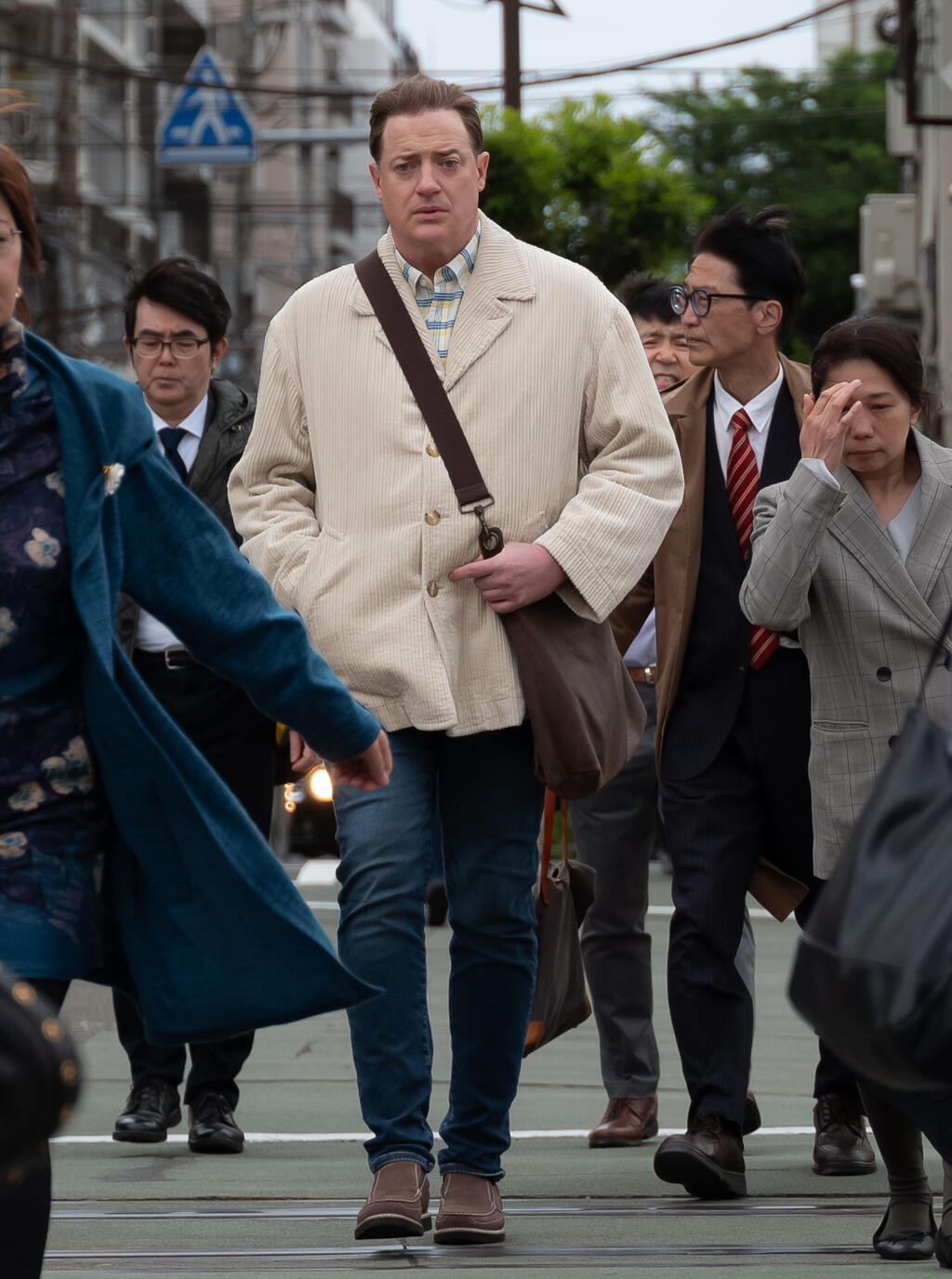
In the film, Fraser plays Philip, an American actor living in Japan who is constantly searching for respectable acting jobs after finding brief success in a toothpaste commercial. Stuck in minor roles, he is eventually hired by a rental family company. Although hesitant, Philip is desperate for cash and accepts a job as the company’s "token white guy."
His first assignment involves helping Yoshie, a lesbian woman preparing to move to Canada with her partner. Before leaving, Yoshie wants to stage a traditional wedding for her parents, and Philip is hired to pose as her fiancé. Later, he takes on longer-term roles, including playing video games with a recluse and pretending to be the absent father of a young girl.
"Philip goes on an emotional journey," Hikari said. "He starts as someone who doesn’t really believe in anything, who has no family and nothing waiting for him back home in America. In Japan, he also feels like a fish out of water. The connections he forms and the lessons he learns about listening and following his heart help him grow as a person."
Why did such services emerge specifically in Japan?
"I think that in Japan, we tend to try everything. At one point, we even had a “cuddling” service, which was strictly non-sexual, just for cuddling. There are services where someone will help you shop for groceries or do almost anything you ask. People will do almost anything you ask for. Since these services are so common, people feel comfortable using them."
"When Japanese experience loneliness, the traditional, basic forms of care offered by the country are not as widely embraced by the public as they are in places like the U.S. I’m not sure what kind of support system exists in Israel for people facing these kinds of struggles, but in Japan, when someone needs support, the support systems are often limited. That’s why, historically, we’ve always had alternatives. When you go out drinking, there are hostesses who will serve you a drink or a bartender who will listen to your troubles."
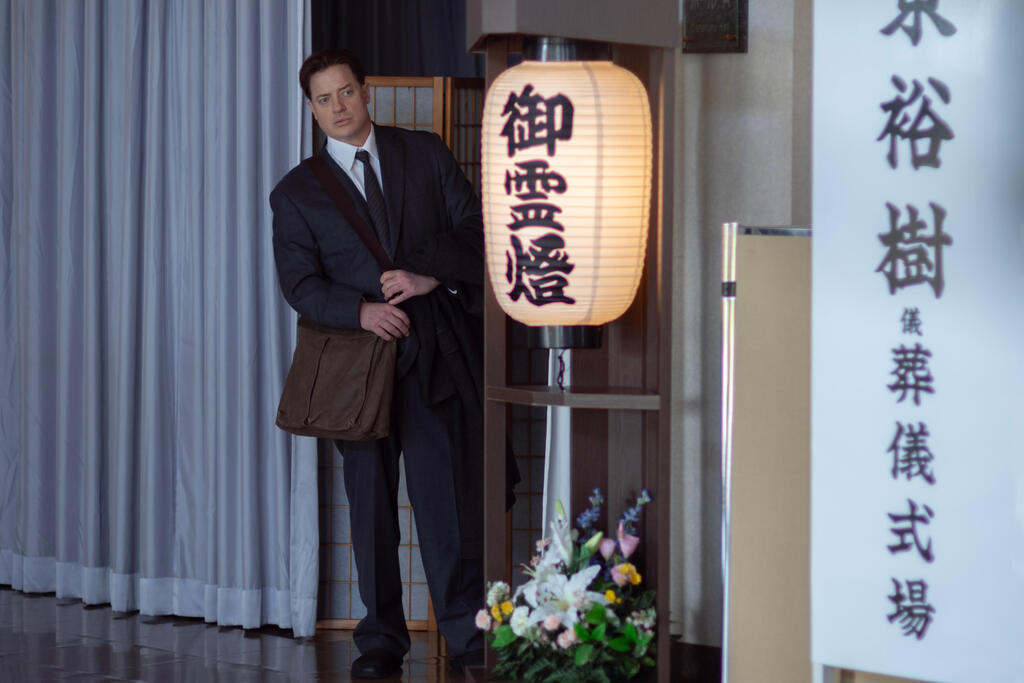
From Rental Family
(Photo: Courtesy Forum Film)
"If you think about it, Rental Family is really an extension of that phenomenon. Here, too, much like the hostess at a bar, you can pay a hired actor an hourly rate. Paying by the hour can even feel reassuring, she said. "You are paying for someone’s time, whether it’s to talk about life, help install hooks at home, or keep an older woman company for an afternoon. Even as people look for companionship through artificial intelligence, renting human presence will always be in demand. I don’t think this profession will disappear. Honestly, it will probably expand."
Hikari also pointed to Japan’s deep-rooted culture of performance. "Many Japanese people prefer paying rather than burdening family members, because with service providers the relationship stays professional.
"Pretending to be someone else has a long history in our culture, going back to kabuki theater, when in its early days, ordinary people were hired to sit in the back of the theater and shout as if they were fans of the actors onstage. Pretending to be someone else is so ingrained, so using actors in a company like a rental family service becomes easier and more natural for people who grow up within it."
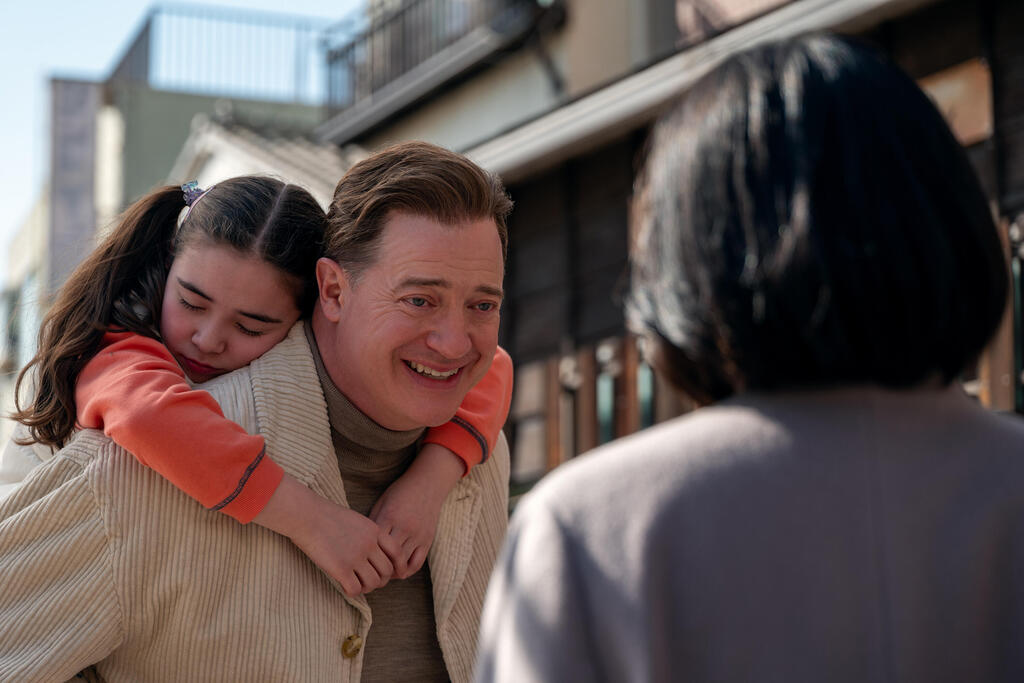
From Rental Family
(Photo: Courtesy Forum Film)
What was it like returning to your homeland to shoot in Tokyo? It has changed a lot over the past decade, becoming increasingly crowded and tourism-driven, with hours-long lines for purple sweet potato or matcha ice cream because of Instagram.
"‘You’re absolutely right. Everywhere you go there’s a huge line. You want to grab a coffee, but popularity on Instagram makes it impossible, so you have to find another café. You can’t even eat your favorite pasta or drink your favorite coffee anymore.
"Filming in Japan is always challenging, because you're expected to be considerate. Especially when shooting in central, crowded areas of Tokyo, you can’t control the flow of people. If you’re filming on the street, unless you block it off entirely, which is extremely expensive and usually not done, you have to let people pass. You can’t stop the traffic. You have to film within the flow of the city."
Did you run into any problems?
"Sometimes we were filming in a park and people complained, and then we had to stop shooting and figure out what to do. There are things you have to take into account when filming in Japan. But I also think it’s an opportunity to think about other options that might still be possible. You always have to stay optimistic when making a film in Japan," she said, laughing.
Why did you choose Brendan Fraser for the role?
"I saw his film “The Whale” on the big screen and realized how extraordinary and vulnerable he is and how unafraid he is to show his emotions. He’s so expressive, in his face and eyes. He isn’t afraid to share what he’s feeling. We met at one of the award ceremonies and talked, and he was wonderful, kind and genuinely warm. I fell in love with who he is as a person. There’s no need to elaborate on his acting abilities, but what really drew me in was Brendan as a human being, and that’s what made me want to cast him.’
From Rental Family
(Photo: Courtesy Forum Film)
Fraser lived in Japan for five months before filming began and took Japanese lessons. "Japanese is a difficult language, but I think he did great," Hikari said. "He loved the food. One day he said, 'I think I ate too much'.”
How did he handle the attention and admiration?
"When Brendan was surrounded by a large crew, people would notice him and ask for autographs, and he was always extremely gracious. If he didn’t have an intense scene to shoot, he was happy to sign for anyone who asked. But when he wasn’t working on set, he was recognized less. As you know, people from all over the world visit Japan, so sometimes he could blend into the city and no one bothered him. Everyone is too busy navigating the city to pay much attention."
‘No one had created content like this for the Asian community’
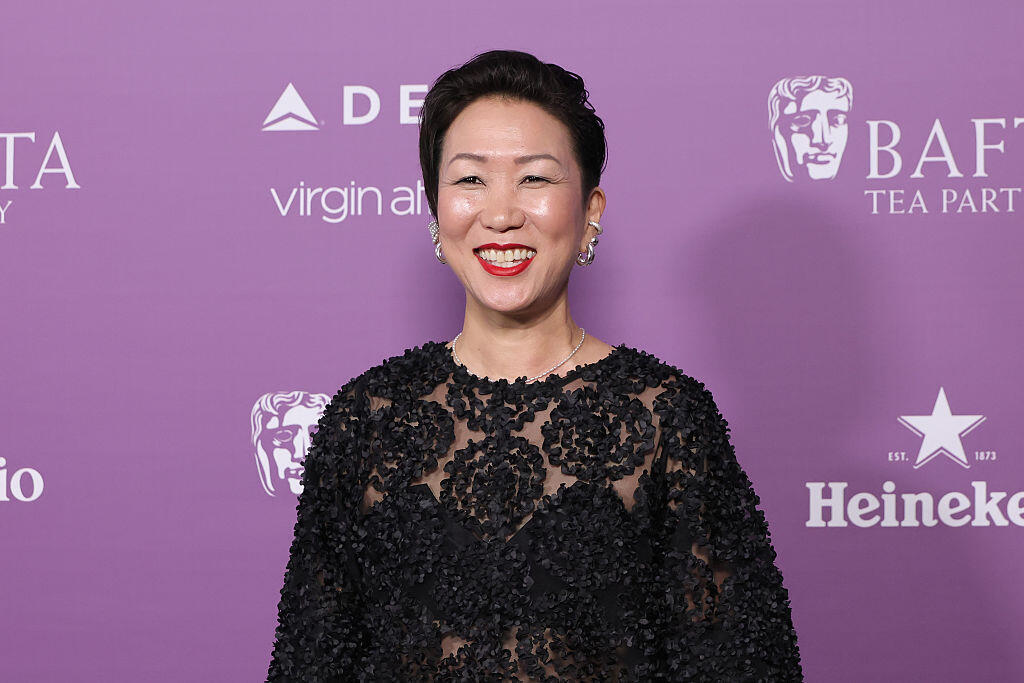
Hikari, born Mitsuyo Miyazaki in Osaka, will turn 50 next year. At 17, she traveled to Utah as part of a student exchange program to study theater, art and music. "At first, I was the only Asian student in the entire school. Later, I found out there was also a Japanese American girl, but she didn’t speak Japanese. I felt a bit lonely at the beginning, but over time I connected with people. The closest friends I made during that period became my family. It was very important for me to bring that experience into Rental Family, especially now, when the worldis so divided."
After returning to Japan, she worked odd jobs before eventually moving to Los Angeles, where she now lives. Hikari worked as an extra and a dancer in films, commercials and music videos. At 30, she began studying film at the University of California, L.A. After directing several short films, she made her feature debut with “37 Seconds,” which screened at the 2018 Berlin Film Festival.
From Beef
(Photo: Courtesy Netflix)
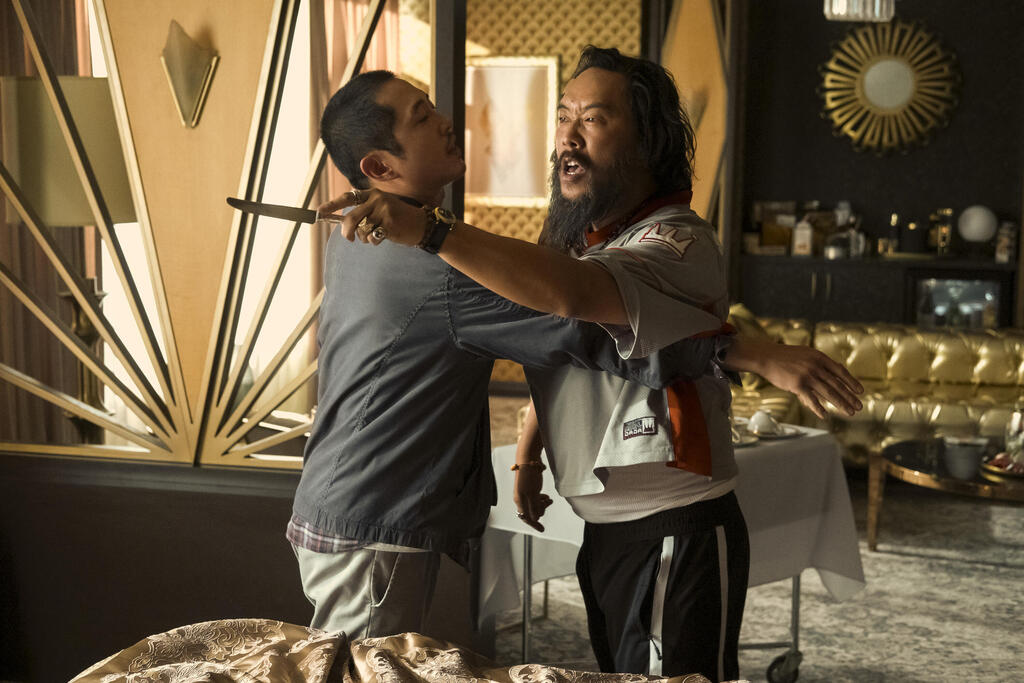
In 2023, Hikari directed three episodes of Beef, including the pilot, which became a breakout hit on Netflix and earned widespread critical acclaim. The psychological dark comedy, created by Lee Sung Jin, centers on a road rage incident between two strangers, a contractor and an entrepreneur, that spirals into a war of revenge.
"I really enjoyed working on the first season. I think the reason the series succeeded is that before that, no one had created content like this aimed at the Asian community."
"In America, Asian characters were boxed into stereotypes. In Beef, they're just people, ordinary people, not the template that was imposed on us. No one had created a show like this before. The script is brilliant, the performances are strong. Steven Yeun is incredible to work with, a smart and talented actor whom audiences love. Ali Wong is hilarious and amazing, with a huge fan base. Watching them clash had me laughing out loud. In the end, this series, too, is about human connection."
Beef - trailer
(Courtesy: Netflix)
Are you involved in the second season, which is set to arrive soon?
"Unfortunately, I wasn’t involved, because I had to work on Rental Famly. I can’t wait to see the second season. It’s going to be amazing."
Hikari added that she has several new projects in development. "I’ve finished a draft of a new film that I’m currently working on. It’s an adaptation of a well-known classic film, and I hope we’ll be able to announce it soon. There are a few other projects as well. One of them is a beautiful Christmas story, a strong human story that stirs emotions and takes you on a journey. I hope I’ll get the green light to direct it."
A better world
Throughout our conversation, the words "bridge," "holding hands" and "human connection" came up again and again. "There's so much happening in the world now that we can't control, but what I can offer is a positive message, positive energy, through art, and that whoever watches it will feel better," Hikari said.
"Rental Family, for example, is about human connection that isn’t dependent on our background, but is based on mutual respect. Philip arrives in a country he has no connection to, even in terms of how he looks, but over the course of the film, mutual respect is built. For me, that kind of human connection is one way, or at least one step, toward making the world a better place."
"As filmmakers, we try to change the perspective of lonely people. A few years ago, for example, I heard about Russian soldiers being sent to Ukraine who did not want to be on the front lines and did not understand why they were sent there. They have friends in Ukraine and do not want to fight, but the country forces them to do so. In times like these, you cannot say, “No, I don’t want to go,” because you would be sent to prison. This has been happening in Russia for a long time.
"In a way, it also existed during that turbulent period when Japan occupied China, Korea and other countries. There was a group of people who did not want to go to war, but if they refused, they would be sent to prison, so they were forced to fight."
Hikari
(Photo: Kevin Winter / Staff, Getty)
"I hope that by showing human connection between people of different races, one day we will be strong enough to say “no” and not go to war, because we respect the person standing in front of us. I want to shift perspective little by little, from film to film, from viewer to viewer. That’s my approach."
What was the reaction in Japan to Rental Family?
"The Japanese loved it. They felt we portrayed Japan beautifully. People from many different backgrounds, including government officials, cultural exchange programs and organizations working with the elderly, all reached out to us saying how much they loved the film. The response was similar in other parts of the world as well. It’s a universal story.
"As technology advances, we’re gradually losing more and more. We spend more time on our phones and less time connecting with people, and that’s sad. If you’re lonely, try to step back and look at the world from the outside. Take the first step and start talking to people, or simply try something new. It can help. You never know what you might discover."