


Long before branded summer camps, ninja parks, TikTok and family vacations overseas, summer vacation in Israel looked much simpler. Children of that era made do with the open spaces around them.
They spent their days in fields, played on haystacks, rode tractors, splashed in small pools under the trees and enjoyed improvised local performances and singalongs, with nature and community at the center of the experience.
A series of photographs from the KKL-JNF archive, now being revealed for the first time, briefly brings back the Israeli summer of the pre-state period and the country’s early decades, showing a vacation that was simple, communal, rough around the edges and far less air-conditioned.
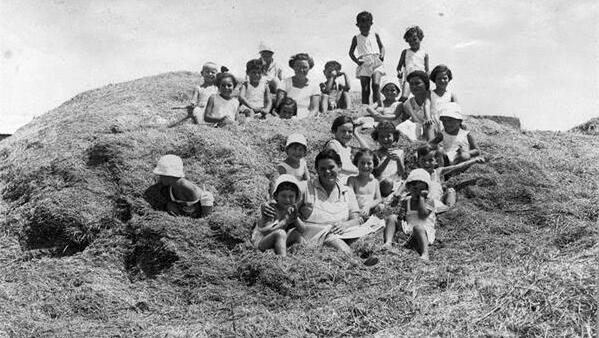
In one of the earliest photos, taken in August 1930 by photographer Yosef Schweig, children from Tel Yosef are seen sitting on a large haystack on the threshing floor. There are no facilities, no decorations and no structured activity, just a group of children, summer sun and an open agricultural landscape.
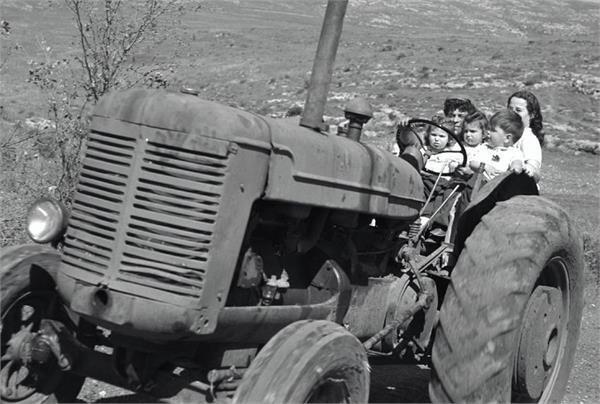
Beit Keshet children on the tractor, 1935
(Photo: Avraham Malavsky, KKL-JNF Photo Archive)
In another photo, taken by Avraham Malavsky at Beit Keshet in 1935, children from the community are seen sitting together on a large tractor. For children at the time, the tractor was not just a work tool, but an inseparable part of the landscape, daily life and play.
“When you look at these photos, you understand how deeply summer vacation was connected to the space in which the children grew up,” said Efrat Sinai, head of archives at KKL-JNF. “The forest, the field, the tractor, the threshing floor and the local pool were all part of childhood. These were not staged moments of leisure, but life itself.”
Another photograph, from 1940, shows children spending time in a small pool in the fields, with the homes of the community and the open landscape typical of summer life at the time in the background. Instead of water parks and giant swimming pools, a small reservoir, a few friends and plenty of imagination were sometimes enough.
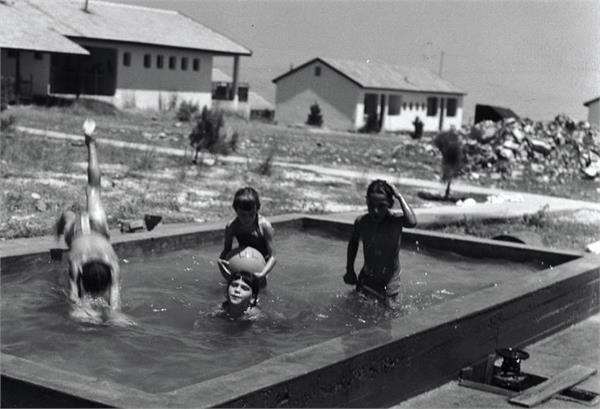
Spending time at the pool, 1940
(Photo: Avraham Malavsky, KKL-JNF Photo Archive)
A jump forward to the late 1960s reveals a somewhat different Israel, but the spirit of summer remained similar.
Photos from 1969, taken by Dafnai Ish-Shalom, show children from the Beit She’an Valley at a summer camp in Ben Shemen. In one image, they watch a performance in the shade of the trees, with a boy playing the accordion in front of children seated on the ground. In another, they stand near the camp building, where a sign welcomes the children of the valley.
The country was already more than 20 years old, but summer vacation still moved at a slower pace, outdoors, in groups and mainly around human connection.
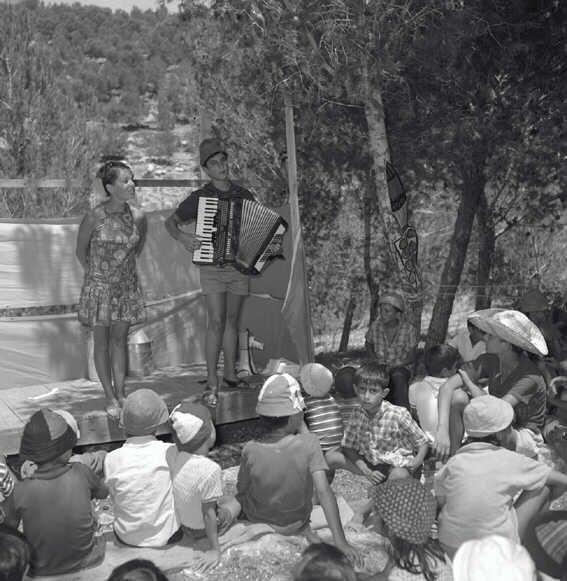
Performance for children from the Beit She’an Valley in Ben Shemen, 1969
(Photo: Dafnai Ish-Shalom, KKL-JNF Photo Archive)
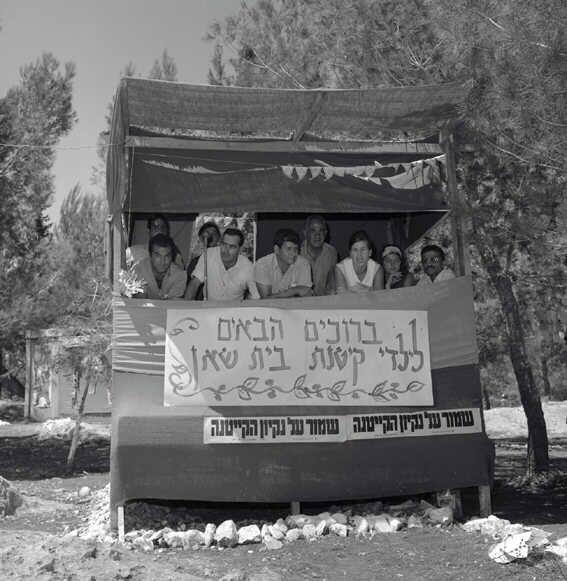
Summer camp building with a sign welcoming the children of Beit She’an
(Photo: Dafnai Ish-Shalom, KKL-JNF Photo Archive)
“There is nostalgia in these photos, but also important historical documentation,” Sinai said. “They show what everyday childhood looked like in this country, not through major events or official ceremonies, but through small moments: play, summer camp, a pool, a field.”
“These moments remind us of summer days before the screen era,” she added. “Days that seemed simple, but created meaningful, enriching and formative experiences.”
According to Sinai, the importance of the photographs is not only nostalgic.
“The archive preserves national history not only through ceremonies and defining moments, but also through everyday life,” she said. “When people see children sitting on hay or gathering around a small performance in the forest, they recognize something very Israeli, nostalgic and heartwarming.”