

Mark Ivanir’s path to Hollywood began far from the red carpets, in a small apartment in Chernivtsi, Ukraine, where writers, actors, singers and poets filled his childhood home almost every night.
Chernivtsi, Ukraine. “I grew up in a three-room apartment with my parents, my sister and my grandparents in Chernivtsi,” he recalled. His grandmother died when he was 2, but his grandfather, a well-known Yiddish writer and actor, left a deep impression. “Our home was really a cultural salon of the Yiddish world. Every evening poets, singers, actors, painters and writers would come over. They would sit, drink, laugh.”
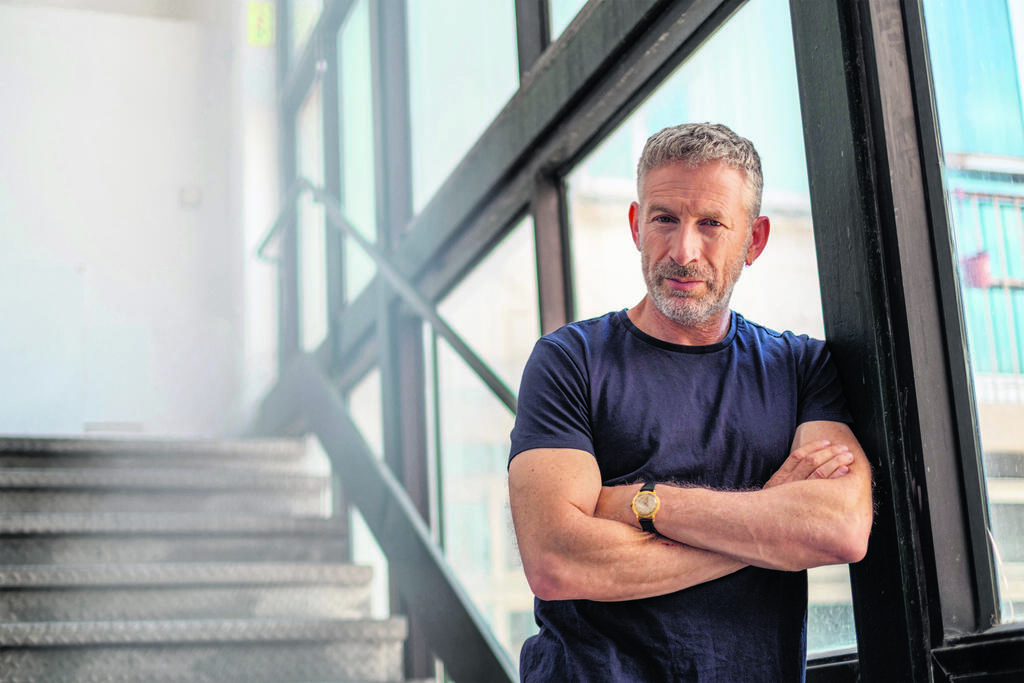
According to family stories, the celebrated Yiddish writer Itzik Manger would sometimes get drunk and fall asleep on the family sofa. Ivanir’s grandfather, who was also a critic, once wrote a review of actress Dina Koenig, the mother of Lia Koenig, after which she stopped speaking to him.
Pardes Katz, Israel. In 1972, when Ivanir was 7, his family immigrated to Israel during the large wave of immigration from the Soviet Union. The move was jarring. “I was uprooted from my life,” he said. “They didn’t even tell us we were immigrating, because in Soviet Russia you weren’t allowed to talk about it and they didn’t want me telling everyone. They said we were going to Moscow, and only on the train did they tell us we were on our way to Israel.”
The family settled in Pardes Katz, a working-class neighborhood near Bnei Brak. For Ivanir, it was a difficult arrival. “I was one of the only Ashkenazi kids at school, and I had to toughen up,” he said. “The first time I went to school, I didn’t even make it there. On the way, I got slapped by Shuki the thug and went back home.”
In the months that followed, he learned to defend himself. “I tried to show everyone that it wasn’t worth messing with the little Russian, because he also knew how to pick up a stone and hit back,” he said. “I think it eventually helped me in my career, because I play a lot of bad guys, and the initiation was in Pardes Katz.”
Did you learn something about the drama of the villain, about his wound?
"Maybe. When you work on a character, you don’t look for the evil but for the humanity, to find the child in him, to understand where it comes from. You try to understand the wound and the scar.
8200, IDF. Before acting became his life, Ivanir served in IDF's Unit 8200. “I was always terrible at math and physics, so being a software engineer or something like that was never an option for me,” he said. “The 8200 unit was a bit different in my time. We were less technological. For me, it came from a feeling of being in a thriller.”
That included taking part in Operation Solomon, which brought Ethiopian Jews to Israel. Years later, he appeared in The Red Sea Diving Resort, Gideon Raff’s film about the operation. “I remember myself in a scene where the planes land, with Ben Kingsley standing on my right and Greg Kinnear on my left. I’m playing the head of the Mossad, but I’m also Mark, the 20-year-old who was really there in that operation. It was a very strange connection between 8200 and Hollywood.”
After October 7, Ivanir said his intelligence background left him with feelings of guilt. “For months after October 7, I walked around with guilt, thinking about where I had failed,” he said. “When I spoke with friends from the unit, including former Mossad people, everyone described something similar. You have a sense of responsibility, and when something like this happens you feel terrible, even if I hadn’t been in the unit or in reserves for 35 years.”
In hindsight, he said, warnings did exist. “It turns out there were alerts from 8200 and there was talk, but the higher levels ignored it.”
Gesher Theater. Ivanir spent an intense decade at Gesher Theater, where he worked not only as an actor but also as a translator, Hebrew instructor and close assistant to founder Yevgeny Arye. “I wore several hats at the theater,” he said. “Arye was more comfortable having me sit next to him and give him ideas. He connected to me less as an actor. Looking back, I can understand that, because I think I’m much better on screen, when the camera is close to my face and I don’t have to shout to 400 people, than on stage.”
Arye, he said, saw him as a possible successor. But life took a different turn. “Maya and I had been married for about five years, and I realized the theater was taking over your life,” he said. “One of the older guys at Gesher told me at the time, ‘Theater is like a woman, but a jealous woman.’”
So you decided to divorce the jealous woman?
"Not all at once. The first step away was a sabbatical, during which Maya and I flew to London. I wanted to study directing there, return to Gesher and start a new career as a director. Then Maya received a job offer in Los Angeles, and I took another year off, found agents in LA and decided to try my luck in Hollywood. The idea was to try a little; if it worked, great; if not, I’d come back and start working again at Gesher. That was in 2000, and I’m still here.”
Did you watch the Israeli series Rehearsals, which was inspired by the Gesher experience?
"Of course. I really loved it. The theater manager, played by Evgenia Dodina, reminded me of all kinds of people I knew, and the director, who came from abroad, had elements of Arye. It had a personal touch, but beyond that, it’s an excellent series. I understand there won’t be a second season, but if it happens anyway, I want to be in it.
The industry abroad, he said, has changed dramatically. “The last few years have been hard,” he said. “It started with COVID, when everything stopped, followed by the writers’ strike; everything was on hold for almost a year. Now the problem is the streaming platforms, which are struggling to make money, so the industry is trying to cut costs.
"That has made it harder for young actors to break in today. I am not saying it is impossible, but agencies are not especially eager to take on new actors because there is much less work and the bar for entry is higher than ever.
I thought you’d say it’s easier now for Israeli actors to reach Hollywood, because once shows like Fauda, Tehran or Unconditional sell abroad, they help pave the way.
“If you’re playing the lead role, then yes,” he said. “Lior Raz is successful; he keeps making more and more films and he’s amazing, but it is much harder now to open doors. The industry is shrinking, and that makes it harder. Actors reach out to me, and I try to connect them with my agents, who tell me, ‘Listen, we’re not signing new actors. If anything, we’re letting people go.’”
Still, you’re Israeli in Hollywood. After October 7, did that add another layer of complexity?
"I’m not a good example, because I didn’t build my career around my Israeli identity. I always had the Russian thing; that’s how I got into film and television 25 years ago, and that’s what has sustained me over the years. Ninety percent of the roles I play are Russians, and that’s what has sustained me over the years. I don’t really market myself as Israeli. I’ve played a Mossad chief, a foreign minister and things like that, but that’s not the core of my work."
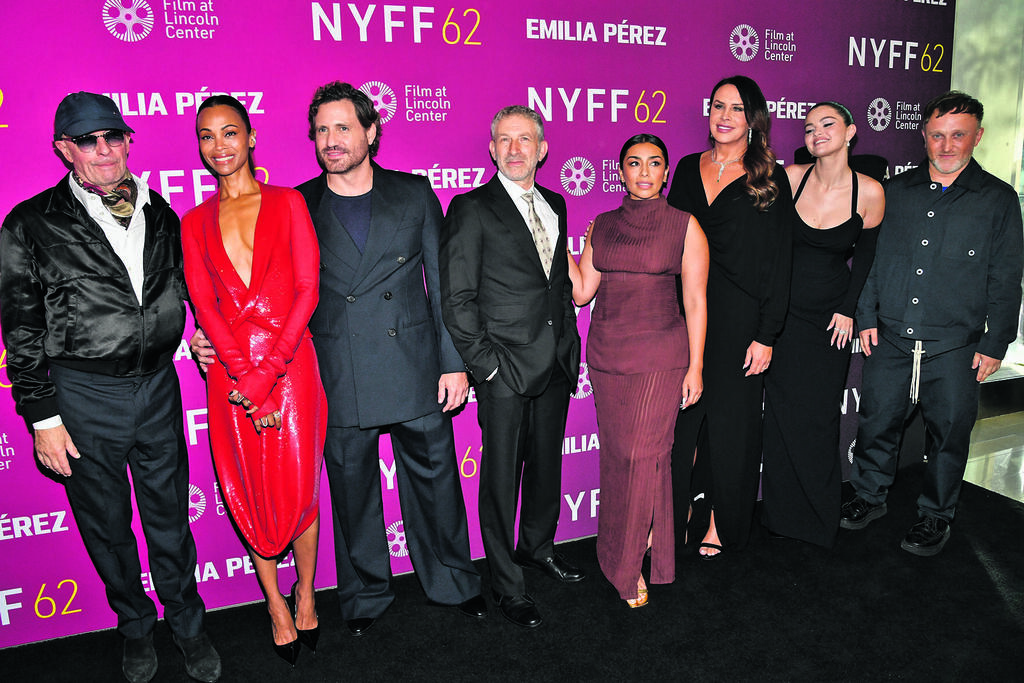
Mark Ivanir with the stars of Emilia Pérez at the New York Film Festival
(Photo: Evan Agostini/Invision/AP)
Still, the atmosphere has affected him. When Emilia Pérez was selected for the Cannes Film Festival, Ivanir said his agent told him only the main actresses, Selena Gomez and Zoë Saldana, were invited. “I said, okay, I’ll fly myself,” he recalled. “She said, no, no. Then I saw in the newspaper that the five main actors were there, and only I wasn’t. It was clear to me they were being very careful because it was very close to October 7.”
"When I met the film’s director, Jacques Audiard, he told me that at one point he was asked to cut the Tel Aviv scenes, because I played a doctor at Tel Aviv Sourasky (Ichilov) Medical Center. But Audiard refused. He really fought for it to stay.”
He described another moment while working on the Netflix series Big Mistakes, created by and starring Dan Levy. “Most of my scenes were with Dan Levy, and once or twice we got to his political position,” Ivanir said. “He told me, ‘I’m very extreme. We shouldn’t talk about politics because I might say things that won’t be pleasant for you.’ I try to do advocacy, but once he said what he said, I decided, okay, I’m not going to trigger him now or get triggered myself.”
Success. Ivanir has had several moments when he felt he had “made it.” One came in 1999, while he and Maya were living in London. “I called my British agents from a public phone, and the agent told me, ‘You got a small part in a film with Johnny Depp,’” he recalled. “I hung up and said, ' Wow, maybe Schindler’s List wasn’t a one-time thing. The role was not opposite Depp, but the scene, ironically, consisted of four lines about how to succeed in Hollywood."
Another breakthrough came with The Good Shepherd, directed by Robert De Niro and starring Matt Damon and Angelina Jolie. “I remember when De Niro was interviewed with Damon and Jolie, Charlie Rose told him, ‘That torture scene, who is that actor? That’s the best torture scene I’ve ever seen in my life,’” Ivanir said. “Then they spent five minutes talking about me, and that was completely a feeling of, yes, this is happening.”
Oscar. Then came the 2025 Oscars, where Emilia Pérez was nominated in 13 categories and won two. Ivanir found himself in the fourth row, exchanging phone numbers with Jesse Eisenberg and chatting with Ralph Fiennes. But the most emotional moment was tied to his father.
“My father had a watch he had taken from a Nazi soldier during World War II, when he himself was a soldier,” Ivanir said. “It’s the watch I remember on my father’s wrist forever. When he died, I took the watch, and since then I don’t take it off. When host Conan O’Brien spoke about Emilia Pérez and my face appeared on the screen, I placed my right hand on the watch, saying, ‘Dad, look where we are.’”
This wasn’t the first time a film you appeared in won an Oscar.
"Right. There was also Schindler’s List. I remember being in Israel in 1994, hearing that it had won and that there was a ceremony, wanting to be there but understanding it wouldn’t happen. Thirty years later, I was sitting there, and my face was on the screen. It felt like, 'Here, I’ve arrived'."
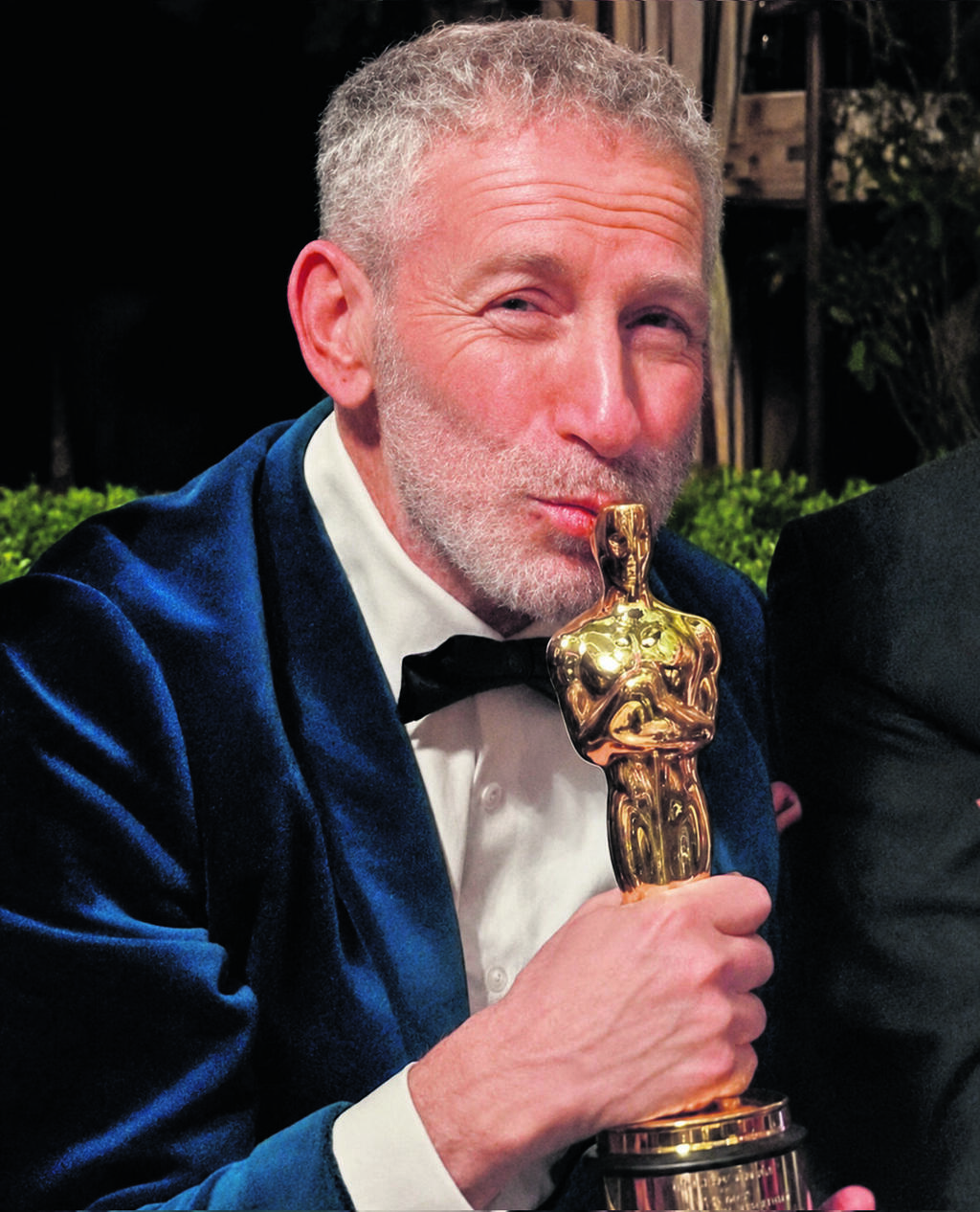
Mark Ivanir at the Oscars
(Photo: Private album)
His wife. Much of his career, he said, would not have happened without Maya, his wife of 32 years. “Without her, my career would not have taken off,” he said. “All our moves and shifts, many of them were inspired by her, and she always gave incredible support to my work and ambitions.”
They met when she came to see him perform at Gesher, although she had actually come to watch Dror Keren, who was acting alongside him and was married to Maya Hanoch, her close friend. “After the show we chatted, and after a few weeks we met again at a party and it happened very quickly,” he said. “A week later we moved in together, and three months later we got married.”
He was 30 at the time. “I was at that stage in life where I said, ' Enough with the nonsense'. I wanted to find the right woman, and when Maya arrived it was clear to me that this was it. Thirty-two years later, I can say we were right.”
You beat all kinds of statistics.
"Yes, I suppose. Listen, it’s never simple. It’s a lot of work, but it’s worth it."
Fatherhood. "Fatherhood anchors me. My daughter Sasha has just finished her third year of college, and Daniela is about to turn 25. The thing that holds me against my existential anxieties is my family." His work often kept him away from home, sometimes for three days, sometimes for a month. “There was longing, but it was always important to me to be present,” he said. Wherever he filmed, he bought postcards and wrote to his daughters. “Sometimes, when I saw I had a few days between shoots, I would get on a plane and come home to the family. It was important to me that they knew that even when I’m far away, I can just get on a plane and come, because my daughters need me.”
Identity. "It took me years to understand my identity. When you’re an immigrant, you give up who you were, and it’s no longer clear what you are now. In the same room in Chernivtsi were my grandfather, who grew up in Austria-Hungary; my mother, who grew up in Romania; and me, who grew up in the Soviet Union, in a region that had repeatedly changed hands.
"I grew up surrounded by Yiddish, German, Russian, Romanian and Ukrainian. At Gesher, I was the Russian Israeli in a Russian theater teaching Russians Hebrew. I’m a 'cocktail'. And still, my central identity is Israeli.”
Ivanir now lives in New York, but says he hardly consumes American media. “I don’t watch CNN. I’m all in Israeli news: I start the day with the panels on Channel 13 or 12, then move to ynet. I want to be connected to the madness, to family and friends. That wasn’t the case before October 7.”
The direction of the world, he said, worries him deeply. “I find myself missing more and more the good old days when there was a political center, where people could still meet and talk to each other and reach understandings,” he said.
Now, he said, communication has reversed. “It’s more like ‘I don’t want to talk to you, I want to go after you.’ It worries me. It turns the world into a frightening place. Technology has taken us 10,000 years back, to the time of biblical tribes. Once, rivers or lakes or groves separated one tribe from another. Now streams of algorithms separate us. The algorithm brings each tribe what it wants to hear, and there is no shared conversation.”
Will you come to Israel to vote in the election?
"I don’t rule it out."
the Intern. Ivanir is currently starring in HOT’s The Intern, available on HOT, HOT VOD and NEXT TV. The script immediately appealed to him. “There was something very promising about the subject, the whole issue of illegal organ transplants, human trafficking,” he said. “On the one hand, it’s outside the law. On the other hand, it’s saving lives. A gray area, but fascinating.”
He also connected to his character, Alex. “There was a phase in my life when I almost went to study medicine, and in recent years I’ve also been getting more roles as a doctor. And I also really love animals, I do animal impressions, and suddenly they let me be a kind of veterinarian. I had a lot of fun doing this project.”
How was working with Niv Sultan?
"When I’m in Israel, I’m there for a very limited time, so there wasn’t time to sit and chat, but we talked a bit about working abroad, she about Tehran and me about my projects. In the series, Niv and I aren’t friends. My character is not someone you want to be friends with too much because it’s dangerous. I think we both kept a bit of distance as part of the working method."
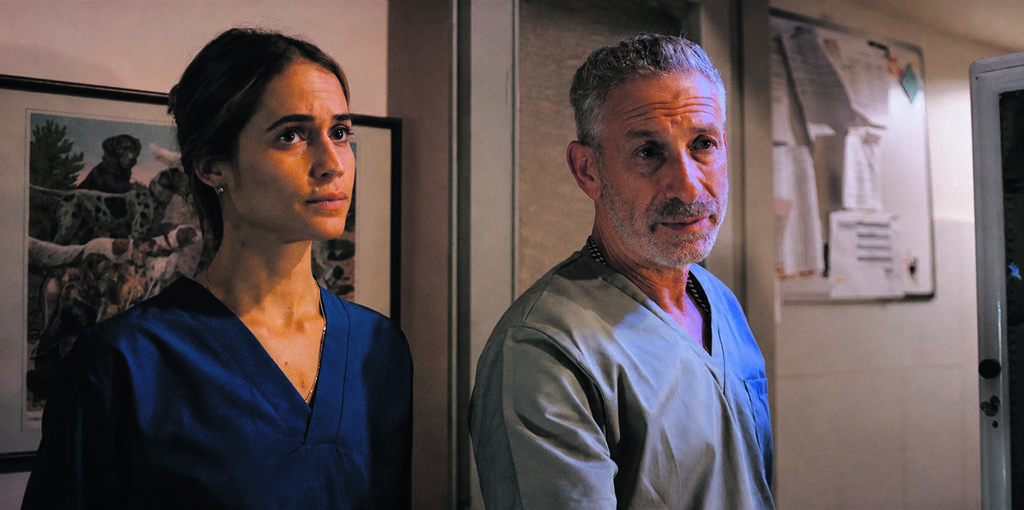
Mark Ivanir with Niv Sultan in The Intern
(Photo: Courtesy of HOT and SIPUR)
Ivanir is not the type of actor who stays fully in character between takes, though he understands why some do. “I’ve met actors who come to set and don’t talk to anyone. I’m not like that, but there are elements you do want to preserve,” he said.
He recalled working with the late Philip Seymour Hoffman on A Late Quartet. “During breaks we would go out to chat and smoke a cigarette, and it was fun, even though in the film we were always fighting,” he said. “On the other hand, on shooting days when we had some extreme scenes, I noticed he was distant. So there are certain moments or days when you keep that thing.”
Schindler’s List. Ivanir’s international career began almost by accident with Schindler’s List. He was at Gesher when his agent called and said there was an audition the next day for an American film. “I was very stupid and told her I couldn’t, because I had a dentist appointment and I had already stood him up twice,” he said. “She was so angry she slammed down the phone. I was in that period of, ‘I’m a theater actor, and what are films and television anyway?’”
The next day, on his way to the dentist, he reconsidered. “I suddenly said to myself, 'What happened to you, you idiot? Go do the audition for 10 minutes'.”
He auditioned and got the part. Six months later, he was told the role had been removed from the script. Then, months after that, he came home from a show and found a message from his agent. They wanted him for Schindler’s List again, this time for a larger role, and he had to fly within two days.
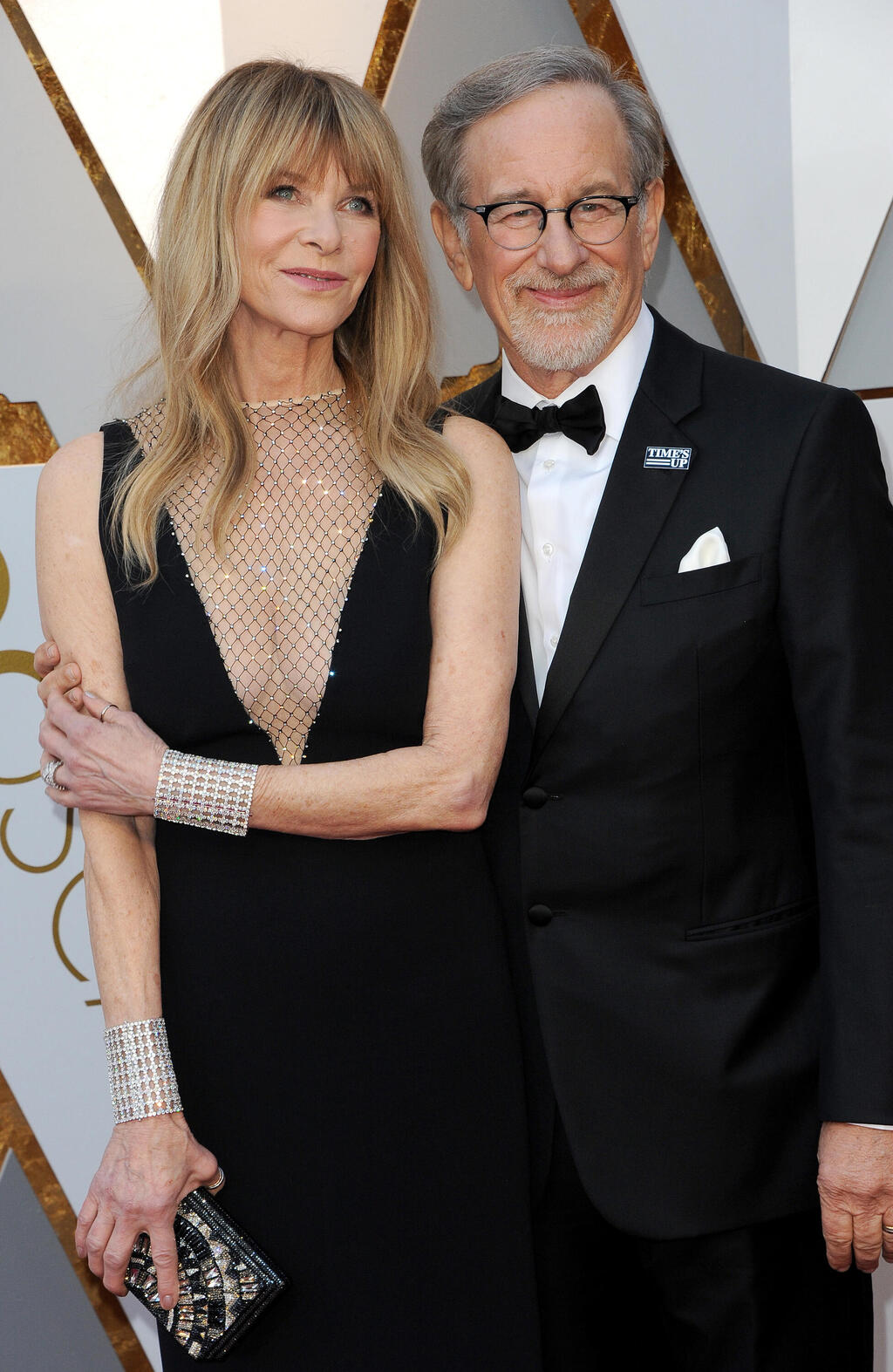
Steven Spielberg and Kate Capshaw
(Photo: Tinseltown/Shutterstock)
After two days of filming with Steven Spielberg, Ivanir asked an assistant why he had been brought in on such short notice. He was told another actor had been cast but was injured in a car accident. Spielberg was willing to wait for him to recover, but the actor’s doctor barred him from flying.
“They had to find a replacement quickly and looked for the tape the Israeli casting directors had sent, with everyone who auditioned for that role,” Ivanir said. “Luckily, the tape also had audition footage for other roles. So they fast-forwarded, and while they were fast-forwarding, Spielberg’s wife, Kate Capshaw, said, ‘Wait a second, stop and look at this.’ Steven looked and said, ‘Let’s take him.’ So it’s all thanks to Kate, who asked them to pause for a moment.”