

At first glance, Jonathan’s display cabinet feels playful and light. Rows of colorful ponies stand quietly behind glass, preserved with care. But spend time inside his story and it becomes clear that this collection is not about toys. It is about memory, identity and the way nostalgia can quietly shape a life.
Jonathan's relationship with My Little Pony began in early childhood and evolved into one of Israel’s most thoughtful pony collections. He received his first pony from his father in 1991, when he was around four years old. The connection was immediate. That first figure, a mare named Hopscotch, stayed with him for decades.
Only in his twenties did Jonathan discover the international collectors’ community and realize that his childhood pony was not just sentimental, but genuinely valuable. By eighteen, he had already built a custom display cabinet, now located in the safe room of his parents’ home. Today, the collection includes several hundred ponies, each carefully categorized and preserved.
The earliest era, Generation 1, launched in the early 1980s with My Pretty Pony and later the iconic “Original 6.” These figures featured flat feet and metal rings inside their tails to help them stand upright.
Gallery
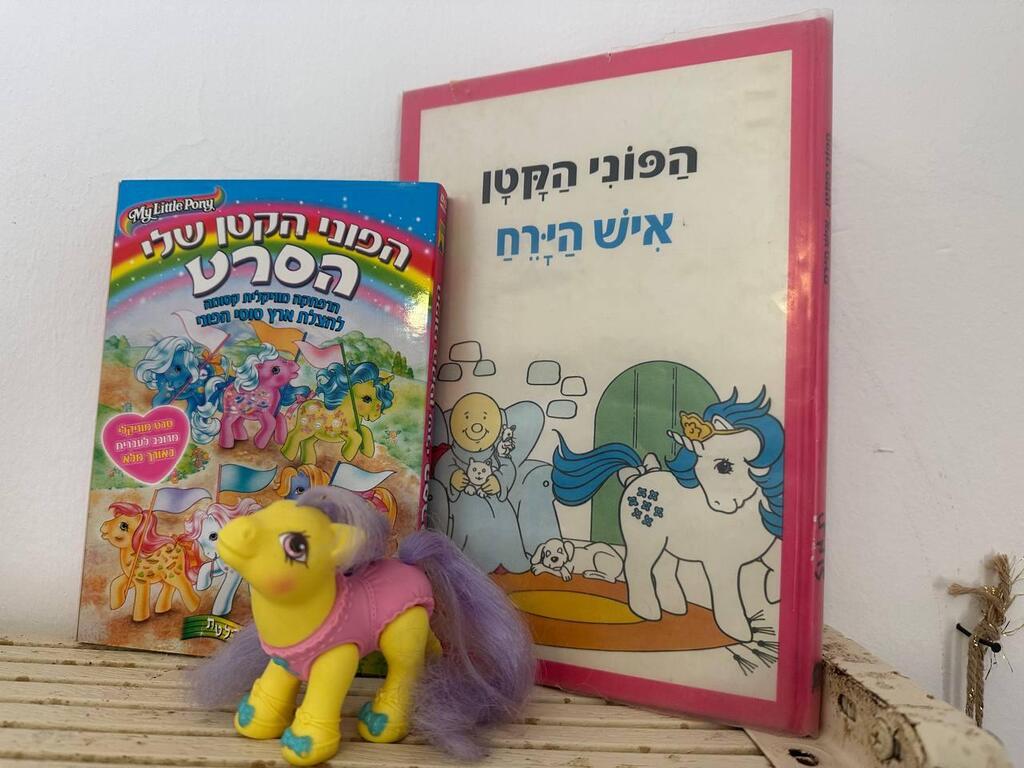
Vintage Hebrew My Little Pony books and figures from the early 1990s are displayed as part of Jonathan’s private collection
(Photo: Bar Gindy)
Generation 2 arrived in the 1990s with slimmer proportions and a more elongated look. While visually distinct, the line struggled commercially and faded from shelves by the early 2000s.
The brand’s revival came with Generation 4, created by animator Lauren Faust. This era reshaped My Little Pony culturally, drawing in adult fans and giving rise to the global “Bronies” community. Jonathan’s collection also includes sea ponies, unicorns, pegasi and magnetic bath-time ponies designed to float in water.
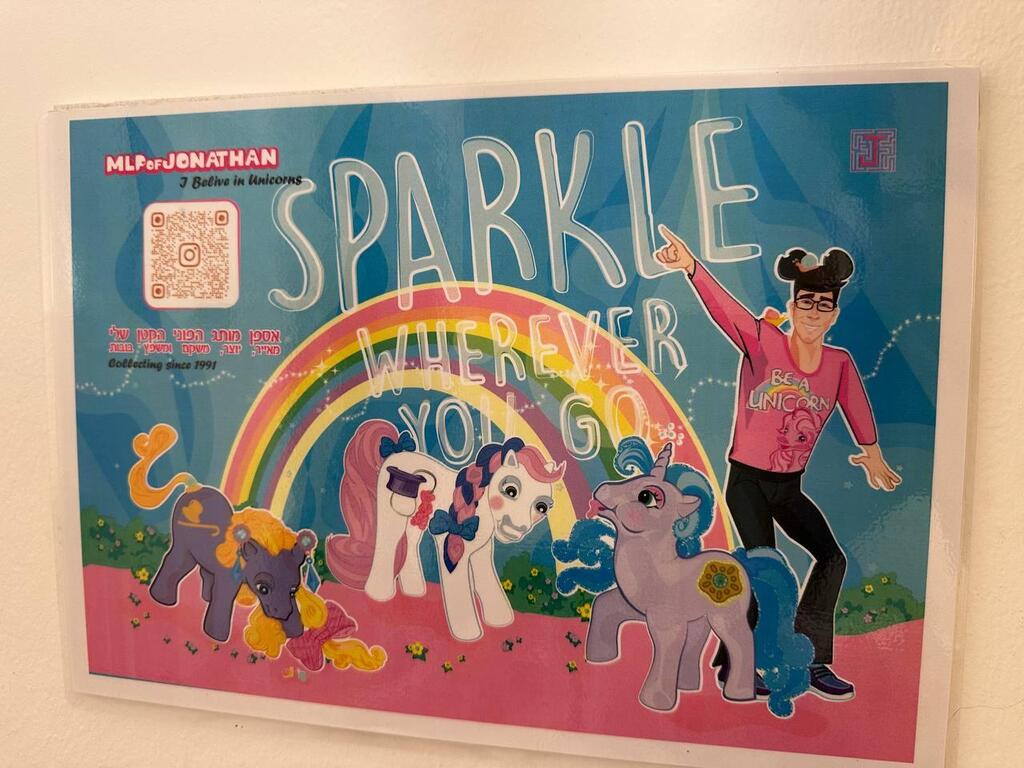
A poster reading 'Sparkle wherever you go' hangs above shelves filled with collectible ponies in Jonathan’s display room
(Photo: Bar Gindy)
Collectors use their own terminology to describe aging issues. “Pony Cancer” refers to brown spots caused by rust or mold forming around the internal metal rings, especially after water exposure. Another phenomenon creates pink discoloration on white or yellow ponies due to chemical reactions within the plastic.
As a teenager, Jonathan experimented with crude restoration methods, including boiling ponies to kill mold. Today, hydrogen peroxide treatments allow careful cleaning while preserving facial details and symbols. Original ponies also retain a distinct sweet scent, a sensory reminder of their manufacturing era.
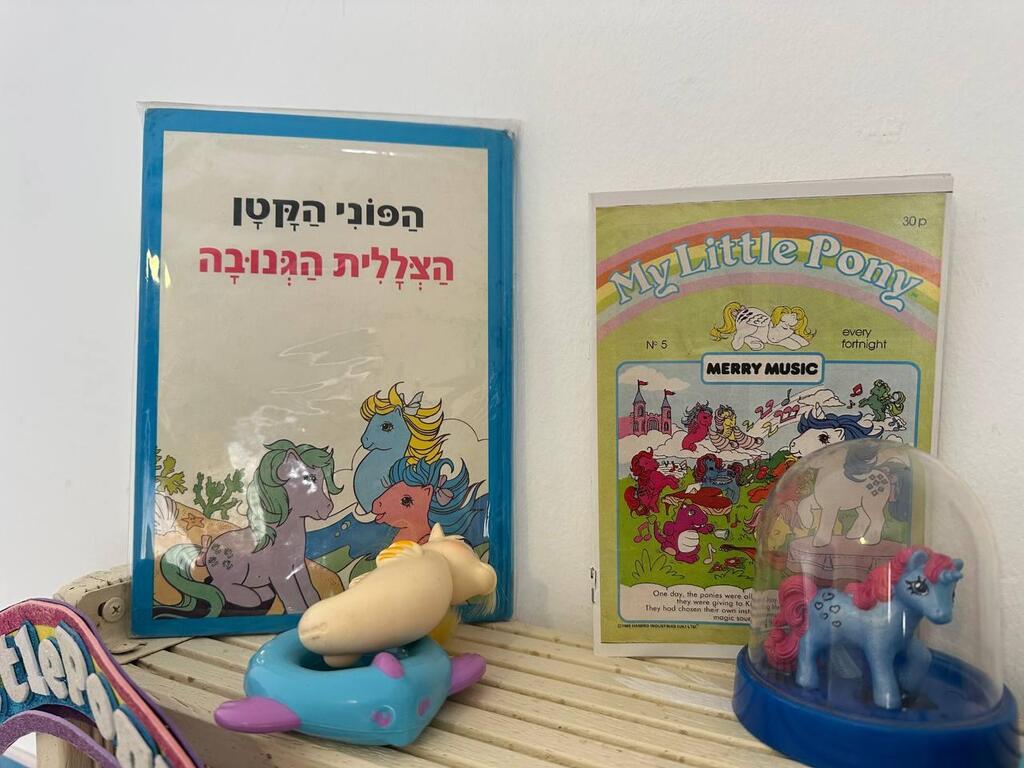
Additional vintage ponies and accessories, including early series figures and bath-time variants, are arranged on display shelves in Jonathan’s home
(Photo: Bar Gindy)
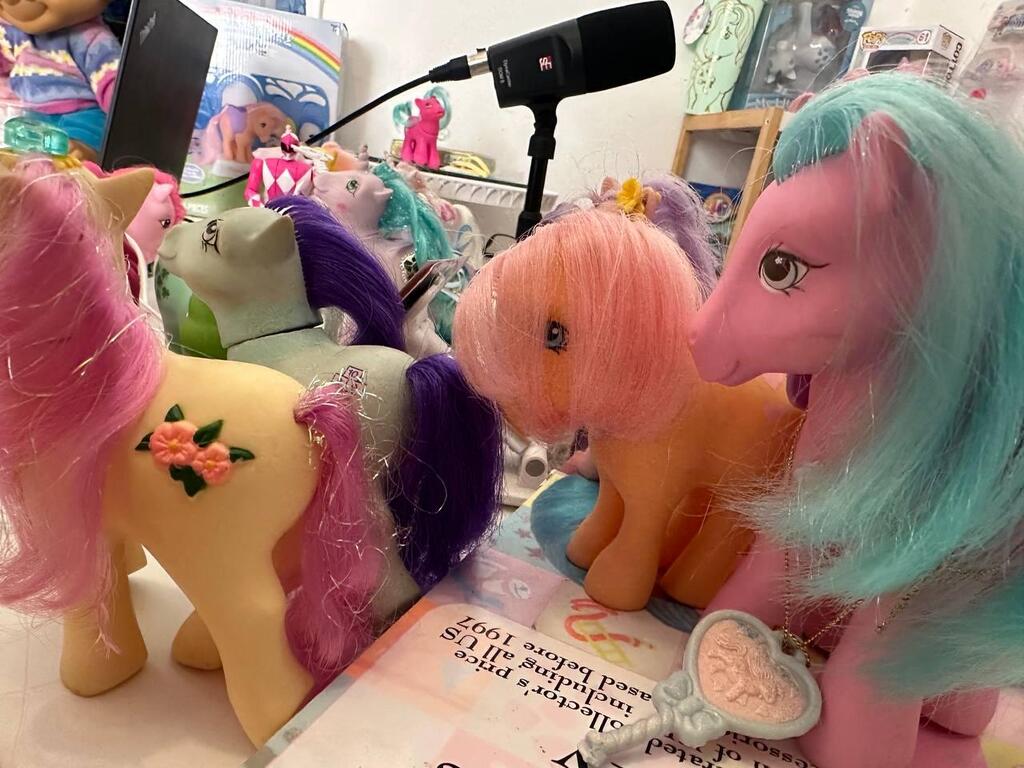
Close-up of several Generation 1 My Little Pony figures from the 1980s inside Jonathan’s collection, where ponies are categorized and preserved by era and condition
(Photo: Bar Gindy)
Some ponies reach surprising prices. Rare figures from Greece, such as seated ponies with candle or ladybug symbols, can sell for 4,000 to 5,000 shekels. Ponies produced in Argentina, Colombia or France are also highly sought after.
Accessories significantly affect value. A pony with its original saddle or a key from the Secret Surprise series is worth far more than the same figure without them. Even certain bootlegs, including Israeli-sold variants made from original molds with altered faces, have become collectible over time.
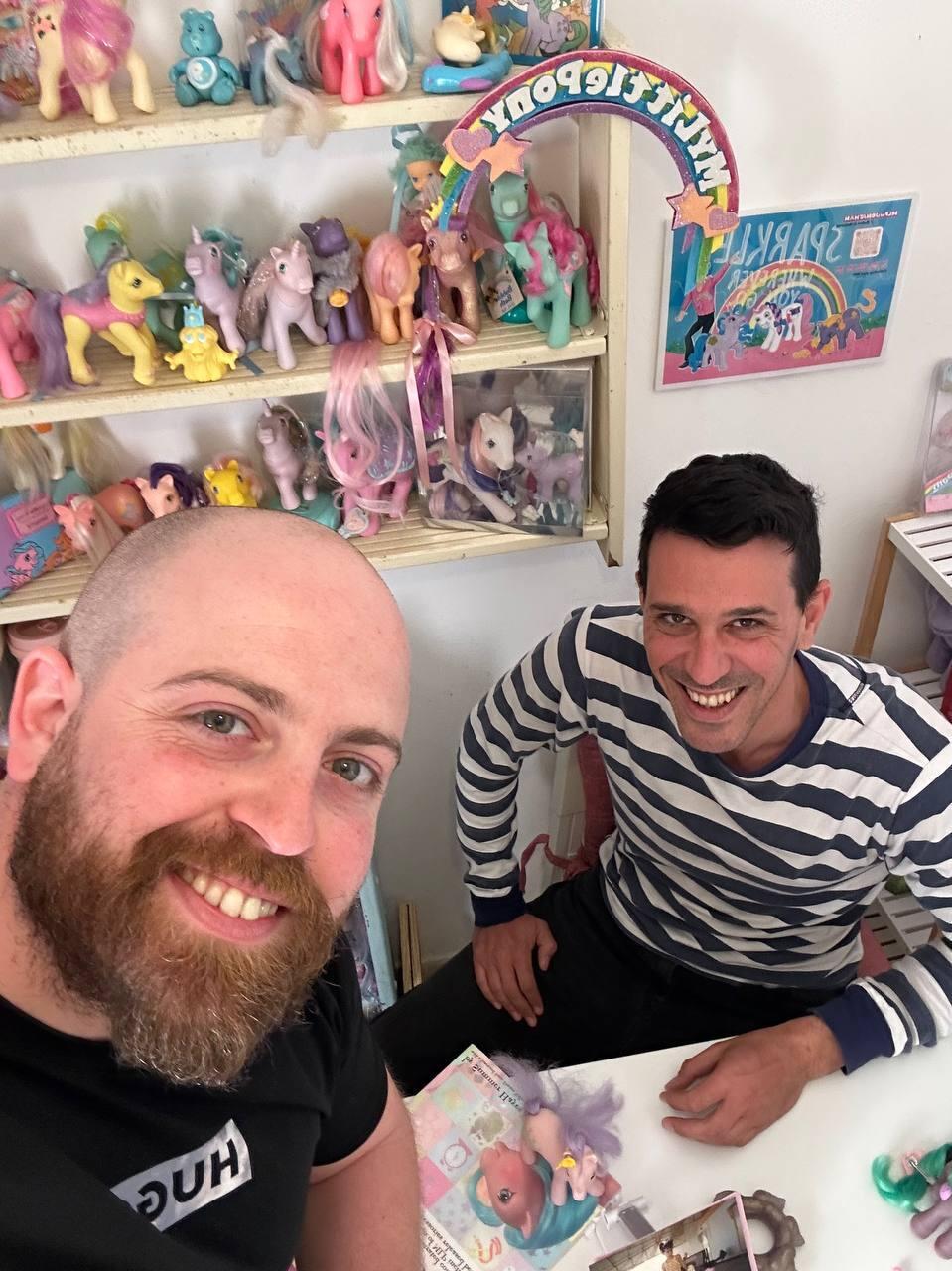
Jonathan (right) poses with Bar Gindi (left), host of the People and Collectors podcast, beside part of the extensive My Little Pony collection
(Photo: Courtesy)
As a teenager, Jonathan bought ponies through international forums, hiding dollar bills inside Britney Spears posters and mailing them overseas. Today, the community is global and deeply supportive. During the war, Jonathan, who lives near the Gaza border, received messages and videos of support from collectors worldwide. He uses his visibility to explain Israeli reality to a community that listens.
- For more stories from Jonathan and other collectors, check out the People and Collectors podcast. The full interview is available with subtitles in English and 50 other languages.