

Last month, two-time Academy Award winner Emma Stone made headlines after signing a sharply worded petition calling for a cultural boycott of the Israeli film industry. Nearly 4,000 filmmakers, actors, writers and crew members joined the call to cut ties with Israeli film institutions, creators and festivals, citing “genocide carried out by Israel,” and “apartheid policies” in the context of the war in Gaza.
Among the signatories were some of Stone’s close friends and collaborators: actors Mark Ruffalo, Olivia Colman, Joaquin Phoenix and Andrew Garfield — Stone’s former partner — as well as Greek director Yorgos Lanthimos, who has worked with her on The Favourite, Poor Things, Kinds of Kindness and now Bugonia. Lanthimos has recently been seen wearing a Palestinian flag pin in public appearances.
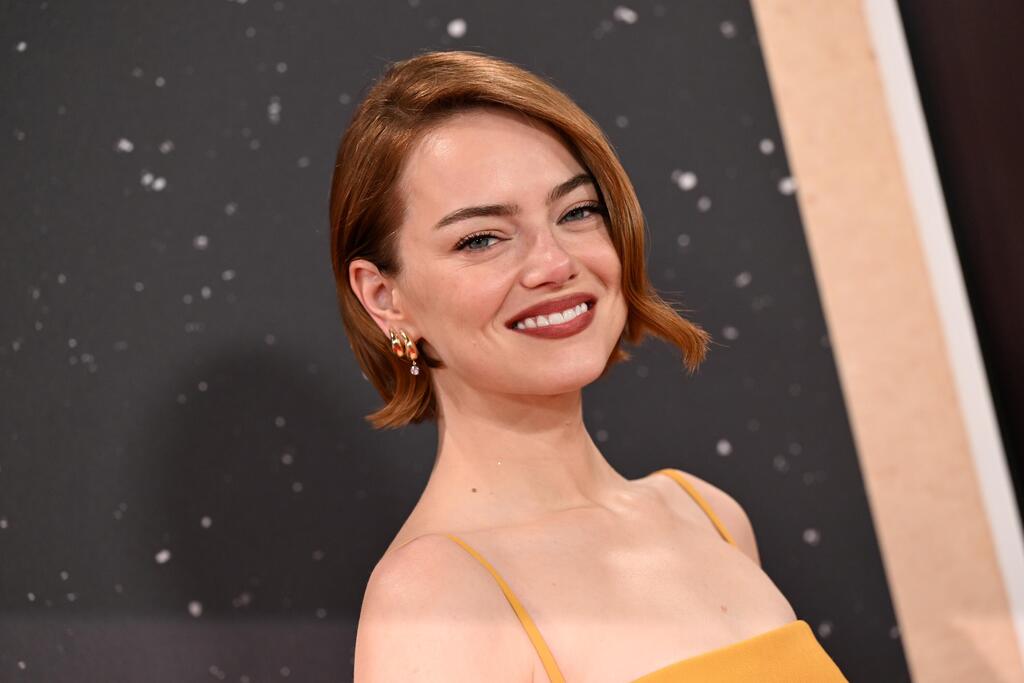
Stone’s decision to sign such a bold and sweeping statement drew immediate global attention. Major outlets featured her name and photo at the top of their coverage, as the move came as a surprise — even to those familiar with her activism. Stone is known for supporting progressive causes, including women’s rights, family planning, breast cancer awareness and environmental protection. But for a star of her stature to endorse a cultural boycott of this magnitude marked a rare and politically charged step.
Unlike Angelina Jolie — who recently criticized Israel for what she described as “the bombing of a trapped population” and said Gaza was “becoming a mass grave,” but stopped short of supporting a boycott — Stone’s move was more explicit and confrontational.
The backlash online was swift. Critics flooded social media with calls to boycott Stone and her films. In one viral post, the Jewish watchdog group StopAntisemitism wrote: “Emma Stone and Ayo Edebiri are modern-day Nazis boycotting the world’s only Jewish state. Their goal isn’t to help Palestinians, it’s to vilify Jews.” The group also urged talent agencies to stop representing them.
The actress’s support for the boycott surprised Amir Kaminer, who had recently met with her. Just a few months before the petition went public — at the height of the war — Stone gave an interview to ynet during the Cannes Film Festival. At the time, she was friendly, open and at times amused, avoiding direct political statements. Her comments on current global affairs were philosophical and vague.
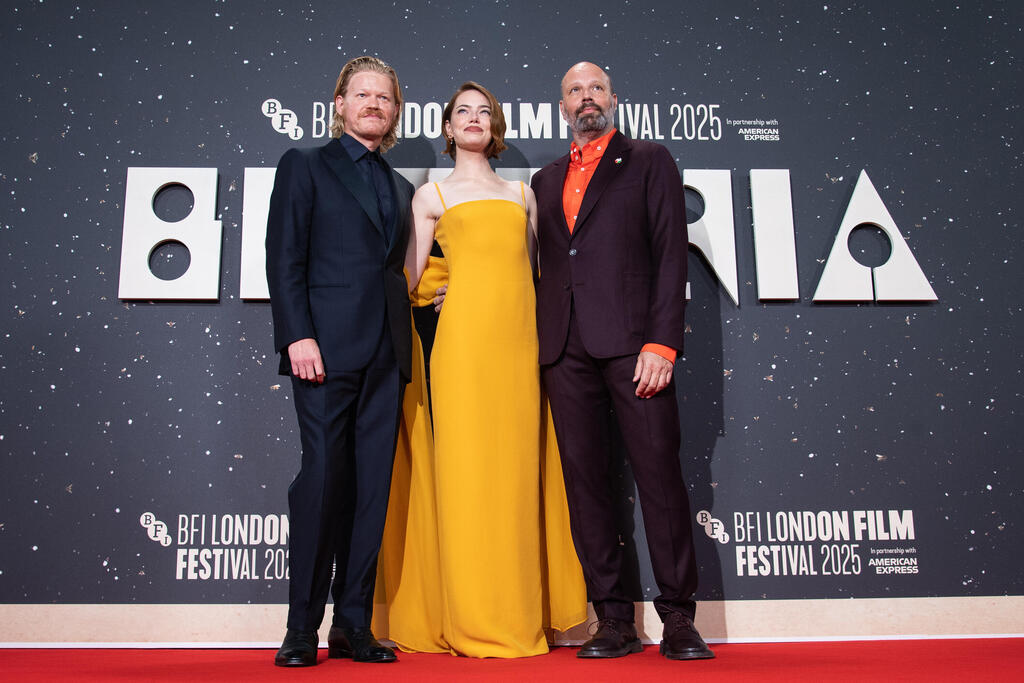
At the Bugonia premiere, from right to left: director Yorgos Lanthimos, and stars Emma Stone and Jesse Plemons
(Photo: Jeff Spicer/Getty Images for BFI)
When asked about her hopes for the U.S. in the Trump era and her general anxieties about the world today, Stone hesitated. “Wow, that would take way too long to explain, and I don’t want to say something that will become a headline,” she said. “I’ll just say I hope for peace, safety, acceptance and equality for everyone — those idealistic things. People everywhere struggle not to judge each other or live in fear. Of course, I’d love to see a kinder, more loving world. My country too. Right now, things are scary — undeniably so. There’s more to say, but I wasn’t very articulate. Anyway, here in Hollywood, we must keep making work that has a voice, that says something, without fear.”
At Cannes, Stone was more comfortable discussing feminism and gender equality in Hollywood. “I am a feminist,” she declared. “Whether it’s activism or the roles I choose.”
Asked whether she’s satisfied with the current state of women in the industry, Stone responded: “I think many people are doing their best to drive change and create an environment where women can feel a true sense of equality in cinema.”
Even at the Venice Film Festival last month — just days before the release of the controversial petition — Emma Stone avoided commenting on the war in Gaza. The Hollywood star arrived in the Italian city of canals to promote her latest collaboration with director Yorgos Lanthimos, Bugonia, which competed for the Golden Lion. Despite Stone and Lanthimos’ support for a cultural boycott of Israel, the Hollywood studios behind Bugonia chose to screen the film in Israel.
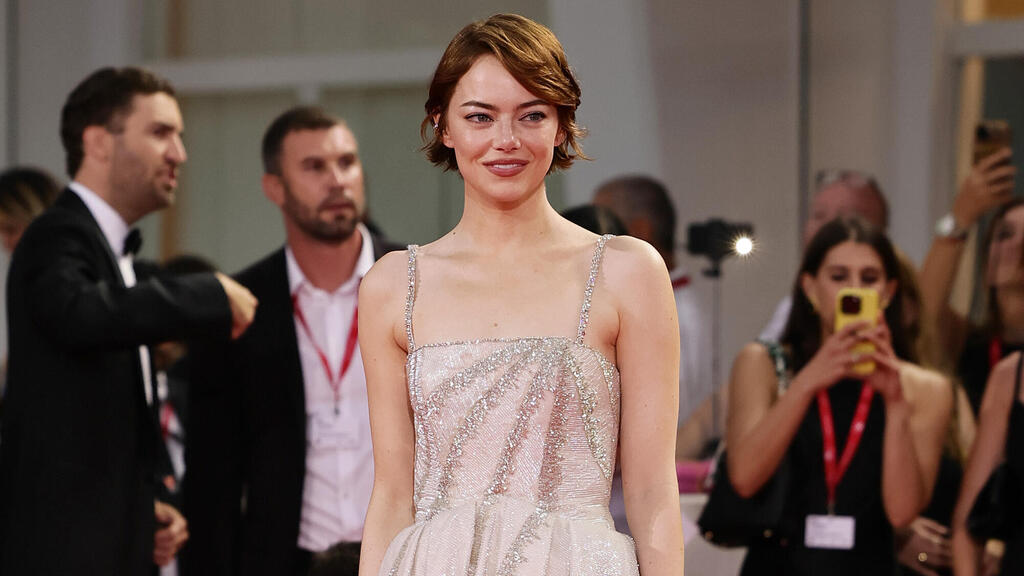
Emma Stone
(Photo: Theo Wargo/Getty Images)
The dark comedy, Bugonia, was inspired by the 2003 Korean cult sci-fi film Save the Green Planet!, directed by Jang Joon-hwan. Stone plays a powerful CEO who is kidnapped by one of her employees (Jesse Plemons) and his obedient cousin (Aiden Delves) — two conspiracy theorists convinced she’s an alien planning to destroy Earth. They hold her captive in an isolated house, while she tries to convince them she’s not an alien but simply human. Alicia Silverstone, best known from Clueless, also appears in the film.
Asked about living in a world of conspiracies and fake news — and what’s the wildest or most absurd thing she’s read about herself — Stone laughed. “That’s an interesting question. I can’t think of anything right now. But the moment you start Googling, you just find more and more of it — it becomes a black hole really fast,” she said. “Unfortunately, the algorithm feeds me the craziest nonsense. For example, during a recent press conference in Cannes for Ari Aster’s film Eddington, I was dealing with a bee that was bothering me. The clip went viral. People even wrote that the bee had stung me! But it didn’t — it was just flying around us. Austin Butler swatted it away.”
“The bee story is just one example of how small, meaningless moments can suddenly explode into something else,” she continued. “That’s part of what you experience as a journalist — and it’s what scares me in interviews now. I can say one thing, and you can write a long article, but someone will pull one quote, turn it into a headline, and that will become the whole thesis — whether that’s what you meant or not. It’s like stepping on landmine after landmine.”
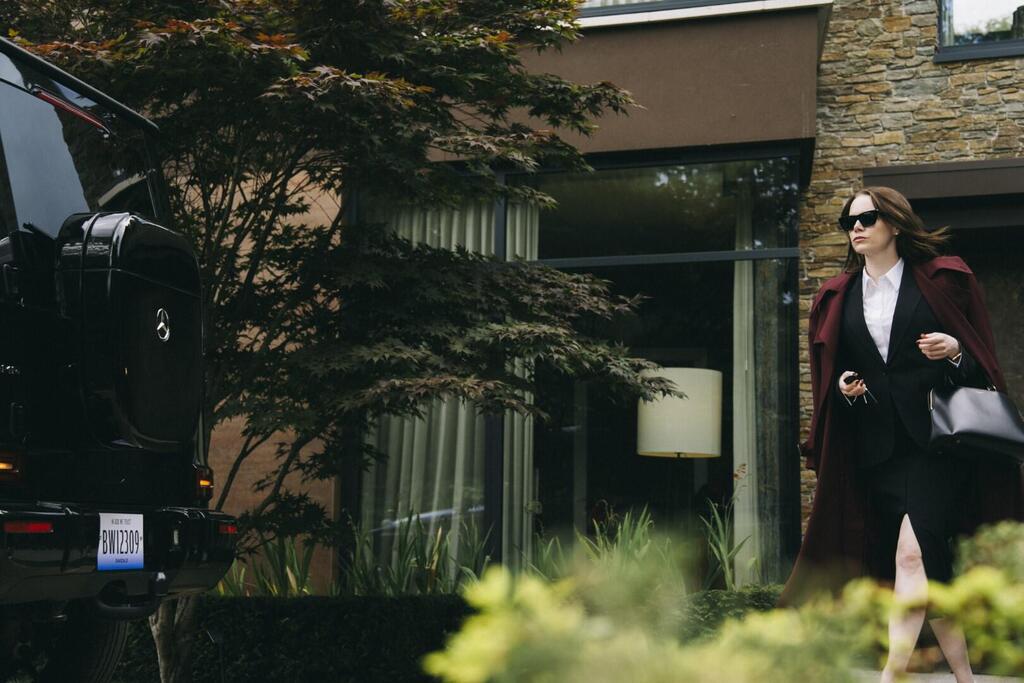
From Bugonia
(Photo: Courtesy of Tulip Entertainment)
At that point, Stone shifted into a more philosophical tone. “It feels like we no longer share a basic understanding of reality,” she said. “We don’t know what’s considered real anymore — among groups or even individuals. Who knows what your version of reality looks like? It’s like with colors — how can we be sure that what I see as purple isn’t what you see as blue, but you were just taught to call it purple? How do we even know we see the same world, visually speaking?”
“The same applies to reality itself — what do we perceive as real? Whether it’s based on our beliefs or life experiences, how can we know what each person’s personal reality looks like? I think that’s something that’s being examined right now — in my country and across the world — where people hold on so tightly to their own beliefs, hopes, accusations and fears.”
When asked whether she believes in extraterrestrial life, Stone smiled. “I don’t know if they’re watching us from above and rolling their eyes,” she said, “but one of my favorite people who ever lived is Carl Sagan. I fell in love with his brilliance — his science and philosophy. Sagan deeply believed that thinking we’re alone in this vast universe is a very narcissistic idea. So yes, I’ll say it: I believe in aliens!”
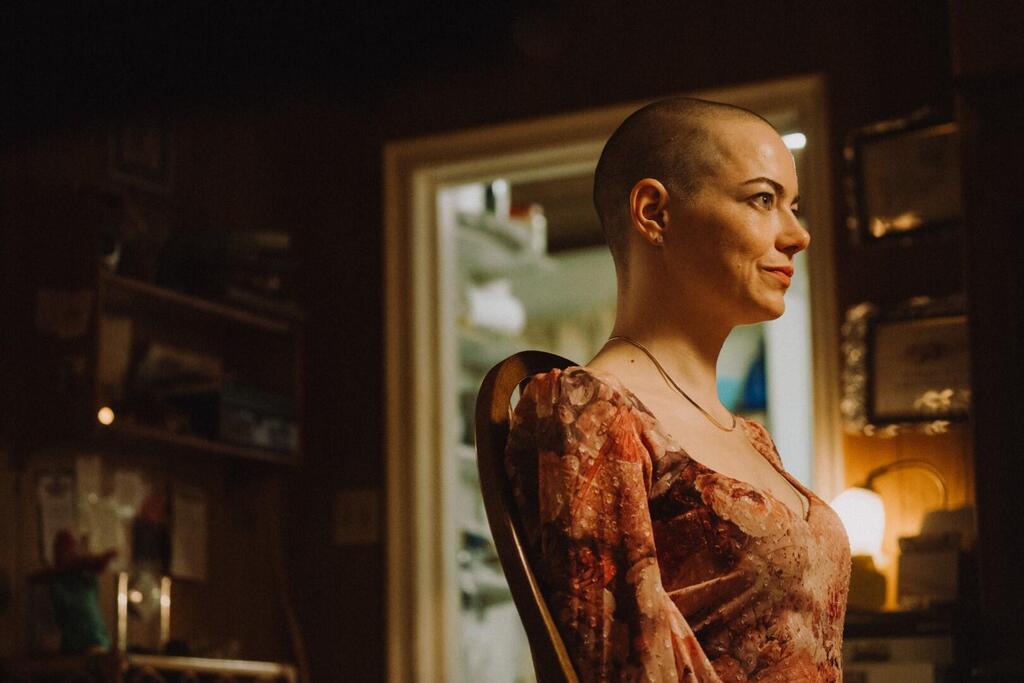
'Shaving your head is the easiest haircut in the world' — from Bugonia
(Photo: Courtesy of Tulip Entertainment)
In Bugonia, Stone’s character is forced by her captors to shave off her hair, and Stone committed fully to the look. “Shaving your head is the easiest haircut in the world,” she joked. “You just grab the clippers and go.”
During our meeting, Stone praised Lanthimos warmly. “He’s my muse,” she said. “I met Yorgos about a decade ago over lunch to talk about The Favourite. At that point, I’d only seen two of his films — Dogtooth and The Lobster. What struck me immediately was how warm he is — so easy to talk to. Maybe it sounds silly, but he’s nothing like his films. I expected him to be much more extreme or intense, but he’s not. We had such a great time working together on The Favourite — that’s how our collaboration began.”
Bugonia – Trailer
(Courtesy of Tulip Entertainment)


What draws you to the world Yorgos Lanthimos creates?
“His stories, his films, the way he views the world, his characters and his whole approach. We share similar taste. The most significant feeling I have when working with Yorgos now is one of deep comfort. Because we’ve worked together so often, I feel I can do anything with him. I trust him more than I’ve trusted any other director I’ve worked with. I’m deeply grateful to him.”
Lanthimos is known for being demanding and pushing actors to take bold, often physical risks — whether it’s intense sex scenes, shaving your head or staging fight scenes like in Bugonia. You don’t seem to have any hesitation about committing fully.
“For Bugonia, I trained for the fight and struggle scenes, but for some of the more complex shots, I used a stunt double. Yorgos has a very physical orientation to begin with. He loves dance — and so do I — so when we worked on Poor Things, we spent a lot of time discussing how Bella, my character, walks and moves. A lot of my relationship with the body — in Yorgos’s films, at least — is about the challenge of constantly turning an internal emotion into something physical and external.”
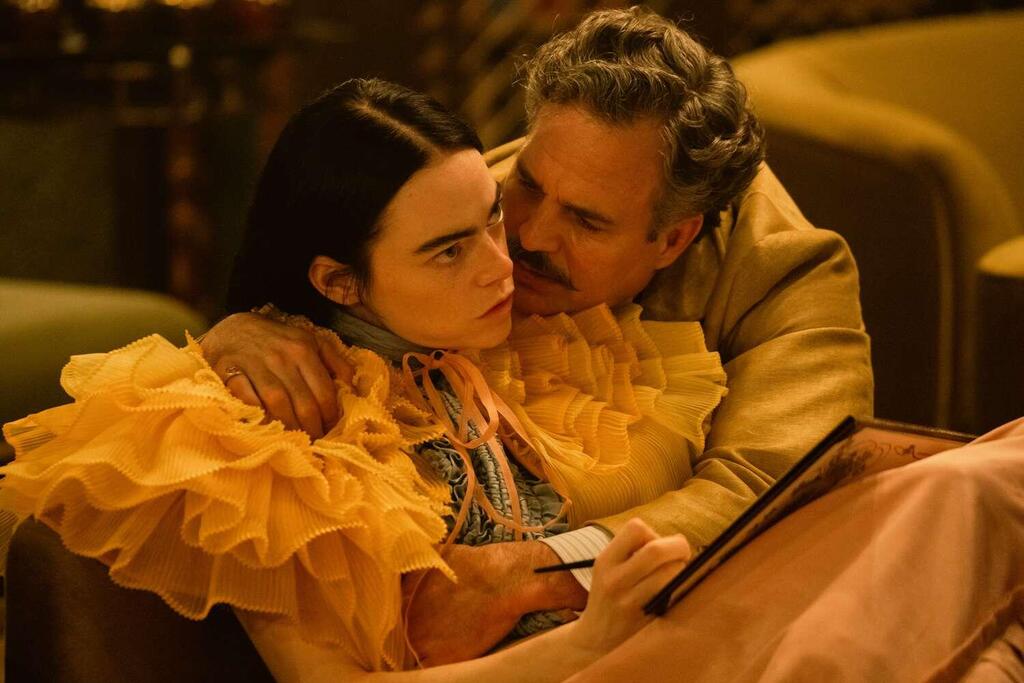
From Poor Things
(Photo: Courtesy of Forum Film)
And how do you handle the nude and sex scenes in his films?
“When we did Poor Things, I really learned the importance and necessity of having an intimacy coordinator on set. Their presence makes a huge difference. It’s a remarkable shift — even down to small things, like putting the microphone between your breasts yourself, instead of someone else doing it for you. That’s a major change, and it wasn’t even on my radar when I was 18 and some guy was just attaching a mic to me.”
“Now, before every production, we have a mandatory conversation about sexual harassment that everyone attends. So I know the crew has heard the same talk as I have, they understand the same language I do, and that allows me to refer to something very specific and know they’ll understand what I’m saying.”
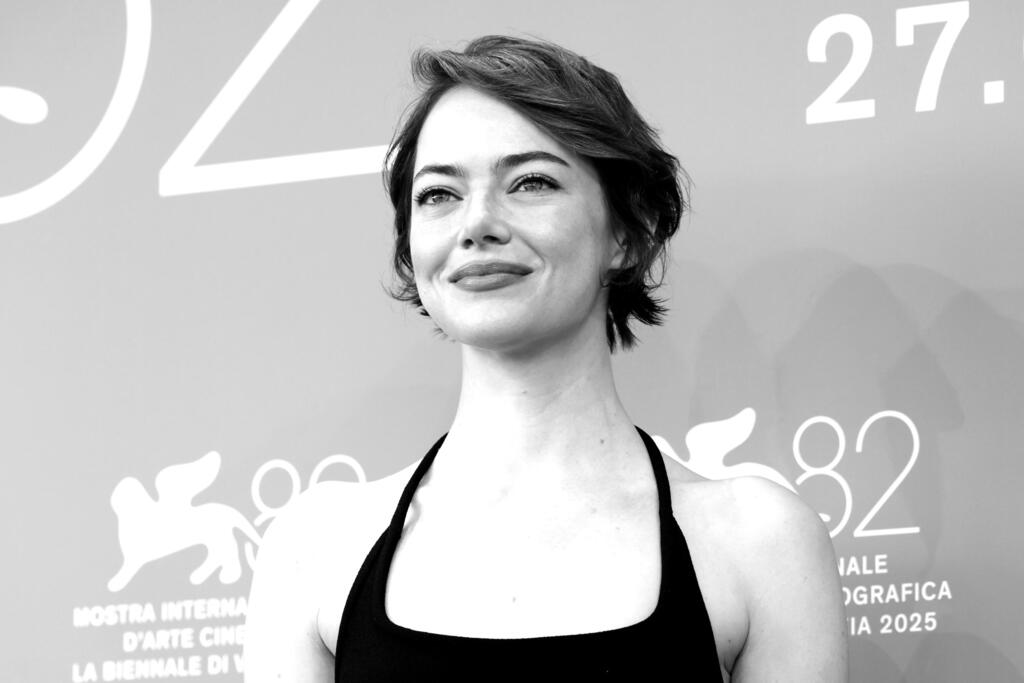
Emma Stone
(Photo: Aldara Zarraoa/Getty Images)
Now 36, Emma Stone was born Emily Jean Emma Stone — and in recent years, she’s returned to her given name. “Around 2017, I showed up for a script reading of The Favourite in England and said, ‘Guys, just so you know, my real name is Emily. If you want to call me that — great,’” she recalled. “Since then, everyone I meet or work with — and of course my family and friends — calls me Emily. But Emma is fine too. Either one works.”
Stone, the daughter of a contractor and a homemaker, grew up in Arizona. She started acting in plays as a child — something she says was a lifeline. “As a kid who struggled with severe anxiety, discovering acting was a gift. It gave me a way to channel all those intense emotions into something purposeful — something I enjoyed. It allowed me to feel everything rather than suppress it.”
At 14, she convinced her mother to move with her to Hollywood to pursue acting. “For three years, I went to tons of auditions, missed a lot of school, and aside from small roles, I didn’t land anything steady,” she told ynet in a previous conversation. “It was tough hearing ‘no’ over and over again. But I never felt I should quit. Something in me kept pushing forward.”
The hardest moment, she recalled, came when she auditioned for the TV series Heroes. “I overheard the producers through the wall telling Hayden Panettiere the part was hers. I thought, ‘Damn, am I just going to hear no forever?’ But two weeks later, I got cast in Superbad — and that changed everything.”
Stone went on to appear in films like The House Bunny, Ghosts of Girlfriends Past, Easy A, Friends with Benefits, The Help, Crazy, Stupid, Love and Gangster Squad. Her role as Gwen Stacy in The Amazing Spider-Man solidified her status and introduced her to co-star Andrew Garfield, who became her partner.
She worked with acclaimed directors including Alejandro González Iñárritu (Birdman), Woody Allen (Magic in the Moonlight, Irrational Man), and Damien Chazelle — who directed her Oscar- and Golden Globe-winning performance in La La Land. Her second Oscar came for Poor Things.
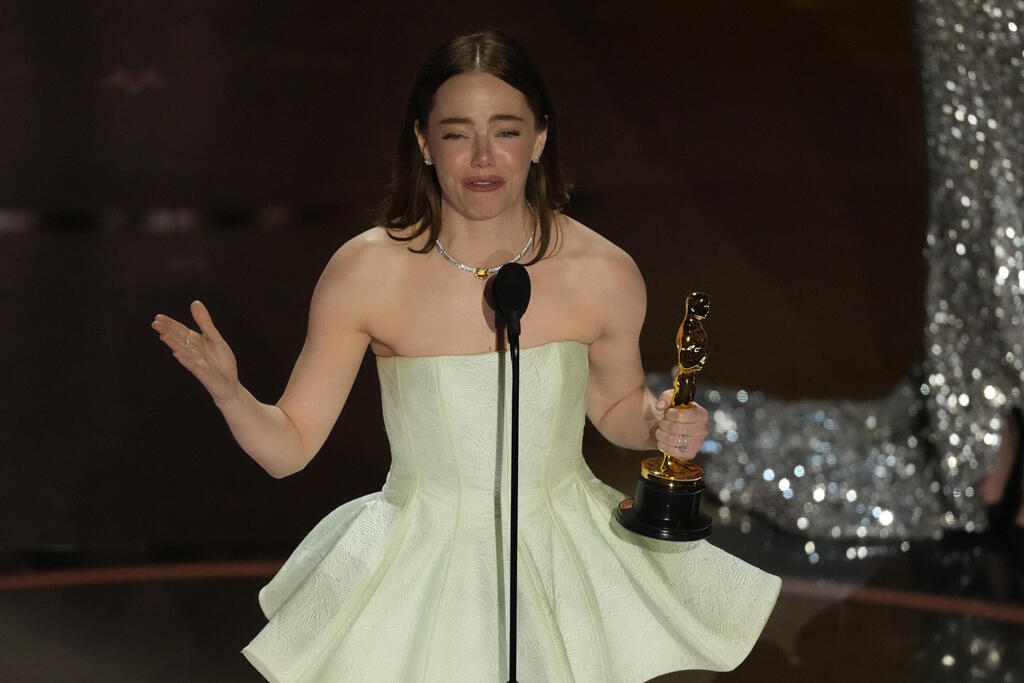
Emma Stone at the 2024 Academy Awards
(Photo: Chris Pizzello/Invision/AP)
Where do you keep your Academy Awards?
“They’re stored in my closet, next to the trophy I won for a fourth-grade spelling bee — which I’m very proud of.” The question caught Stone off guard. As she sipped her Coke, she burst out laughing, spraying soda in all directions.
Stone is married to Saturday Night Live producer Dave McCary, whom she met while hosting the show. They married in 2020 and welcomed a daughter the following year. “Balancing career and family is going well,” she said. “Sometimes the time zone differences can be hard when I travel. But I’m usually pretty good at letting go when I need to, and then snapping back into ‘home mode’ when I return. Family puts everything into perspective really fast.”
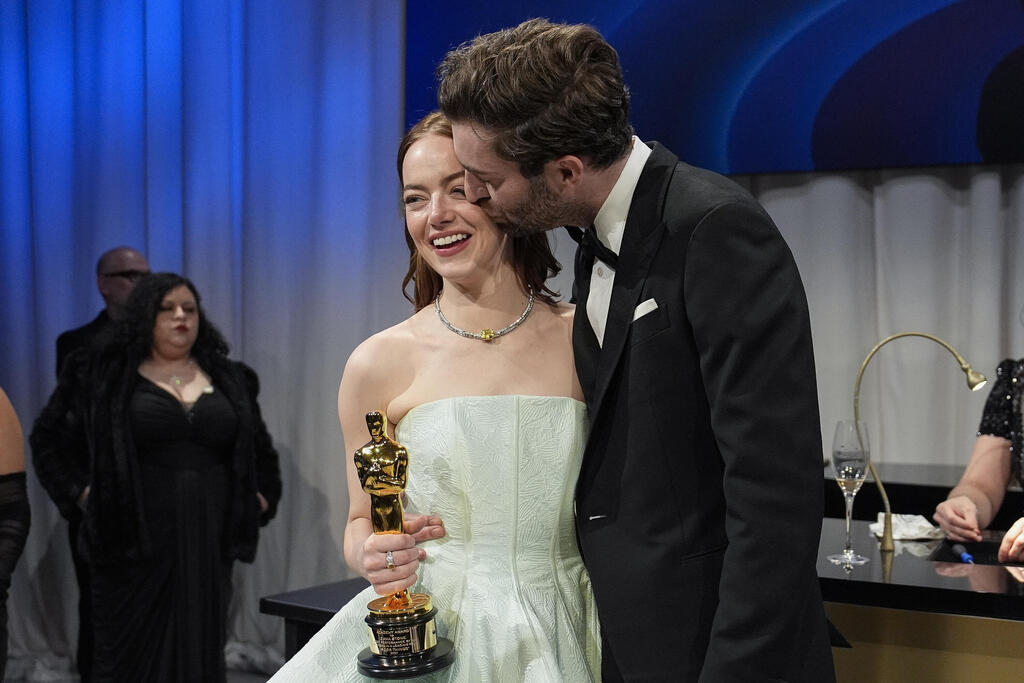
Emma Stone and Dave McCary
(Photo: John Locher/Invision/AP)
On her left forearm, just above the wrist, Stone has a small tattoo of blackbirds. “It’s inspired by the Beatles song Blackbird,” she said. “I really connect with the line, ‘Take these broken wings and learn to fly.’ That song is all about turning tough moments into something meaningful.”
Stone also shared her thoughts on the power of belief in uncertain times. “The desire to believe — it’s something we all have. Whether it’s through religion or being a sports fan, or being passionate about something. I’ve learned a lot about it — through things you love, or falling in love. I don’t think there’s life without hope. Faith and hope live in the same space. There are no guarantees in life.”
She added that her husband often talks about the concept of “sunk cost” — the idea that if you’ve invested so much in something, whether a belief system or a relationship, it’s hard to let go. “You feel like you have to keep going. You need to believe in something.”
“In our era, people cling tighter than ever — even if it means falling apart. You want to keep believing, to find a sliver of faith in something, because what’s the point if you lose that? Without it, we really have nothing. It’s heartbreaking to see people losing their grip, unsure of what’s real, just searching for something to hold onto.”