

Israeli painter and sculptor Yaacov Agam, an Israel Prize laureate and pioneer of kinetic art, has died at 98.
His funeral will be held Monday at 5 p.m. at the military cemetery in Rehovot. Earlier, at 2 p.m., his coffin will lie in state at the plaza of the Yaacov Agam Museum in Rishon Lezion, where he was born and later lived.
Culture and Sports Minister Miki Zohar mourned Agam as “one of the most prominent and influential Israeli artists in the world.”
“Agam was a groundbreaking artist who gave Israeli creativity a unique and inspiring language,” Zohar said. “His artistic legacy will continue to illuminate and influence generations of artists in Israel and around the world.”
Rishon Lezion Mayor Raz Kinstlich said Agam “was one of the greatest and most respected artists of his generation,” adding that he “broke boundaries in art” and helped found kinetic art, a movement built around motion and changing perspective.
“In my last meeting with him about two months ago, when he received the Israel Prize, I had the privilege of thanking him again for his many years of contribution to art, the state and our city,” Kinstlich said. “I am proud that we established the Agam Museum with him, showing him during his lifetime how much we loved and appreciated him.”
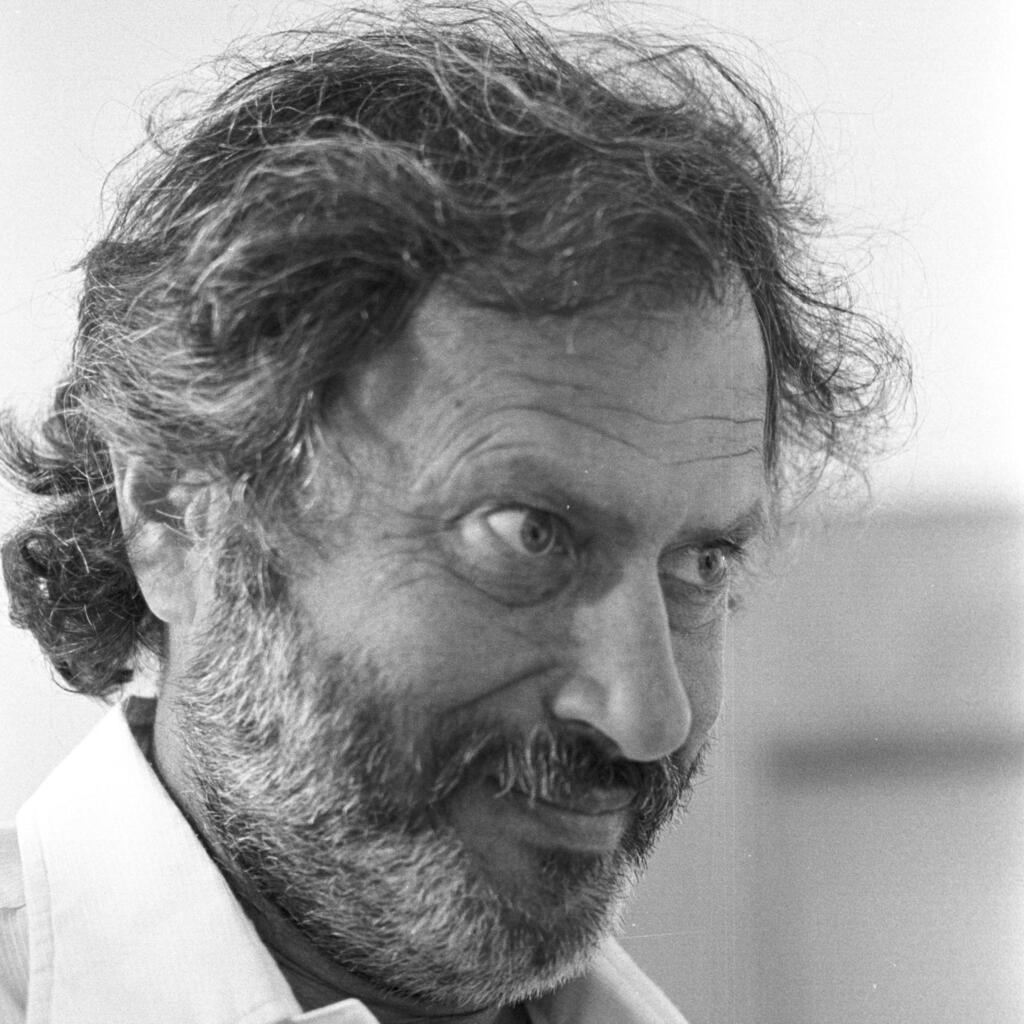
Yaacov Agam, 1978
(Photo: David Rubinger)
Agam received the Israel Prize, Israel’s highest civilian honor, earlier this year at age 97. The prize committee said his work reflected a seven-decade contribution to Israeli and international art.
“Agam broke the boundaries of plastic art as it was known and created new languages of kinetic art and Op art,” the committee wrote. It said the central innovation in his work was “internal change,” both in the work itself and in the viewer’s shifting point of view.
Agam was born Yaacov Gibstein in Rishon Lezion in 1928 to a religious family. At 18, he left to study at Bezalel Academy of Arts and Design in Jerusalem. After completing his studies, he traveled to Europe and trained in Switzerland, Italy and France. During those years, he lived in severe poverty and collected raw materials for his work from market trash bins.
A chance meeting with a Parisian artist led to his first exhibition, “Yaacov Agam — Art in Motion.” Positive reviews led to the next exhibition, “Le Mouvement,” or “The Movement,” which included other artists whose work centered on motion. The show is remembered as a landmark in the birth of kinetic art.
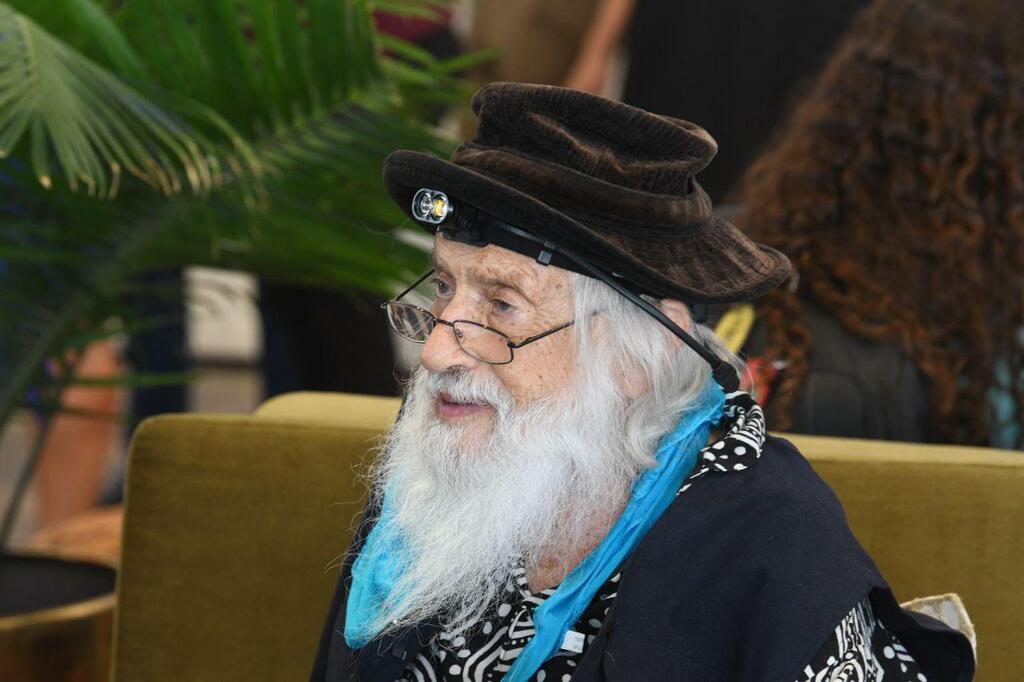
Yaacov Agam
(Photo: Yair Sagi)
From the 1950s onward, Agam’s works were shown in some of the world’s leading museums and exhibitions. His works are included in collections at the Museum of Modern Art and the Guggenheim Museum in New York and the Pompidou Center in Paris, which displays his “Kinetic Salon,” also known as the “Agam Salon,” as part of its collection of masterpieces. Before reaching the Pompidou, the installation decorated the Élysée Palace in France.
His works also appear in public spaces around the world, from the White House in Washington to major sites in New York, Miami, Buenos Aires, Tokyo, Paris and Taipei. Each Hanukkah, Manhattan displays what is billed as the world’s largest menorah, an 11-meter, or 36-foot, structure designed by Agam and inspired by a drawing by Maimonides.
In Israel, his best-known works include the “Fire and Water” fountain in Tel Aviv’s Dizengoff Square, “Jacob’s Ladder” at the International Convention Center in Jerusalem, the Yizkor memorial at the Western Wall plaza, “One Hundred Gates” at the President’s Residence and “Rhythm of Time” at the Tel Aviv Museum of Art. He also designed the colorful seafront facade of the Dan Hotel in Tel Aviv and the “Menorah-Roots” sculpture in the city’s Brender Garden.
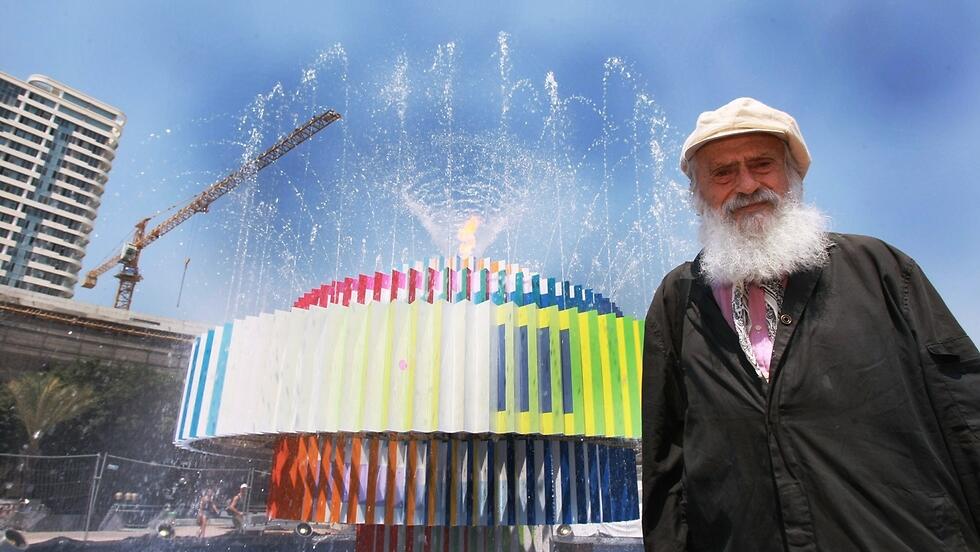
The work most closely identified with him is the “Fire and Water” fountain, installed in 1986. The fountain became the focus of a public dispute during renovations to Dizengoff Square, with Agam opposing its relocation and arguing that changing its surroundings damaged its artistic meaning.
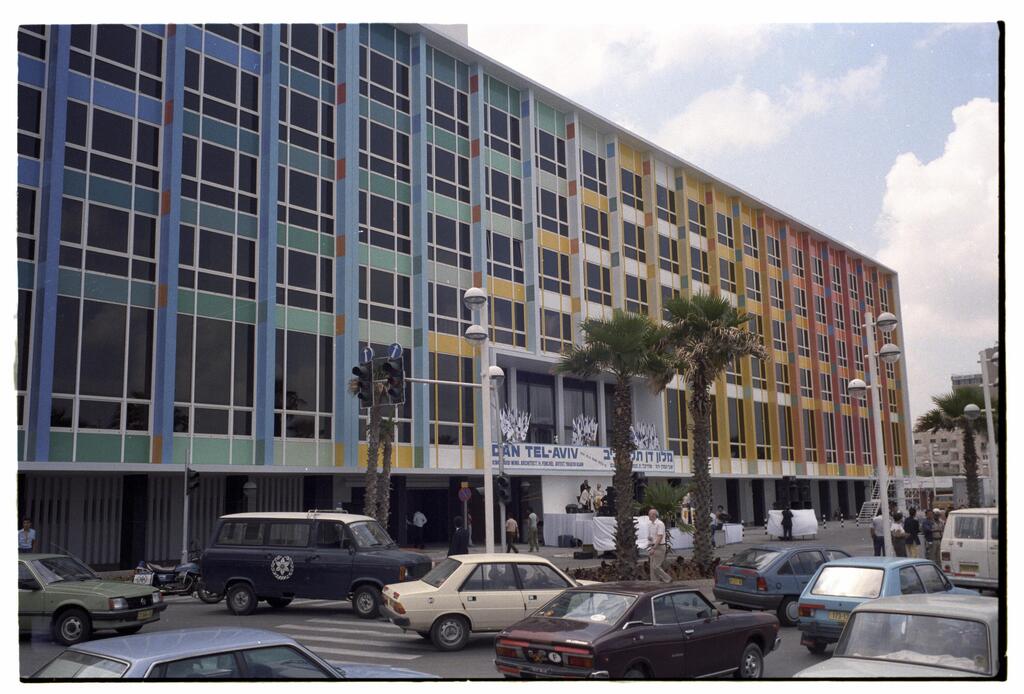
The facade of the Dan Hotel Tel Aviv designed by Yaacov Agam
(Photo: David Rubinger)
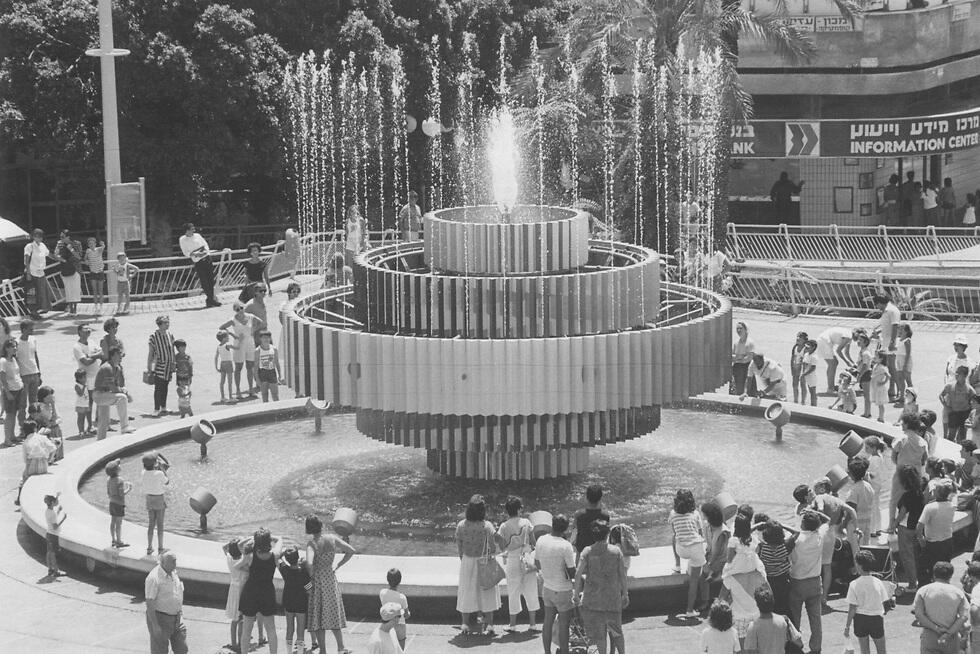
The 'Fire and Water' fountain in Tel Aviv’s Dizengoff Square designed by Yaacov Agam
(Photo: Shalom Bar-Tal)
“The fountain did not become the Eiffel Tower because there was enormous jealousy from artists,” he told Yedioth Ahronoth’s “7 Days” magazine in 2001. “The square drew huge crowds, but there was no understanding of what I had done.”
In the same interview, Agam spoke bitterly about how some of his work had been received in Israel.
“I feel complete failure,” he said. “The important things I really wanted to do, I did not succeed in. For 30 years I worked on the visual education method, and I did not manage to convey the message. I invested years and hundreds of thousands of dollars in the ‘Agamilim’ dictionary — and people belittle it. I devoted 10 years to creating ‘Fire and Water’ for the city of Tel Aviv — and they turned it into a shameful piece of scrap. They turned my most important work into scrap.”
His art is defined by motion and transformation. Whether in sculpture or painting, Agam’s works are not static. They change as viewers move through space, turning the viewer into an active participant who reveals the hidden colors and forms within the work.
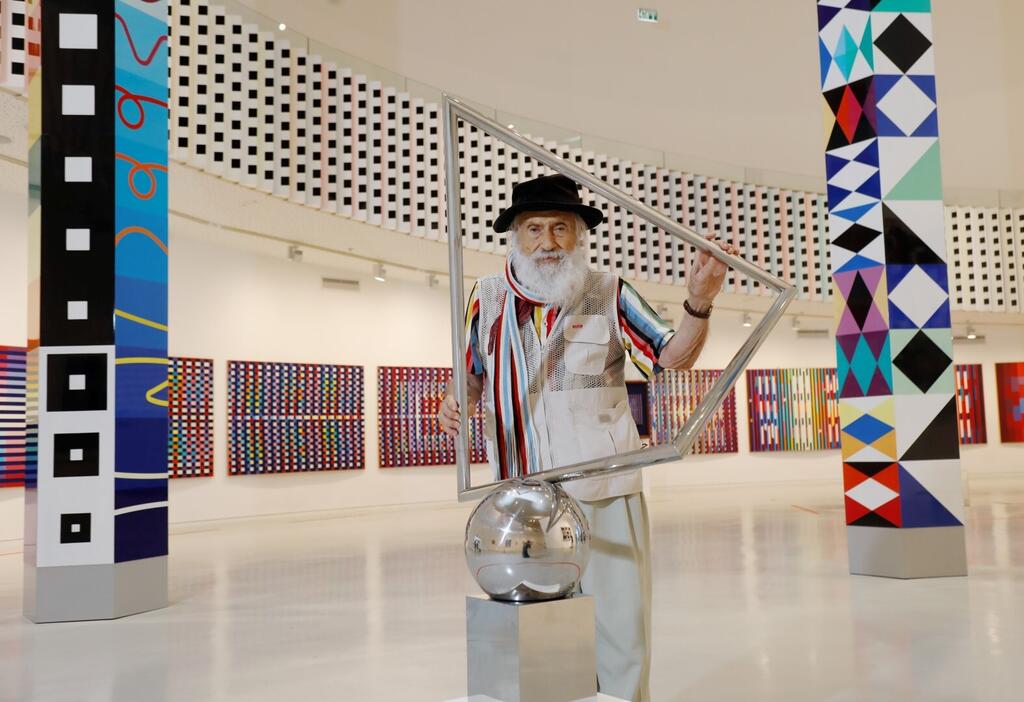
Yaacov Agam
(Photo: Shaul Golan)
Alongside his art, Agam developed educational methods. In the 1980s and 1990s, he worked with the science teaching department at the Weizmann Institute of Science on a curriculum based on visual language, meant to develop creativity, memory and thinking through shapes and images rather than words. The program was researched at the institute and used in kindergartens and schools across Israel.
The Yaacov Agam Museum opened in Rishon Lezion in 2017 and includes about 30 of his works. At the museum’s opening, Agam said: “Right now I am in a struggle. I want to finish the work I have done here, and I have a lot of work.”