


What happens when one of the world’s most renowned and influential artists designs a metro station? It depends on who you ask.
In this case, an urban infrastructure project in Italy became an extraordinary art installation when British-Indian-Jewish artist Anish Kapoor was invited to Naples to design two entrances to a new subway station.
Gallery
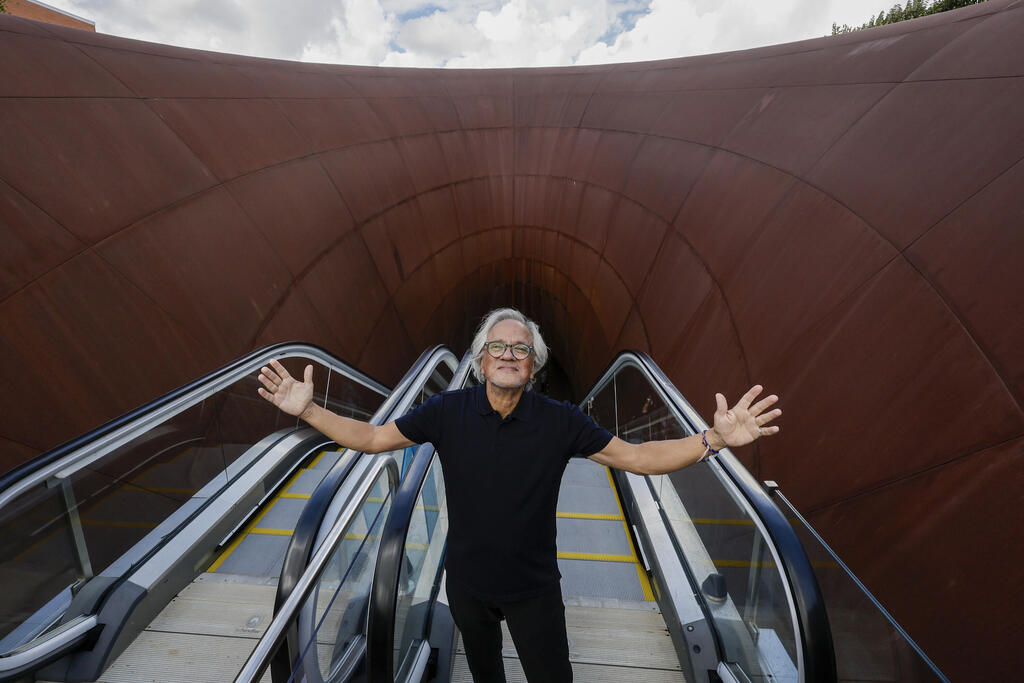
Metro station in Naples designed by Anish Kapoor
(Photo: Salvatore Laporta/KONTROLAB/LightRocket via Getty Images)
The result is a space where the daily descent underground becomes a sculptural, dramatic, and inspiring experience, and, as hinted in several reports, one that resembles female genitalia in shape.
The two entrances to Monte Sant’Angelo Station in Naples are more than just functional solutions; they are two works of art inviting passersby to stop, observe, and experience the city from a different angle.
The fusion of architecture, art, and infrastructure creates a public experience unlike anything typically associated with public transportation; one that connects everyday utility with a powerful inspiring cultural experience.
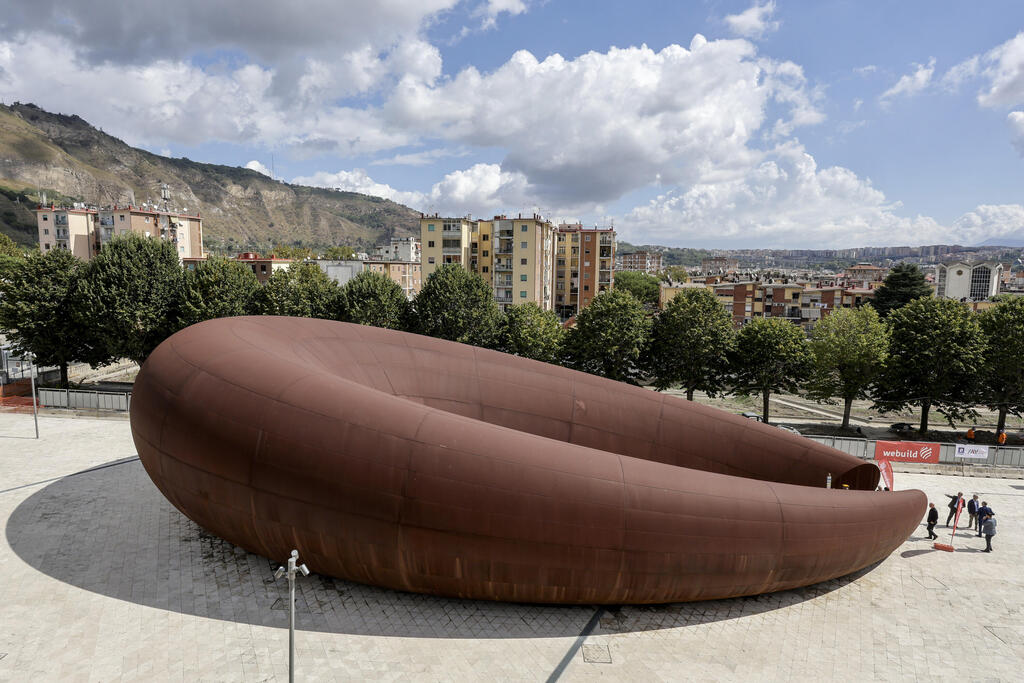
Naple's metro station by Kapoor
(photo: Salvatore Laporta/KONTROLAB/LightRocket via Getty Images)
A living, dynamic cultural space
Kapoor, one of the most prominent and influential artists on the international stage, is known for his public installations that carry distinct visual and emotional weight. The subway station project began more than 20 years ago.
In 2003, Kapoor, in collaboration with the London-based architectural studio AL_A, was invited to design one of the stations for Naples’ new metro line as part of a broader urban and cultural renewal process in the city’s Traiano district. After more than two decades, Monte Sant’Angelo Station opened to the public just a few weeks ago.
Located near the University of Naples, the station is not just a transportation hub but a sculptural-architectural work that embodies Kapoor’s visual language and is part of a wider effort to transform the city's transit system into a living, dynamic cultural space.
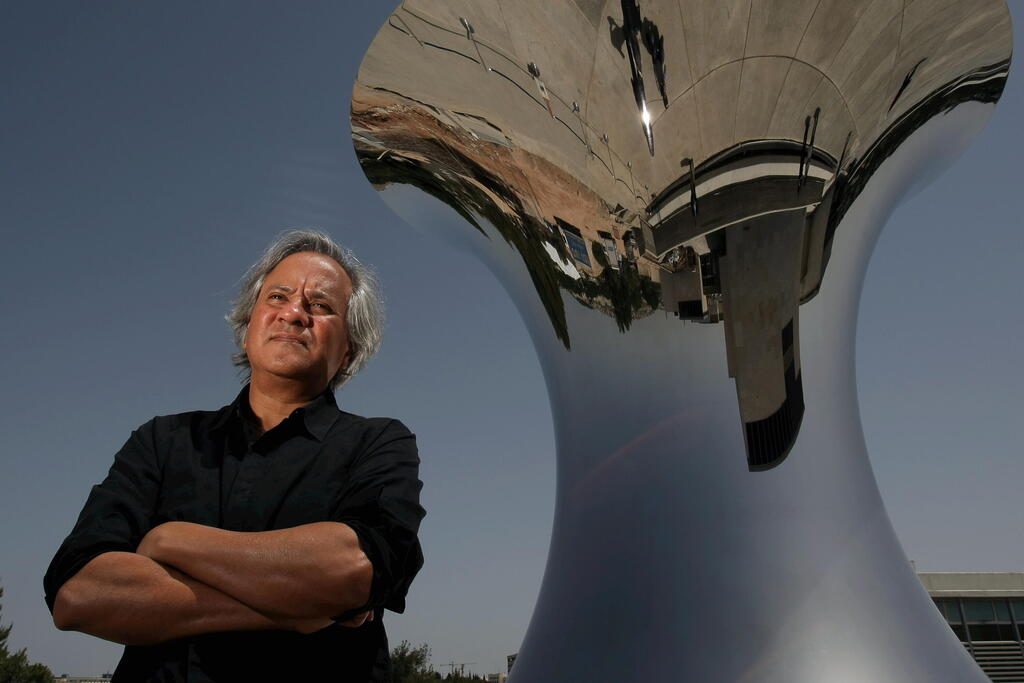
'Turning the world upside down Jerusalem'
(Photo: Amit Shabi)
The main entrance, made of curved, rust-colored steel, was designed to appear as if it emerges from the earth, with an inverted funnel guiding visitors into the station’s depths.
The second entrance, made of aluminum, penetrates the ground and echoes the surrounding low-lying topography. Both entrances connect to a network of tunnels that had previously been abandoned.
Kapoor sees them as an expression of Naples’ unique geology. “In the city of Mount Vesuvius and Dante’s mythical entrance to the Inferno, I found it important to try and deal with what it really means to go underground", the artist said at the project’s unveiling.
The Naples station is a remarkable symbiosis of sculpture and architecture, a dynamic that has always been a central theme in Kapoor’s work. It is not merely a structure for passenger traffic, but a space where material, form, and light merge into a holistic artistic experience.
As in his other works, the station blurs the line between the monumental and the everyday, and poses the question of how a functional space can also become a cultural, emotional, and symbolic site.
While Kapoor described the Corten steel entrance as a passage, others on social media have compared it to a river stone, the throat of a living organism, or a descent into the inferno. Many have also drawn connections to intimate female anatomy, as hinted by architect Amanda Levete, Kapoor’s partner in the project, in a recent interview.
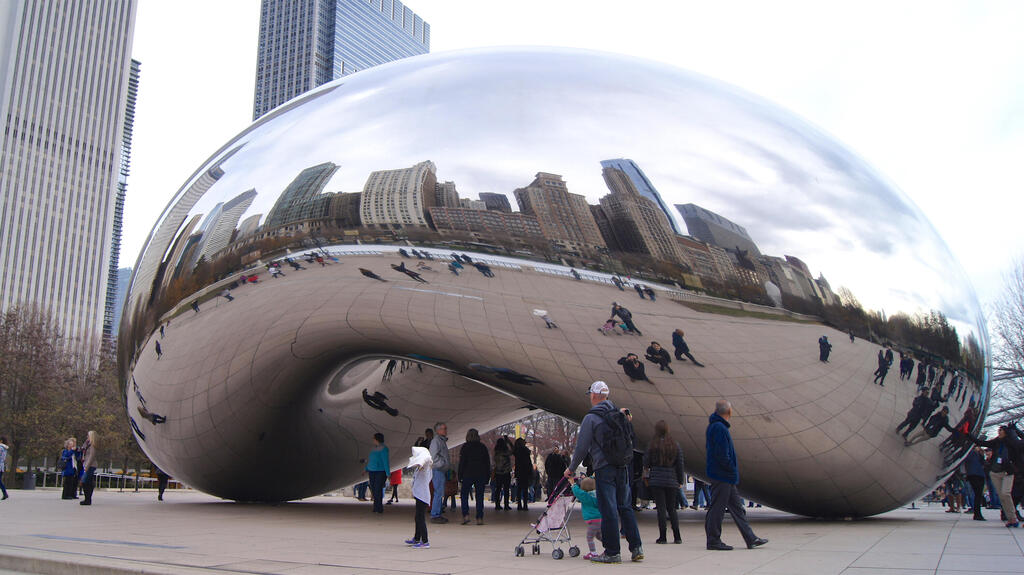
"Cloud Gate" in Chigaco
(Photo: Christian Heinz, shutterstock)
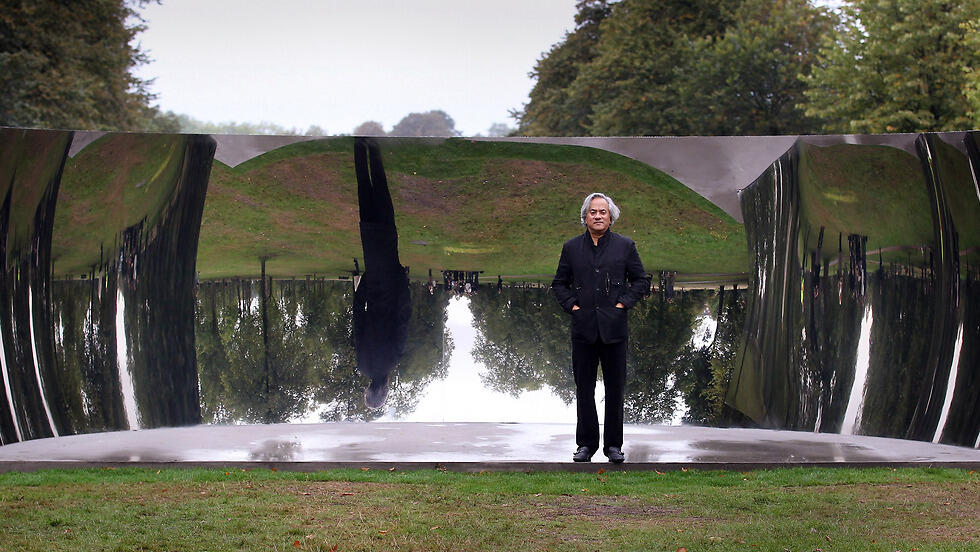
Kapoor standing beside his sculpture C-Curve in Kensington Gardens, London
(Photo: Getty Images)
Rejected by Bezalel Academy of Arts in Jerusalem
Anish Kapoor was born in 1954 in Mumbai, India, to a Jewish mother from the Baghdadi Jewish community and a Hindu father who had served in the Indian Navy.
In the early 1970s, Kapoor moved to Israel with his brother and lived on Kibbutz Gan Shmuel, where he studied Hebrew in an ulpan. He initially pursued electrical engineering, but after a few months, realizing that mathematics was not for him, he dropped out.
His true calling turned out to be art, a field he sought to enter but was rejected by the art department at the Bezalel Academy of Arts in Jerusalem. That story later became one of the well-known anecdotes about the globally celebrated artist who didn’t get accepted into Israel’s premier art school.
The rejection didn’t stop him: soon after, Kapoor moved to the UK, where he began a new chapter, studying at Hornsey College of Art and continuing at Chelsea College of Arts in London.
Over the years, Kapoor established himself as one of the most significant and influential artists in the world, with dozens of exhibitions at major museums.
In 1991, he won the prestigious Turner Prize, and in 2013 he was honored with knighthood by Queen Elizabeth II.
Four years later, he was awarded the Genesis Prize, a $1 million honor often referred to as the “Jewish Nobel”, but he donated the prize money to aid refugees fleeing Syria’s civil war. Explaining his decision at the time, Kapoor said:
“I am an artist, not a politician, and I feel I must speak out against indifference for the suffering of others. There are over 60 million refugees in the world today – whatever the geography of displacement, the refugee crisis is right here on our doorstep.”
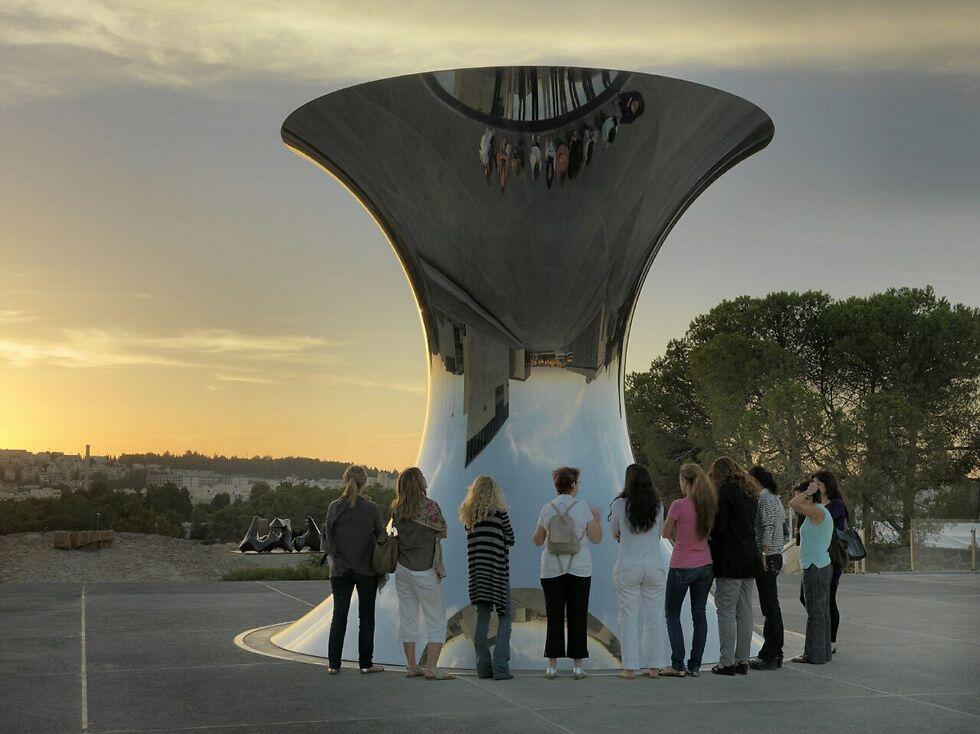
Kpoor's Turning the world upside down Jerusalem
(Photo: Eli Posner, Courtesy of Israel Museum, Jerusaelm)
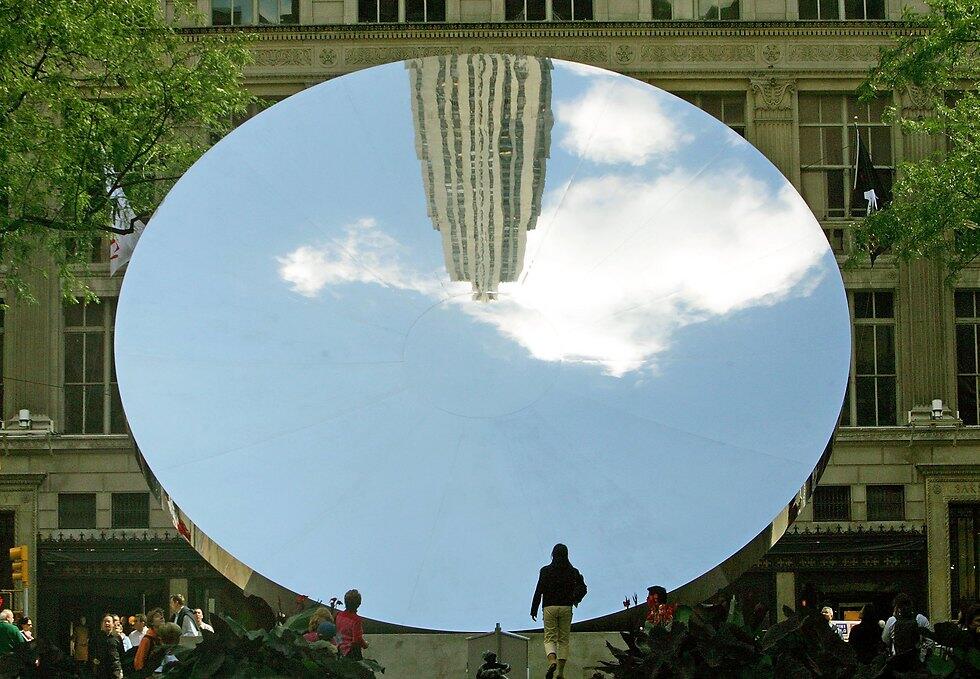
Kapoor's 'Sky Mirror' at Rockefeller Center
(Photo: Getty Images)
From ‘Turning the World Upside Down Jerusalem' to ‘The Bean’ in Chicago
Among Kapoor’s most iconic works is 'Turning the World Upside Down Jerusalem', a sculpture installed in the Israel Museum in Jerusalem, which reflects his ongoing exploration of the tension between space, material, and consciousness.
Another standout creation is 'Cloud Gate' in Chicago’s Millennium Park, a massive mirror-like sculpture composed of 168 stainless steel plates that has become one of the city’s most recognized landmarks and a pilgrimage site for visitors from around the world. Due to its elliptical shape, the sculpture, 33 ft high, 42 ft wide, is widely known as “The Bean.”
Another monumental work is 'ArcelorMittal Orbit', a sculptural tower built in London’s Olympic Park for the 2012 Games. It merges architecture, sculpture, and urban landscape, exemplifying Kapoor’s tendency to create works in a public space that transform the way communities experience their surroundings.
Beyond his monumental art, Kapoor has also engaged in projects tied to memory and historical significance. He created the Holocaust Memorial at the Liberal Jewish Synagogue in London, and in 2015 he launched '70 Candles', a series of installations marking 70 years since the liberation of Auschwitz, displayed in cities worldwide as a collective act of remembrance and a bridge between art and history.
Another project recently relaunched alongside the opening of the Naples metro station is 'Ark Nova', a pioneering mobile concert hall made entirely of inflatable materials. The concept is both simple and moving: to bring classical music and art to different parts of the world.
Designed in 2013 in collaboration with award-winning Japanese architect Arata Isozaki, the structure creates a portable cultural space adaptable to diverse settings. After years in Japan, the structure was recently relocated to Switzerland for the Lucerne Festival, where it has garnered renewed public interest.
Ark Nova's envelope is made from a 0.6-millimetre-thick polyester fiber membrane coated in polyvinyl chloride (PVC), which is remains inflated by blowing air in with three fans.
Reaching a height of 18 metres and with an inflated volume of about 9,000 cubic meters, with room for up to 500 visitors, it bears a similar organic form to Kapoor's 2011 Leviathan sculpture, giving it a lifelike, breathing presence.
More than a stunning visual, the project embodies Kapoor’s hybrid approach, blending art, architecture, and technology, and his belief that public art can exist outside museums and traditional concert halls, bringing culture directly to the places where it is most needed.
His works are featured in major collections at MoMA and the Guggenheim in New York, the Tate in London, and many others.
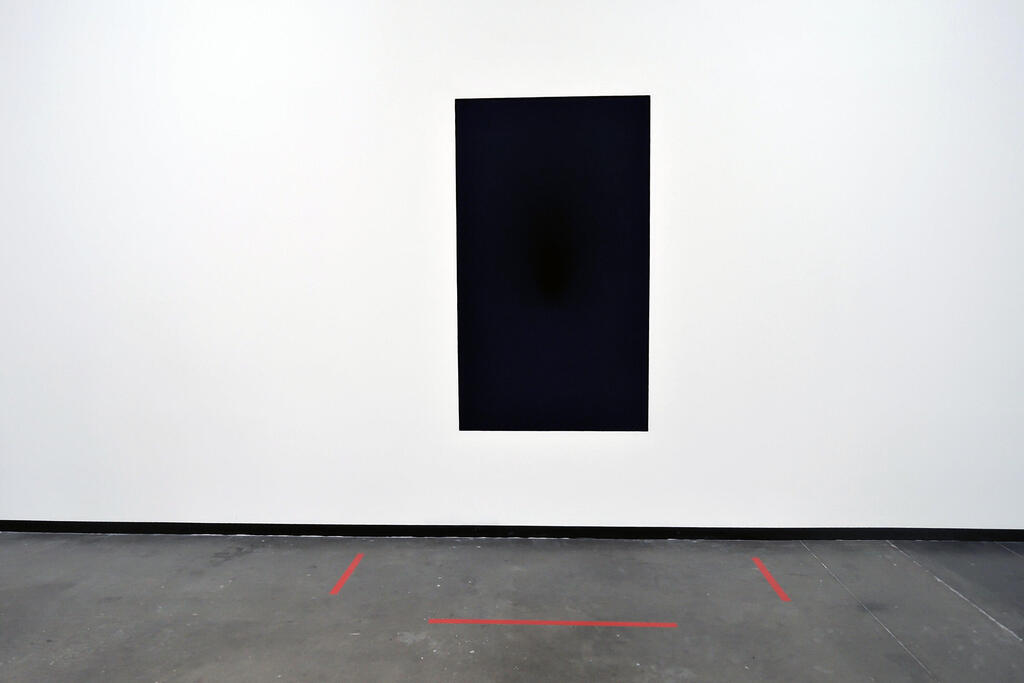
Vantablack "the blackest black" aquired exclusively by Kapoor
(Photo: Ekaterina Bykova, shutterstock)
The most controversial black
Kapoor’s career has also had its share of controversy. One of the most talked-about incidents occurred in 2016 when he acquired exclusive rights to use a unique pigment called Vantablack, dubbed “the blackest black in the world.”
Originally developed for military and aerospace applications, Vantablack absorbs 99.96% of visible light, giving coated objects the appearance of a void or black hole.
The British nanotechnology company that developed the pigment confirmed Kapoor was the only artist authorized to use it, sparking outrage within the global art community, which saw the move as an act of appropriation and elitism in a world that is meant to be open and collaborative.
One of the loudest voices in protest was British artist Stuart Semple, who responded with a creative twist: he developed a new pigment called Pinkest Pink and made it freely available to any artist in the world, except Kapoor.
To ensure this, Semple required buyers to sign a legal declaration pledging not to allow Kapoor access to the pigment under any circumstances. The stunt went viral, and the feud between the two artists over the most extreme shades on the spectrum became one of the most amusing and famous episodes in the world of contemporary art.