

French DJ and musician Kavinsky, best known for the electronic hit “Nightcall,” was found dead at his home in Paris, prosecutors said Wednesday. He was 50.
The self-taught pianist, whose real name was Vincent Belorgey, would have turned 51 on Friday. The cause of his death was not immediately clear, but emergency crews who arrived at his home late Tuesday reported finding no suspicious circumstances, according to the Paris prosecutor’s office.
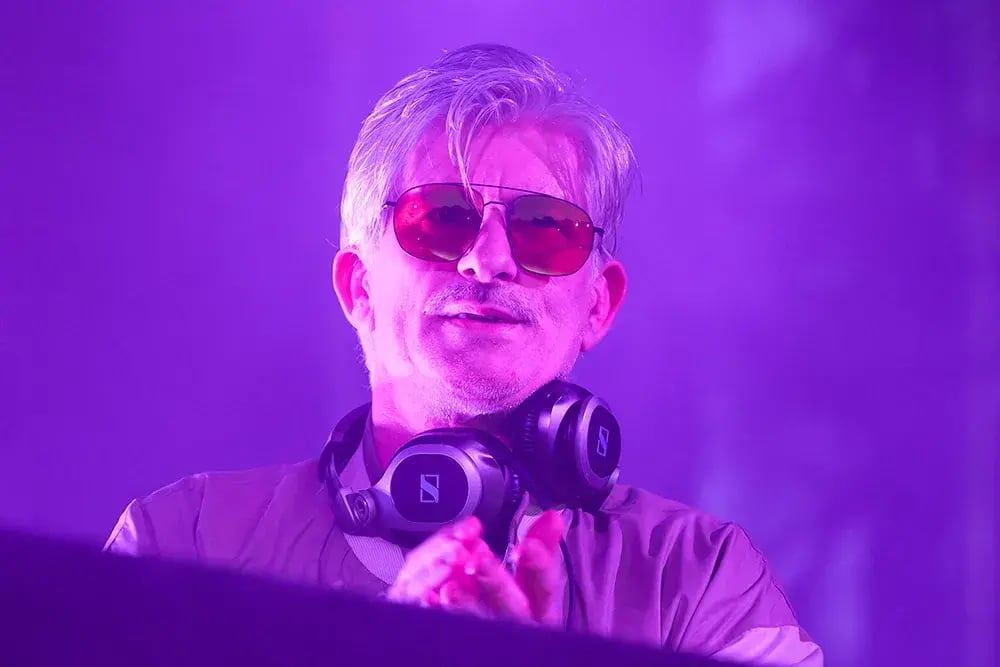
Kavinsky
(Photo: Getty Images)
Kavinsky became internationally renowned after “Nightcall” was featured prominently in the 2011 film “Drive,” starring Ryan Gosling. The track, with its brooding synthesizers and cinematic sound, became one of the defining songs of modern French electronic music and was later covered by English indie pop band London Grammar.
His fame reached a new peak when he performed “Nightcall” during the closing ceremony of the 2024 Paris Summer Olympics. Following the performance, the song became the most searched-for track on the Shazam music identification app in a single day.
French Culture Minister Catherine Pegard paid tribute to Kavinsky, saying France had lost “one of its most singular voices.”
“The entire world has vibrated to ‘Nightcall,’” she said. “Both danceable and nostalgic, his music will continue to cross generations and borders.”
Born near Paris in 1975, Kavinsky began pursuing a music career in the early 2000s. His work drew heavily on the sound and imagery of the 1980s, blending pulsing electronic beats with cinematic narratives, vintage cars and a mysterious fictional persona.
He released his first EP, “Teddy Boy,” in 2006, featuring the track “Testarossa Autodrive,” named after the Ferrari Testarossa that became closely associated with his stage identity. He later performed internationally and opened concerts for Daft Punk, helping establish him as a prominent member of the French electronic music scene.
“Nightcall,” produced with Daft Punk member Guy-Manuel de Homem-Christo and featuring vocals by Brazilian singer Lovefoxxx, was released in 2010. Its inclusion in the opening sequence of “Drive” introduced Kavinsky’s music to a much wider global audience.
The track accompanied Gosling’s character as he drove through nighttime Los Angeles, and its atmospheric sound became inseparable from the film’s neon-lit visual style. The soundtrack’s success helped turn Kavinsky into an internationally recognized musician even though he remained a relatively private and elusive public figure.
His debut studio album, “OutRun,” followed in 2013. Named after the 1980s arcade racing game, the album expanded the mythology surrounding Kavinsky’s fictional character, portrayed as a man killed in a car crash who returns years later as a supernatural electronic musician.
The record combined electronic dance music, synth-pop and cinematic influences and included “Nightcall” alongside tracks such as “Protovision” and “Odd Look.” The latter was later reworked with Canadian singer The Weeknd.
After several years away from releasing new material, Kavinsky returned with his second album, “Reborn,” in 2022. The record retained elements of his signature retro sound while moving beyond the fictional universe that had defined much of his earlier work.
His appearance at the Paris Olympics closing ceremony brought his music before a vast international audience. Performing the song most closely associated with his career in his home city marked one of the most visible moments of his two decades in music.
French officials and fellow musicians mourned an artist whose work helped shape the global image of French electronic music and introduced a new generation to the country’s distinctive synth-driven sound.
Pegard said Kavinsky’s combination of melancholy and dance music ensured that his work would endure long after his death.
“Nightcall,” the song that transformed his career, remained his defining work: a dark, nostalgic recording that traveled from the French electronic underground to Hollywood, international concert stages and the closing ceremony of the Olympic Games.